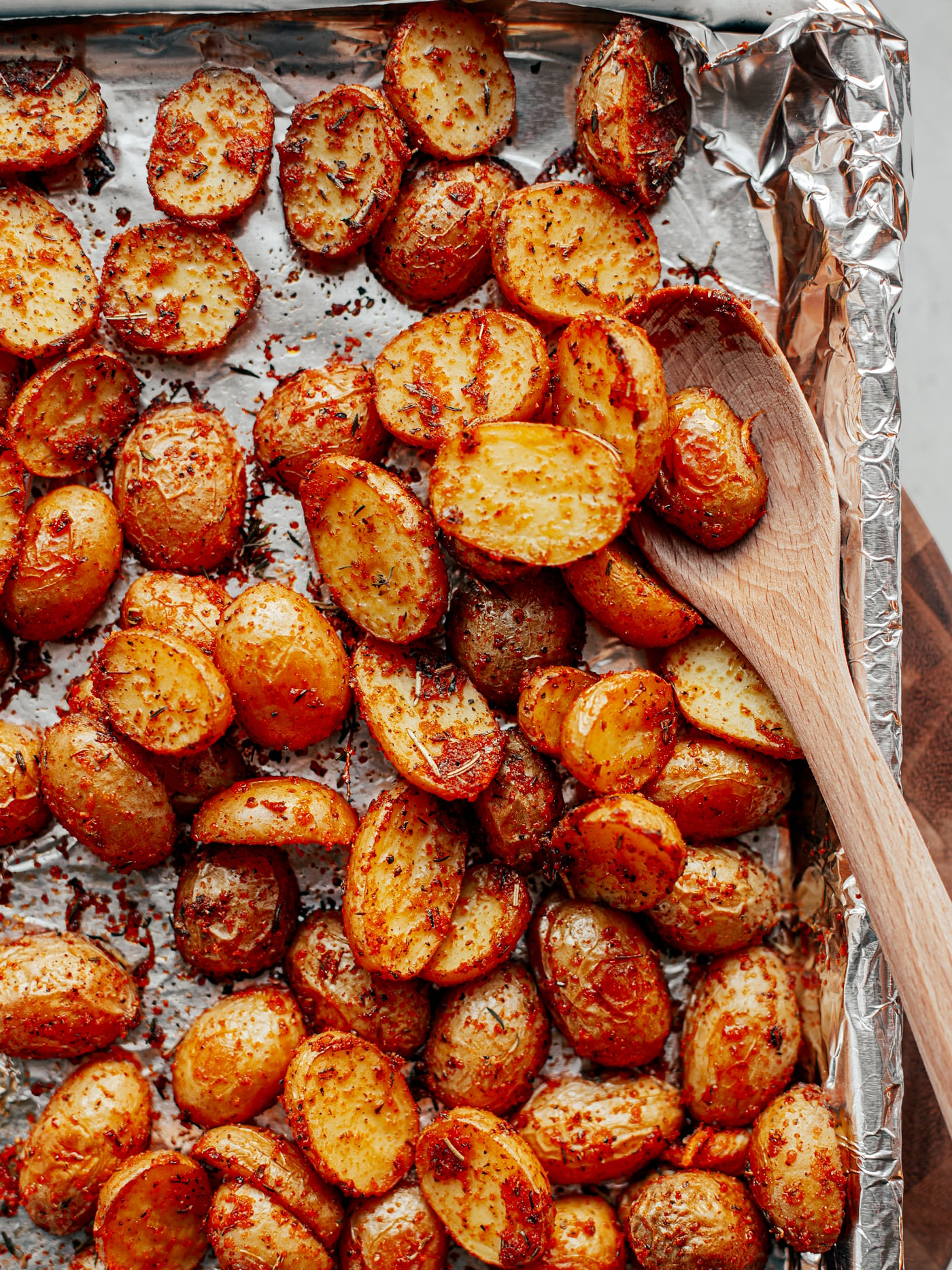
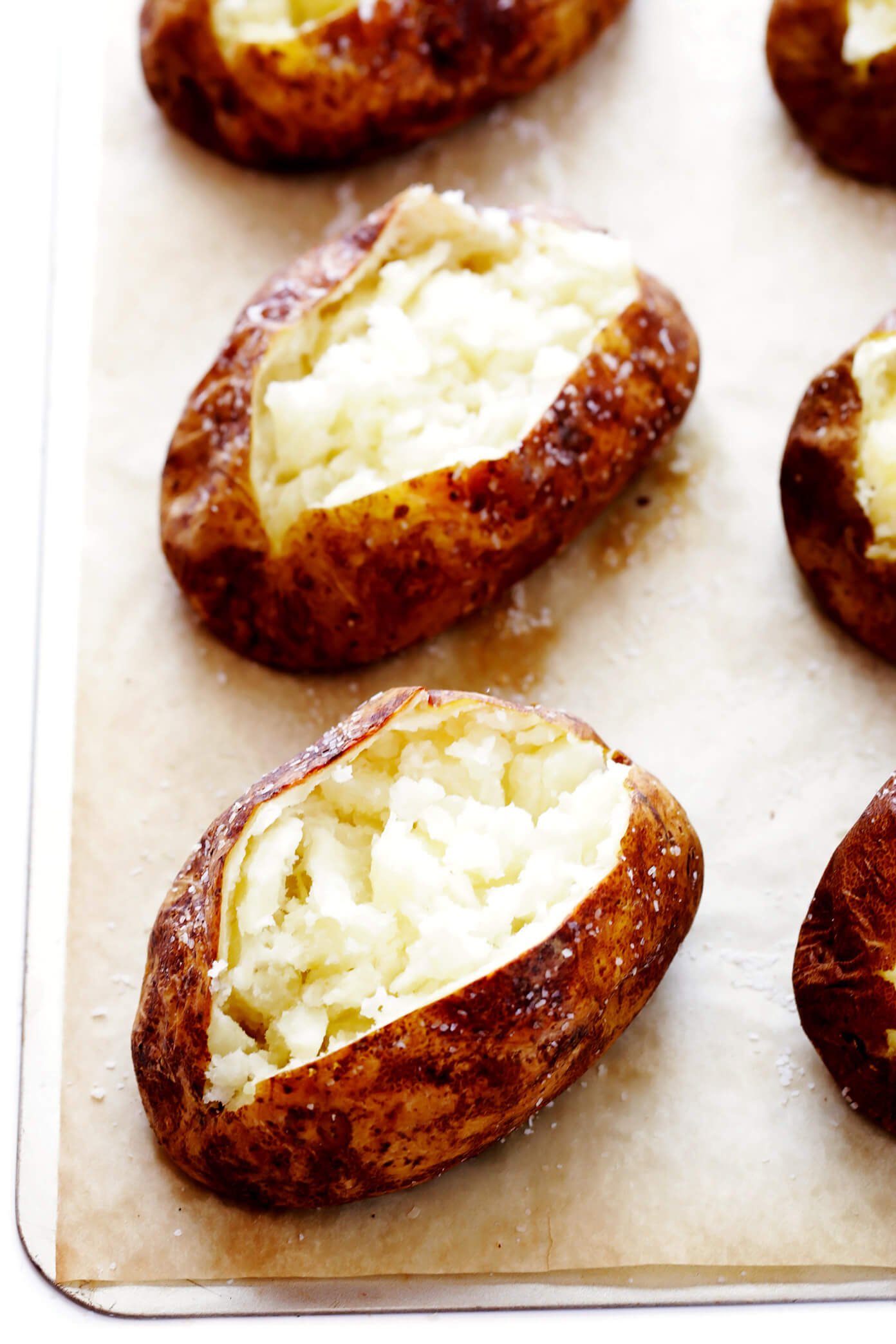
Bake small potatoes at 400°F for about 35 to 45 minutes when they are cut in half, or 40 to 55 minutes when left whole. The exact time depends on their size, your oven, and how crisp you want the skin. They are ready when a fork slides into the center with little resistance.
Small potatoes make an easy side dish for weeknight dinners, backyard cookouts, and holiday meals across the United States. You can serve them with roast chicken, grilled steak, baked fish, or a simple plate of vegetables. Their thin skins turn golden in the oven, while the centers become soft and tender.
The best baking time depends on more than the clock. A tiny baby potato may cook much faster than a large creamer potato, even when both sit on the same baking sheet. For the most reliable result, use 400°F as a starting point, spread the potatoes in a single layer, and check them with a fork before serving.
Source: jz-eats.com
How Long Do You Bake Small Potatoes at Different Temperatures?
At 400°F, plan on about 35 to 45 minutes for halved small potatoes and 40 to 55 minutes for whole small potatoes. These are practical starting ranges, not fixed rules. Check the potatoes before the end of the estimated time because size, pan material, and oven performance can change how quickly they cook.
A hotter oven can brown the skin faster, while a cooler oven generally takes longer to cook the centers. The key is to balance browning with tenderness. If the outside is dark but the center is still firm, lower the heat slightly and continue baking until the inside is done.
The table below gives approximate times for small potatoes in a conventional oven. It assumes the potatoes are washed, dried, lightly coated with oil, and arranged in a single layer. A crowded pan or unusually large potatoes may need extra time.
Source: spendwithpennies.com
At 350°F
Allow roughly 45 to 60 minutes for halved potatoes and 50 to 65 minutes for whole small potatoes. This lower temperature can suit a meal when another dish needs the oven set to 350°F.
At 400°F
Allow about 35 to 45 minutes for halved potatoes and 40 to 55 minutes for whole small potatoes. This is a useful balance between a tender center and browned edges.
At 425°F
Allow roughly 30 to 40 minutes for halved potatoes and 35 to 45 minutes for whole small potatoes. Start checking early because the outside may brown before the center becomes tender.
At 450°F
Small halved potatoes may take around 25 to 35 minutes, while whole ones may need 30 to 40 minutes. Watch closely, especially when using a dark metal pan or small potato pieces.
Which Oven Temperature Gives the Best Results?
For most home cooks, 400°F is a dependable place to start. It gives small potatoes enough time to soften while allowing the cut surfaces and skins to brown. You can use 425°F when you want more color and your potatoes are cut into evenly sized pieces.
There is no single temperature that works best for every recipe. If your oven already holds a steady 375°F for a roast, the potatoes can cook alongside it. Simply expect a longer cooking time and test for tenderness instead of raising the heat without checking what the other food needs.
Choose 400°F for everyday cooking
This temperature is a practical middle ground for whole or halved baby potatoes.
Choose 425°F for more browning
This works well for halved potatoes with dry surfaces and enough room on the pan.
What Counts as a Small Potato?
Small potatoes are often sold as baby potatoes, petite potatoes, or creamer potatoes. They can be red, yellow, white, or purple. Most are small enough to cook whole or cut in half, but the label does not guarantee that every potato in the bag is the same size.
For baking time, the potato’s thickness matters more than its name. A potato about 1 inch across may become tender sooner than one measuring 2 inches across. Even two potatoes with similar lengths can cook at different speeds if one is much thicker through the middle.
Try to group potatoes by size before putting them in the oven. If a bag contains tiny potatoes and larger ones, remove the smallest pieces first when they are tender, then give the larger ones more time. This small step helps prevent some potatoes from drying out while others remain firm.
Source: sweetandsavorymeals.com
Tiny potatoes
Potatoes about 1 inch across may cook in roughly 25 to 35 minutes at 400°F when halved, although whole pieces may take longer.
Medium baby potatoes
Potatoes about 1 to 1.5 inches across commonly need 35 to 45 minutes when halved at 400°F.
Larger small potatoes
Potatoes approaching 2 inches across may need 45 to 55 minutes or longer when left whole at 400°F.
Do Red and Yellow Baby Potatoes Cook Differently?
Red and yellow baby potatoes can both roast well, and neither color alone tells you the exact cooking time. Size, thickness, moisture, and how the pieces are cut have a greater practical effect on timing.
Yellow potatoes often have a creamy texture, while many red potatoes hold their shape well. These are general traits rather than guarantees for every variety. Use the same tenderness test for both and avoid extending the cooking time just because one type has a different skin color.
Red potatoes
Their thin skins can become pleasantly browned, and the flesh often holds together well after roasting.
Yellow potatoes
Their rich, creamy texture works well with olive oil, garlic, black pepper, and fresh herbs.
Purple or mixed potatoes
Cook them according to size and thickness. Color is not a dependable substitute for checking the center.
How to Bake Small Potatoes in the Oven
You only need small potatoes, cooking oil, salt, pepper, and a baking sheet for a basic batch. Garlic powder, paprika, rosemary, thyme, or grated Parmesan can add more flavor if you want them. The main goal is to cook the potatoes evenly without covering their surfaces in excess moisture.
For about 1.5 to 2 pounds of small potatoes, use 1 to 2 tablespoons of olive oil as a starting point. Add salt and pepper to taste. You can adjust the amount for your batch, but the potatoes should have a light coating rather than sit in a pool of oil.
Before starting, preheat the oven to 400°F and place a rack near the center. A rimmed metal baking sheet works well because it holds the potatoes in place and allows you to turn them safely. Do not line the pan with a material that is not rated for your oven temperature.
Source: theendlessmeal.com
Step 1: Wash the potatoes
Rinse them under running water and rub away dirt. Small potatoes are often cooked with their skins on, so clean the surface well.
Step 2: Dry them thoroughly
Pat the potatoes dry with a clean kitchen towel or paper towels. Dry surfaces help the oil coat the potatoes evenly and support browning.
Step 3: Cut evenly
Leave tiny potatoes whole if you prefer, or cut larger ones in half. For more even cooking, aim for pieces of similar thickness.
Step 4: Add oil and seasoning
Toss the potatoes with oil, salt, pepper, and any dry seasonings. Coat the cut sides as well as the skins.
Step 5: Arrange on the pan
Spread the potatoes in a single layer with a little room between them. Put halved potatoes cut-side down when you want more browning on the flat surfaces.
Step 6: Bake and check
Bake at 400°F, checking halved pieces at about 30 minutes and whole pieces at about 35 minutes. Keep cooking as needed until a fork slides into the center easily.
Step 7: Turn if needed
Turn the potatoes once during cooking if you want more even color on several sides. You can leave cut-side-down potatoes in place longer if their flat surfaces are browning well.
Step 8: Serve while hot
Remove the pan with oven mitts and let the potatoes rest briefly. Add fresh herbs or a little grated cheese just before serving.
Should You Cut Small Potatoes in Half Before Baking?
Cutting small potatoes in half is a useful way to get browned edges and shorten the cooking time. The exposed flesh can make direct contact with the hot pan, which helps create a golden surface. Halving also makes it easier to check whether the center is tender.
Whole potatoes need no cutting and may keep a slightly firmer outer shape. They can be a good choice when you want small potatoes that look neat on a serving plate. If you leave them whole, choose potatoes of similar size and allow extra time for the heat to reach the center.
For very small potatoes, cutting is optional. If they are roughly bite-size already, roast them whole if that suits your meal. Avoid cutting some potatoes into tiny pieces while leaving others large, since they will not finish at the same time.
Cut them in half
Choose this method for more browned surface area and a shorter, easier-to-check cook.
Leave them whole
Choose this method for small, evenly sized potatoes when appearance and shape matter.
How Can You Tell When Small Potatoes Are Done?
The most useful sign is a tender center. Insert a fork or thin knife into the thickest potato. It should pass through without much force. If you meet a hard or crunchy center, return the pan to the oven and check again after about 5 to 10 minutes.
Color is helpful, but it is not enough on its own. A potato can look golden on the outside while remaining firm inside, especially when cooked at high heat. A pale potato can also be fully tender if the oven temperature was lower or the pan did not produce much browning.
Check more than one potato when the pieces vary in size. Test one of the largest pieces first, then check a second piece in another part of the pan. If the largest potatoes are tender, the smaller ones are usually ready too, but confirm if they look or feel different.
Source: larrealasvegas.com
Tender center
A fork or thin knife slides into the middle with little resistance.
Golden skin
The outside has the color and crispness you want, although browning alone does not prove the center is cooked.
Soft, not mushy
The flesh feels tender while the potato still holds its shape.
Can You Use a Food Thermometer?
A food thermometer can help you assess temperature, but there is no need to rely on a single internal temperature as the only measure of potato tenderness. Potatoes soften as their starches and cell structure change during cooking, and the exact texture you want can vary by variety and size.
For ordinary oven-roasted potatoes, a fork or thin knife is a simple practical test. If you are preparing a dish that combines potatoes with meat, poultry, or other ingredients, follow the relevant food-safety temperature guidance for those ingredients as well.
Test the thickest piece
The center of a larger potato is the best place to check for a firm, undercooked spot.
Give firm potatoes more time
Return them to the oven in short intervals rather than assuming extra browning will soften the center immediately.
How to Make Small Potatoes Crispy on the Outside
For crisp roasted potatoes, focus on dry surfaces, enough heat, and open space on the pan. Potatoes release moisture as they cook. When they are packed tightly together, that moisture can collect around them and slow browning. A single layer gives hot air more room to move.
Oil helps transfer heat across the surface and supports browning, but adding more oil does not guarantee a crisp result. Too much can leave the potatoes greasy. Use enough to coat the skins and cut sides lightly, then season them before baking.
A metal sheet pan is a practical choice for roasting. A dark pan may brown the bottoms faster than a light pan, so check early if you change pans or use a new oven. Avoid crowding the tray just to fit the entire batch; use two pans when needed.
Water on the surface must evaporate before the outside can brown well. Pat the potatoes dry after washing.
Preheat the oven
A fully heated oven starts the cooking process at the expected temperature and helps the surface begin to brown.
Use a single layer
Leave gaps between the pieces so they roast instead of steaming in trapped moisture.
Put cut sides down
The flat flesh can brown against the hot pan. Check that the potatoes release easily before turning them.
Avoid covering the pan
A lid or tight foil cover traps steam and usually works against a crisp exterior.
Why Are My Roasted Potatoes Soft Instead of Crispy?
Soft potatoes often result from trapped moisture, a crowded pan, or insufficient browning time. They may still be cooked through, so first test the centers. If they are tender but pale, continue roasting for several minutes and check the surface again.
If the potatoes are already soft inside but need more color, increase the oven temperature modestly only if the recipe and other food in the oven allow it. Keep a close eye on the skins because small pieces can darken quickly. Moving the pan to a suitable upper-middle rack may also help, but the exact effect depends on your oven.
Do not judge success by crispness alone. Some waxy small potatoes have a smooth, tender outside rather than a very crunchy shell. The aim is a cooked center and the surface texture you prefer, without burning the skin.
If the pan is crowded
Move some potatoes to another baking sheet and spread the rest apart.
If the surface is wet
Dry uncooked potatoes before roasting. Do not splash water onto a hot pan to correct the problem.
If the potatoes are pale
Continue baking and check often. A small increase in heat may help if the centers are already tender.
Easy Seasonings for Oven-Baked Small Potatoes
Small potatoes pair well with simple seasonings, so you do not need a long ingredient list. Salt, black pepper, and a little oil make a good base. Garlic powder, dried herbs, paprika, or a pinch of chili flakes can add flavor without changing the cooking method much.
For a fresh finish, add chopped parsley, dill, or chives after baking. Fresh herbs can lose color or develop a burnt taste if they spend the whole cooking time in a hot oven. Finely grated hard cheese can also be added near the end, but watch closely because cheese can brown quickly.
If you use minced fresh garlic, consider adding it during the last 10 minutes rather than at the start. Small bits of garlic can burn before the potatoes are tender, particularly at 425°F or 450°F. Garlic powder is often easier to use for a full-length roast.
Source: aspectacledowl.com
Garlic and herbs
Mix oil with garlic powder, rosemary, thyme, salt, and pepper for a classic savory flavor.
Smoky paprika
Use a little paprika with black pepper and garlic powder for a warm, smoky note.
Lemon and dill
Add fresh dill and a squeeze of lemon after baking for a bright finish.
Parmesan finish
Sprinkle finely grated Parmesan over the potatoes near the end of cooking or just before serving.
When Should You Add Butter?
Butter adds a rich flavor, but it can brown or burn during a long roast at higher temperatures. For a simple approach, roast the potatoes with olive oil and add a small amount of butter after they come out of the oven.
You can also use a mixture of oil and butter, but keep the heat and timing in mind. If the butter darkens too quickly, the potatoes may still need more time in the center. A post-bake addition gives you more control over flavor without relying on butter to handle the full cooking time.
For a rich finish
Toss the hot potatoes with a small pat of butter and chopped herbs after baking.
For easier browning control
Use oil for the main roast and save the butter for the end.
Common Mistakes That Affect Baking Time
The biggest timing mistakes come from uneven sizes, a cold oven, and guessing doneness from color alone. The suggested cooking ranges work best when the oven is preheated and the pieces are prepared in a consistent way. If you change one of those conditions, allow for a different result.
Opening the oven briefly to check tenderness is fine, but repeated long openings can lower the oven temperature. Start checking near the early end of the time range, then use short intervals until the potatoes are ready. That approach is more useful than adding a fixed number of minutes without checking.
Another common mistake is adding wet seasonings or rinsing the potatoes and putting them straight onto the tray. Excess water can slow browning. Dry the potatoes first, and add liquid toppings such as lemon juice after roasting when possible.
Source: gimmesomeoven.com
Cutting pieces unevenly
Large chunks stay firm longer than tiny pieces. Cut potatoes to similar thickness or remove the smaller ones when they finish.
Using a crowded pan
Too many potatoes on one tray can trap steam and reduce browning. Split the batch between pans if needed.
Skipping the preheat
Putting potatoes into a cold oven makes the timing less predictable. Let the oven reach the target temperature first.
Relying on a timer alone
Oven settings and potato sizes vary. Always test the center before serving.
Using too much oil
Excess oil can leave the outside greasy. Coat the potatoes lightly and spread them out.
What If the Potatoes Are Still Hard After 45 Minutes?
If the centers are still firm after 45 minutes at 400°F, keep baking them in 5 to 10 minute intervals. Check the largest pieces first. Whole potatoes, thick pieces, and a crowded pan can all take longer than the starting range.
If the skins are already dark, reduce the oven temperature to about 375°F and continue cooking until the centers soften. You can loosely shield the pan with foil if the surfaces are browning too much, but keep in mind that covering the potatoes may soften their crust.
Do not serve potatoes that still have a hard, raw center just because the outside looks done. Give them more time, then check again with a fork. If your oven runs cool, the total time may be longer than the range in this guide.
Check the largest potato
A firm center in the thickest piece means the batch needs more cooking time.
Lower the heat if needed
A lower temperature can help the center catch up when the skins are browning too fast.
Recheck in short intervals
Use a fork after another 5 to 10 minutes rather than guessing how much longer the batch needs.
Can You Bake Small Potatoes Ahead of Time?
You can cook small potatoes ahead of a meal, then reheat them when needed. Their texture is usually best just after roasting, especially if you want crisp edges. Refrigeration softens the crust, but a hot oven or air fryer can help restore some of the surface texture.
For a meal later the same day, roast the potatoes until tender, cool them promptly, and store them in a covered container in the refrigerator. Reheat them on a baking sheet at about 375°F to 400°F until hot throughout. The time depends on the quantity and whether the potatoes are whole or cut.
Avoid leaving cooked potatoes at room temperature for long periods. As a general food-safety rule, refrigerate perishable cooked food within two hours, or within one hour when the surrounding temperature is above 90°F. Use shallow containers when practical so the potatoes cool more quickly.
For best texture
Roast shortly before serving when possible, then add fresh herbs or delicate toppings at the end.
For meal prep
Refrigerate cooked potatoes promptly in a covered container and use a suitable reheating method.
For leftovers
Reheat until hot throughout and discard food that has been left at unsafe temperatures for too long.
How Should You Store Leftover Roasted Potatoes?
Place leftover potatoes in a clean, covered container and refrigerate them promptly. For best quality, use them within three to four days. If they have been held at room temperature beyond the recommended safety window, do not rely on smell or appearance alone to decide whether they are safe.
To reheat, spread the potatoes on a baking sheet and warm them in a preheated oven until hot throughout. A microwave also works, though the skin is more likely to become soft. If the potatoes smell off, show signs of spoilage, or have been stored improperly, throw them away.
Refrigerate promptly
Do not leave cooked potatoes on the counter for hours after dinner.
Use a hot oven to reheat
A baking sheet and dry heat can help the outside regain some texture.
What to Serve With Oven-Baked Small Potatoes
Roasted small potatoes fit into many American meals because their mild flavor works with meat, fish, eggs, and vegetables. Serve them beside grilled chicken at a summer cookout, with baked salmon on a weeknight, or with roast beef for a family dinner. Their size also makes them easy to portion without cutting them at the table.
For a simple meal, pair the potatoes with a green salad and a protein of your choice. If the main dish already has a rich sauce, keep the potatoes lightly seasoned with salt, pepper, and herbs. A squeeze of lemon or a spoonful of chopped parsley can add freshness without making the meal feel heavy.
You can also serve the potatoes at brunch with eggs and sautéed vegetables. If several dishes need the oven, plan the timing so the potatoes finish close to the meal. They can rest briefly while you plate the other food, although the crust will soften as they sit.
Pair potatoes with chicken, beef, pork, or turkey and use herbs that match the main dish.
Fish and seafood
Try lemon, dill, parsley, or black pepper with baked fish or grilled shrimp.
Vegetarian meals
Serve the potatoes with roasted vegetables, beans, lentils, or a crisp green salad.
Breakfast or brunch
Add roasted potatoes to a plate with eggs, mushrooms, or sautéed peppers.
Frequently Asked Questions
Q
How long do small potatoes take at 400°F?
Halved small potatoes generally take about 35 to 45 minutes at 400°F. Whole small potatoes often need about 40 to 55 minutes. Actual timing depends on their size, how crowded the pan is, and how your oven heats. Check the thickest potato with a fork before serving.
Q
Should you wrap small potatoes in foil when baking?
You do not need foil for ordinary oven-roasted small potatoes. Leaving them uncovered allows moisture to escape and helps the surfaces brown. Foil can trap steam and make the skins softer. Use a baking sheet and a light coating of oil when crisp edges are your goal.
Q
Do you need to boil baby potatoes before roasting?
No. Small potatoes can go straight into a preheated oven after washing, drying, and seasoning. Parboiling is an optional method that can soften the outer layer before roasting, but it adds another step and is not required for tender results. Adjust the baking time if you choose to boil them first.
Q
Can you bake small potatoes at 375°F?
Yes. At 375°F, halved small potatoes may need about 40 to 50 minutes, while whole potatoes may need about 45 to 60 minutes. These are estimates, so test the thickest potato with a fork. A lower temperature can work well when other dishes need the oven set to 375°F.
Q
Is it better to bake small potatoes whole or cut in half?
Halving small potatoes usually gives you more browned surface area and can shorten the cooking time. Whole potatoes keep their shape and need less preparation, but the centers may take longer to soften. Choose the method that suits the size of the potatoes and the texture you want.
Q
Why are my small potatoes still hard in the middle?
They may be larger or thicker than expected, or the oven may be running below the set temperature. Continue baking in 5 to 10 minute intervals and test the thickest potato again. If the outside is already dark, lower the oven temperature so the center can soften without excessive browning.
Q
Can you eat the skin of small potatoes?
Yes, potato skin is generally edible when the potatoes are clean and properly cooked. Wash the skins under running water and remove dirt before roasting. Cut away bruised or damaged areas, and discard potatoes with extensive green discoloration, a bitter taste, or signs of spoilage.
✦ Wrapping Up
Conclusion
For most home meals, bake small potatoes at 400°F for about 35 to 45 minutes when halved, or 40 to 55 minutes when whole. These ranges give you a useful starting point, but potato size and oven conditions can change the total time. Drying the potatoes, coating them lightly with oil, and spreading them across the pan can help the outside brown.
The final check matters more than the timer. Test the thickest potato with a fork, and keep baking in short intervals if the center is firm. Once the potatoes are tender and browned to your liking, season them with fresh herbs or a little butter and serve them hot.
💡 Key Takeaway
Preheat the oven to 400°F, wash and dry the potatoes, cut larger ones in half, toss with oil and seasoning, and roast in a single layer. Start checking at 30 minutes for halved potatoes and 35 minutes for whole ones, then use a fork to confirm that the centers are tender.