
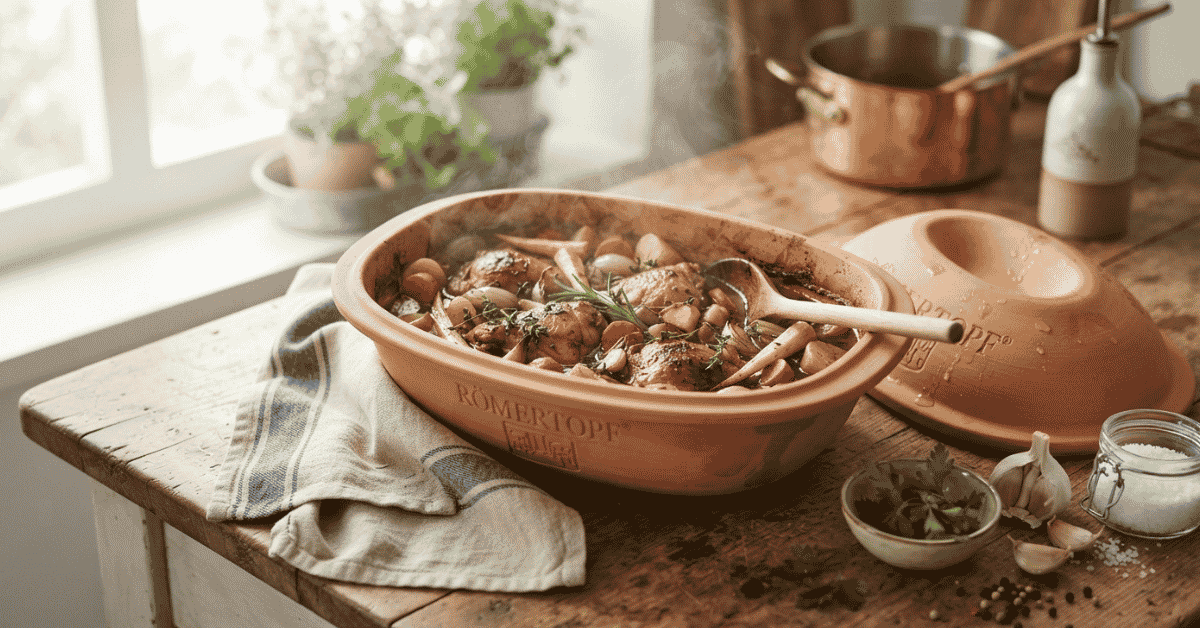
Romertopf Clay Pot Cooking Recipes made easy with roast chicken, beef, vegetables, fish, and simple tips for tender, flavorful meals every time.
I love the slow, cozy feel of cooking with a Römertopf clay pot. On a cool Sunday, I can load it with chicken, potatoes, garlic, and herbs, then let the oven do the work. The trapped steam keeps food moist and tender. Here are simple recipes and tips for getting started.
What Is a Römertopf Clay Pot?
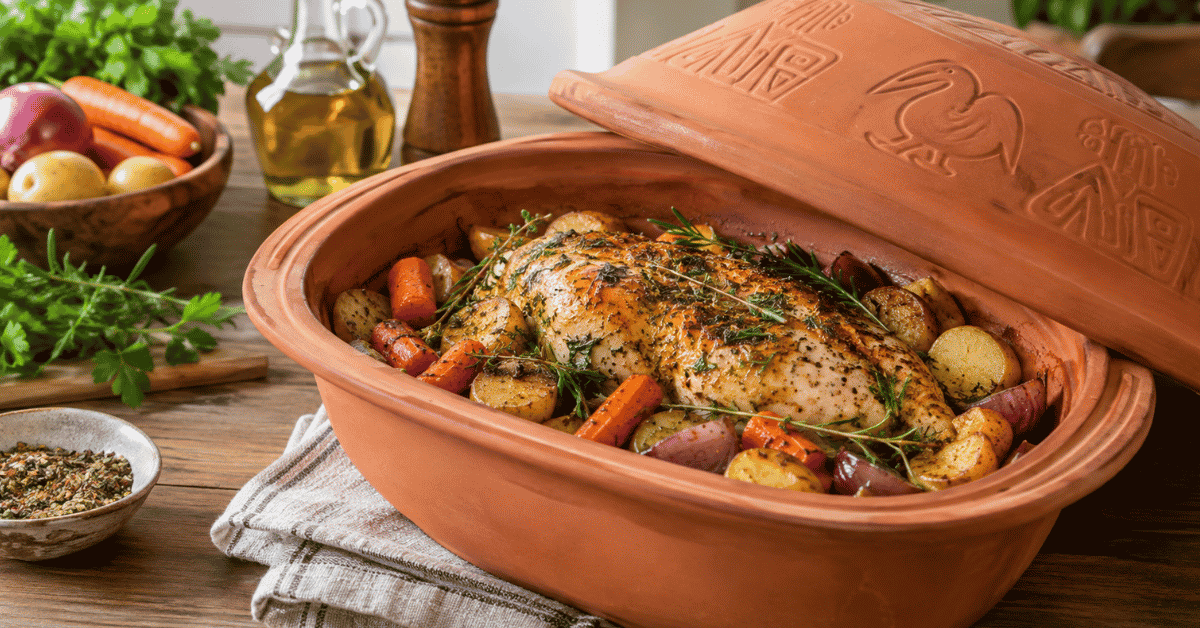
A Römertopf is a porous clay cooking pot that uses moisture to cook food low and slow. It has deep roots in German kitchens, where cooks have relied on it for generations to turn simple ingredients into tender, comforting meals.
The pot is made from unglazed terracotta clay. That rough, porous surface is not a flaw. It is the whole point. When you soak the clay in water before cooking, it soaks up moisture like a sponge. As the pot heats up in the oven, that trapped water slowly turns to steam, and the tight-fitting lid holds all of it inside.
People often compare a Römertopf to a Dutch oven, but they work in different ways. A Dutch oven is heavy cast iron that holds and radiates heat. A Römertopf is lightweight clay that holds water and releases gentle steam. That steam is what gives clay-pot cooking its signature moist texture, without needing much added fat or liquid.
This slow, steamy environment works beautifully for:
- Chicken
- Beef
- Pork
- Fish
- Root vegetables
- Rice-based meals
Why I Like Cooking With a Clay Pot
There is something calming about pulling a Römertopf out of the cabinet. The earthy smell that rises off the warm clay as it bakes feels like it belongs in a farmhouse kitchen. Food stays moist on its own, so I am not standing over the stove stirring or basting. It has become my go-to for a relaxed Sunday meal, since I can load the pot, slide it into the oven, and mostly just wait.
How to Cook in a Römertopf Clay Pot
The first time I used a clay pot, I treated it like a regular roasting pan. That was a mistake. A Römertopf has its own rhythm, and a few simple steps make all the difference.
Soak the Clay Pot First
Start by placing the bottom and lid in cool water. Most manufacturers recommend soaking for around ten to fifteen minutes, though you should always check the instructions for your specific model. This step matters because the clay is porous. It needs to absorb water so it can release steam evenly once it heats up. Once soaking is done, drain off any extra water before adding your ingredients. And never pour hot water onto a cold clay pot, since the sudden change in temperature can crack it.
Add the Ingredients
Place your meat in the center of the pot, then arrange vegetables around it so they can soak up the juices as everything cooks. Herbs, garlic, spices, or a small splash of liquid can go in at this point too. Try not to overfill the pot. Steam needs room to move around the food, so leave a bit of breathing space rather than packing it to the brim.
Put the Römertopf Into a Cold Oven
Unless your specific model says otherwise, start with a cold oven rather than a preheated one. This gradual heating is one of the most important habits for clay pot cooking, since a sudden jump in temperature is the main reason clay pots crack. Once the pot is in, set the oven to the temperature your recipe calls for and give the meal extra time compared with a normal roasting pan. Clay cooks gently, not quickly.
Finish and Serve
Check the internal temperature of your meat with a food thermometer to be sure it is fully cooked. When you remove the lid, lift it away from yourself carefully, since a rush of hot steam will escape right away. Let the meat rest for a few minutes before slicing so the juices settle back in. From there, you can serve straight from the pot for that cozy, rustic feel.
Best Römertopf Clay Pot Cooking Recipes
These are the meals a clay pot handles best. If you are new to this style of cooking, start with chicken or vegetables before working up to anything more involved.
Classic Römertopf Roast Chicken
Ingredients: whole chicken, potatoes, carrots, onion, garlic, olive oil, salt and black pepper, rosemary or thyme, lemon.
Method: Soak the pot, then season the chicken well. Add the vegetables around it, and place the chicken breast-side up in the center. Cover with the clay lid and start the whole thing in a cold oven. Cook until the chicken reaches a safe internal temperature, then let it rest before carving.
The result is crispy golden skin, soft carrots, and tender meat sitting in a pool of flavorful juices at the bottom of the pot.
Clay Pot Beef Roast
Ingredients: beef chuck or another suitable roasting cut, onion, carrots, potatoes, garlic, beef stock, thyme, black pepper.
Only brown the meat first if your pot’s manufacturer allows it and the model is designed for that kind of use. Keep the lid on for most of the cooking time and let everything cook low and slow. Check for tenderness with a fork before serving.
Römertopf Pork Roast
Ingredients: pork shoulder or loin, apples or onions, garlic, mustard, rosemary, root vegetables.
The trapped moisture in a clay pot helps keep pork from drying out, which matters since leaner cuts can turn tough quickly under regular heat. Watching the internal temperature closely helps you avoid overcooking. Once the roast is done, the pan juices left behind make a simple, flavorful sauce with almost no extra effort.
What Are Some Simple Recipes I Can Cook in a Clay Pot?
You do not need anything fancy to get good results. Some of the best clay pot meals are just meat, vegetables, herbs, and a little patience.
Simple Clay Pot Vegetables
Ingredients: potatoes, carrots, onion, bell peppers, zucchini, garlic, olive oil, herbs.
Cut the vegetables into similar sizes so they cook evenly, and place the denser ones like potatoes and carrots near the bottom. Season each layer lightly as you go, and avoid adding much liquid, since the vegetables will release moisture on their own.
Simple Clay Pot Fish
Ingredients: firm white fish, tomatoes, onion, garlic, lemon, parsley, olive oil.
Choose a fish that can hold up to gentle, moist heat. Fish cooks much faster than beef or chicken in a clay pot, so keep an eye on it near the end to avoid overcooking.
Clay Pot Rice and Vegetable Meal
Ingredients: rice, water or stock, carrots, peas, onion, garlic, herbs.
Getting the liquid-to-rice ratio right is the key to this one. Avoid overfilling the pot, since rice needs room to expand as it absorbs the liquid. Let it rest for a few minutes after cooking before you serve it, which helps the texture settle.
How to Get Tender Meat and Flavorful Vegetables
This is where a Römertopf really earns its place in the kitchen. Trapped moisture creates a soft, juicy result, and the vegetables cook right in those same flavorful juices.
Use the Right Cuts of Meat
Some of the best choices include chicken thighs, whole chicken, beef chuck, beef brisket, pork shoulder, and pork roast. These cuts hold up well to slow, moist cooking and become more tender the longer they sit in the steam.
Build Flavor Before Cooking
Salting the meat ahead of time when you can makes a noticeable difference. Fresh garlic, along with herbs like rosemary, thyme, sage, or parsley, adds depth. Onions work well as a flavor base under the meat, lemon brightens up chicken or fish, and using stock instead of water gives you richer pan juices at the end.
Do Not Keep Opening the Lid
Every time you lift the lid, heat and steam escape, and the pot has to work to build that environment back up. Check on your food only when you really need to, and use your oven light instead when you can. Trust the process, but still confirm the meat has reached a safe temperature before serving.
Common Römertopf Cooking Mistakes to Avoid
Clay pots are forgiving once you understand how they work, but they do have a few firm rules. I learned the hard way that clay and sudden temperature changes do not get along.
Heating the Pot Too Quickly
Never place a cold clay pot into a very hot oven. Follow your specific manufacturer’s temperature guidance, and avoid any sudden jump from hot to cold or cold to hot.
Using the Wrong Amount of Liquid
Clay pot cooking naturally creates steam, so too much added liquid can leave your vegetables soggy. Some recipes need barely any extra liquid at all. It is worth following the amount suggested for the specific food you are cooking rather than guessing.
Overloading the Pot
Crowding the pot affects how evenly everything cooks. Leave enough room for steam to move freely, and cut larger vegetables into smaller, more manageable pieces.
Ignoring the Cooking Instructions
Older and newer Römertopf models can have different care requirements. Always check the instructions for your exact model, and never assume a clay pot is safe to use on the stovetop unless it is specifically designed for that.
Römertopf Care, Cleaning, and Storage
A clay pot needs a bit more attention than a metal roasting pan, but treat it gently and it will last for years.
How to Clean a Römertopf
Let the pot cool naturally before you touch it with water. Clean it with warm water and a soft sponge, and avoid any sudden temperature swings during cleaning. Stick to your manufacturer’s cleaning instructions, and skip harsh detergents if the guidance recommends against them.
How to Prevent Odors and Mold
Dry both the base and the lid completely before putting them away. If needed, store the lid slightly separated from the base so air can circulate. Keep the pot in a dry, ventilated spot, and never store it while it is still damp.
Best Tips for First-Time Römertopf Users
A few small habits can make your first meal far less stressful. The goal is simple: let the clay do its job instead of fighting against it.
- Read the manual for your exact model
- Soak the pot when required
- Start in a cold oven when instructed
- Use a food thermometer for meat
- Never place a hot pot on a cold or wet surface
- Avoid sudden temperature changes
- Keep the lid on while cooking
- Let cooked meat rest before slicing
- Start with chicken or vegetables
- Keep your first recipe simple
A Good Sunday Dinner to Start With
A whole chicken with potatoes, carrots, onion, garlic, and rosemary, finished with a bit of lemon, makes a great first Römertopf meal. Add a simple green salad on the side, and you have a full, satisfying dinner without much fuss.
Frequently Asked Questions About Römertopf Cooking
How do you cook in a Römertopf clay pot?
Soak the pot, fill it with your ingredients, cover it with the lid, and place it in a cold oven. Let it heat up gradually, cook until the food reaches a safe temperature, then let it cool safely before handling.
What are some simple recipes I can cook in a clay pot?
Roast chicken, simple roasted vegetables, beef roast, pork roast, fish, and rice dishes are all easy places to start.
Do you have to soak a Römertopf before cooking?
Traditional unglazed Römertopf pots are almost always soaked before use, but it is best to follow the instructions that came with your exact model.
Can you put a Römertopf in a hot oven?
It is best avoided. Traditional clay cookware needs gradual heating, and a sudden temperature change can cause the pot to crack.
Can you cook meat and vegetables together in a Römertopf?
Yes. Vegetables can sit around or beneath the meat, where they soak up the cooking juices and pick up extra flavor.
Can you cook chicken in a Römertopf?
Yes. A whole chicken or chicken pieces are one of the easiest and most popular things to cook in this kind of pot.
Can you use a Römertopf on the stovetop?
Do not assume it is safe. Traditional Römertopf cookware is generally made for oven use, so check your exact model’s instructions before trying it on the stovetop.