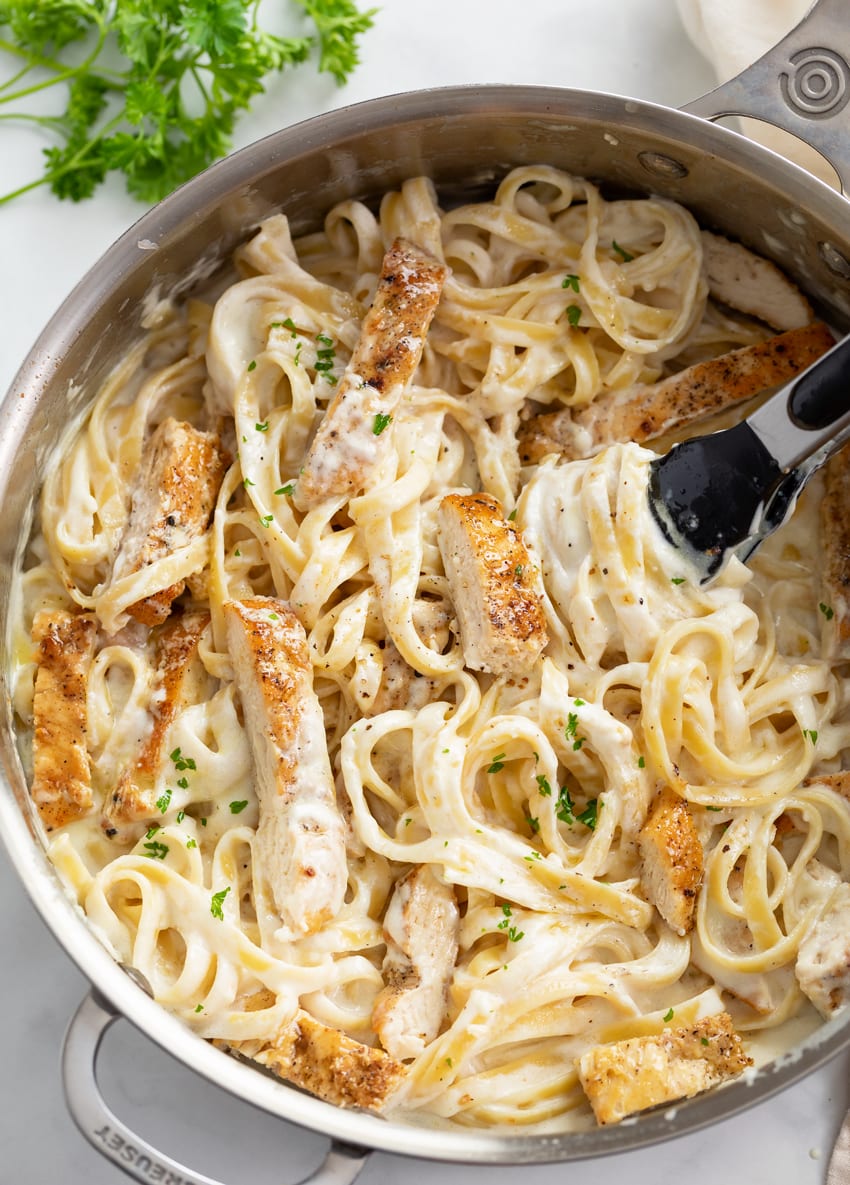
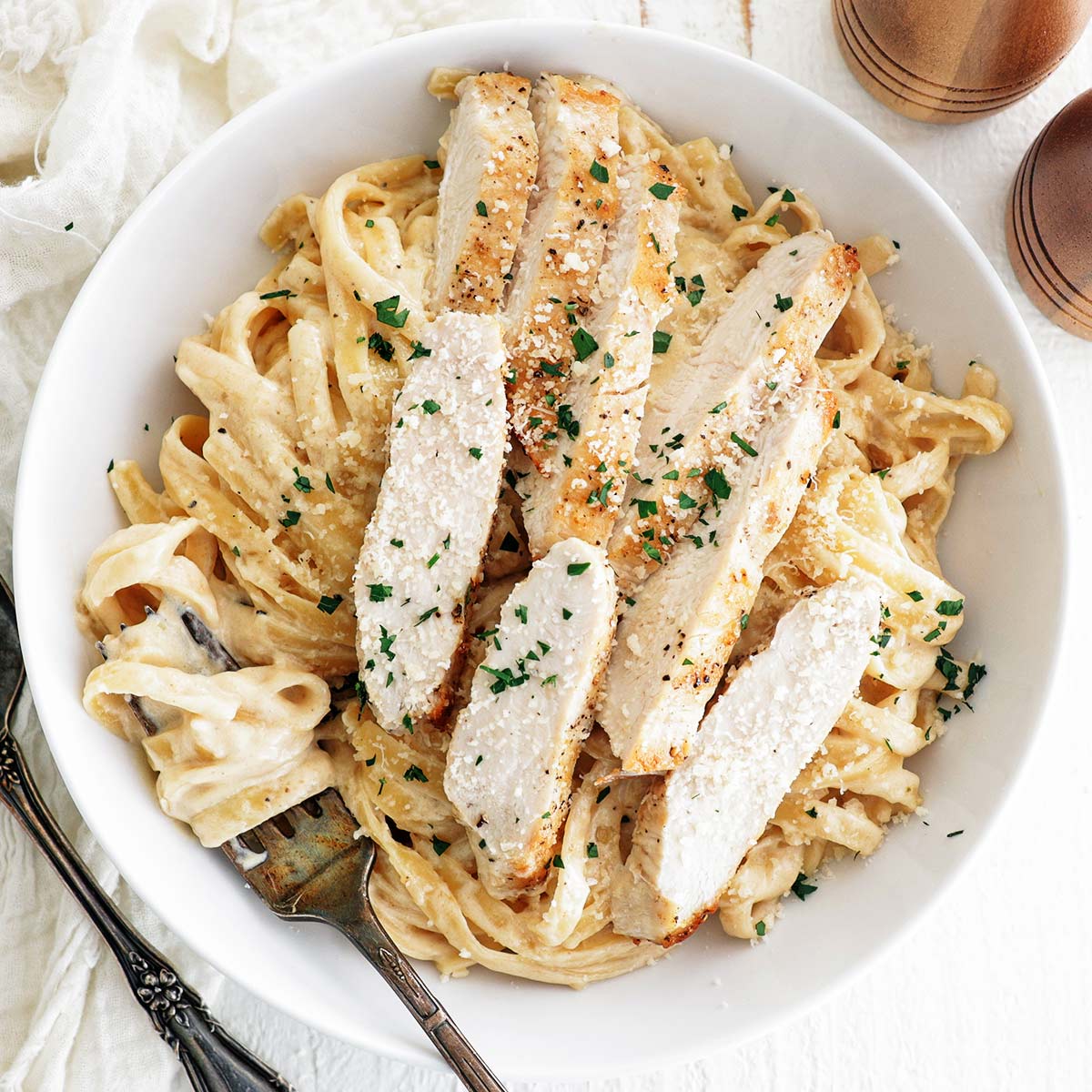
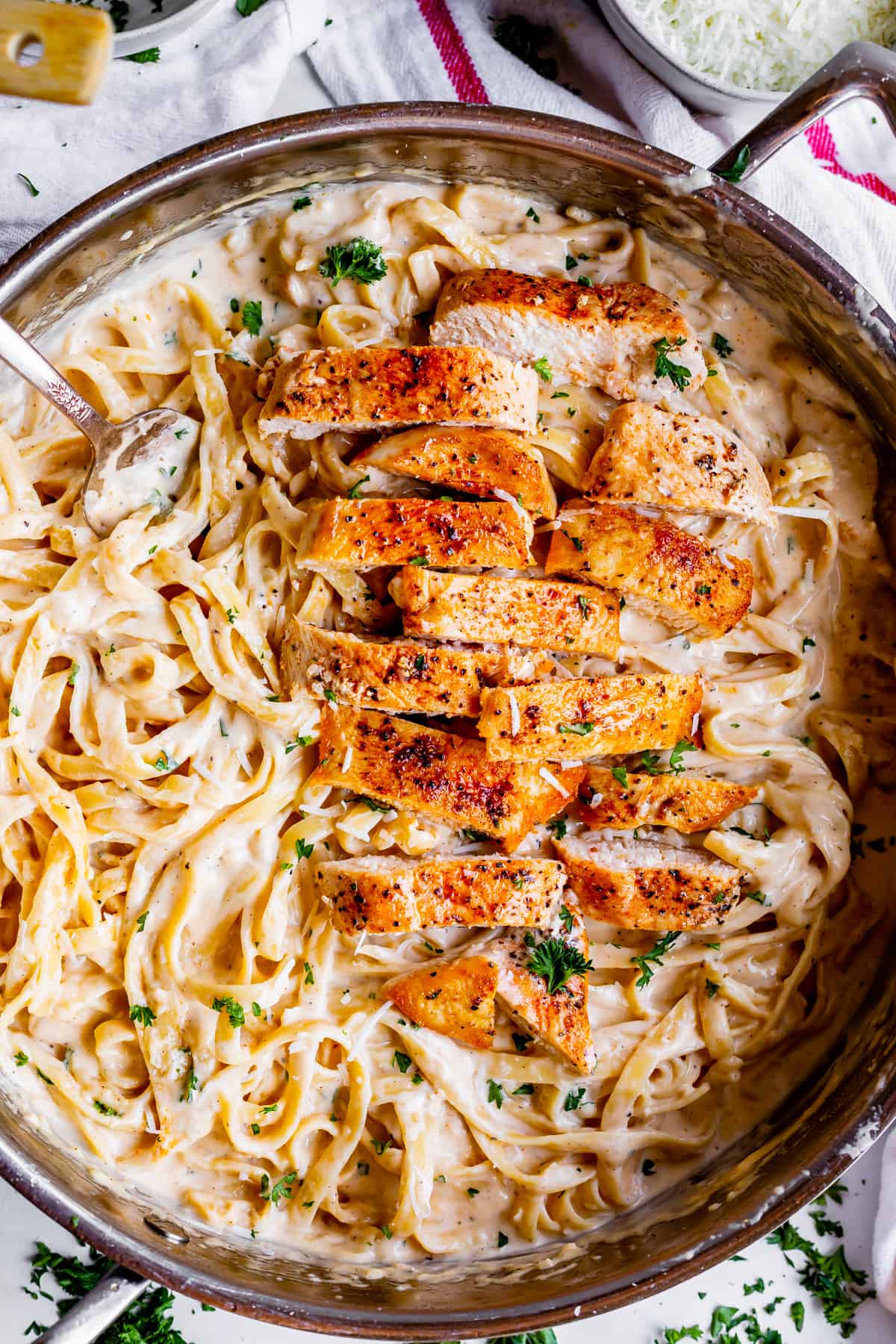
To make chicken alfredo with premade sauce, cook pasta, season and cook chicken, warm the jarred Alfredo sauce, and mix everything together. Add a splash of pasta water or milk if the sauce is too thick, then serve with Parmesan cheese and parsley.
Chicken Alfredo is a popular comfort meal in American homes. It fits a busy weeknight when you want a warm, filling dinner without making sauce from scratch. A jar of Alfredo sauce cuts down on prep time, while fresh chicken and hot pasta help the dish taste like a meal made with care.
The best way to make chicken Alfredo with premade sauce is to cook each part with care and bring it all together at the end. Season the chicken well, keep the sauce at a gentle heat, and save some pasta water before draining the noodles. These small steps help the sauce coat the pasta without turning greasy or too thick.
Source: 1.bp.blogspot.com
Ingredients for Chicken Alfredo With Premade Sauce
You only need a few basic ingredients to make a creamy chicken Alfredo dinner. Most are easy to find at a US grocery store, and you can change the pasta, seasonings, or vegetables to suit your taste. The amounts below make about four servings, depending on portion size.
Choose a jarred Alfredo sauce you enjoy on its own. Some sauces taste rich and cheesy, while others have a stronger garlic flavor. Since the sauce is already seasoned, taste it before adding extra salt or cheese.
Source: jessicagavin.com
Chicken
Use 1 pound of boneless, skinless chicken breast or thighs. Breast meat is lean and mild, while thighs tend to stay juicy and have a richer flavor.
Pasta
Use 12 ounces of fettuccine for the classic shape. Penne, linguine, rotini, or spaghetti also work if that is what you have.
Premade Alfredo sauce
Use one 15-ounce jar for a fairly coated pasta dish. Keep an extra half jar available if you prefer more sauce or use a larger amount of pasta.
Use 1 tablespoon of olive oil or another cooking oil to help brown the chicken in the skillet.
Seasonings
Use 1 teaspoon garlic powder, 1/2 teaspoon onion powder, 1/2 teaspoon Italian seasoning, and black pepper to taste. Adjust the amounts to suit your sauce.
Optional finishing ingredients
Keep 1/4 cup grated Parmesan, chopped parsley, and a little pasta water nearby. You may also use a splash of milk or cream if the sauce needs thinning.
What Type of Alfredo Sauce Works Best?
A creamy jarred Alfredo sauce is the easiest choice for this recipe. Refrigerated sauce can also work, but follow its package directions because storage and heating instructions may differ. A shelf-stable jar is handy when you want to keep a quick dinner option in the pantry.
Classic Alfredo sauce pairs well with garlic, black pepper, and Parmesan. A roasted garlic version may need little extra seasoning, while a mild sauce can benefit from herbs and freshly grated cheese. Avoid adding every seasoning at once. Taste first, then adjust.
For a richer taste
Stir in a small amount of grated Parmesan near the end of cooking.
For a lighter texture
Use a little reserved pasta water to loosen the sauce instead of adding more cream.
For extra garlic flavor
Cook one minced garlic clove briefly in the pan before adding the sauce. Do not let it turn brown.
Fresh or Frozen Chicken?
Fresh chicken is easy to slice and season before cooking. Frozen chicken can also be used, but thaw it safely in the refrigerator before cutting and cooking it. Do not leave raw chicken on the counter to thaw.
If you use cooked rotisserie chicken, remove the skin and bones, then cut the meat into bite-size pieces. Add it to the warm sauce near the end, just long enough to heat it through. This shortcut reduces cooking time, though it will not give the dish the same browned chicken flavor as freshly seared meat.
How to Make Chicken Alfredo With Premade Sauce Step by Step
The easiest method is to cook the pasta and chicken while you warm the sauce. Use a large pot for the noodles and a skillet for the chicken. Keep the sauce on low heat while you prepare the final dish, and avoid boiling it hard.
Source: billyparisi.com
Prep time
Allow about 10 minutes to cut the chicken, measure seasonings, and set out the ingredients.
Cook time
Plan for about 20 to 25 minutes, depending on the pasta and the thickness of the chicken pieces.
Total time
The meal usually takes about 30 to 35 minutes from prep to serving.
Equipment
Use a large pot, colander, cutting board, sharp knife, skillet, cooking spoon, and food thermometer.
Step 1: Boil the Pasta
Fill a large pot with water and bring it to a boil. Add salt if desired, then cook 12 ounces of fettuccine according to the package directions. Stir the noodles during the first minute so they do not stick together.
Start checking the pasta near the lower end of the package cooking time. Aim for al dente pasta, which feels tender but still has a slight bite in the center. The noodles will soften a little more when you toss them with the hot sauce.
Before draining the pasta, scoop out about 1 cup of cooking water and set it aside. Drain the noodles without rinsing them. The water contains starch that can help the sauce cling to the pasta.
Avoid overcooking
Soft, mushy noodles can break apart when mixed with thick sauce.
Save the pasta water
Add it a tablespoon or two at a time later if the sauce needs a thinner texture.
Step 2: Cut and Season the Chicken
Pat the chicken dry with paper towels. Cut it into strips or bite-size pieces of similar thickness so they cook at a similar rate. Season with garlic powder, onion powder, Italian seasoning, and black pepper.
Keep raw chicken and its juices away from cooked pasta, sauce, and clean utensils. Wash your hands, knife, and cutting board after handling raw poultry. This simple step helps prevent harmful germs from spreading to ready-to-eat food.
Choose even pieces
Uniform strips cook more evenly than a mix of thick chunks and thin slices.
Go easy on salt
The jarred sauce and Parmesan may add enough salt to the finished dish.
Step 3: Cook the Chicken Until Browned
Heat 1 tablespoon of oil in a large skillet over medium to medium-high heat. Add the chicken in a single layer. If the pan is crowded, cook in two batches so the meat can brown instead of steam.
Cook the pieces for several minutes, turning them as needed. The exact time depends on their size and thickness, so do not rely on the clock alone. Check the thickest piece with a food thermometer and make sure it reaches 165°F.
Once the chicken is cooked, transfer it to a clean plate. If there are browned bits on the bottom of the skillet, leave them in place unless they are burnt. They can add flavor when you warm the sauce.
If the chicken sticks
Give it more time to brown before turning it. Meat often releases more easily once a crust forms.
If the chicken browns too fast
Lower the heat and check that the center reaches 165°F before serving.
Step 4: Warm the Premade Alfredo Sauce
Lower the skillet heat to low. If the pan has very dark or burnt bits, wipe it out before adding the sauce. Pour in the jarred Alfredo sauce and stir slowly as it warms.
Let the sauce heat gently for a few minutes, stirring often. Avoid a hard boil because high heat can make some creamy sauces separate or turn oily. If the sauce looks too thick, add a small splash of milk or reserved pasta water and stir until smooth.
Taste the sauce before adding Parmesan or more seasoning. Jarred Alfredo products vary in salt, garlic, and cheese flavor. A small amount of black pepper may be all you need.
Keep the heat low
Gentle heat helps warm the sauce without scorching the bottom of the pan.
Add liquid slowly
Start with 1 tablespoon of pasta water or milk, then add more only if needed.
Step 5: Add the Chicken and Pasta
Return the cooked chicken to the skillet and stir it into the warm sauce. Add the drained pasta and toss with tongs until the noodles are coated. If the mixture looks dry, stir in a little reserved pasta water.
Let everything heat together briefly over low heat. Stir gently so the noodles do not break and the chicken stays coated. The sauce should cling to the pasta without pooling like soup at the bottom of the skillet.
If you want a richer finish, turn off the heat and stir in a small handful of grated Parmesan. Add chopped parsley or black pepper just before serving.
For a creamy finish
Add pasta water in small amounts instead of pouring in a large splash all at once.
For more sauce
Warm a little extra Alfredo sauce separately and mix it in as needed.
Step 6: Taste and Serve
Taste one noodle and one piece of chicken before serving. Add pepper, Parmesan, or a pinch of Italian seasoning if the flavor needs a lift. If the sauce has become too thick while resting, loosen it with a small splash of warm water or milk.
Divide the chicken Alfredo among warm plates or shallow bowls. Top with parsley and Parmesan if desired. Serve it right away while the sauce is creamy and the pasta is hot.
Simple side dish
Serve with steamed broccoli, green beans, or a crisp green salad.
For a fuller meal
Add cooked mushrooms or peas to the sauce before tossing in the pasta.
How Much Alfredo Sauce Should You Use?
The right amount depends on how much pasta you cook and how creamy you like the meal. A 15-ounce jar can coat a moderate amount of pasta, but it may feel skimpy if you use a full pound of noodles. For a saucier dish, use more sauce or cook less pasta.
Use the table below as a starting point. Jar sizes and sauce thickness vary by brand, so the amounts are practical estimates rather than fixed rules.
Source: easychickenrecipes.com
Pasta, Chicken, and Sauce Guide
Choose the portion that matches the number of people you are feeding. The amounts below assume boneless chicken and dry pasta. Adjust the sauce to your taste before serving.
Two servings
Use about 6 ounces of dry pasta, 1/2 pound of chicken, and 8 to 10 ounces of Alfredo sauce.
Four servings
Use about 12 ounces of dry pasta, 1 pound of chicken, and 15 to 22 ounces of Alfredo sauce.
Six servings
Use about 18 ounces of dry pasta, 1 1/2 pounds of chicken, and 24 to 30 ounces of Alfredo sauce.
Should You Add Milk, Cream, or Pasta Water?
Pasta water is often the best first choice when a sauce is too thick. Its starch can help the sauce spread across the noodles. Add a little at a time while tossing the pasta.
Milk can make a thick sauce easier to stir and may soften a strong cheese flavor. Heavy cream adds richness, but it can make an already rich jarred sauce feel heavy. Neither is required, so start with the liquid you have and adjust slowly.
Use pasta water
Choose it when you want a smooth coating without adding more dairy fat.
Use milk
Choose it when the sauce is very thick and you want a mild, creamy texture.
Use cream
Add only a small splash when you want a richer sauce and the current texture needs loosening.
Easy Ways to Make Jarred Alfredo Sauce Taste Better
A jar of Alfredo sauce can taste better with a few simple additions. You do not need to rebuild the sauce from scratch. Focus on one or two flavors that match the brand you bought, then taste before adding anything else.
The best add-ins improve flavor without making the sauce too salty or heavy. Add delicate ingredients near the end and cook raw ingredients fully before they go into the finished dish.
Source: thefoodcharlatan.com
Fresh garlic
Cook one minced garlic clove in a little oil over low heat for about 30 seconds, just until fragrant. Stir in the sauce before the garlic browns.
Parmesan cheese
Add a small handful of finely grated Parmesan off the heat. Stir until it melts, and remember that it adds salt.
Black pepper
Freshly ground black pepper adds a mild bite that balances the rich sauce.
Italian seasoning
A small pinch of dried basil, oregano, or an Italian herb blend can add a familiar pasta flavor.
Mushrooms
Slice and sauté mushrooms until tender and their released liquid has mostly cooked away. Add them before mixing in the pasta.
Spinach
Stir in a handful of fresh spinach near the end. Let it wilt in the warm sauce before serving.
Broccoli or peas
Use cooked broccoli florets or peas for color and texture. Cook them separately or add them at a point when they can become tender.
How to Keep the Sauce Creamy
Creamy sauce needs gentle heat. Once the jarred sauce is warm, keep the burner low and stir often. A rolling boil can cause some sauces to separate, especially when cheese and fat do not stay evenly mixed.
Add grated cheese in small amounts rather than dumping in a large pile. If the sauce starts to look oily, remove the pan from the heat and stir in a spoonful of warm pasta water. This may help the sauce come back together, though a badly separated sauce may not return to its original texture.
Do not rush the heat
A low burner gives you more control and helps prevent scorching.
Do not add cold liquid in large amounts
Small splashes are easier to mix into the warm sauce.
Common Mistakes and How to Fix Them
Most problems with chicken Alfredo come from heat, liquid, or timing. The pasta may be ready before the chicken, or the sauce may thicken while it sits. Fixing the issue early is easier than trying to rescue the whole pan at the end.
Source: cookingclassy.com
The Sauce Is Too Thick
A thick sauce may simply need a little liquid. Add warm pasta water one tablespoon at a time and stir until the sauce coats the noodles. Milk can also work if you prefer a softer, creamier taste.
Do not pour in a full cup at once. Too much liquid can leave the pasta watery, and it takes longer to correct a sauce that has become too thin.
The Sauce Is Too Thin
If the sauce looks watery, let it warm gently for a short time while stirring. Make sure the pasta has drained well and that you have not added too much milk or pasta water. A little Parmesan may add body, but it can also make the dish saltier.
Avoid boiling the sauce hard to force it to thicken. High heat can cause separation before the sauce reaches the texture you want.
The Sauce Looks Oily or Grainy
An oily surface may mean the sauce has separated. Remove the pan from the heat, then stir gently. Add a small spoonful of warm pasta water and see whether the sauce becomes smoother.
Graininess may come from cheese that did not melt well or from overheating. Use finely grated cheese and add it near the end. Some packaged sauces may remain slightly grainy because of their ingredients, so a perfectly smooth texture is not guaranteed.
The Chicken Is Dry
Chicken can turn dry when it cooks too long or is cut into very small pieces. Cut it into even pieces and check the thickest part with a food thermometer. Remove each batch from the heat once it reaches 165°F.
If the chicken is already cooked and a little dry, toss it with the warm sauce just before serving. The sauce can add moisture to each bite, but it cannot fully reverse overcooked meat.
The Dish Tastes Bland
Taste the finished sauce before adding salt. A little black pepper, garlic, or Parmesan may bring out the flavor. If the dish still tastes flat, check whether the chicken was seasoned before cooking and whether the pasta water was salted.
Add seasonings in small amounts and taste again. Extra salt is hard to undo, especially when the jarred sauce already contains cheese and sodium.
The Pasta Absorbed All the Sauce
Pasta keeps absorbing liquid as it rests. If the dish looks dry after mixing, add a little warm pasta water or warm extra Alfredo sauce. Toss gently until the noodles look coated again.
For the best texture, combine the pasta and sauce shortly before serving. If dinner is delayed, keep the components warm separately when practical and mix them just before eating.
Variations for an Easy Chicken Alfredo Dinner
You can change this basic recipe without changing the main cooking method. Keep the chicken cooked to a safe temperature and add vegetables that fit the sauce. Choose one or two changes at a time so the dish does not become crowded or overly rich.
Source: mylifestyleinspo.com
Chicken Alfredo With Broccoli
Broccoli adds color, texture, and a mild earthy taste. Steam or boil small florets until tender, then drain them well. Stir the broccoli into the warm sauce with the chicken before adding the pasta.
Frozen broccoli can work too. Cook it according to the package directions and drain off extra water so it does not thin the sauce.
Chicken Alfredo With Spinach
Fresh spinach wilts quickly, which makes it an easy addition near the end of cooking. Stir a handful into the warm sauce and let the leaves soften before adding the pasta. Use less spinach at first if you want the creamy sauce to remain the main flavor.
Frozen spinach should be thawed and squeezed to remove excess water. Add it in small amounts and mix well.
Chicken Alfredo With Penne
Penne works well when you do not have fettuccine. Its hollow shape holds sauce, and the short noodles are easy to serve. Cook it according to the package directions, then drain and toss it with the chicken and sauce.
Rotini and rigatoni are also useful choices. The shape changes the feel of the dish, but the same gentle sauce-heating method still applies.
Chicken Alfredo With Rotisserie Chicken
Rotisserie chicken is a useful shortcut when you need dinner fast. Remove the meat from the bones and cut it into bite-size pieces. Warm it in the sauce rather than frying it again, which can dry it out.
Since rotisserie chicken may already be salty or seasoned, taste the dish before adding more salt. This version is especially handy when leftover chicken is already in the refrigerator.
Spicy Chicken Alfredo
For a mild kick, add a pinch of red pepper flakes to the sauce. You can also season the chicken with a small amount of paprika before cooking. Start with a little, then taste before adding more.
Keep the heat gentle after adding the sauce. Spice can add warmth without needing a high simmer.
Food Safety, Storage, and Reheating
Chicken Alfredo contains cooked poultry and a creamy sauce, so handle it with the same care as other perishable leftovers. Serve it hot, keep track of time at room temperature, and chill any extra portions promptly. The sauce may thicken in the refrigerator, but that is a texture issue rather than a sign that the food is unsafe.
Source: i.pinimg.com
Cook chicken safely
Use a food thermometer to confirm that every piece reaches an internal temperature of 165°F. Check the thickest pieces rather than relying only on color.
Refrigerate leftovers promptly
Place leftovers in shallow containers and refrigerate within two hours of cooking, or within one hour when the surrounding temperature is above 90°F.
Use leftovers within three to four days
Keep cooked chicken Alfredo refrigerated at 40°F or below and use it within three to four days.
Reheat to 165°F
Reheat leftovers until the center reaches 165°F. Stir the food as it heats so the temperature is more even.
How to Reheat Chicken Alfredo on the Stove
Put the leftovers in a skillet over low heat. Add a small splash of milk or water and stir gently as the sauce warms. Continue heating until the food reaches 165°F, checking with a thermometer.
The sauce may look thicker after chilling because the pasta has absorbed moisture. Add liquid a little at a time rather than pouring in a large amount. Avoid a hard boil, which can make the sauce oily or uneven.
How to Reheat Chicken Alfredo in the Microwave
Place a portion in a microwave-safe dish and add a small splash of milk or water. Cover loosely to reduce splatter, then heat in short intervals. Stir between intervals so the chicken and pasta warm evenly.
Check that the center reaches 165°F before eating. Microwave ovens vary, so the time needed depends on the portion size and the power of the appliance.
Can You Freeze Chicken Alfredo?
You can freeze chicken Alfredo, but the creamy sauce may change texture after thawing. Some sauces separate or become grainy, and the pasta may soften. For better results, freeze the cooked chicken separately from the sauce and pasta when you know you will need to store portions for later.
If freezing a complete dish, cool it promptly, pack it in a freezer-safe container, and label the date. Thaw it in the refrigerator and reheat it thoroughly. Stir gently and add a little milk or water if needed, but expect that the texture may not match a freshly made meal.
What to Serve With Chicken Alfredo
Chicken Alfredo is rich and filling, so a fresh or lightly cooked side can balance the plate. Choose a side that adds color and crunch without taking much more time than the main dish. A simple salad or steamed vegetable is often enough.
Source: i.pinimg.com
Green salad
Serve mixed greens with cucumber, tomato, and a light vinaigrette. The fresh, tangy taste contrasts with the creamy pasta.
Steamed broccoli
Broccoli adds a tender bite and pairs well with garlic and Parmesan.
Serve a small amount of garlic bread for a classic pasta-night side. It is useful for soaking up any extra sauce.
Roasted vegetables
Roast zucchini, carrots, or bell peppers until tender. Their browned edges add flavor and texture.
Make It a Balanced Meal
A plate of pasta and chicken provides protein and carbohydrates, while vegetables add fiber and a range of nutrients. You do not need a large side dish to round out dinner. A serving of broccoli or a small salad can be enough.
For a lighter meal, use a moderate portion of pasta, add vegetables, and avoid adding lots of extra cream or cheese. The right serving size depends on your appetite and dietary needs.
Frequently Asked Questions
Q
Can I make chicken Alfredo with jar sauce without heavy cream?
Yes. You do not need heavy cream when you use premade Alfredo sauce. The jar already provides the creamy base. If the sauce is too thick, add a small splash of reserved pasta water or milk and stir over low heat.
Q
Do I need to cook the Alfredo sauce before adding it to pasta?
Warm the sauce before mixing it with the pasta and chicken. Follow the package directions for the sauce you bought. Gentle heating helps the sauce coat the noodles and brings the meal to a serving temperature without exposing it to a hard boil.
Q
Can I cook the chicken in the same pan as the Alfredo sauce?
Yes. Cook the chicken fully first, then move it to a clean plate while you warm the sauce in the same skillet. Once the sauce is warm, return the chicken to the pan. This method uses the browned bits left by the chicken to add flavor, but the chicken must reach 165°F before serving.
Q
Can I use milk to thin jarred Alfredo sauce?
Yes. Add a tablespoon of milk at a time and stir over low heat until the sauce reaches the texture you want. Reserved pasta water is another good option because its starch can help the sauce cling to the noodles. Avoid adding too much liquid at once.
Q
How do I keep chicken Alfredo from drying out?
Do not overcook the chicken, and avoid leaving the finished pasta on high heat. Cook chicken to 165°F, then mix it with the warm sauce and pasta shortly before serving. If the dish thickens as it rests, add a small splash of warm water, milk, or extra sauce.
✦ Wrapping Up
Conclusion
Making chicken Alfredo with premade sauce is simple when you cook the pasta and chicken well, warm the sauce gently, and combine everything at the right time. A jar of Alfredo sauce saves work, while garlic, black pepper, Parmesan, and a few vegetables can help you tailor the meal to your taste.
Keep the sauce on low heat, save some pasta water, and check the chicken with a food thermometer. These small steps help you avoid dry meat, thick sauce, and noodles that soak up too much liquid. Serve the dish fresh with a simple green side for an easy family dinner.
💡 Key Takeaway
Start with 12 ounces of fettuccine, 1 pound of chicken, and one 15-ounce jar of Alfredo sauce. Cook the chicken to 165°F, warm the sauce over low heat, and add reserved pasta water a little at a time until the noodles are creamy and well coated.