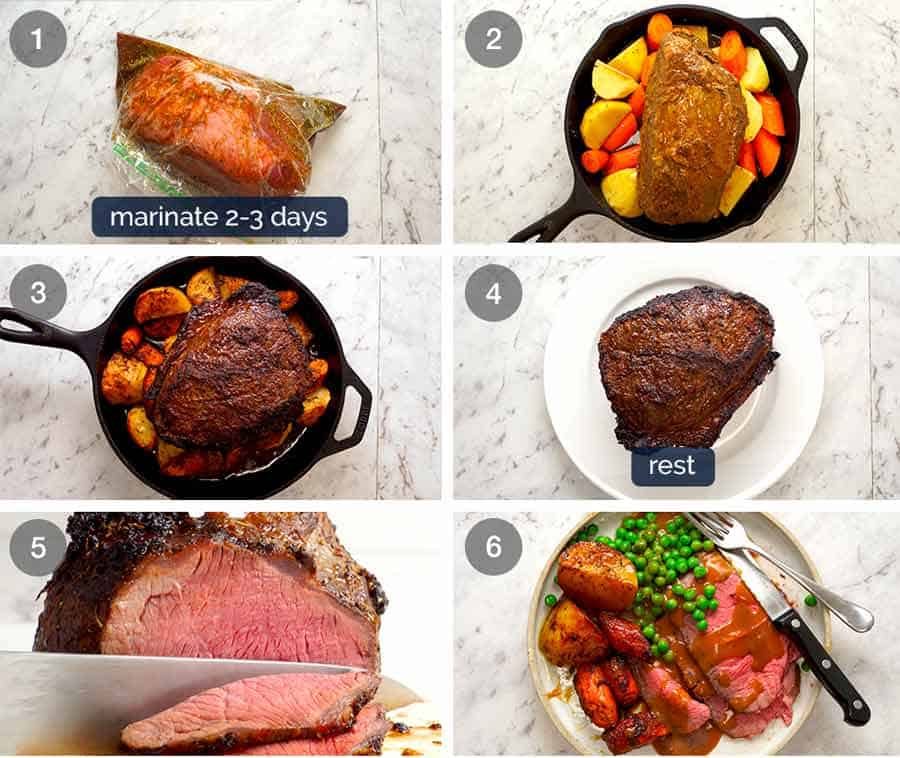
To marinate roast beef, mix olive oil, soy sauce, worcestershire sauce, garlic, black pepper, and herbs. Coat the beef, cover it, and refrigerate for 4 to 12 hours. Turn the meat once or twice, then roast it using a method suited to the cut. Always marinate beef in the refrigerator, not on the counter.
A roast beef dinner is a familiar favorite in many American homes. It can be the main dish for a Sunday meal, a holiday gathering, or a simple dinner with roasted potatoes and green beans. A good marinade adds flavor before the meat goes into the oven, so each slice tastes savory and well seasoned.
The best marinade does not need a long list of ingredients. Oil helps carry seasonings over the surface, while garlic, herbs, pepper, and savory sauces add depth. A small amount of acid can brighten the flavor, but too much acid or an overly long soak may affect the outer texture of the meat.
The cut of beef matters, too. A lean eye of round, a top round roast, and a rib roast have different amounts of fat and connective tissue. Marinating can season the outside of these cuts, but it cannot turn every tough roast into a tender one. The right cooking method, careful temperature control, and a short rest after roasting all matter.
A balanced marinade combines savory flavor, a little fat, herbs, and a measured amount of acid. You can use this basic recipe for many boneless beef roasts, including top round, bottom round, eye of round, and sirloin tip. Adjust the herbs and seasoning to suit the meal you plan to serve.
This recipe makes enough marinade for one roast weighing about 3 to 4 pounds. It seasons the outside of the meat and creates a flavorful base for pan juices or gravy. The exact amount of flavor that reaches the center depends on the shape of the roast, the ingredients, and the length of the marinating time.
Source: lordbyronskitchen.com
Olive oil
Use 1/4 cup of olive oil. It helps spread the herbs and spices over the meat and supports browning once excess moisture has been removed.
Soy sauce
Add 1/4 cup of regular or reduced-sodium soy sauce for savory flavor. Since soy sauce contains salt, taste any separate sauce before adding more salt.
Worcestershire sauce
Add 2 tablespoons for a tangy, savory note that pairs well with beef.
Garlic
Use 4 minced garlic cloves. Garlic powder can work in a pinch, but fresh garlic gives the marinade a stronger, more distinct aroma.
Acid
Add 1 tablespoon of red wine vinegar or lemon juice. This gives the marinade some brightness without making acid the main flavor.
Herbs and spices
Mix in 1 teaspoon of dried rosemary, 1 teaspoon of dried thyme, 1 teaspoon of black pepper, and 1 teaspoon of Dijon mustard if desired.
How to Mix the Marinade
Whisk the olive oil, soy sauce, Worcestershire sauce, vinegar, garlic, herbs, pepper, and mustard in a medium bowl. Keep mixing until the garlic and herbs are spread through the liquid. The oil may separate from the other ingredients while the mixture sits, so stir it again just before adding the beef.
Taste a tiny amount of the marinade before it touches raw meat. It should taste savory and slightly sharp rather than harsh or overwhelmingly salty. Do not add much extra salt at this stage because the soy sauce already contributes sodium.
For a sweeter flavor
Add 1 teaspoon of honey or brown sugar. Sugar can help the surface brown, but it may burn over high heat.
For a peppery flavor
Add extra freshly ground black pepper and a little crushed coriander seed.
For a wine-based flavor
Replace the vinegar with 2 tablespoons of dry red wine. Keep the total liquid modest so the seasoning stays balanced.
How Do You Marinate Roast Beef Step by Step?
The basic process is simple: prepare the beef, mix the marinade, coat the roast, refrigerate it, and remove excess liquid before cooking. A little care at each stage helps the meat absorb flavor while keeping raw beef and its juices away from ready-to-eat foods.
Start with a fresh or properly thawed roast. If the beef is frozen, thaw it in the refrigerator before marinating. Do not leave frozen or thawing beef on the counter to speed up the process.
Source: happymuncher.com
Step 1: Trim the roast if needed
Remove loose pieces of fat or silver skin that you do not want to serve. Leave a useful layer of fat in place when the cut has one, because it can add flavor during roasting.
Step 2: Dry the surface
Blot the beef with clean paper towels. A dry surface helps the marinade cling more evenly and makes it easier to brown the roast later.
Step 3: Mix the ingredients
Whisk the oil, sauces, garlic, herbs, pepper, and acid in a bowl. Stir again if the ingredients separate.
Step 4: Coat the beef
Place the roast in a food-safe container or a sturdy, leakproof bag. Pour the marinade over it and turn the meat until the surface is coated.
Step 5: Cover and refrigerate
Seal the bag or cover the dish. Place it in the refrigerator at 40°F or below, ideally on a rimmed tray on a low shelf to contain leaks.
Step 6: Turn the roast
Turn the meat once or twice during the marinating period if convenient. If you use a bag, gently move the liquid around the roast without opening the bag unnecessarily.
Step 7: Prepare it for roasting
Remove the beef from the marinade. Let excess liquid drip off, then pat the surface dry with clean paper towels. Discard the used marinade unless you plan to boil it thoroughly for a separate sauce.
Step 8: Cook and rest
Roast the beef using a method suited to the cut. Check the internal temperature with a food thermometer, then allow the meat to rest before slicing.
How Can You Tell Whether the Beef Is Ready to Cook?
The roast should be evenly coated, with no need for a thick pool of marinade around it. A pleasant garlic and herb smell is normal. A sour or rotten smell, an unusual slimy surface, or other signs of spoilage mean you should not try to fix the meat with more seasoning or cooking.
Marinating does not make spoiled beef safe. Use fresh beef, follow the package date and storage directions, and discard meat that shows signs of spoilage.
Before cooking
Check that the beef has stayed cold and that its container has not leaked onto other food.
Before browning
Dry the surface well. Wet meat tends to steam before it browns, and sugary marinade can darken too quickly.
How Long Should You Marinate Roast Beef?
For many boneless roasts, 4 to 12 hours is a practical starting range. A few hours gives the surface time to take on flavor, while a longer soak can produce a more pronounced seasoned taste. The ideal duration depends on the roast’s size, thickness, ingredients, and the result you want.
Marinade does not travel quickly through a thick roast. Most of the flavor stays near the surface, so a 4-pound roast will not taste as if every part has been soaked in sauce. Salt can move into meat over time, but an ordinary oil-based marinade should not be expected to season the center evenly.
Source: i.pinimg.com
About 1 to 3 hours
Useful when time is short and you mainly want surface flavor. Keep the beef refrigerated throughout.
About 4 to 12 hours
A sensible range for many standard garlic and herb marinades used with boneless beef roasts.
About 12 to 24 hours
May suit some roasts and recipes, especially when the marinade is not overly acidic. Follow any tested recipe guidance and watch the texture.
More than 24 hours
Usually unnecessary for a typical roast beef marinade. A strong acidic mixture or a high-salt mixture may leave the surface soft, firm, or overly seasoned.
Does a Bigger Roast Need More Marinating Time?
A thicker roast has more meat between the surface and the center, but simply doubling the weight does not mean you should double the marinating time. Shape matters. A long, narrow roast has more surface area relative to its volume than a compact, thick one.
For a large roast, use a well-balanced marinade and turn the meat when practical. If deep seasoning is your main goal, a measured dry brine or a recipe designed for the particular cut may work better than extending a strong acidic soak.
Thin or narrow cuts
Flavor may reach more of the meat because there is less distance from the surface to the center.
Thick, compact cuts
Expect the strongest marinade flavor near the outside. Do not rely on a long soak to make the whole roast taste evenly seasoned.
Which Marinade Ingredients Work Best for Roast Beef?
Each ingredient has a different job. Oil helps distribute herbs and spices, salt adds savory flavor, and acid brings a sharp note. Aromatics such as garlic, onion, rosemary, and thyme create the familiar flavor many people expect from an oven-roasted beef dinner.
The right balance matters more than using every ingredient in the pantry. A marinade with too much vinegar can taste sharp and affect the outside texture, while excess salt can overwhelm the beef. Start with a simple base and change one or two ingredients at a time.
Source: i.pinimg.com
Oil
Olive oil or another neutral cooking oil helps coat the surface. Oil does not penetrate deeply into the muscle, so its main role is to carry seasonings and support surface browning.
Salt and salty sauces
Soy sauce, Worcestershire sauce, and added salt all contribute to seasoning. Count them together to avoid making the finished roast too salty.
Acid
Red wine vinegar, lemon juice, or a little wine can brighten flavor. A small amount is often enough for a roast that will cook for a long time.
Garlic and onion
Fresh minced garlic, grated onion, or onion powder gives the meat a savory base. Small pieces of fresh garlic can burn during searing, so remove loose pieces before browning.
Herbs
Rosemary, thyme, parsley, and oregano pair well with beef. Dried herbs are convenient because they hold up well during marinating.
Mustard
Dijon mustard adds mild sharpness and helps the mixture cling to the meat. Use it in small amounts so it does not dominate the flavor.
Should You Use Baking Soda or Pineapple Juice?
Baking soda and fresh pineapple are sometimes used to tenderize meat, but they are not essential to a roast beef marinade. Baking soda changes surface chemistry and is more commonly used in specific methods for smaller pieces of meat. Too much can leave an unpleasant taste or texture.
Fresh pineapple contains enzymes that break down proteins. Those enzymes can act quickly on exposed meat and make the outside mushy if the treatment is too long. Canned pineapple may behave differently because heating can deactivate much of the enzyme activity. For a whole roast, a basic oil, herb, and seasoning mixture is easier to control.
For a classic roast
Use garlic, herbs, pepper, oil, and a modest amount of acid.
Follow a recipe with exact amounts and timing instead of adding enzymes or alkaline ingredients by guesswork.
How to Choose a Marinade for Different Beef Cuts
Choose your marinade based on the cut and how you intend to cook it. Lean cuts often benefit from a bold, balanced seasoning mix, while a well-marbled roast may need little more than salt, pepper, garlic, and herbs. A marinade can add flavor, but it cannot replace the moisture and texture benefits of choosing the right cut.
Check the label or ask the butcher when you are unsure which cut you have. The same name can refer to different products in different markets, and bone-in roasts may need different cooking times from boneless ones.
Source: i.pinimg.com
Top round roast
This lean cut works well with garlic, herbs, soy sauce, and a small amount of vinegar. Roast it carefully and slice thinly across the grain to improve tenderness.
Bottom round roast
Use a savory marinade, then cook with a method suited to this lean cut. Thin slices across the grain are especially helpful when serving it as a main dish or in sandwiches.
Eye of round
This compact, lean roast takes well to a garlic and pepper marinade. Avoid overcooking it, because it can become dry and chewy.
Sirloin tip roast
A rosemary, thyme, garlic, and Worcestershire marinade gives this cut a strong beef-friendly flavor. Follow a suitable roasting method and use a thermometer.
Rib roast
A rich rib roast often needs less liquid seasoning. Salt, pepper, garlic, and rosemary may be enough, and a dry seasoning paste can be easier to manage than a wet marinade.
Chuck roast
Chuck contains more connective tissue and is often better suited to braising or slow cooking until tender. A marinade can add flavor, but slow, moist cooking does much of the work needed to soften the meat.
Can You Marinate a Roast for the Slow Cooker?
Yes. You can marinate a chuck roast or another suitable slow-cooker cut in the refrigerator before cooking. A savory mixture with garlic, onion, Worcestershire sauce, black pepper, and herbs works well with the rich flavor of chuck.
Drain the beef before browning if the recipe calls for searing. You can add fresh broth, vegetables, and other ingredients to the slow cooker according to the recipe. Do not pour raw marinade into the cooker and assume the cooking process will make the dish safe immediately; use a reliable recipe and ensure the beef reaches a safe temperature and is cooked as intended.
For a pot roast
Use a restrained amount of acid and focus on savory flavors, onions, garlic, and herbs.
For a sliceable oven roast
Choose a marinade that will not leave too much residue on the surface before searing or roasting.
How to Roast Marinated Beef for the Best Results
A good marinade is only one part of the process. Cooking the beef to the right internal temperature, allowing it to rest, and slicing it correctly all affect the final texture. A roast that is well seasoned but overcooked can still turn out dry.
Use a roasting method suited to the cut. Lean round roasts are often roasted and served in thin slices, while chuck is usually cooked longer with moisture to soften its connective tissue. Follow a reliable recipe for the specific cut rather than using one fixed cooking time for every roast.
Source: i.pinimg.com
Preheat the oven
Set the oven temperature according to the recipe and the cut. Higher heat may help create a crust, while a lower roasting temperature can give more gradual cooking. Neither approach removes the need to check the internal temperature.
Dry the surface
Pat away excess marinade. A wet surface slows browning, and garlic or sugar left in thick clumps can burn.
Brown the beef if desired
Sear the roast in a hot, suitable pan before oven roasting if the recipe calls for it. Browning develops a darker surface and roasted flavor, but it does not seal in the juices.
Use a thermometer
Insert a food thermometer into the thickest part of the roast, away from bone and large pockets of fat. Check more than one spot if the shape is uneven.
Rest the roast
Rest the beef after cooking so the temperature can even out and the juices are less likely to run out immediately when sliced. Follow the recipe’s resting instructions.
Slice across the grain
Look for the direction of the muscle fibers and cut across them. Shorter fibers make each bite easier to chew, especially with lean round roasts.
What Internal Temperature Should Roast Beef Reach?
For a whole beef roast, the USDA recommends cooking to a minimum internal temperature of 145°F and allowing at least a 3-minute rest. Check the thickest part with a food thermometer. This is the general food safety minimum for whole beef cuts, not a guarantee that every cut will have the same tenderness.
Some recipes use different temperature targets for texture or preferred doneness. If you choose a lower temperature for a rare or medium-rare result, understand that it is below the USDA’s recommended minimum for whole beef roasts. People at higher risk of foodborne illness should be especially careful to follow food safety guidance.
Temperature matters more than the clock
Roast weight, shape, starting temperature, oven accuracy, and pan type can all change cooking time.
Measure the center
A browned exterior does not tell you whether the middle has reached a safe temperature.
Food Safety Rules for Marinating Beef
Always marinate beef in the refrigerator at 40°F or below. Raw meat can carry harmful bacteria, and leaving it at room temperature allows bacteria to grow. A covered dish or sealed bag helps prevent leaks and keeps the raw meat separate from other food.
Use a container made for food storage, such as glass, food-safe plastic, or a suitable sealed bag. Avoid reactive metal containers for acidic marinades. Place the beef on a tray or in a dish on a lower refrigerator shelf so raw juices cannot drip onto vegetables, cooked food, or other ready-to-eat items.
Source: kamereo.vn
Never marinate on the counter
Room temperature is not a safe shortcut. If the beef needs more time, leave it in the refrigerator.
Do not reuse raw marinade as a dip
Marinade that has touched raw beef may contain harmful bacteria. Discard it or bring it to a full boil before using it as a sauce, keeping it separate from clean serving utensils.
Use clean tools
Wash hands, bowls, cutting boards, and utensils that contact raw beef with soap and hot water. Keep cooked beef on a clean plate rather than the one used for raw meat.
Freeze only with a plan
You can freeze beef in a suitable marinade if the packaging and recipe allow it. Thaw the sealed package in the refrigerator, not on the counter, and cook it after thawing.
Handle leftovers promptly
Refrigerate cooked beef within 2 hours, or within 1 hour when the surrounding temperature is above 90°F. Store leftovers in a covered container and use them within 3 to 4 days.
Can You Marinate Beef at Room Temperature for an Hour?
Refrigeration is the safer choice throughout marinating. Even if a recipe tells you to let meat sit out before cooking, do not use that instruction as permission to marinate raw beef on the counter. The total time raw beef spends outside safe refrigeration conditions should be kept within food safety limits.
If the beef has been left at room temperature for more than 2 hours, discard it. When the temperature is above 90°F, the limit is 1 hour. Smell and appearance cannot reliably show whether unsafe bacterial growth has occurred.
If you forgot to refrigerate it
Use the time and temperature conditions to decide whether it must be discarded. Do not taste the raw meat or rely on cooking as a way to rescue beef that has been held unsafely.
Common Roast Beef Marinade Problems and Fixes
If the roast does not turn out as expected, the problem may be the cut, the marinade balance, the cooking method, or the way the meat was sliced. More marinating time is not always the answer. Identify the problem first, then change the part of the process that caused it.
Source: i.pinimg.com
The beef tastes bland inside
A surface marinade cannot quickly season the center of a thick roast. Season the sliced beef lightly if needed, serve with pan juices, or use a suitable dry-brining method next time.
The surface tastes too salty
Reduce the soy sauce or other salty ingredients in the next batch. Serve the roast with unsalted vegetables, potatoes, or a low-salt sauce to balance the meal.
The meat feels mushy outside
The marinade may have contained too much acid or an active tenderizing ingredient, or the beef may have sat in it too long. Use a milder mixture and shorten the marinating period.
The roast is dry
The beef may have been cooked too far, sliced too thickly, or made from a very lean cut. Use a thermometer, rest the meat, and slice across the grain. A sauce can help the serving feel less dry, but it cannot reverse overcooking.
The crust will not brown
Excess moisture may be steaming the surface. Pat the beef dry, remove loose garlic and herbs, and use a suitable hot pan or roasting method.
The garlic tastes burnt
Minced garlic can burn during high-heat searing. Wipe away loose pieces before browning or use garlic powder in the marinade and add fresh garlic to a sauce instead.
The roast is tough despite marinating
A marinade does not dissolve all connective tissue in a large roast. Choose a tender cut for quick roasting or use a slow, moist method for cuts such as chuck.
Should You Poke Holes in Roast Beef Before Marinating?
You usually do not need to poke holes in a roast before marinating. Small holes do not guarantee that a liquid marinade will spread evenly through the center, and puncturing the meat can move surface bacteria into the interior.
For a whole roast, coating the surface and allowing enough refrigerated time is a simple approach. If you want deeper seasoning, a tested injection or dry-brining method may be more suitable, but each requires its own handling and storage instructions.
For ordinary home cooking
Keep the surface intact, apply the marinade evenly, and focus on the correct cooking temperature and slicing method.
What to Serve With Marinated Roast Beef
Garlic and herb roast beef pairs well with sides that balance its rich, savory taste. Choose one crisp vegetable, one filling starch, and a sauce if you want a complete American-style dinner without adding too much work.
Roasted potatoes are a natural match because they can cook in the oven while the beef rests or, with careful planning, during part of the roasting time. Green beans, carrots, broccoli, and a simple salad add freshness and contrast.
Source: cookinglovely.com
Roasted potatoes
Season potato chunks with oil, pepper, and rosemary. Cook them separately or arrange the oven schedule so they reach the table hot.
Green beans
Steam or sauté green beans with a little butter or olive oil. A small squeeze of lemon can balance the rich beef flavor.
Carrots and onions
Roast carrots and onions until tender and lightly browned. Their mild sweetness works well with garlic and Worcestershire sauce.
Pan gravy
Use suitable roasting drippings and fresh stock to make gravy. If you want to use leftover marinade, boil it thoroughly first and handle it separately from the cooked beef.
Horseradish sauce
A small serving of prepared horseradish mixed with sour cream or plain yogurt adds a sharp contrast to the beef.
Roast beef sandwiches
Cool and store leftover beef safely, then slice it thinly for sandwiches with mustard, lettuce, tomato, or horseradish sauce.
How to Store and Reheat Leftover Roast Beef
Store leftover roast beef in a covered container in the refrigerator within 2 hours of cooking, or within 1 hour when the temperature is above 90°F. Use refrigerated leftovers within 3 to 4 days, or freeze them for longer storage.
To reheat beef without drying it out, slice it and warm it gently with a little broth or gravy in a covered pan. Reheat leftovers to 165°F. Avoid repeated heating and cooling, and discard food that has been held outside safe temperature limits.
For sandwiches
Chill the roast before slicing if you want thin, even pieces. Keep the slices covered and cold until you assemble the sandwiches.
For a hot meal
Add a little broth or gravy to the pan, cover it, and heat the beef gently until it reaches a safe reheating temperature.
Frequently Asked Questions
Q
Can you marinate roast beef overnight?
Yes. Many boneless beef roasts can marinate overnight in a covered container in the refrigerator at 40°F or below. A period of about 8 to 12 hours is a useful starting point for a balanced garlic and herb marinade. Very acidic or salty mixtures may need less time, so follow the recipe and avoid assuming that longer is always better.
Q
Should you rinse roast beef after marinating?
No. Rinsing raw beef can splash contaminated water around the sink and nearby surfaces. Remove the roast from the marinade, let excess liquid drip off, and pat the surface dry with paper towels. Discard the used marinade or boil it thoroughly before using it as a separate sauce.
Q
Does marinating roast beef make it more tender?
A marinade may affect the outer texture, depending on its ingredients, but most liquid marinades do not deeply tenderize a thick roast. Choosing the right cut, avoiding overcooking, resting the meat, and slicing across the grain are key steps. Cuts rich in connective tissue often need slow, moist cooking to become tender.
Q
Can you freeze roast beef in its marinade?
Yes, if you use a freezer-safe, leakproof container or bag and follow the recipe’s handling instructions. Label the package and thaw it in the refrigerator. The beef can marinate while it thaws, so consider the combined time and avoid leaving it in a strong acidic mixture for too long.
Q
Can you use the marinade to make roast beef gravy?
You can use marinade that has touched raw beef only after bringing it to a full boil. A safer, simpler option is to discard the used marinade and make gravy with roasting drippings, fresh stock, and seasonings. Keep the gravy and cooked beef away from utensils or plates that held raw meat.
Q
How much marinade do you need for a 4-pound roast?
The recipe in this guide makes enough to coat a roast weighing about 3 to 4 pounds when used in a suitably sized container or bag. The beef does not need to be fully submerged. Turn it during marinating so the mixture reaches all sides, and avoid adding excess liquid just to cover the entire roast.
✦ Wrapping Up
Conclusion
The best way to marinate roast beef is to keep the mixture simple and give the meat enough time in the refrigerator. Olive oil, soy sauce, Worcestershire sauce, garlic, black pepper, rosemary, thyme, and a little vinegar create a savory base that suits many boneless roasts. Start with 4 to 12 hours, then adjust the ingredients and timing to suit the cut.
Good results also depend on what happens after marinating. Remove excess liquid before browning, cook the beef with a method suited to the cut, check its internal temperature with a food thermometer, and rest it before slicing. For food safety, follow USDA guidance for whole beef roasts and keep raw meat refrigerated throughout preparation.
💡 Key Takeaway
For your next roast, mix 1/4 cup olive oil, 1/4 cup soy sauce, 2 tablespoons Worcestershire sauce, 4 minced garlic cloves, 1 tablespoon vinegar, 1 teaspoon rosemary, 1 teaspoon thyme, and 1 teaspoon black pepper. Coat a 3 to 4 pound roast, cover it, and refrigerate for 4 to 12 hours. Pat it dry, roast it according to the cut-specific recipe, and verify a minimum internal temperature of 145°F followed by a 3-minute rest.