For one gallon of snow juice, the safest choice is fluid made for your exact snow machine. There is no single homemade recipe that is safe for every machine, and a mix that looks right may clog the unit, leave residue, or create an unsuitable airborne mist.
In the United States, snow machines are used at Christmas displays, school plays, Halloween events, weddings, and backyard parties. These machines create artificial flakes or foam-like snow effects. The fluid they use is often called snow juice, snow fluid, or snow machine liquid. Despite the name, it is not a drink or a recipe for real snow.
A search for a snow juice recipe 1 gallon often means one of two things. You may want to make a gallon of fluid at home, or you may want to know how much ready-made fluid to buy for an event. The right answer depends on your machine, its manual, the effect you want, and where the fluid will be used.
This guide explains how to plan a one-gallon supply, what to check before using any fluid, and why common DIY mixtures can cause trouble. It does not present an unverified household mixture as a universal machine formula. If your manual provides an approved recipe, use its exact ingredients, proportions, and cleaning instructions.
Snow juice is a liquid used by a purpose-built artificial snow machine to create a snow-like effect. Depending on the machine, the output may look like small flakes, wet foam, or light particles that drift through the air. The effect and the fluid are not identical across all models.
The liquid must suit the machine’s pump, tubing, nozzle, and method of producing the effect. Some machines use a fan to disperse fluid, while others use a different mechanism. A liquid that works in one device may not work in another.
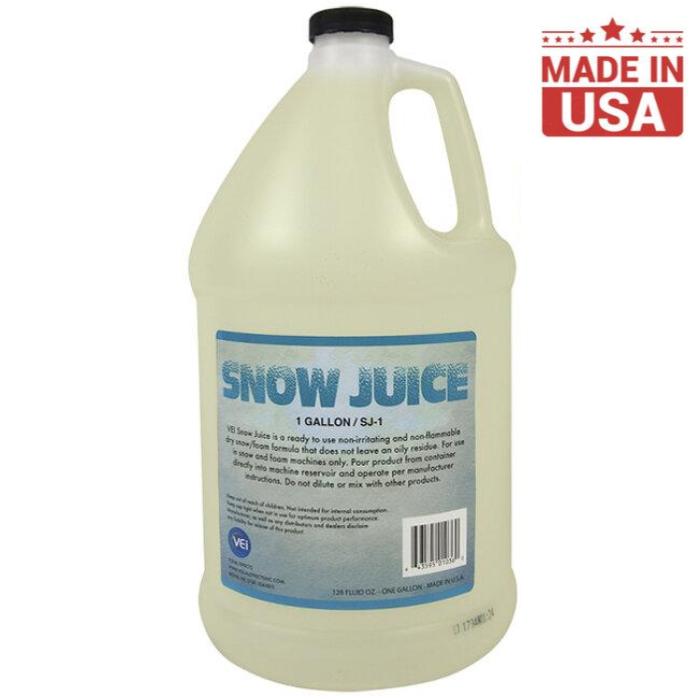
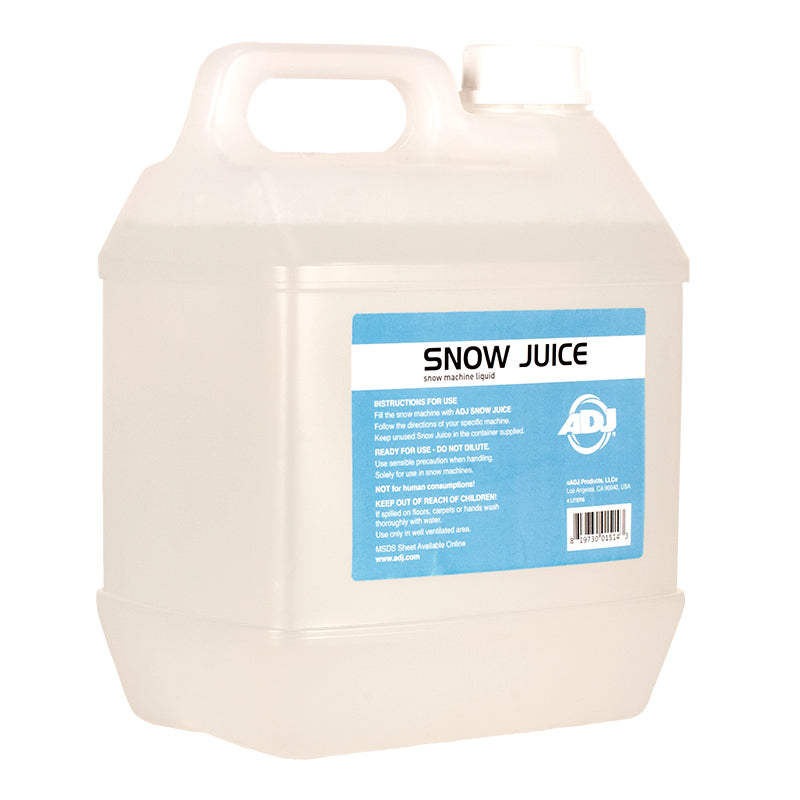
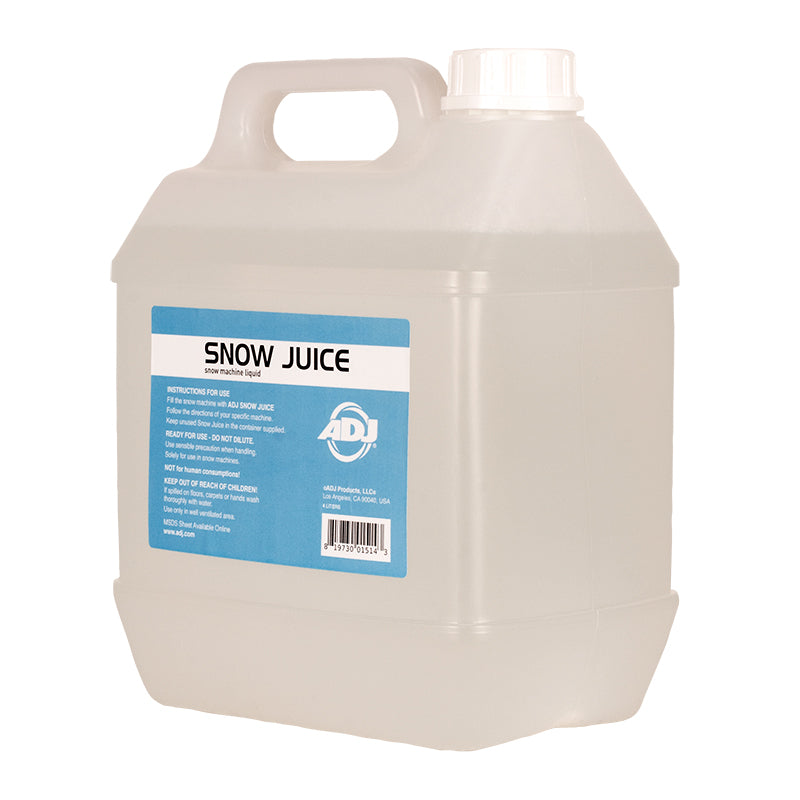
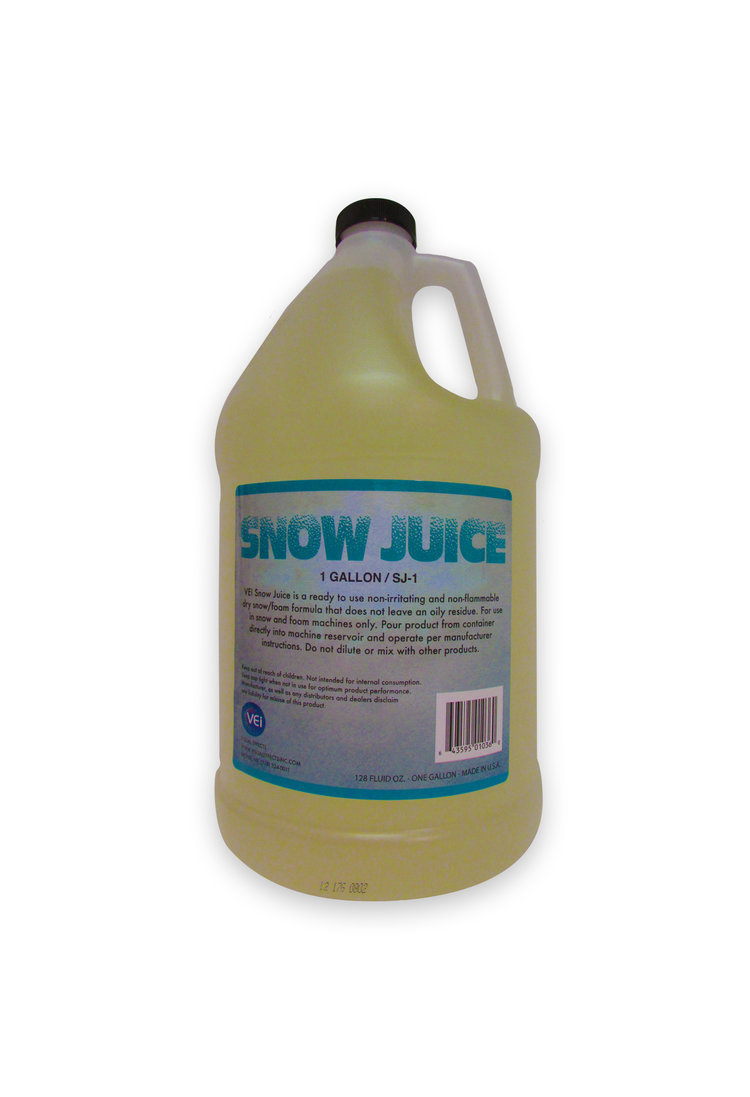
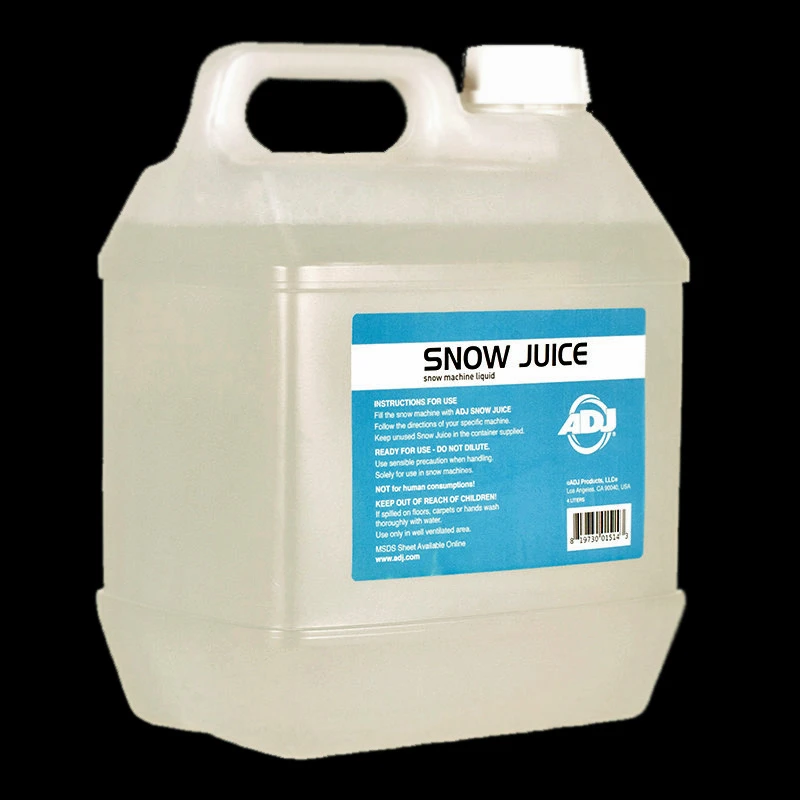
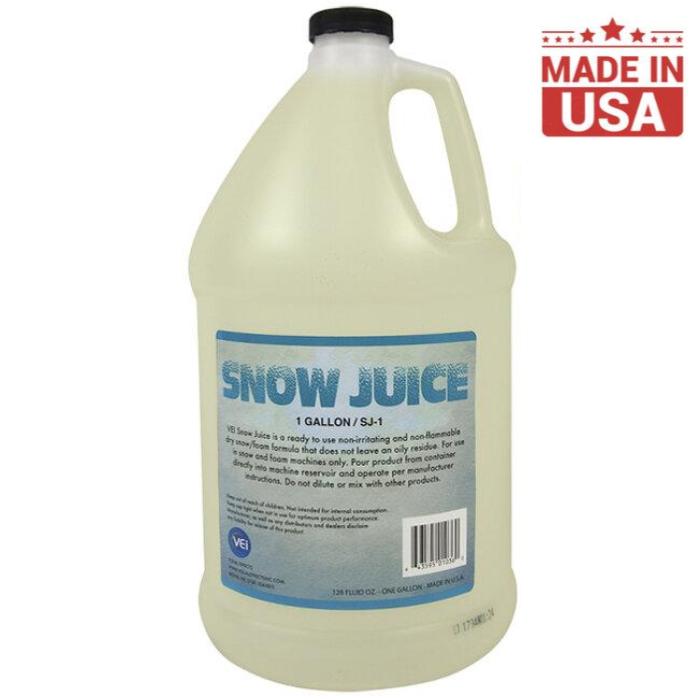
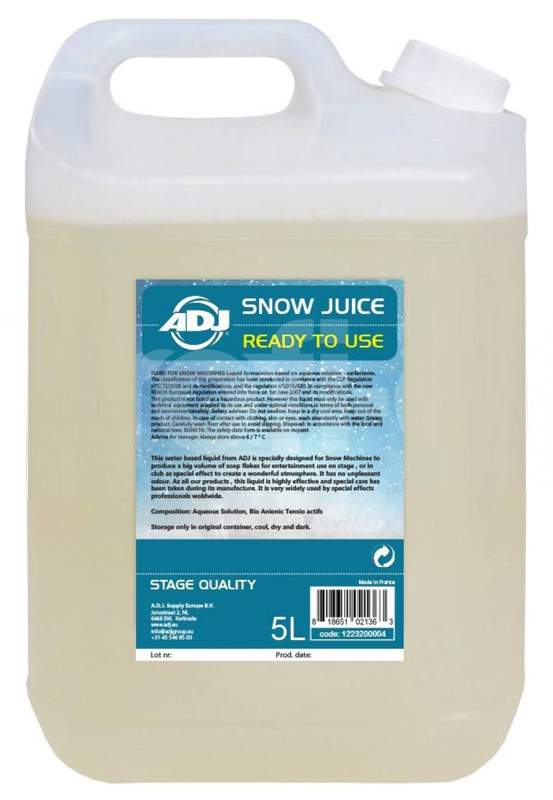
The term can also refer to a branded, ready-made fluid sold in gallon jugs. That product is not necessarily interchangeable with every other brand or machine. The label and machine manual are the best starting points.
Source: adj.com
Snow machine fluid
A liquid formulated for an artificial snow machine. Its permitted use depends on the product label and equipment requirements.
Fog machine fluid
A fluid designed to create fog or haze. Do not assume that it can replace snow fluid, even if both liquids are sold for stage effects.
Snow spray or decorative foam
A separate type of product that may come in an aerosol can or another package. It is not automatically suitable for use in a machine reservoir.
Why the Fluid Formula Matters
A machine is designed around certain fluid properties. Thickness, foaming behavior, residue, and the way the liquid passes through its parts can affect performance. A homemade mix can look similar to the recommended product yet behave differently inside the unit.
The output also matters. A fluid intended for an outdoor display may not be suitable for an enclosed room or for use near food, costumes, flooring, or sensitive equipment. Read the directions for both the liquid and the machine before deciding where to use it.
Pump and nozzle fit
Use only a fluid type permitted by the equipment maker to reduce the risk of clogs and damage.
Residue control
An unsuitable mixture may leave a film on floors, props, or machine parts.
Air and surface safety
The visible snow effect can reach people and surfaces. Follow the product’s stated use conditions.
How Much Fluid Is in One Gallon?
A US gallon contains 128 US fluid ounces, which is about 3.785 liters. This is the volume to use when planning a one-gallon supply in the United States. It does not tell you how much concentrate or water a particular machine needs.
Before preparing or buying the fluid, check whether the container holds ready-to-use liquid or concentrate. Ready-to-use fluid normally goes into the machine as directed on the label. Concentrate may require dilution, but only at the stated ratio.
Do not add water simply because a fluid seems thick or because a homemade recipe calls for it. Unapproved dilution can change how the machine performs and may affect the intended effect.
Source: images-bucket.bonanzastatic.com
US volume
1 US gallon = 128 US fluid ounces = approximately 3.785 liters.
Ready-to-use product
Use it as supplied unless the product label explicitly gives a dilution instruction.
Concentrate
Follow the specified mixing ratio and the stated final volume. Do not guess the amount of water.
A Simple One-Gallon Planning Example
Suppose the machine maker approves a particular fluid and the product label states that it is ready to use. Your target is one US gallon, so you need a container holding 128 fluid ounces of that fluid. No additional ingredient is needed unless the instructions say otherwise.
If the label instead gives a dilution ratio, calculate the quantities from that exact ratio. For example, a hypothetical instruction might specify one part concentrate and three parts water. That would make four total parts, so the concentrate would account for one-quarter of the final volume. This is a math example only, not a recommended snow juice formula.
Confirm the final volume
Check whether the instructions describe the amount of concentrate or the amount of finished fluid.
Measure accurately
Use a clean, suitable measuring container and the units printed on the label.
Label the mix
If dilution is approved, mark the container with the product name, dilution, and date.
Can You Make a Snow Juice Recipe at Home?
You should make snow machine fluid at home only when the equipment maker provides a compatible formula or explicitly approves the ingredients and method. Without that guidance, there is no verified universal household recipe that can be recommended for every snow machine.
Online recipes may suggest water, soap, glycerin, or other common materials. A list of familiar ingredients does not establish that a mixture is suitable for a pump, nozzle, indoor air, or the surfaces it will touch. It also does not show that the liquid will produce the desired effect.
The practical choice is to use approved ready-to-use fluid or a concentrate that the manufacturer says is compatible. If the manual does not explain whether homemade fluid is allowed, ask the manufacturer before putting a new mixture into the reservoir.
Source: i5.walmartimages.com
Start with the manual
Look for approved fluid types, any dilution instructions, and warnings about additives or alternative liquids.
Avoid guesswork
Do not estimate a formula from the color, texture, smell, or appearance of a commercial product.
Ask before testing
Contact the equipment maker if you cannot confirm that a proposed ingredient or mixture is permitted.
Why Soap and Water Are Not a Universal Substitute
Soap and water may produce bubbles or foam under some conditions, but that does not make them an approved snow machine fluid. Household cleaners vary in their ingredients and concentration. Some can create excess foam, leave deposits, or affect parts that were not designed for them.
The same concern applies to glycerin, fragrance oils, food coloring, and other additives. Even if an ingredient appears harmless on its own, the full mixture and its use in a machine need to be considered. Do not add an ingredient unless the product and equipment instructions permit it.
Unwanted foam
Extra foaming can change the output and may interfere with the machine’s intended operation.
Residue
Household ingredients can leave a film on parts or surfaces.
Unknown exposure
A mixture has not been shown safe for breathing or skin contact simply because its ingredients are sold for household use.
What If You Want Decorative Snow Without a Machine?
If your goal is a snow-like display rather than a machine effect, choose a decorative product designed for that exact use. Follow its directions for indoor or outdoor use, cleanup, and contact with children or pets.
For a simple craft display, paper snowflakes, white fabric, or other dry decorations can create a winter look without placing an unapproved liquid in equipment. These options will not behave like falling artificial snow, but they avoid the need to develop a fluid formula.
For indoor decor
Use materials intended for the room and keep them clear of heat sources, exits, and electrical equipment.
For a moving snow effect
Use a purpose-built machine with fluid approved for that model.
How to Prepare One Gallon of Approved Snow Fluid
Once you have confirmed the correct product and mixing instructions, preparing a gallon is mostly a matter of measuring, checking the container, and keeping the mixture clean. The exact process still depends on the product label and the machine manual.
Set up a clean work area away from food, drinks, children, pets, and sources of heat. Read the fluid’s label first, including its handling directions and any protective equipment requirements. Do not mix different brands or products unless the manufacturer explicitly allows it.
Source: cdn11.bigcommerce.com
What you need
The approved snow fluid or concentrate, any permitted dilution water, a clean measuring container if required, a compatible storage jug, and the machine manual.
A clean work area
Choose a stable surface where spills can be contained and where the liquid cannot be mistaken for drinking water.
A clear label
Keep the original product label available and label any approved diluted fluid with its contents and ratio.
Step 1: Check the Machine Model
Find the brand and model number on the machine. Read the manual section about fluid type and reservoir filling. If the machine is rented, ask the rental provider which fluid is approved for that unit.
Do not rely only on the shape of the reservoir or the fact that a jug says snow juice. Similar-looking machines may have different requirements.
Verify compatibility
Match the fluid’s stated use to the machine model or to the equipment maker’s written guidance.
Step 2: Read the Fluid Label
Check whether the product is ready to use or concentrated. Read its dilution, storage, handling, and cleanup instructions. If the label is unclear, contact the supplier instead of making an educated guess.
Use only the specified water quality if the directions call for dilution. Do not add other ingredients to improve the smell, change the color, or make the effect last longer.
Ready-to-use liquid
Measure the needed amount without adding water unless the label says to do so.
Concentrated liquid
Follow the stated ratio and account for the final volume rather than assuming the concentrate alone should fill the jug.
Step 3: Measure and Mix Only as Directed
Use clean equipment to measure the listed quantities. If mixing is approved, combine only the stated ingredients and use the mixing order provided by the manufacturer. Do not make a stronger batch or substitute a different liquid to save time.
Keep the jug closed when you are not using it. Mark it clearly so nobody mistakes the fluid for water, juice, or another household liquid.
Avoid cross-contamination
Do not use a drinking cup, food container, or cooking utensil to measure machine fluid.
Step 4: Fill the Machine Correctly
Turn off the machine and follow its instructions for filling the reservoir. Do not overfill it, pour fluid into an opening that is not intended for filling, or operate the unit while its electrical parts are wet.
If you notice an unusual smell, a leak, a new warning light, or unexpected output, stop the machine and check the manual. Do not keep running it in the hope that the fluid will correct itself.
Prevent spills
Wipe up any spill using a method permitted by the fluid label and keep the floor dry before people walk through the area.
Step 5: Test the Effect in a Controlled Area
Follow the machine’s start-up instructions and begin in a clear area. Watch the output, check for leaks, and confirm that the machine behaves as the manual describes. Keep people away from the discharge area during the initial check.
A normal-looking effect does not prove that a fluid is safe for every setting. Use the stated operating conditions and stop if the machine sputters, makes unusual noises, or produces an unexpected mist.
Check the floor
Look for wet patches or slick residue, particularly on smooth indoor flooring.
Check the surrounding area
Make sure the effect is not reaching food, sensitive electronics, or people who should avoid the mist.
How to Choose Fluid for Indoor and Outdoor Events
The best fluid is the one approved for your machine and suitable for the planned setting. A product intended for a large outdoor display may not be suitable for a small, poorly ventilated room. Likewise, a fluid’s advertised effect does not remove the need to follow its instructions.
For an indoor event, consider room size, airflow, floor type, audience proximity, and how the area will be cleaned. For an outdoor event, consider wind, nearby walkways, water-sensitive equipment, and where the fluid may land. Follow the label rather than assuming outdoor use is always risk-free.
Source: i5.walmartimages.com
Indoor parties
Confirm that the fluid and machine are permitted for indoor use, provide suitable ventilation, and keep the effect away from faces and crowded areas.
Stage and school events
Coordinate with the venue team, especially when performers have respiratory concerns or when props, costumes, and lighting equipment are nearby.
Outdoor displays
Position the machine so the effect does not create a slick path or reach roadways, electrical connections, or neighboring property.
Homes with children or pets
Keep fluid containers closed and out of reach. Follow the product directions for contact, cleanup, and storage.
Why the Floor Matters
Artificial snow can settle on the ground and may leave moisture or residue, depending on the product and machine. A surface that looks white and dry from a distance may still be slippery underfoot.
Use a small controlled test in a suitable area before the event. Check the floor during use, limit the amount of fluid reaching walkways, and clean the surface according to the product directions. Do not assume that a fluid described as dry leaves every surface completely dry.
Smooth tile or sealed floors
Watch for slick spots and stop the effect if people cannot walk safely.
Carpets and costumes
Check compatibility and cleanup guidance before allowing the effect to settle on fabric.
Common Snow Juice Problems and What to Do
If a snow machine does not work as expected, stop and check the simple, safe causes first. A poor effect does not automatically mean the fluid needs more ingredients. It may be caused by the wrong product, a low reservoir, a blocked component, an incorrect setting, or a machine that needs maintenance.
Turn the machine off and allow it to cool or settle as directed before checking the reservoir or other parts. Never open electrical housings or dismantle a pump unless the manual describes a safe procedure for the user.
Source: abracadabranyc.com
Little or no snow
Check the fluid level, the approved fluid type, and the machine settings. Follow the manual’s troubleshooting steps before trying anything else.
Sputtering or uneven output
Stop the machine and check for a low reservoir, an incorrect fluid, or a maintenance issue identified in the manual.
Unexpected odor or irritation
Stop use, move people away from the affected area, and follow the product’s safety guidance. Seek medical help if symptoms are serious or do not improve.
Sticky or slippery surfaces
Stop the effect, keep people away from the affected area, and clean the surface according to the product directions.
Leak near electrical parts
Stop using the machine and disconnect power only if you can do so safely. Keep away from wet electrical equipment and seek qualified help.
Should You Add Water When the Machine Clogs?
No, not unless the manual specifically instructs you to do so. Adding water may not clear a blockage, and it can change the fluid properties or cause further problems. Do not push tools into a nozzle or use household cleaners to flush the machine.
Use only the cleaning or flushing method specified by the equipment maker. If the blockage remains, contact the manufacturer or a qualified repair service.
Stop first
Switch off the unit and follow the manual’s shutdown and cooling instructions.
Use the approved method
Follow the exact maintenance steps and fluid recommendations for the model.
How to Store Leftover Snow Juice
Store leftover fluid according to its label, in a compatible, sealed container, and away from heat or direct sunlight when the directions call for it. The original container is usually the clearest way to retain the product name, handling information, and safety warnings.
Do not store snow fluid in a bottle that once held drinking water, soda, or juice. A familiar bottle can lead someone to drink the contents by mistake. Keep all fluid out of reach of children and pets, and never leave an open jug beside food or drinks.
If you have diluted an approved concentrate, follow the maker’s storage limits for the mixed fluid. Do not assume it will keep as long as the original concentrate. Discard questionable or contaminated fluid according to the label and local disposal guidance.
Source: bsacoustic.com
Keep the label
Retain the original label or a clear record of the product name and any approved dilution.
Keep the container closed
Limit contamination and spills by sealing the jug after each use.
Do not mix leftovers
Keep different products separate unless the manufacturer expressly approves combining them.
Check before reuse
Follow the stated storage period and discard instructions. Do not use fluid that appears contaminated or has an unexplained change.
Can You Keep Homemade Snow Juice for Next Time?
Only retain a homemade mixture if the equipment maker has approved the formula and provided suitable storage instructions. An unverified mixture may change during storage or become contaminated, and its appearance alone cannot establish that it remains suitable for the machine.
When there is no approved formula or storage guidance, do not save an improvised batch for future use. Use compatible commercial fluid or ask the manufacturer for a documented alternative.
Write down the dilution
For an approved mixture, record the exact product and ratio so it can be identified later.
Frequently Asked Questions
Q
What is the best snow juice recipe for one gallon?
There is no single verified recipe that works safely in every snow machine. Use the manufacturer’s approved formula if one is provided. Otherwise, choose compatible ready-to-use fluid or an approved concentrate and follow its label.
Q
Can I use tap water to make snow machine fluid?
Use tap water only if the product and machine instructions permit it. Some products specify a certain water quality or do not require dilution at all. Adding water without approval may affect performance or leave deposits.
Q
Can I use fog machine liquid in a snow machine?
Do not assume that fog fluid and snow fluid are interchangeable. They may be designed for different mechanisms and output effects. Check the exact machine manual and fluid label before filling the reservoir.
Q
How long will one gallon of snow juice last?
The run time depends on the machine’s fluid consumption, output setting, and how often it runs. If the maker provides a consumption rate, divide 128 fluid ounces by the stated rate in fluid ounces per hour to estimate hours of use. Treat the result as an estimate because real use can vary.
Q
Is homemade snow juice safe to breathe indoors?
Do not assume an improvised mixture is safe to inhale. The risks depend on its ingredients, the machine, the amount dispersed, and the room conditions. Use only a fluid approved for the machine and setting, follow ventilation guidance, and stop if anyone develops irritation or breathing symptoms.
Q
Can snow juice make a floor slippery?
Yes, the effect can leave moisture or residue that makes some surfaces slippery. Check the product instructions, test a small area, and keep the effect away from walkways when possible. Stop the machine and clean the area if safe footing cannot be maintained.
Q
Can I add food coloring or fragrance to snow juice?
Do not add coloring, fragrance, soap, or oils unless the manufacturer specifically approves them. These additives may affect the machine, change the fluid’s behavior, or create unwanted residue and airborne exposure.
✦ Wrapping Up
Conclusion
A snow juice recipe 1 gallon starts with the machine, not the mixing bowl. One US gallon is 128 fluid ounces, or about 3.785 liters, but the right contents depend on the machine and the fluid label. A ready-to-use jug may need no mixing at all.
Homemade mixtures made from common household ingredients are not universal substitutes for purpose-made snow fluid. If the manufacturer supplies an approved formula, follow it exactly. If not, use compatible fluid and avoid adding ingredients based on guesswork.
Plan the event around more than the visual effect. Check ventilation, protect electrical equipment, watch the floor, and store leftover liquid in a clearly labeled container. These steps help you avoid turning a festive snow display into a maintenance or safety problem.
💡 Key Takeaway
Before preparing a gallon, find your snow machine’s exact model number and check its approved fluid and dilution instructions. If no homemade formula is documented, use compatible ready-to-use snow fluid instead.