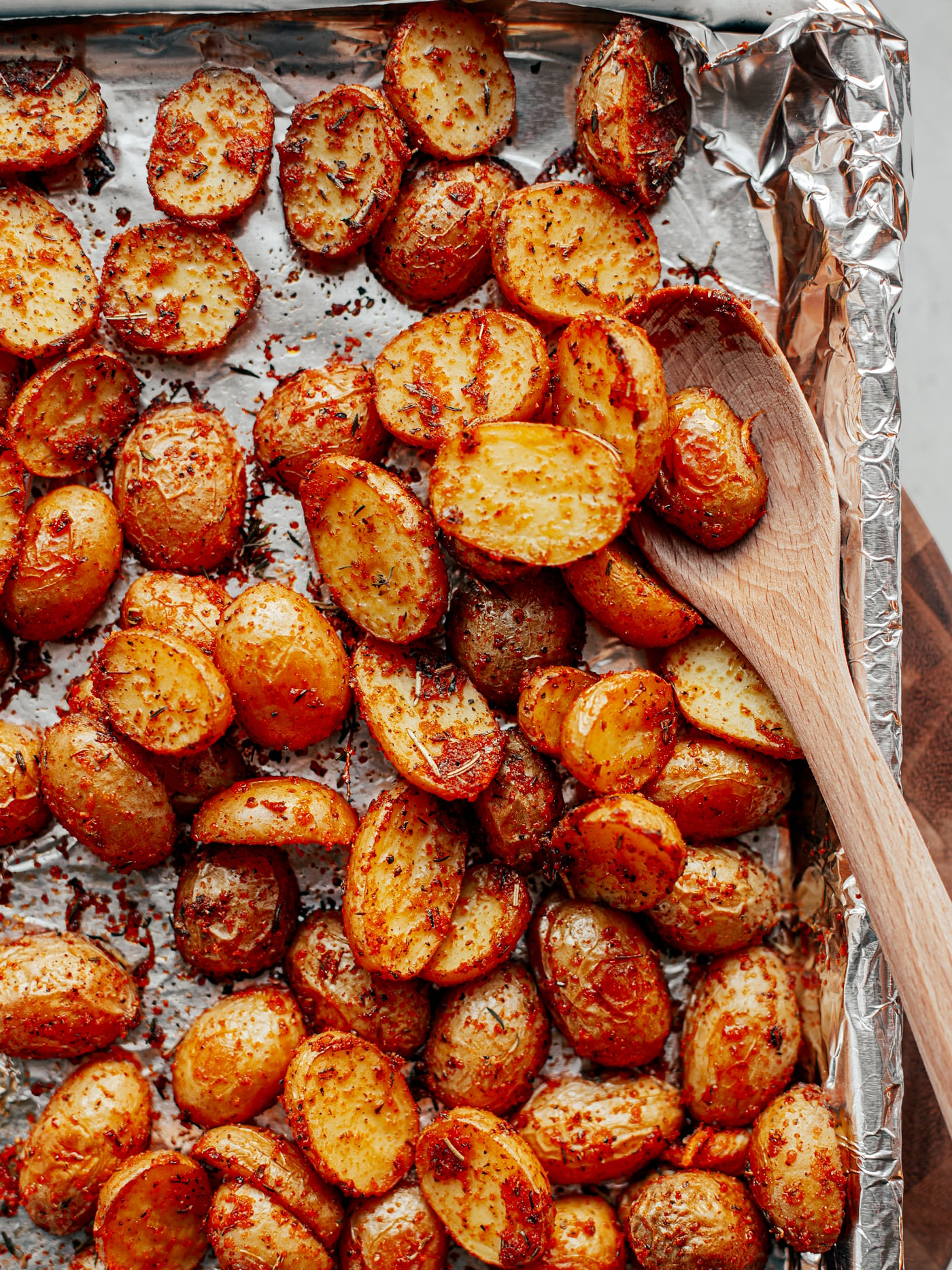
Roast 2 pounds of cut Yukon Gold potatoes at 425°F for about 35 to 45 minutes. Toss them with olive oil, salt, black pepper, and garlic, then spread them in a single layer on a baking sheet. Turn them once during cooking and roast until the edges are golden and crisp and the centers are tender.
Golden potatoes are a popular side dish at American family dinners, summer cookouts, and holiday meals. They pair well with roast chicken, steak, burgers, fish, and simple vegetable dishes. Yukon Gold potatoes work especially well because their creamy flesh and naturally buttery flavor suit both crisp edges and soft centers.
The key to good roasted golden potatoes is to control moisture, leave room between the pieces, and use enough heat to brown their surfaces. A few basic steps can make a big difference. This guide covers the best oven temperature, cooking time, seasonings, preparation methods, and fixes for potatoes that turn out pale or soft instead of crisp.
Golden potatoes, often sold as yellow potatoes, have a mild flavor and a smooth, creamy texture. Yukon Gold is a familiar variety in American grocery stores. Its flesh stays tender while the cut surfaces can develop a rich golden crust in a hot oven.
Roasting uses dry heat to remove moisture from the outer surface and brown the potato. Oil helps the surface cook evenly and carry seasonings, while the hot oven creates the contrast between crisp edges and a soft middle. Crowding the pan can interfere with this process because trapped moisture makes the potatoes steam.
You do not need a special roasting pan or a long list of ingredients. A rimmed baking sheet, a sharp knife, a mixing bowl, and a hot oven are enough to make a flavorful side dish.
Creamy texture
Yellow potatoes have a naturally smooth texture that works well with garlic, herbs, and olive oil.
Golden color
The cut surfaces brown as the potatoes roast, giving the finished dish an appetizing golden look.
Flexible seasoning
Their mild taste pairs with simple salt and pepper, fresh herbs, paprika, onion powder, or grated Parmesan.
Yukon Gold vs. Other Potato Types
Yukon Gold potatoes are a strong choice when you want a creamy center with a crisp outside. Red potatoes also hold their shape well and have a firm texture. Russet potatoes contain more starch and can produce a drier, fluffier interior with crisp edges when prepared well.
Small differences in potato size, moisture, and starch content can change the final texture. If your grocery store sells yellow potatoes without naming the variety, they can still work for this recipe. Cut them into even pieces and use the same browning and tenderness checks.
Yukon Gold
Best for a creamy center and rich potato flavor.
Red potatoes
Useful when you want firm pieces that hold their shape.
Russet potatoes
A good alternative for a fluffier interior and a more starchy texture.
Ingredients for Roasted Golden Potatoes
You need only a handful of basic ingredients to make oven-roasted golden potatoes. The recipe below makes about four side-dish servings, depending on portion size and what else you serve with the meal.
Use fresh potatoes with firm skins and no large soft spots. Olive oil adds flavor and helps the pieces brown, while salt brings out the natural taste of the potatoes. Black pepper and garlic provide a savory base without covering up the mild, buttery flavor.
Source: bvnews24.com
2 pounds Yukon Gold potatoes
Choose small or medium potatoes with firm flesh. Wash them well and remove damaged areas.
2 to 3 tablespoons olive oil
Use enough to coat the pieces lightly without leaving a pool of oil on the baking sheet.
1 teaspoon kosher salt
Adjust the amount to taste and reduce it if your seasoning blend already contains salt.
1/2 teaspoon black pepper
Freshly ground pepper adds a warm, savory flavor.
2 garlic cloves, minced
Garlic adds a strong savory note. Add it later in the roasting process if it tends to burn in your oven.
1 teaspoon dried rosemary or thyme
Choose one herb or use a small amount of both for an earthy flavor.
Optional fresh parsley
Chop the parsley and sprinkle it over the potatoes just before serving.
Can You Use Butter Instead of Olive Oil?
Yes, but butter behaves differently from olive oil during roasting. Whole butter contains milk solids that can brown or burn at high oven temperatures. Olive oil is a practical main fat for a 425°F oven, while a small amount of butter can be added near the end for extra flavor.
For a dairy-free version, use olive oil or another suitable plant-based cooking oil. Check the label of any seasoning blend if you need to avoid particular ingredients.
For crisp edges
Use olive oil and avoid adding excess fat.
For buttery flavor
Toss the cooked potatoes with a small amount of butter while they are still hot.
The Best Oven Temperature and Cooking Time
Set the oven to 425°F for a good balance of browning and tenderness. At this temperature, 1-inch potato pieces often take about 35 to 45 minutes. Smaller pieces may finish sooner, while large wedges or crowded pans may need more time.
Preheat the oven before adding the potatoes. A fully heated oven gives the surfaces a better start and makes cooking time easier to judge. If your oven runs hot or has uneven heat, begin checking the potatoes a little earlier and rotate the pan if one side browns faster.
Treat the time as a guide rather than a guarantee. Potato variety, piece size, pan material, oven calibration, and the amount of food on the tray all affect how quickly the potatoes cook.
425°F
A useful default temperature for crisp edges and tender centers.
35 to 45 minutes
A typical cooking range for 1-inch pieces in a preheated oven.
Turn once
Flip or stir the potatoes around the halfway point so more surfaces brown.
Check with a fork
The fork should slide into the center without much resistance when the potatoes are done.
Cooking Time by Potato Size
Cutting the potatoes to a similar size helps them finish at roughly the same time. The estimates below are starting points for a preheated 425°F oven, not fixed cooking times. Begin checking early because thin pieces can brown before larger ones become tender.
1/2-inch cubes
Allow about 25 to 35 minutes, checking for browning and tenderness.
1-inch cubes
Allow about 35 to 45 minutes as a practical starting range.
1 1/2-inch chunks
Allow about 40 to 50 minutes or longer if the centers remain firm.
Wedges
Allow about 35 to 50 minutes, depending on their thickness and how much surface touches the pan.
How to Make Roasted Golden Potatoes in the Oven
The process is simple: wash, cut, dry, season, and roast. Give each step a little care, especially drying the potatoes and leaving space on the pan. These two details help reduce excess moisture and encourage better browning.
Step 1: Preheat the oven
Heat the oven to 425°F. Place a rack in the center so the potatoes receive fairly even heat.
Step 2: Wash the potatoes
Scrub the skins under running water to remove soil. Peel them only if you prefer a skinless result or the skins are damaged.
Step 3: Cut into even pieces
Cut the potatoes into roughly 1-inch cubes or similarly sized chunks. Keep the pieces close in size so they cook at a similar rate.
Step 4: Dry the pieces
Pat the potatoes with a clean kitchen towel or paper towels. Remove surface water before adding oil.
Step 5: Add oil and seasoning
Toss the potatoes in a large bowl with olive oil, salt, pepper, and dried herbs. Coat all sides lightly.
Step 6: Arrange on a baking sheet
Spread the potatoes in one layer with a little room between pieces. Use a second sheet if the pan is crowded.
Step 7: Roast until golden
Bake for about 35 to 45 minutes, turning the pieces after about 20 minutes. Start checking sooner if your pieces are small.
Step 8: Add garlic at the right time
For finely minced garlic, add it during the final 10 to 15 minutes or toss it with the hot potatoes after roasting. This helps prevent bitter, burnt garlic.
Step 9: Check the centers
Test a large piece with a fork. If the center still feels firm, return the tray to the oven for another 5 to 10 minutes and check again.
Step 10: Serve while hot
Taste and adjust the salt. Add chopped parsley or a small sprinkle of grated Parmesan if desired, then serve promptly.
Should You Boil Golden Potatoes Before Roasting?
Parboiling is optional. You can roast raw potato pieces directly, and this is the simplest method for a regular weeknight meal. The potatoes need enough oven time for the centers to soften while the outside browns.
Partly boiling the potatoes first can help create rough outer edges that brown well. If you choose this method, cook the pieces only until the outside begins to soften while the centers remain firm. Drain them well and allow steam to escape before adding oil and seasoning. Wet potatoes can hinder browning, so drying matters even more after boiling.
Direct roasting requires fewer steps and less cleanup. Parboiling adds work but can be useful when you want a more textured crust or are preparing potatoes for a larger meal.
Choose direct roasting
Use this method when you want a simple recipe with minimal preparation.
Choose parboiling
Try it when you have extra time and want to rough up the surface before roasting.
How to Get Crispy Edges and Soft Centers
The main goal is to brown the outside without leaving the middle hard or dry. Good results come from managing moisture, heat, and space on the pan. Adding more oil alone will not fix potatoes that steam instead of roast.
Use a large, rimmed metal baking sheet when possible. A metal pan transfers heat well, and the rim helps keep the pieces from sliding off. Line it with parchment if you want easier cleanup, but avoid covering the potatoes tightly or using a pan that crowds them.
Water left on the surface must evaporate before the outside can brown well.
Leave room between pieces
Space allows moisture to escape instead of collecting between tightly packed potatoes.
Use a hot oven
A preheated 425°F oven helps the outer surfaces brown while the centers cook.
Turn only when needed
Give the first side time to brown before turning. Moving the pieces too often can interrupt contact with the hot pan.
Avoid excess oil
A light, even coating is enough. Too much oil can leave the potatoes greasy rather than pleasantly crisp.
Does Parchment Paper Affect Browning?
Parchment paper makes cleanup easier and helps reduce sticking. It can also change how the potato surface contacts the pan, so the browning may differ from potatoes roasted directly on metal. Both methods can work.
If crispness is your main goal, try roasting directly on a clean, lightly oiled metal pan. If you use parchment, spread the pieces well and turn them when the first side has developed color. Follow the paper manufacturer’s temperature limit.
For easy cleanup
Use oven-safe parchment within its stated temperature limit.
For direct pan contact
Use a clean metal baking sheet with a thin layer of oil.
Seasoning Ideas for Golden Roasted Potatoes
Salt, pepper, and olive oil make a useful base, but you can change the flavor to suit the rest of the meal. Keep the seasoning simple when serving the potatoes with a strongly flavored main dish. Use garlic, herbs, or spices when the potatoes need to carry more of the flavor themselves.
Add dry spices before roasting so they coat the potatoes with the oil. Fresh herbs and delicate cheese are often better near the end because long exposure to high heat can darken them or affect their flavor.
Source: binodon69.com
Garlic and rosemary
Use olive oil, black pepper, dried rosemary, and garlic added late in the cooking process.
Smoky paprika
Add a small amount of paprika for color and a mild smoky note. Avoid burning the spice on the hot pan.
Italian herb blend
Use dried oregano, thyme, and basil with black pepper for a familiar savory flavor.
Lemon and parsley
Finish the cooked potatoes with a little lemon zest or juice and chopped parsley for a fresh taste.
Parmesan and garlic
Sprinkle finely grated Parmesan over the potatoes near the end or after roasting so the cheese does not burn.
Cajun-style seasoning
Use a modest amount of Cajun seasoning for a spicier side dish, checking its salt content before adding extra salt.
When Should You Add Garlic?
Garlic burns more quickly than potato pieces. Finely minced garlic added at the start may turn dark and bitter before the potatoes are tender, especially in a hot oven. For a safer flavor balance, add minced garlic during the last 10 to 15 minutes or stir it into the potatoes after cooking.
Garlic powder is another option because it distributes easily across the surface. Use a small amount first, since its flavor can become strong when spread over a full tray.
Fresh minced garlic
Add it late in roasting or toss it with the finished potatoes.
Garlic powder
Mix it with the oil and other dry seasonings before roasting.
Common Problems and How to Fix Them
If roasted golden potatoes do not turn out as expected, look first at piece size, moisture, pan spacing, and oven temperature. These factors usually have a greater effect than adding more seasoning. Check one problem at a time so you can tell what needs to change.
Source: ajkerpatrika.com
The potatoes are soft but not crisp
They may have been crowded, too wet, or coated with excess oil. Spread them farther apart and return them to the hot oven until their surfaces brown.
The outside is dark but the center is hard
The pieces may be too large or the oven may run hot. Lower the temperature slightly, loosely shield any surfaces that are getting too dark if needed, and continue cooking until the center is tender.
The potatoes stick to the pan
They may have been turned before a crust formed or the pan may not have had enough oil. Allow the pieces to brown before gently loosening them with a thin spatula.
The garlic tastes bitter
The garlic likely browned too much. Add fresh garlic later next time or use garlic powder instead.
Some pieces cook faster than others
The pieces may be uneven. Cut them to a similar size and move the smaller pieces to a cooler area or remove them when tender.
The potatoes look pale
The oven may not have been fully preheated, or the potatoes may have released too much moisture. Give them more space and roast a little longer while watching their color.
Should You Cover the Potatoes With Foil?
Leave the potatoes uncovered when your goal is a crisp exterior. Covering the tray traps steam, which softens the surfaces. Foil is not usually needed for this recipe.
If the potatoes are browning too fast while the centers remain firm, lower the oven temperature and continue cooking. Check the oven rack position and cut size before deciding to cover the tray.
For crisp potatoes
Roast uncovered on a spacious baking sheet.
For uneven cooking
Check the piece size, oven temperature, and rack position first.
What to Serve With Roasted Golden Potatoes
Roasted golden potatoes work with many everyday meals because their mild flavor complements meat, fish, eggs, and vegetables. Their crisp edges add texture to a plate, while the soft centers make them filling without the need for a heavy sauce.
For an American-style dinner, serve them with roast chicken, grilled steak, meatloaf, or baked fish. They also fit a brunch spread with eggs and vegetables. A green salad, steamed broccoli, or roasted carrots can round out the meal.
Source: dhakaage.com
Roast chicken
Use rosemary, thyme, and garlic to match the savory flavor of the chicken.
Steak or burgers
Add black pepper, paprika, and a little parsley for a simple steakhouse-style side.
Baked fish
Finish the potatoes with lemon zest and herbs for a lighter flavor.
Eggs and breakfast dishes
Cut the potatoes into smaller cubes for a useful brunch side.
Vegetarian meals
Serve with roasted vegetables, beans, lentils, or a fresh salad.
Can You Roast Potatoes With Other Vegetables?
Yes, but choose vegetables that cook at a similar rate or add them at different times. Carrots and onions can roast alongside potatoes when cut to suitable sizes, while delicate vegetables may become soft before the potatoes finish.
Avoid packing too many ingredients onto one tray. If the vegetables release a lot of water, the potatoes may take longer to brown. Two trays can be a better choice for a large meal.
Carrots and onions
Cut them into pieces that can withstand the full roasting time.
Bell peppers
Add them later if you want them to retain more texture.
Broccoli
Roast it separately or add it later because its florets can brown quickly.
Storage, Reheating, and Food Safety
Roasted potatoes taste best right after cooking, when their surfaces are still crisp. Leftovers can be saved for another meal, but the refrigerator will soften the crust. Store the potatoes in a clean, shallow container and refrigerate them within two hours of cooking, or within one hour if the surrounding temperature is above 90°F.
For best quality, use refrigerated leftovers within three to four days. Reheat them until they reach 165°F in the center. A food thermometer is the most reliable way to check the temperature when reheating a substantial portion.
Source: dhakapost.com
Cool and refrigerate promptly
Transfer leftovers to a shallow container and refrigerate them within the recommended time.
Use the oven for better texture
Spread the cold potatoes on a baking sheet and reheat at about 400°F until hot, checking often so they do not burn.
Reheat in a single layer according to the appliance instructions, checking the center for thorough heating.
Use a microwave for speed
Microwaving heats the potatoes quickly but usually leaves the outside softer. A brief oven finish can help restore some crispness.
Freeze only if useful
Cooked potatoes can be frozen, but their texture may change after thawing. Freeze them in a sealed, suitable container and reheat thoroughly.
Can You Prepare the Potatoes Ahead of Time?
You can wash and cut the potatoes ahead of time. If you need to hold cut raw potatoes, keep them covered in cold water in the refrigerator for a short period, then drain and dry them thoroughly before adding oil. Water left on the surface can slow browning.
For the crispest result, season and roast them close to serving time. If you roast them in advance, refrigerate them promptly and reheat them in a hot oven rather than leaving cooked potatoes at room temperature for a long period.
Before cooking
Wash and cut the potatoes ahead, then dry them well before roasting.
After cooking
Refrigerate leftovers promptly and reheat them until the center reaches 165°F.
Frequently Asked Questions
Q
How long do golden potatoes take in the oven at 425°F?
Cut golden potatoes into roughly 1-inch pieces and roast them at 425°F for about 35 to 45 minutes. Turn them once around the halfway point. Smaller pieces may finish sooner, while larger chunks may need extra time. Check that the centers are tender and the outside is golden before serving.
Q
Do you need to peel golden potatoes before roasting?
No. You can leave the skins on after washing and scrubbing the potatoes well. The skins add texture and help the pieces hold their shape. Peel them if you prefer a smoother texture or need to remove damaged areas.
Q
Why are my roasted golden potatoes not crispy?
Common causes include excess surface water, an overcrowded baking sheet, too much oil, and an oven that was not fully preheated. Dry the potatoes well, leave space between pieces, and roast them uncovered. If the centers are already tender, give the potatoes a little more time to brown while watching them closely.
Q
Should golden potatoes be soaked before roasting?
Soaking is not required for this recipe. You can wash, dry, season, and roast golden potatoes directly. Some cooks soak cut potatoes to remove surface starch, but this adds a step and requires thorough drying afterward. Even cuts, enough heat, and good pan spacing are more useful starting points.
Q
Can I roast golden potatoes at 400°F instead?
Yes. At 400°F, the potatoes may take around 40 to 55 minutes, depending on their size and your oven. The lower temperature can provide more time for the centers to soften, but browning may take longer. Use a fork to check tenderness and look for a golden surface rather than relying on time alone.
Q
Can I make roasted golden potatoes without oil?
Yes, although the texture will be different. Oil helps the surface brown and gives the potatoes a richer feel. Without it, the pieces may be drier or more likely to stick to the pan. Use a suitable nonstick baking surface and check them during cooking. Do not expect exactly the same crust as an oil-roasted batch.
Q
What is the best oil for oven-roasted golden potatoes?
Olive oil is a practical choice for roasting at 425°F and adds a pleasant flavor. You can also use another cooking oil that is suitable for this temperature. Choose an oil based on its heat suitability and the taste you want, and use enough to coat the potatoes lightly.
Q
Can I roast frozen golden potatoes?
Yes, but follow the package directions if the potatoes are commercially frozen or partly cooked. Frozen potatoes release moisture as they heat, and the cooking time can differ from that of fresh potatoes. Spread them out well and allow extra time if needed. Do not thaw them first unless the product directions recommend it.
✦ Wrapping Up
Conclusion
Roasted golden potatoes are easy to make with a few basic ingredients and a hot oven. For a dependable starting point, use 2 pounds of Yukon Gold potatoes, 2 to 3 tablespoons of olive oil, salt, pepper, and your choice of herbs. Roast 1-inch pieces at 425°F for about 35 to 45 minutes, turning them once during cooking.
The biggest difference comes from preparation. Dry the potatoes well, keep the pieces close in size, and leave enough room on the baking sheet for moisture to escape. Add fresh garlic late in cooking and check the centers with a fork. These simple habits help you serve potatoes with golden edges and soft, creamy centers.
💡 Key Takeaway
For your next meal, start with evenly cut Yukon Gold potatoes, a light coating of olive oil, and a preheated 425°F oven. Roast uncovered, turn once, and cook until the outside is golden and the center is tender.