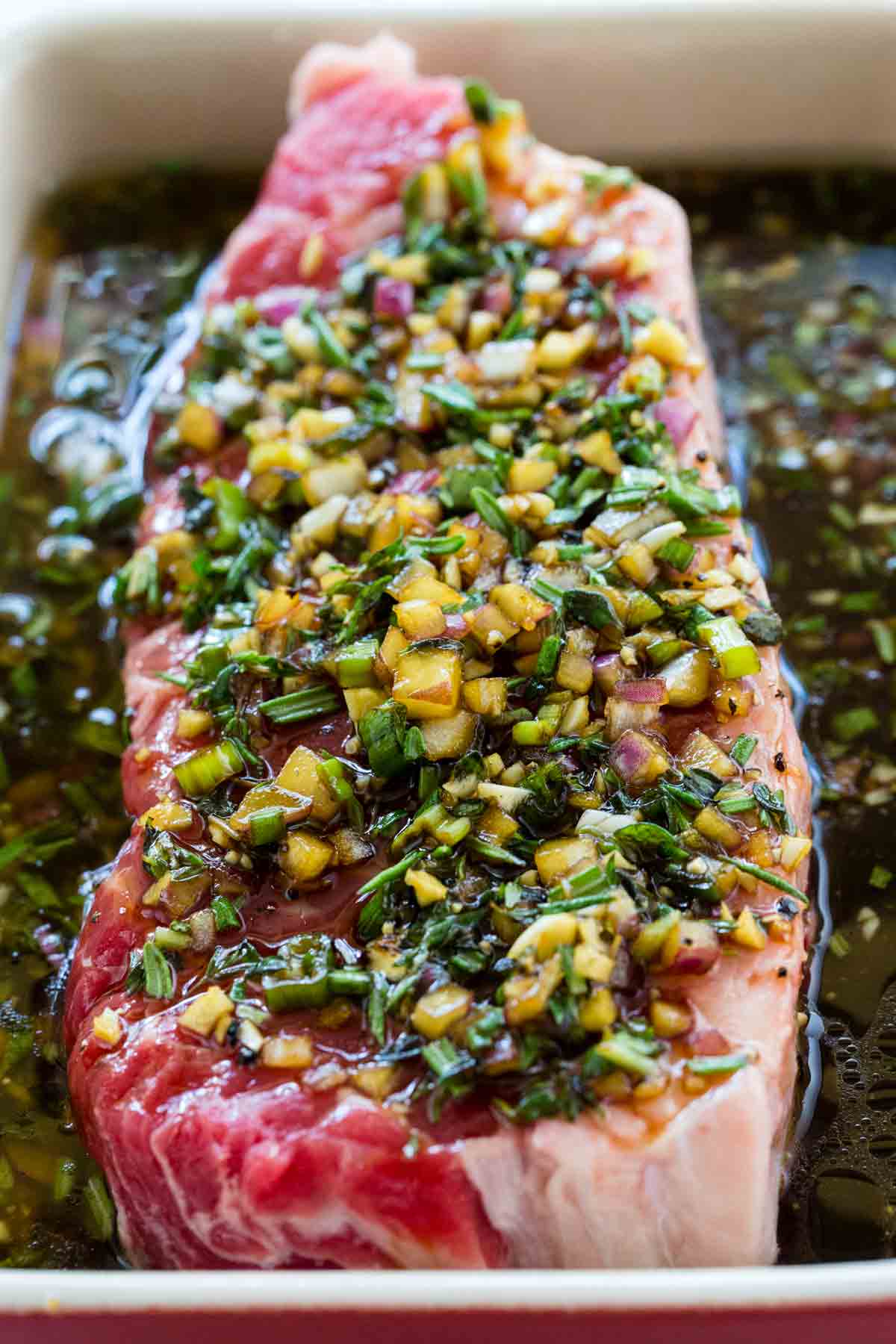
Marinate New York strip steak in a mix of oil, garlic, herbs, salt, pepper, and a little acid for 30 minutes to 4 hours in the refrigerator. For most steaks, a few hours gives enough time for the surface to take on flavor without letting an acidic marinade sit too long.
New York strip steak is a popular cut for backyard cookouts, weeknight dinners, and Fourth of July grilling across the United States. It comes from the short loin of the cow and has a firm bite with a rich beef flavor. A good strip steak already has plenty to offer, so the goal of a marinade is to add flavor without hiding the meat’s natural taste.
Marinating NY strip steak does not need to be hard. A simple mix of olive oil, garlic, black pepper, and a small amount of vinegar or lemon juice can work well. The right timing matters, too. Leave the steak in the fridge, give the surface time to absorb the seasonings, and pat it dry before cooking so it can brown well.
This guide covers a basic steak marinade, useful timing ranges, grilling and pan-searing methods, and food safety. It also explains when a marinade helps and when a dry rub or simple seasoning may be the better choice. These tips apply to common home kitchens and outdoor grills in the United States.
A marinade adds flavor to the outside of a New York strip steak. Depending on its ingredients and the time used, it can also affect the texture of the meat’s surface. Oil helps carry fat-soluble flavors, while garlic, herbs, spices, and pepper add aroma and taste.
A marinade will not soak deeply into a thick steak in the way many people expect. Salt can move into meat over time, but most other flavor compounds stay closer to the surface. This is why a well-seasoned exterior matters so much when you cook a strip steak.
New York strip is naturally flavorful and often has a strip of fat along one edge. It usually does not need a strong or complicated marinade. A balanced mixture can bring out its beefy taste without making the steak seem sour, salty, or covered in seasoning.
Source: storage.googleapis.com
Adds surface flavor
Garlic, herbs, pepper, and other seasonings leave the outside of the steak fragrant and savory.
Helps support browning
Oil can help spread seasonings over the meat, but excess wet marinade should be removed before cooking so the steak can brown instead of steam.
Can affect surface texture
Acidic ingredients change proteins near the surface. Too much acid or too much time can make that outer layer soft or unpleasant.
Is optional for a good steak
A quality strip steak can also taste great with salt, pepper, and a little oil. Marinating is a flavor choice, not a required step.
What Makes New York Strip Different?
New York strip is cut from the short loin and is known for a firm texture and a strong beef flavor. It is usually less tender than tenderloin but often has more chew and a richer taste. Many strip steaks also have visible marbling, which is the fat found within the muscle.
Since the cut already has flavor and a fairly firm structure, it usually benefits more from seasoning than from a long soak in a very acidic mixture. A short marinade can add garlic and herb notes while leaving the meat’s natural character in place.
For a classic steak taste
Choose olive oil, black pepper, garlic, and rosemary or thyme.
For a slightly tangy flavor
Add a small amount of balsamic vinegar or lemon juice rather than filling the marinade with acid.
This basic marinade uses common kitchen ingredients and works for two medium New York strip steaks. It has oil for flavor distribution, garlic and herbs for aroma, and a little vinegar for balance. The aim is to complement the beef rather than cover it up.
Mix the ingredients in a small bowl before adding the steak. Taste the mixture before it touches raw meat, then adjust the herbs, pepper, or acid to suit your meal. If you want a low-acid marinade, reduce or leave out the vinegar and rely on the garlic, herbs, and seasonings.
Source: qaqooking.wiki
2 New York strip steaks
Choose steaks of similar thickness so they cook at roughly the same rate.
2 tablespoons olive oil
Helps coat the steak and distribute oil-based flavors.
2 garlic cloves, minced
Adds a savory aroma. Finely chopped garlic spreads more evenly than large chunks.
1 tablespoon low-sodium soy sauce
Adds savory depth and salt. Reduce any extra salt if you use soy sauce.
1 tablespoon balsamic vinegar
Provides a mild sweet-tart note. You can use red wine vinegar in a smaller amount for a sharper taste.
1 teaspoon Dijon mustard
Adds mild tang and helps the oil and other ingredients mix together.
1 teaspoon chopped fresh rosemary or thyme
Adds an earthy herbal note. Use about one-third as much dried herb if substituting.
1/2 teaspoon ground black pepper
Adds a gentle bite and pairs well with the beef.
Salt, if needed
Add only a small amount after considering the salt already present in the soy sauce.
How to Mix the Marinade
Add the olive oil, soy sauce, balsamic vinegar, Dijon mustard, garlic, herbs, and black pepper to a bowl. Whisk until the mixture looks evenly blended. The oil may separate again while it sits, so stir it before using it.
Place the steaks in a food-safe, nonreactive container or a leakproof food storage bag. Pour the marinade over them and turn each steak so both sides are coated. Seal the container and place it in the refrigerator right away.
Wash your hands, utensils, and work surface after handling raw beef. Keep the marinade that touches the raw steaks separate from any sauce you plan to serve without further cooking.
Use glass or food-safe plastic
These containers work well for acidic marinades. Avoid reactive metal containers that may react with the acid.
Coat both sides
Turn the steaks once during marinating if the liquid does not cover them evenly.
Do not reuse raw marinade as-is
Keep it away from cooked food unless you boil it first for safe use as a sauce.
How Long Should You Marinate NY Strip Steak?
For most New York strip steaks, 30 minutes to 4 hours is a useful starting range. The exact time depends on the marinade, steak thickness, and how strong you want the surface flavor to be. A short soak can add aroma, while a few hours gives the seasonings more contact time.
Longer is not always better. Acidic marinades can change the surface texture, and the effect becomes more noticeable when the steak sits in them for too long. If your mixture contains vinegar, lemon juice, or wine, keep the marinating period moderate rather than leaving the meat in it overnight by default.
Always marinate in the refrigerator at 40°F or below. Do not use room temperature as a shortcut. Cold storage slows the growth of harmful bacteria while the steak rests in the marinade.
Source: www.pinterest.com
15 to 30 minutes
Useful when time is short and you mainly want a light coating of flavor. Keep the steak chilled during this time.
30 minutes to 2 hours
A practical range for a mild marinade with garlic, herbs, oil, and a little acid.
2 to 4 hours
Works well when you want a more developed surface flavor. Keep the amount of acid modest.
Overnight
Not usually needed for New York strip, especially with a strongly acidic marinade. Follow a reliable recipe’s timing if it calls for a longer soak.
Does Steak Thickness Change Marinating Time?
Thickness affects how quickly the steak cooks, but it does not mean that a thick steak needs to sit in a marinade for a full day. Most marinade flavors remain near the surface, so extending the time will not make a thick strip steak taste seasoned all the way through.
A one-inch steak and a thicker steak can both benefit from a short marinade. For a deeper seasoning effect, salt used in a separate dry brine may be more useful than extending the time in an acidic liquid. Keep the steak refrigerated and use a clean, separate preparation area.
Thin steaks
Use a shorter marinating time and watch cooking closely because thin meat can overcook quickly.
Thick steaks
Allow enough time for surface flavor, but judge doneness with a thermometer rather than extending the marinade.
Should You Add Salt to the Marinade?
Salt helps season beef, but the right amount depends on the other ingredients. Soy sauce, Worcestershire sauce, and some prepared seasoning blends already contain a good deal of salt. Adding a large amount of extra salt can make the outside of the steak too salty.
A liquid marinade is not the only way to season a New York strip. You can salt the steak separately and let it rest in the refrigerator before cooking. This method is often called dry brining. Given enough time, salt dissolves in the moisture on the surface and can move into the meat more effectively than many larger flavor compounds.
If you use a salty marinade, start with less added salt and adjust after considering the full ingredient list. If you choose a salt-free marinade, season the steak in a controlled way before cooking. Keep in mind that salt needs time to dissolve, so a last-second sprinkle and a longer salted rest may produce different results.
Source: bbqhost.com
Using soy sauce
Taste the mixture first and usually skip extra salt until you know it needs more.
Using a low-sodium marinade
A small amount of salt can help season the beef without overpowering the other flavors.
Wanting a crisp crust
Dry the surface before cooking. Moisture on the outside can slow browning.
Marinade or Dry Brine: Which Works Better?
Choose a marinade when you want garlic, herbs, mustard, vinegar, or other flavors on the steak’s surface. Choose a dry brine when you want to focus on seasoning the beef and getting a well-browned crust without extra liquid.
Both methods can work well. A marinade adds more ingredients and often needs a drying step before cooking. A dry brine is simpler, but it will not provide the same vinegar, garlic, or herb flavor. There is no need to combine every method for one meal.
Marinade
Best for adding a blend of flavors to the outside of the steak.
Dry brine
Best for a direct beef flavor with salt-based seasoning and less surface moisture.
How to Cook Marinated New York Strip Steak
A marinated strip steak can be grilled outdoors or cooked in a heavy skillet indoors. Both methods can produce a brown crust and a juicy center when the heat is managed well. The main preparation step is to remove excess marinade before the steak reaches the cooking surface.
Take the steak out of the marinade and let the excess liquid drip away. Pat both sides dry with clean paper towels. Do not rinse raw beef, since splashing water can spread germs around the sink and counter. If the steak needs oil, use a thin coating rather than leaving it wet with marinade.
Cooking time depends on thickness, starting temperature, pan or grill heat, and the desired doneness. Use timing as a guide, not a guarantee. A food thermometer is the more reliable way to check the center.
Source: bbqhost.com
Prepare the cooking surface
Preheat a clean grill or heavy skillet. A properly heated surface helps the meat brown quickly.
Remove excess marinade
Pat the steak dry to reduce steaming and limit flare-ups from dripping oil on a grill.
Cook both sides
Turn the steak as needed for even browning. Do not press down on it with a spatula.
Check the center
Insert a food thermometer into the thickest part of the steak, away from large areas of fat or bone.
Rest before serving
Let the cooked steak rest for at least 3 minutes after it reaches the recommended minimum internal temperature.
Grilling a Marinated NY Strip Steak
Preheat the grill and clean the grates. Set up a hotter area for searing and, if possible, a cooler area for finishing thicker steaks. This gives you more control if the outside browns before the center reaches the desired temperature.
Place the dry steak over the hot area and let it sear. Turn it when the first side has developed a brown crust. Move it to a cooler part of the grill if the outside is getting too dark before the center is done.
Watch closely if the marinade contains sugar, honey, or a sweet sauce. These ingredients can burn over high heat. A simple oil, garlic, herb, and pepper marinade is often easier to manage on a very hot grill.
Limit flare-ups
Remove dripping marinade and avoid excess oil on the surface. Move the steak away from flames if fat catches fire.
Use a thermometer
Check the center rather than relying on grill marks or a fixed number of minutes.
Pan-Searing a Marinated NY Strip Steak
A heavy cast-iron or stainless-steel skillet works well for pan-searing. Heat the pan before adding the steak, then add a small amount of high-heat cooking oil if needed. Do not pour a large amount of marinade into the skillet with the beef.
Lay the steak in the hot pan and allow it to brown. Turn it as needed, adjusting the heat if the garlic or herbs begin to burn. For a thick steak, lower the heat after searing or transfer the skillet to a suitable preheated oven to finish cooking.
Butter, crushed garlic, and fresh herbs can be added near the end for extra flavor. This is optional. Butter can brown or burn if added too early over very high heat, so use it only when the steak is close to done.
Use a dry surface
Excess liquid reduces direct contact with the hot pan and can delay browning.
Avoid crowding
Cook steaks in batches if needed so the pan stays hot.
Safe Internal Temperature for Steak
The USDA recommends cooking whole beef steaks to a minimum internal temperature of 145°F and then letting them rest for at least 3 minutes. Measure the temperature in the thickest part of the steak with a food thermometer. This guidance applies to whole steaks, not ground beef.
Color alone cannot confirm that a steak has reached a safe temperature. A brown surface does not prove that the center is ready, and a pink center does not provide a reliable temperature reading. Use a thermometer even when the steak looks done.
If you prefer a particular level of doneness, remember that culinary labels such as medium-rare are not the same as the USDA’s recommended minimum temperature. People at higher risk from foodborne illness should take extra care to follow food safety guidance.
Minimum USDA recommendation
145°F in the center, followed by a rest of at least 3 minutes.
Check the thickest section
Keep the thermometer tip away from the pan, grill grate, and any bone.
Clean the thermometer
Wash it after use according to its care instructions, especially before checking another food.
How to Keep Marinated Steak Juicy and Tender
The best way to keep New York strip steak juicy is to avoid overcooking it and to give it a short rest before slicing. Marinade ingredients can add flavor, but they cannot prevent moisture loss if the steak stays on the heat for too long. Start with a reasonable cooking plan and check the internal temperature as you go.
Patting the steak dry helps it brown. A thick crust adds flavor and contrast to the tender center. If the steak is wet, the surface must lose that moisture before it can brown well, which can make the cooking process slower and less even.
Resting gives the temperature a chance to settle and makes the steak easier to slice without losing as much juice onto the cutting board. Resting is not a substitute for safe cooking temperature, so check the center before you take the steak off the heat.
Source: 95percentcarnivore.com
Do not over-marinate
Long exposure to a strong acidic mixture can damage the surface texture rather than make the whole steak tender.
Avoid constant flipping out of impatience
Give the surface time to brown, but turn the steak as needed to manage heat and prevent burning.
Slice against the grain
Cut across the direction of the visible muscle fibers to shorten them and make each bite easier to chew.
Use a sharp knife
A sharp knife makes clean slices and helps avoid crushing the meat.
Why Is My Steak Tough After Marinating?
A tough steak can have several causes. The cut may have less marbling, the meat may be overcooked, or the slices may run with the grain instead of across it. A marinade does not guarantee tenderness, and a very acidic mixture can make the outside feel soft while the center remains firm.
Check the cooking temperature first. Then look at how the steak was sliced and whether the marinade was too strong or used for too long. For the next meal, use a shorter marinade, cook with a thermometer, and slice across the grain.
Dry or firm center
The steak may have cooked longer than intended. Use a thermometer earlier during the next cook.
Soft or mushy surface
The marinade may have contained too much acid or remained on the meat for too long.
Chewy slices
Check the direction of the muscle fibers and slice across them.
Food Safety Rules for Marinating Steak
Raw beef needs cold storage while it marinates. Keep the steak in a covered container or sealed bag in a refrigerator set at 40°F or below. Place the container on a lower shelf so raw juices cannot drip onto ready-to-eat foods.
Never leave steak on the counter for hours to speed up marinating. Perishable food should not sit at room temperature for more than 2 hours, or more than 1 hour when the temperature is above 90°F. These limits apply to the time the meat spends outside refrigeration, including preparation and serving.
Marinade that touches raw steak can carry harmful bacteria. Do not pour it over cooked steak or use it as a dipping sauce without first boiling it. The simplest option is to set aside a clean portion before adding raw meat if you want extra marinade for serving.
If you plan to marinate steak ahead of time, keep it refrigerated and cook it within the recommended storage period for fresh beef. Follow the package date and handling instructions, and freeze the steak if you need to keep it longer. Thaw frozen steak in the refrigerator rather than on the counter.
Source: The Mom 100
Refrigerate promptly
Put the steak into the refrigerator as soon as it is coated with marinade.
Use clean tools
Keep tongs, plates, and cutting boards used for raw beef away from cooked steak unless they have been washed.
Separate raw and cooked food
Never place cooked steak on the plate that held the raw meat unless the plate has been washed.
Discard unsafe leftovers
Throw away marinade that has been left out too long or handled in a way that risks contamination.
Can You Reuse Steak Marinade?
You should not reuse marinade from raw steak as a cold sauce or pour it directly over cooked meat. The liquid may contain bacteria transferred from the raw beef. Even if it looks clean, appearance cannot show whether it is safe.
If you want to use the same liquid for a sauce, bring it to a full boil before serving and handle it with clean utensils. A better option is to reserve some marinade in a separate bowl before adding the steak. Keep the reserved portion refrigerated until needed.
Safest simple option
Make a fresh sauce from ingredients that never touched raw meat.
If cooking the used marinade
Bring it to a boil and avoid cross-contamination during preparation.
Frequently Asked Questions
Q
Is it better to marinate NY strip steak overnight?
Not usually. A New York strip steak can develop plenty of surface flavor in 30 minutes to 4 hours. An overnight soak is often unnecessary, especially when the marinade contains vinegar, lemon juice, or another acidic ingredient that can change the surface texture. If a trusted recipe calls for a longer time, follow its specific ingredients and instructions while keeping the steak refrigerated.
Q
Can I marinate New York strip steak for 30 minutes?
Yes. Thirty minutes is enough to coat the steak with a fresh layer of garlic, herbs, and other seasonings. Keep the meat in the refrigerator during this time. The flavor may remain mostly on the surface, which is normal for a short marinade.
Q
Should I rinse steak after marinating?
No. Rinsing raw beef can spread bacteria through splashes around the sink. Instead, lift the steak from the marinade, let the excess liquid drip off, and pat the surface dry with paper towels. Discard the used paper towels and wash your hands and nearby surfaces.
Q
Can I freeze New York strip steak in its marinade?
Yes, you can freeze raw steak with marinade in a suitable freezer-safe, leakproof bag or container. The seasoning can remain in contact with the meat as it freezes and thaws. Thaw the steak in the refrigerator, not on the counter, and cook it promptly after thawing. If the marinade is highly acidic, avoid an unnecessarily long thawed marinating period because the surface texture may change.
Q
Can I marinate steak without vinegar or lemon juice?
Yes. Oil, garlic, black pepper, rosemary, thyme, and a little soy sauce can provide plenty of flavor without vinegar or citrus. Salt can season the beef, while herbs and garlic add aroma. This style is a good fit when you want the natural flavor of New York strip steak to remain the main focus.
Q
How do I know when marinated NY strip steak is done?
Use a food thermometer inserted into the thickest part of the steak. The USDA recommends a minimum internal temperature of 145°F for whole beef steaks, followed by a rest of at least 3 minutes. Grill marks, firmness, and meat color are not reliable substitutes for a temperature reading.
✦ Wrapping Up
Conclusion
Marinating NY strip steak is a simple way to add garlic, herbs, pepper, and a touch of tang to a flavorful cut of beef. A mix of oil, seasonings, and a modest amount of acid is enough for a tasty result. For most home cooks, 30 minutes to 4 hours in the refrigerator is a practical place to start.
The cooking method matters just as much as the marinade. Remove excess liquid, pat the steak dry, and use a hot grill or skillet to build a brown crust. Check the center with a food thermometer, follow the recommended safe temperature, and let the meat rest before slicing across the grain.
Keep the process simple. Choose flavors that work with beef, avoid soaking the steak in a strong acidic mix for too long, and handle raw meat with care. You can adjust the herbs and seasonings to fit your meal without losing what makes New York strip steak appealing in the first place.
💡 Key Takeaway
For your next steak dinner, whisk together olive oil, garlic, soy sauce, a little balsamic vinegar, mustard, black pepper, and rosemary. Coat two New York strip steaks, cover and refrigerate for 1 to 2 hours, then pat dry and cook to a safe internal temperature. Rest for at least 3 minutes before slicing and serving.