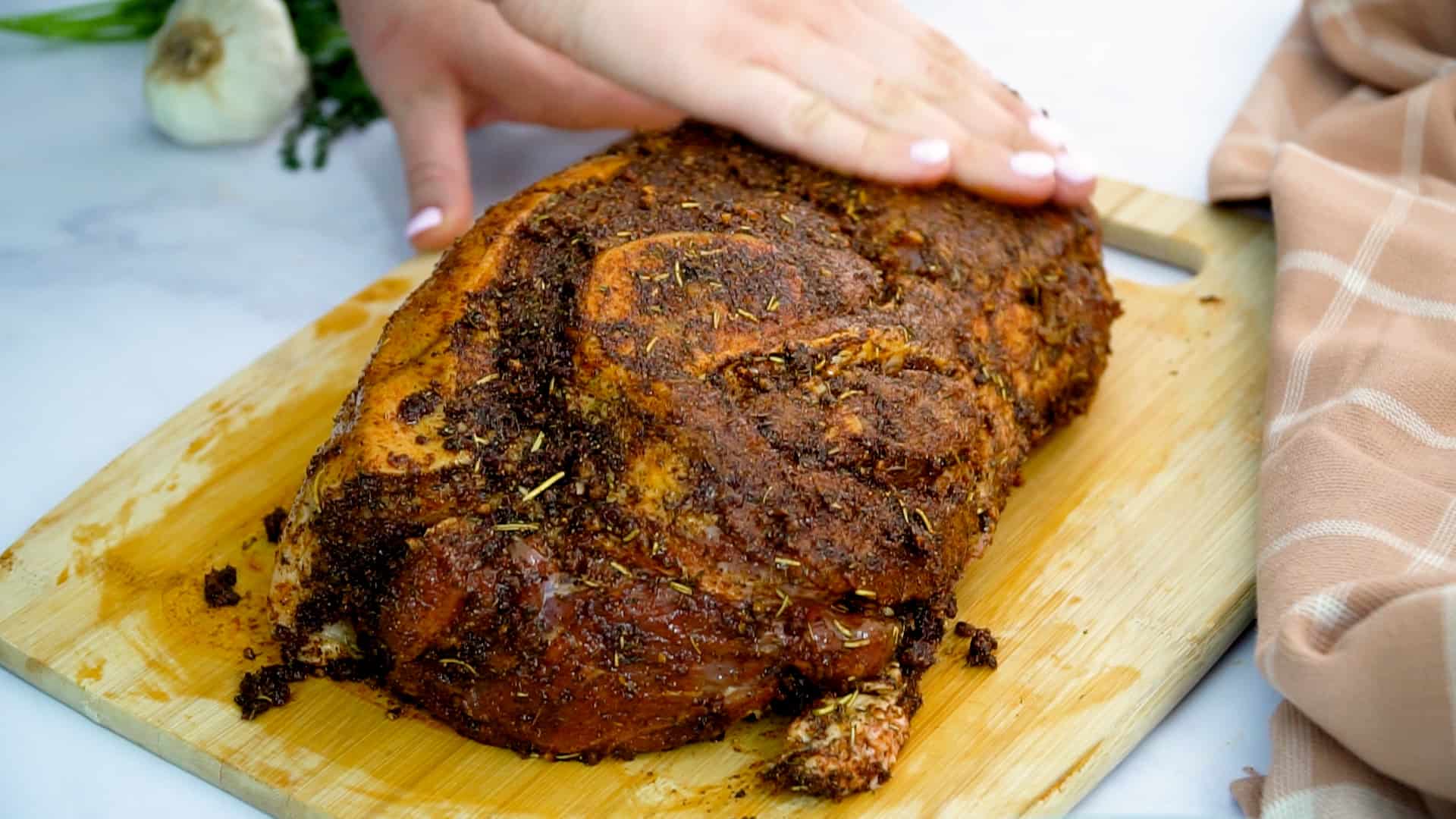
To make a pork picnic roast, season a thawed pork shoulder with salt, pepper, garlic, paprika, and herbs. Roast it in a preheated 325°F oven until the meat is tender and reaches your desired doneness. For pulled pork, cook it longer, often to around 195°F to 205°F, until it pulls apart with little effort. Rest the roast before serving.
Across the United States, pork roast is a welcome choice for Sunday dinner, holiday meals, and casual family gatherings. A pork picnic roast offers plenty of flavor from its rich meat, fat, skin, and connective tissue. It can take time to cook, but the prep is simple and the oven does most of the work.
A picnic roast comes from the lower part of the pork shoulder, near the front leg. Many cuts include the skin and bone. These parts add flavor, but they also affect how the roast cooks. The best method depends on whether you want neat slices, soft chunks, or meat that falls apart for sandwiches and tacos.
This guide explains how to choose the roast, season it, roast it in a home oven, and check when it is ready. It also covers crisp skin, cooking times, common mistakes, and safe food handling. Since roast size and oven performance vary, use a meat thermometer and the texture of the meat rather than time alone.
A pork picnic roast is a cut from the lower shoulder of the pig. It may also be sold as a picnic shoulder, pork shoulder picnic, or fresh picnic roast. The exact name on the package can vary by store and region.
This cut contains muscles that do plenty of work, along with connective tissue and fat. That mix gives it a strong pork flavor. It also makes the cut a good fit for slow roasting when you want tender meat.
Many picnic roasts are sold bone-in with the skin attached. Some are trimmed, rolled, or sold without skin. Read the label before cooking because the cut and its preparation can change the best method.
Source: thecortezkitchen.com
Bone-in roast
The bone can add flavor and helps you identify the center of the cut. It may make carving a little harder, so use a sharp knife after resting.
Skin-on roast
The skin can turn crisp when its surface is dry and it receives enough heat. It may stay chewy if it is covered or exposed to steam for too long.
Skinless roast
A skinless cut is easier to season all over. It will not form the same crisp pork rind, but the outside can still brown.
Is Picnic Roast the Same as Pork Butt?
They are both cuts from the shoulder, but they come from different areas. Pork butt, often called Boston butt, comes from the upper shoulder. Picnic roast comes from the lower shoulder near the front leg.
Both can work for pulled pork. A picnic roast may have skin and a more noticeable bone, while pork butt is often sold with a thick fat cap. Either cut can become tender with slow cooking and enough time.
Ingredients for an Easy Pork Picnic Roast
You only need a few basic items to make a flavorful roast. Salt brings out the pork’s natural taste, while garlic, pepper, paprika, and herbs add a savory crust. A little oil helps the dry rub cling to the meat.
The amounts below suit one pork picnic roast weighing about 5 to 7 pounds. If your roast is much smaller or larger, adjust the seasoning to fit its surface. Do not add so much salt that it forms a thick layer.
Source: bakeitwithlove.com
Pork picnic roast
Use one 5- to 7-pound fresh roast, bone-in or boneless. If frozen, thaw it safely in the refrigerator before cooking.
Kosher salt
Use about 2 teaspoons, adjusting for the salt type and size of the roast. Fine table salt packs more tightly, so use less by volume.
Black pepper
Use 1 teaspoon of ground black pepper for a warm, savory flavor.
Garlic
Use 4 minced cloves or about 1 teaspoon of garlic powder. Fresh garlic gives the rub a strong, savory note.
Paprika
Use 2 teaspoons of sweet paprika. Smoked paprika works well if you want a mild smoky taste.
Dried herbs
Use 1 teaspoon of dried thyme or rosemary. You can use a small amount of both if you enjoy their flavor.
Oil
Use 1 tablespoon of olive oil or another neutral cooking oil for the meat side. If you want crisp skin, keep oil off the skin when possible.
Optional vegetables
Add one sliced onion and a few chunks of carrot to the roasting pan. They add flavor to the drippings and can help form a base for gravy.
Optional Flavor Changes
For a sweet and savory roast, add 1 tablespoon of brown sugar to the rub. Sugar can brown fast, so watch the surface near the end of cooking. For a mild kick, add a little cayenne pepper or chili powder.
For a more herb-forward flavor, use rosemary, thyme, and black pepper. For a Latin-inspired meal, try cumin, oregano, garlic, and a small amount of lime zest. Keep the core method the same and choose flavors that suit the sides you plan to serve.
How to Make a Pork Picnic Roast in the Oven
The simplest way to make a pork picnic roast is to season it well, roast it at a steady temperature, and check the meat as it cooks. Start with a fully thawed cut and a clean roasting pan. Allow enough time for the roast to cook slowly and rest before serving.
For this method, set the oven to 325°F. This temperature supports even roasting and gives the fat and connective tissue time to soften. The total cooking time will vary, so plan a flexible meal window rather than relying on a fixed minute-per-pound rule.
Source: bakeitwithlove.com
Step 1: Heat the oven
Preheat the oven to 325°F. Place a rack in the middle so hot air can circulate around the roasting pan.
Step 2: Prepare the pork
Remove the roast from its packaging and check for any loose bone fragments. Pat it dry with paper towels. Do not rinse raw pork in the sink, since splashes can spread germs onto nearby surfaces.
Step 3: Season the roast
Mix the salt, pepper, garlic, paprika, herbs, and oil. Rub the mixture over the exposed meat. If the roast has skin, dry the skin well and apply salt to its surface.
Step 4: Set it in the pan
Place the roast in a sturdy roasting pan, skin-side up when skin is attached. A rack helps hot air move under the meat, but the roast can also sit on a bed of onion and carrot. Add a small amount of water or broth to the pan only if needed to keep the drippings from scorching.
Step 5: Roast the pork
Put the pan in the oven and let the roast cook. Avoid opening the door often, since heat escapes each time. If the surface gets dark before the center is ready, loosely cover the browned areas with foil.
Step 6: Check the internal temperature
Insert a food thermometer into the thickest part of the meat, away from the bone. Check more than one spot if the roast is large. For sliced pork, follow the safe minimum of 145°F and allow at least three minutes of rest. For pulled pork, continue cooking until the meat is very tender.
Step 7: Rest the roast
Move the roast to a clean board or serving dish. Let it rest before slicing or pulling. A large shoulder cooked until tender often benefits from a longer rest of about 20 to 30 minutes, loosely covered.
Step 8: Serve
Slice the meat across the grain or pull it into pieces with two forks. Spoon a little of the warm pan juice over the meat if you want extra moisture. Serve while hot.
How to Get Crispy Pork Skin
Dry skin is the starting point for crisp pork rind. Moisture on the surface turns to steam and can stop the skin from becoming crisp. If you have time, leave the uncovered roast on a tray in the refrigerator for several hours or overnight, as long as it remains safely chilled and protected from other food.
Salt the skin before roasting, but avoid pouring broth or water over it. Once the meat is tender, you can raise the oven temperature briefly to brown the skin further. Watch closely during this stage because the skin and any sugar in the rub can darken fast.
A broiler can help, but it can also burn the surface in a short time. Keep the pan at a safe distance from the heating element and stay nearby. If the skin remains chewy, the meat can still be cooked and flavorful even if the crackling is not ideal.
Should You Cover a Pork Picnic Roast?
You do not need to cover the roast for the whole cooking time. Leaving it uncovered helps the outside brown and gives the skin a chance to crisp. Covering it with foil can help prevent the surface from getting too dark during a long cook.
For pulled pork, some cooks cover the roast during part of the cook to limit moisture loss. This can soften the skin, so remove the cover near the end if you want to crisp it again. Choose the approach that matches your goal.
Pork Picnic Roast Cooking Time and Temperature
Cooking time depends on the roast’s weight, shape, starting temperature, bone, and oven. A wide, flat roast may cook faster than a thick one of the same weight. Use time as a planning guide, then use a thermometer and tenderness checks to decide when to stop.
For a traditional oven roast, 325°F is a useful starting point. A roast cooked for neat slices can be done well before one cooked for pulled pork. If you want the meat to fall apart, allow extra time for connective tissue to soften.
Source: farmhouseharvest.net
Smaller roast
A 3- to 4-pound roast may take several hours, depending on its shape and the desired texture. Begin checking its temperature well before you expect it to finish.
Medium roast
A 5- to 7-pound roast needs a longer cooking window. For pulled pork, it may take much of the afternoon, so avoid setting a strict serving time based only on weight.
Large roast
A roast over 8 pounds may need many hours. Check the package weight, allow room for resting, and use a thermometer rather than repeatedly opening the oven.
What Temperature Should Pork Picnic Roast Reach?
For food safety, the USDA recommends that whole cuts of pork reach at least 145°F, followed by a rest of at least three minutes. Measure the temperature in the thickest part and keep the probe away from bone. Color alone cannot tell you whether the pork is safe.
That safe minimum does not mean every shoulder roast will be tender enough to pull apart. For pulled pork, many cooks aim for roughly 195°F to 205°F and test the meat with a fork or probe. This higher range is a texture goal, not the minimum safety temperature for every pork roast.
If the meat reaches 195°F but still feels firm, keep cooking and check it again later. Some roasts become tender sooner than others. The probe should slide into several parts of the meat with little resistance when the roast is ready to pull.
A Simple Cooking Plan
For a dinner served at 6 p.m., a 6-pound roast intended for pulled pork should go into the oven well before the afternoon rush. The exact start time depends on your oven and the shape of the roast, so build in extra time for the cook and rest.
If the pork finishes early, keep it covered and warm while you prepare the sides. If it is still firm near dinner time, do not treat the clock as proof that it is ready. Continue cooking until the texture suits the dish, then adjust the meal schedule if needed.
How to Make the Meat Tender and Juicy
Tender pork starts with enough cooking time and ends with a proper rest. A shoulder roast contains connective tissue that softens during a long cook. When the meat is rushed, the outside may look done while the center remains firm.
Fat helps the roast stay flavorful, but it cannot prevent every dry spot. Avoid cooking at an unnecessarily high temperature for the whole process. If the surface becomes too dark, loosely cover it with foil and keep cooking until the center reaches the right texture.
Source: i.pinimg.com
Do not trim away all the fat
A thin layer of fat can add flavor and help protect the surface. Remove only thick, unwanted pieces if needed, and keep the skin intact when crisp crackling is your goal.
Use a thermometer
A thermometer helps you track progress without cutting into the roast. Check the thickest part and take more than one reading when the cut is large or uneven.
Allow enough time
Slow cooking gives tough connective tissue more time to soften. If the roast is still hard to pull apart, it usually needs more cooking rather than a stronger seasoning rub.
Rest before cutting
Resting gives the meat time to settle after cooking. Keep it loosely covered, then slice across the grain or pull it apart while warm.
Why Is My Pork Roast Tough?
A tough shoulder roast often needs more time. Reaching a safe temperature does not mean all the connective tissue has softened. If you want pulled pork and the meat will not separate easily, return it to the oven and check it again after more cooking.
A roast can also seem dry if it is sliced with the grain or served without its juices. Slice across the muscle fibers for a more tender bite. For pulled pork, mix a little of the cooking liquid into the meat before serving.
Can You Add Water to the Pan?
Yes, a small amount of water or broth can help keep pan drippings from burning. It also creates liquid for a simple sauce. However, too much liquid can steam the roast and make the skin soft.
If crisp skin is your main goal, keep the skin above the liquid and avoid covering the pan for the entire cook. Check the pan now and then, adding a little liquid only if the drippings are drying out or scorching.
How to Make Gravy From Pork Roast Drippings
Pan drippings can make a rich, simple gravy. Once the roast is done, move it to a board to rest. Check the roasting pan for browned bits, and remove any blackened pieces that could make the sauce taste bitter.
Place the pan on the stove if it is safe for stovetop use, or pour the drippings into a saucepan. Skim off excess fat if you prefer a lighter gravy. Stir in a little flour to make a paste, then slowly add broth while whisking until the sauce reaches the thickness you like.
Source: thecortezkitchen.com
For a quick gravy
Whisk 2 tablespoons of flour into 2 tablespoons of warm pork fat or butter over medium heat. Cook briefly, then add about 2 cups of broth in small amounts while whisking. Simmer until smooth and thick.
For a thinner pan sauce
Add broth to the browned pan drippings and scrape up the flavorful bits. Simmer until the liquid reduces slightly, then taste and season.
For extra flavor
Add a small amount of onion, thyme, or black pepper. Taste before adding salt because the roast drippings may already be salty.
What If the Pan Drippings Taste Burnt?
Do not scrape black, burnt bits into the gravy. Pour the usable liquid into a clean pan and leave the scorched material behind. Add fresh broth and season to taste.
If the drippings are very bitter, skip them and make a fresh gravy with broth and butter. A simple sauce is better than one that carries a burnt flavor through the whole meal.
What to Serve With Pork Picnic Roast
Pork picnic roast pairs well with simple sides that balance its rich flavor. Roasted potatoes, green beans, carrots, coleslaw, and cornbread all work well. A fresh salad or a tangy slaw can also cut through the richness of the meat.
For a classic American Sunday dinner, serve slices of pork with mashed potatoes, gravy, and a green vegetable. For pulled pork, use soft sandwich rolls, pickles, and a vinegar-based slaw. Leftover pork can also go into tacos, rice bowls, quesadillas, or baked potatoes.
Source: bakeitwithlove.com
Roasted vegetables
Carrots, onions, potatoes, and Brussels sprouts can roast alongside the pork if there is room in the pan. Add quick-cooking vegetables later so they do not turn too soft.
Potatoes and gravy
Mashed or roasted potatoes soak up the pork juices and make the meal hearty. Serve the gravy on the side so each person can add as much as they like.
Slaw and pickles
Cabbage slaw and pickles add crunch and a bright, tart taste. They are especially good with pulled pork sandwiches.
Cornbread or dinner rolls
Bread is useful for soaking up sauce or making sandwiches from leftover pork. Warm it just before serving.
How to Use Leftover Picnic Roast
Remove leftover meat from the bone and store it with a little cooking liquid to help it stay moist. Shred the pork for sandwiches, stir it into beans, or add it to a skillet with onions and peppers. You can also warm it in broth for an easy soup.
Refrigerate cooked pork within two hours of cooking, or within one hour when the surrounding temperature is above 90°F. Keep it in a covered, shallow container and use refrigerated leftovers within three to four days. Reheat leftovers to 165°F, measured with a food thermometer.
Common Pork Picnic Roast Mistakes
A few small errors can change the texture of a roast. Most problems come from poor temperature checks, too little cooking time, wet skin, or cutting the meat before it has rested. A simple plan helps you avoid these issues.
Source: farmhouseharvest.net
Using time instead of temperature
A cooking chart gives an estimate, not a guarantee. Check the thickest part of the roast with a thermometer and use tenderness to judge whether it is ready for pulling.
Starting with wet skin
Wet skin is less likely to turn crisp. Pat it dry and, if time allows, chill the uncovered roast in the refrigerator to help dry the surface.
Cooking at very high heat for the entire time
High heat can darken the outside before the inner meat is tender. Use a steady oven temperature for most of the cook and raise the heat only near the end if you need more browning.
Adding too much liquid
A deep pool of liquid can steam the skin. Use only enough to prevent the pan drippings from scorching, and keep the skin out of the liquid.
Cutting too soon
Cutting the roast as soon as it leaves the oven can make serving harder and allow more juices to escape. Give it time to rest before slicing or pulling.
Ignoring safe handling
Keep raw pork separate from ready-to-eat foods, wash hands and utensils after contact, and refrigerate leftovers promptly. Never judge safe doneness by color alone.
Frequently Asked Questions
Q
How long does it take to cook a pork picnic roast?
The time depends on the roast’s weight, shape, oven, and desired texture. A 5- to 7-pound shoulder may need several hours at 325°F, and pulled pork often takes longer than pork meant for slices. Use a thermometer and check tenderness instead of relying on a fixed time.
Q
Should I cook a pork picnic roast covered or uncovered?
Roast it uncovered if you want browning and crisp skin. You can cover the meat loosely with foil if the surface gets too dark before the center is ready. For pulled pork, covering partway through can help limit moisture loss, but the skin may soften.
Q
What is the best temperature for a tender pork picnic roast?
A 325°F oven is a practical choice for slow roasting. Whole pork cuts are safe at an internal temperature of 145°F with a rest of at least three minutes. For pulled pork, aim for roughly 195°F to 205°F and check that the meat pulls apart easily.
Q
Do I need to remove the skin before roasting?
No. You can leave the skin on, especially if you want crisp pork rind. Dry the skin well and season it with salt. If you prefer to eat only the meat, you can remove the skin before cooking, but the roast will not have a crisp rind.
Q
Can I make pulled pork with a picnic roast?
Yes. Picnic roast works well for pulled pork because its connective tissue softens during a long cook. Roast it until the meat is very tender, often around 195°F to 205°F, then rest it and pull it apart with forks. Mix in a little cooking liquid to keep the meat moist.
Q
Can I cook a frozen pork picnic roast in the oven?
For more even cooking, thaw the roast in the refrigerator before roasting. Do not leave raw pork on the counter to thaw. Cooking from frozen can take much longer, and it is harder to estimate the finish time, so follow reliable food-safety guidance and use a thermometer.
Q
How do I know when the pork picnic roast is done?
Use a food thermometer to check the thickest part, away from the bone. For sliced pork, reach at least 145°F and rest for three minutes. For pulled pork, the meat should reach a higher temperature and feel soft enough for a probe or fork to slide in with little resistance.
Q
How should I store leftover pork picnic roast?
Place the leftovers in a covered, shallow container and refrigerate them within two hours of cooking, or within one hour in temperatures above 90°F. Use them within three to four days and reheat to 165°F. Freeze portions you will not use in that time.
✦ Wrapping Up
Conclusion
Making a pork picnic roast at home takes a few basic ingredients and some patience. Season the meat, roast it at 325°F, and check the center with a thermometer. A dry surface helps the skin crisp, while a long cook helps the shoulder turn tender enough for pulling.
The key is to match the finish to the meal. Stop at a safe temperature and rest the meat if you want slices. For pulled pork, keep cooking until the meat is soft and easy to shred. Serve it with potatoes, vegetables, rolls, or slaw, and save the drippings for a quick sauce.
💡 Key Takeaway
Start with a fully thawed 5- to 7-pound pork picnic roast, pat it dry, season it well, and roast at 325°F. Use a food thermometer, allow time for resting, and keep cooking until the texture matches the way you plan to serve it.