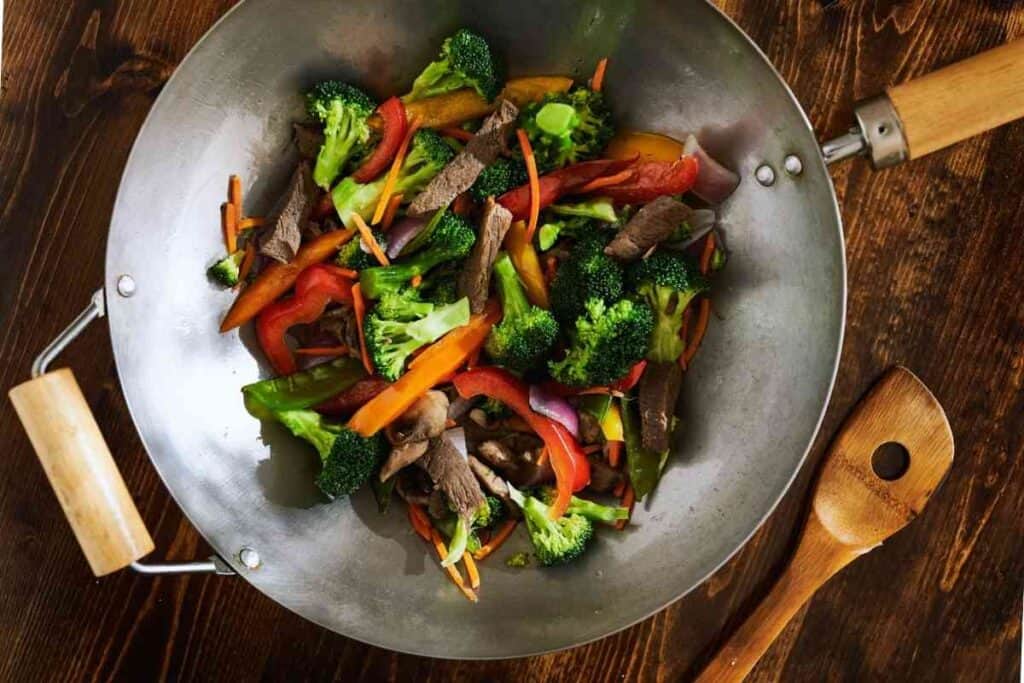
You can cook far more than stir-fry in a wok. Try fried rice, noodles, chicken, shrimp, beef, eggs, vegetables, dumplings, soups, and even popcorn. Its deep bowl makes it easy to toss food, stir sauces, and cook many small pieces in one pan.
In American home kitchens, a wok can help make quick weeknight meals with common foods from the fridge and pantry. You can use it for a simple chicken dinner, a bowl of veggie noodles, or fried rice made with leftover rice. The trick is to pick food that suits the pan and control the heat.
A wok is not just for high-heat stir-frying. Depending on its size, shape, material, and your stove, it can also steam, shallow-fry, simmer, boil, and braise food. Some dishes work better in a wok than others, so it helps to know what the pan can do before you start cooking.
This guide covers what to cook in wok, which foods work best, and how to avoid common problems. You will also find simple meal ideas, cooking steps, and food safety tips for making wok cooking easier at home.
Source: marionskitchen.com
1. Fried Rice Is One of the Best Foods to Cook in a Wok
Fried rice is a great place to start because it uses simple ingredients and cooks quickly. You can make it with cooked rice, eggs, vegetables, and a small amount of oil. Add chicken, shrimp, pork, or tofu if you want a more filling meal.
Cold rice that has been chilled in the fridge often works well because its grains are less wet and easier to separate. Fresh rice can also work, but it may clump if it is moist. Spread freshly cooked rice out to release steam, then chill it promptly if you plan to use it later.
A wok’s curved sides make it easy to move rice around while mixing in eggs, vegetables, and sauce. The key is to avoid adding too much food at once. A crowded pan can trap moisture and leave the rice soft rather than lightly toasted.
Source: foodiosity.com
Basic ingredients
Use cooked rice, eggs, peas, carrots, green onions, a little neutral cooking oil, and soy sauce.
Try garlic, ginger, sesame oil, or a small amount of oyster sauce if it suits your diet.
How to Make Simple Wok Fried Rice
Heat the wok over medium-high heat, adjusting the setting for your stove and pan. Add a small amount of oil, then cook the beaten eggs until just set. Remove them if the pan is crowded.
Add firm vegetables first, followed by softer vegetables and aromatics. Add the rice and break up any clumps with a spatula. Stir in the eggs and a little soy sauce, then toss until the rice is hot throughout.
If you use leftover rice, keep it refrigerated until cooking time. Rice should be cooled and stored promptly after cooking, not left at room temperature for long periods. Reheat leftovers until steaming hot throughout.
Helpful tip
Use a small amount of sauce at first. Too much liquid can make fried rice wet and heavy.
2. Cook Noodles for a Fast, Filling Meal
Noodles are another good choice for a wok. Wheat noodles, rice noodles, egg noodles, and many other types can be tossed with vegetables, meat, tofu, and sauce. The best type depends on the recipe and the texture you want.
Cook the noodles according to their package directions before adding them to the wok, unless your recipe calls for a different method. Drain them well so extra water does not dilute the sauce. Some rice noodles need soaking rather than boiling, so check the package.
For a simple noodle dinner, stir-fry sliced bell peppers, carrots, cabbage, and green onions. Add cooked noodles, then pour in a mix of soy sauce, garlic, and a little broth. Toss gently until everything is hot and coated.
Source: www.pinterest.com
Chicken lo mein style noodles
Combine cooked noodles with thin chicken strips, cabbage, carrots, garlic, and a savory sauce.
Vegetable rice noodles
Use softened rice noodles with bean sprouts, mushrooms, peppers, and tofu.
Spicy peanut noodles
Toss noodles with a sauce made from peanut butter, soy sauce, lime juice, and water, checking for peanut allergies.
How to Keep Wok Noodles From Sticking
Drain noodles well and avoid leaving them in a wet pile. If the package directions allow it, a small amount of oil can help keep drained noodles apart while you prepare the other ingredients.
Make sure the vegetables and protein are nearly cooked before adding the noodles. Use tongs or a wok spatula to lift and turn the noodles instead of crushing them. Add sauce in small amounts and keep the food moving.
Avoid overcooking
Cook noodles slightly firm when they will receive extra heat in the wok, following the package guidance.
3. Make Chicken, Beef, and Pork in a Wok
A wok is useful for thin strips of meat because they cook faster than large cuts. Chicken, beef, and pork all work well when sliced into similar pieces. You can pair them with vegetables and a quick sauce for a complete meal.
Trim excess fat if needed, and cut meat across the grain when that suits the cut. Pat wet meat dry before cooking to reduce splattering and help it brown. If the pan is small, cook the meat in batches rather than crowding it.
Cook raw meat separately from ready-to-eat ingredients. Use clean utensils and plates, and never return cooked food to a plate that held raw meat unless it has been washed first. A wok can get hot quickly, but high heat alone does not prove that the center of each piece is safe.
Source: tastingtable.com
Chicken and broccoli
Cook thin chicken pieces, then add broccoli, garlic, ginger, and a light soy-based sauce.
Beef and peppers
Stir-fry thin beef strips with bell peppers, onions, and a sauce made with soy sauce and a little broth.
Pork and cabbage
Combine thin pork strips with cabbage, carrots, and garlic for a quick savory meal.
Safe Cooking Temperatures for Meat
Use a food thermometer to check the thickest part of the food. The USDA recommends 165°F for poultry, 160°F for ground meats such as ground beef and ground pork, and 145°F for whole cuts of beef and pork followed by a three-minute rest.
Thin slices can be hard to check one by one. Cut them to a consistent size, spread them across the pan, and make sure they cook through. If you cannot confirm the temperature of a piece, continue cooking it rather than relying only on color.
Poultry
Cook chicken and turkey to 165°F.
Ground meat
Cook ground beef and pork to 160°F.
Whole cuts
Cook whole beef and pork cuts to at least 145°F, then rest for three minutes.
4. Cook Shrimp and Other Seafood in a Wok
Shrimp, scallops, and small pieces of firm fish can cook well in a wok. They pair nicely with garlic, ginger, green onions, snap peas, peppers, and noodles. Seafood cooks quickly, so prepare the other ingredients before adding it to the pan.
Pat seafood dry before cooking. Excess surface water can lower the pan temperature and create more steam. Add the seafood in a single layer when possible, and turn it once the first side has started to cook.
Shrimp are done when the flesh is pearly and opaque, but appearance is not a replacement for a thermometer. Fish and shellfish should reach 145°F, according to USDA guidance. Remove seafood promptly once it is cooked to help prevent a tough texture.
Source: www.pinterest.com
Garlic shrimp
Cook peeled shrimp with garlic, a little oil, green onions, and a splash of lemon juice.
Shrimp fried rice
Add cooked shrimp to fried rice near the end so it heats through without becoming rubbery.
Fish and vegetables
Use firm fish pieces with vegetables and a mild ginger sauce, turning the fish gently to keep it intact.
How to Avoid Rubbery Shrimp
Do not leave shrimp in the wok while you finish chopping vegetables or mixing sauce. Have everything ready before the shrimp go into the pan. Cook them until they reach a safe temperature, then move them to a clean plate if other ingredients still need work.
Keep the sauce light
A small amount of sauce adds flavor without soaking the seafood and vegetables.
5. Stir-Fry Fresh or Frozen Vegetables
Vegetables are among the easiest foods to cook in a wok. Broccoli, cabbage, carrots, mushrooms, zucchini, snow peas, bell peppers, and green beans are all useful options. Mix two or three types for a simple side dish, or add tofu and noodles to make a full meal.
Cut firm vegetables into thin, even pieces so they cook at a similar rate. Add dense vegetables first, then softer vegetables near the end. For example, carrots and broccoli stems need more time than thin slices of bell pepper or leafy greens.
Frozen vegetables can work too, though they may release more water. If you add too many while frozen, the pan may cool and the vegetables may soften before they brown. Cook them in batches or thaw and drain them when the recipe allows.
Source: gypsyplate.com
Broccoli and garlic
Stir-fry small broccoli florets with garlic and a splash of water or broth to help them soften.
Mushrooms and snow peas
Cook mushrooms first to release moisture, then add snow peas for a crisp finish.
Cabbage and carrots
Slice both thinly and toss with ginger, garlic, and a little soy sauce.
Can You Cook Vegetables Without Oil?
You can cook vegetables in a wok with a small splash of water or broth instead of oil, but the result will be closer to steaming or braising than classic stir-frying. Add liquid in small amounts so the vegetables do not sit in a deep pool.
For a browned finish, a little suitable cooking oil usually works better. The amount you use depends on the pan, the ingredients, and your cooking needs.
For crisp vegetables
Use a hot pan, dry vegetables, and short cooking times.
6. Cook Eggs, Tofu, and Other Meat-Free Meals
A wok can make simple meat-free meals with eggs, tofu, and vegetables. These foods take on the flavor of sauces and seasonings, so you do not need a long list of ingredients. They also pair well with rice and noodles.
For tofu, choose firm or extra-firm varieties when you want the cubes to hold their shape. Drain the tofu and pat it dry before cooking. Brown the cubes in a little oil, turn them carefully, and remove them before stir-frying the vegetables if the pan becomes crowded.
Eggs can be scrambled directly in the wok or cooked first and added back near the end. Keep the heat moderate enough to avoid scorching them. A little garlic, ginger, soy sauce, and green onion can bring the whole dish together.
Source: artofit.org
Tofu and broccoli
Brown tofu cubes, stir-fry broccoli, then combine them with a ginger and soy sauce.
Egg and vegetable rice
Scramble eggs, add vegetables and cooked rice, and stir until hot throughout.
Mushroom tofu noodles
Toss browned tofu and mushrooms with cooked noodles and a mild savory sauce.
How to Keep Tofu From Breaking
Dry tofu well and use a wide spatula to turn it. Avoid stirring too often before the cubes form a browned surface. Add the sauce near the end so the tofu has a chance to brown before it absorbs extra moisture.
Choose the right tofu
Firm or extra-firm tofu is usually easier to stir-fry than soft or silken tofu.
7. Steam Dumplings and Cook Other Small Bites
A wok can steam dumplings when you have a fitted lid, a suitable rack or steamer insert, and enough room for steam to circulate. This is useful for frozen dumplings, fresh dumplings, and some vegetables. Follow the food package instructions for cooking time and preparation.
Add water beneath the rack, making sure the water does not touch the food unless the method calls for it. Bring the water to a steady simmer, set the dumplings in the steamer, and cover with the lid. Keep enough water in the wok throughout cooking.
Some dumplings are better pan-fried before a small amount of water is added for steaming. This creates a browned base and a softer top. Use a lid that fits securely, keep your hands away from escaping steam, and turn off the heat before lifting the lid toward you.
Source: qaqooking.wiki
Steamed dumplings
Use a compatible steamer insert and follow the package directions for the filling and cooking method.
Steamed vegetables
Broccoli, carrots, and other vegetables can be steamed in a rack above simmering water.
Pan-fried dumplings
Brown the bottoms first, add the amount of water required by the recipe, cover, and cook until done.
What You Need Before Steaming
Check that the wok, lid, rack, and handles are safe for the heat source. Do not use a loose or unstable rack. The water should simmer steadily, not boil over onto the burner.
Watch the water level
Add more hot water if needed, taking care to avoid splashes and steam burns.
8. Make Soups, Broths, and Simple Braised Dishes
A wok can hold broth, soup ingredients, and sauces, especially when it has a deep shape. This makes it useful for quick noodle soup, vegetable broth, and small batches of braised food. However, a stockpot may be more stable and easier to handle for large amounts of liquid.
For a basic noodle soup, soften garlic and ginger in a little oil, then add broth and bring it to a simmer. Add vegetables and noodles according to their cooking times. Add cooked meat or tofu and heat it through before serving.
For a braised dish, brown the main ingredients first, then add sauce or broth and lower the heat. Cover if the lid fits properly. Avoid filling the wok too close to the rim, since moving hot liquid in a wide pan can be awkward and unsafe.
Source: cookwarely.com
Chicken noodle soup
Use broth, cooked chicken, vegetables, and noodles for a quick meal.
Vegetable broth bowl
Simmer mushrooms, cabbage, carrots, and greens in broth, then add noodles if desired.
Simple braised tofu
Brown tofu, add a modest amount of seasoned broth, and simmer until the sauce has the taste and texture you want.
When a Wok Is Not the Best Pan
A wok is not always the safest or most practical choice for a large pot of soup, a deep pool of hot oil, or a long slow simmer. Its shape and handle design vary, and some models can become unstable when filled with liquid.
Use a stockpot for large soup batches and a pan designed for deep-frying when you need to submerge food in oil. If the wok rocks on the burner or its base does not match the stove, choose another pan.
Choose stability first
The wok should sit securely on a compatible burner or wok ring before you add hot liquid or oil.
9. Try Shallow-Fried Foods and Crispy Snacks
A wok can shallow-fry foods such as small fritters, thin slices of vegetables, and some dumplings. The deep sides help contain splashes, but they do not remove the risks of hot oil. The wok must sit securely, and the oil level must leave plenty of room for food and bubbling.
Use an oil suitable for the cooking temperature and heat it gradually. Add food carefully, away from your body, and avoid dropping wet ingredients into hot oil. Water on food can cause dangerous splattering.
Do not leave hot oil unattended. Keep children and pets away from the stove, and never use water to put out a grease fire. If oil catches fire, turn off the heat if you can do so safely and cover the pan with a suitable metal lid. Leave it covered and call emergency services if the fire does not go out.
Source: marionskitchen.com
Vegetable fritters
Cook small portions of batter with chopped vegetables, making sure the center cooks through.
Crispy tofu
Shallow-fry dry tofu pieces in a small amount of suitable oil, turning them as they brown.
Pan-fried dumplings
Brown dumplings in a thin layer of oil, then use the recipe’s steaming step if needed.
Can You Deep-Fry in a Wok?
Some woks are used for deep-frying, but not every wok or stove setup is suitable. A rounded-bottom wok needs proper support, and a wide, shallow pan may require more oil than expected to cover the food.
For home cooks who want to deep-fry often, a stable pan designed for the task may be easier to control. Never fill a wok with oil beyond a safe level, and never move a pan of hot oil.
Keep oil away from water
Dry food and utensils before they touch hot oil, and lower food gently to reduce splashes.
10. Choose the Right Wok Cooking Method
The best cooking method depends on the food, wok material, and heat source. Stir-frying suits small pieces that cook quickly, while steaming works for foods that benefit from moist heat. Simmering and braising need more liquid and lower heat.
Carbon steel and cast iron can retain and conduct heat differently from stainless steel and nonstick cookware. Follow the maker’s care and heat guidance for your specific pan. Do not assume every wok can be heated empty over a high flame or used with metal utensils.
A flat-bottom wok often sits more securely on common home stovetops than a traditional round-bottom wok. Check your stove manual and the wok instructions, especially with glass or ceramic cooktops. A wok ring should only be used if it is designed for that setup.
Source: artofit.org
Stir-frying
Best for thin meat strips, vegetables, noodles, and rice that need quick cooking.
Steaming
Useful for dumplings and vegetables when a suitable rack and lid are available.
Simmering
Works for small batches of broth, soup, and sauces when the wok is stable.
Shallow-frying
Suitable for selected foods when the wok and stove can safely support the pan and oil.
Wok vs. Skillet: Which Should You Use?
A wok is useful when you need to toss food or move ingredients up the curved sides. A flat skillet often provides more direct contact between food and the cooking surface, which helps when you want a broad, even sear.
Choose the pan based on the meal rather than assuming one is always better. A wok suits noodles and mixed stir-fries, while a skillet may be easier for a large steak, pancakes, or foods that should remain in one flat layer.
Use a wok
Choose it for mixed vegetables, fried rice, noodles, and thin pieces of meat.
Use a skillet
Choose it when a wide, flat cooking area is more useful than deep curved sides.
11. How to Cook a Good Wok Meal Step by Step
A good wok meal starts before the burner turns on. Wash and cut the ingredients, mix the sauce, and keep the tools you need close by. This reduces the chance of burning garlic or overcooking meat while you look for the next ingredient.
Use a cooking oil suited to the planned heat. Heat the wok according to its material and maker’s guidance, then add the oil. If the oil smokes heavily, lower the heat and let the pan cool as needed before continuing.
Cook ingredients in an order that matches their cooking time. Dense vegetables and raw protein often need more time than leafy greens, cooked noodles, or fresh herbs. Add the sauce near the end unless the recipe calls for a longer simmer.
Source: gypsyplate.com
Step 1: Prep everything
Cut food evenly, measure the sauce, and separate raw meat from ready-to-eat ingredients.
Step 2: Heat the pan
Follow the wok’s instructions and use a heat level suited to the stove and recipe.
Step 3: Cook in stages
Cook protein and dense vegetables first, working in batches when needed.
Step 4: Add the finishing ingredients
Toss in cooked rice or noodles, then add sauce and quick-cooking greens.
Step 5: Check and serve
Confirm that food is cooked safely, then serve it on clean plates.
How to Tell When the Wok Is Too Crowded
A crowded wok often produces a lot of liquid and very little browning. Food may soften instead of developing the texture you want. The problem is common when you add a full recipe’s worth of cold meat and wet vegetables at once.
Remove some food and cook it in a second batch. Let excess liquid evaporate before adding more ingredients. Combine the batches at the end and heat them through with the sauce.
A simple rule
Leave enough room to move the food freely with your spatula without spilling it over the rim.
12. Common Wok Cooking Problems and How to Fix Them
Most wok cooking problems come from excess moisture, uneven cuts, poor heat control, or too much food in the pan. You can fix many of them by making a small change to your prep or cooking order. Do not assume that turning the heat to its highest setting will solve every problem.
Source: tastingtable.com
Food turns soggy
Dry the ingredients, reduce the batch size, and avoid adding too much sauce too early.
Garlic burns
Lower the heat or add garlic later, after the larger pieces of meat or vegetables have started cooking.
Food sticks to the wok
Check the pan’s seasoning and care instructions, use enough suitable oil, and avoid forcing food loose before it has browned.
Rice clumps together
Break up cold rice before cooking, add it in manageable amounts, and use a spatula to separate the grains.
Meat cooks unevenly
Slice it into similar pieces, avoid piling it up, and cook in batches when necessary.
Oil smokes heavily
Reduce the heat. Check that the oil suits the cooking temperature and that the pan is being used as its maker directs.
What to Do if Food Sticks to a Carbon Steel Wok
A carbon steel wok often needs seasoning, which is a thin layer of baked-on oil that helps protect the metal and improve cooking. If food sticks often, check whether the surface is clean, dry, and properly seasoned according to the manufacturer’s directions.
Avoid soaking carbon steel for long periods or putting it in the dishwasher unless the maker says otherwise. Dry it well after washing and follow the care instructions to reduce rust.
Do not scrape blindly
Use a suitable spatula and avoid damaging a coated surface or removing seasoning unnecessarily.
13. Easy Wok Meal Ideas for Different Days
You do not need a complex recipe each time you use a wok. A few basic foods, a sauce, and a plan for cooking order can make many different meals. Use the ideas below as starting points and adjust them to the ingredients you have.
Source: www.pinterest.com
A quick lunch
Cook leftover rice with egg, peas, carrots, and green onions.
A family dinner
Make chicken and broccoli with rice, using a mild garlic sauce.
A meat-free meal
Stir-fry tofu, mushrooms, cabbage, and noodles.
A seafood dinner
Cook shrimp with bell peppers and rice noodles, adding lime at the end.
A simple side dish
Toss green beans with garlic and a small amount of soy sauce.
A warming bowl
Simmer broth with vegetables and noodles in a stable wok that can safely hold the liquid.
A Simple Formula for Building Your Own Wok Recipe
Start with one main protein or a mix of vegetables. Add two or three vegetables with different textures, then choose rice or noodles if you want a complete meal. Finish with a sauce that matches the main ingredients.
For example, tofu, broccoli, carrots, and rice work with garlic, ginger, soy sauce, and a splash of broth. Shrimp, snow peas, and noodles can use a similar base with lime or another bright flavor. Taste the sauce before serving and adjust salt, spice, or acidity as needed.
Pick a base
Choose cooked rice, prepared noodles, or vegetables alone.
Add protein
Use chicken, beef, pork, shrimp, tofu, or eggs as appropriate.
Finish with flavor
Use garlic, ginger, green onions, soy sauce, citrus, or other suitable seasonings.
Frequently Asked Questions
Q
What is the easiest thing to cook in a wok?
Fried rice and simple vegetable stir-fry are easy choices. Both use common ingredients and take little prep once everything is cut and ready. You can add eggs, tofu, chicken, or shrimp to make the meal more filling.
Q
Can you cook eggs in a wok?
Yes. You can scramble eggs in a wok, make egg fried rice, or cook eggs before adding noodles and vegetables. Use suitable heat and a small amount of oil, and move the eggs to a plate if the pan gets crowded.
Q
Can you cook frozen food in a wok?
Yes, some frozen vegetables, dumplings, and other foods can be cooked in a wok. Follow package instructions and consider cooking in batches because frozen food can lower the pan temperature and release water. Do not thaw food on the counter for long periods.
Q
Can you cook rice directly in a wok?
You can cook rice in a wok with the right amount of water and a suitable lid, but a saucepan or rice cooker is often easier for plain rice. For fried rice, use rice that has already been cooked and cooled safely. Never leave cooked rice at room temperature for extended periods.
Q
What oil should you use in a wok?
Choose an oil suited to the heat level and follow the guidance for your wok. Common options for stir-frying include refined peanut, canola, and other neutral oils with suitable heat tolerance. Check allergy needs before using peanut oil, and lower the heat if the oil begins to smoke heavily.
Q
Can you use a wok on an electric stove?
Yes, if the wok is compatible with the stove. A flat-bottom model often provides better contact with a standard electric burner than a round-bottom model. Check the cookware and stove instructions, especially for glass or ceramic cooktops.
Q
Can you cook soup in a wok?
Yes, a stable, deep wok can be used for small batches of soup or broth. Avoid filling it too high, since the curved shape can make hot liquid harder to move. A stockpot is usually more practical for large batches.
Q
How do you keep food from sticking to a wok?
Use the right heat, prepare the surface according to the wok’s care instructions, and add suitable oil when needed. Dry ingredients well and cook in batches to reduce excess moisture. Carbon steel woks may also need proper seasoning.
✦ Wrapping Up
Conclusion
A wok can handle much more than a basic stir-fry. You can make fried rice, noodles, chicken, beef, pork, shrimp, tofu, eggs, vegetables, dumplings, soups, and selected fried foods. The best results come from matching the cooking method to the ingredients and keeping the pan at a suitable heat.
Start with one simple meal, such as egg fried rice or chicken and broccoli. Prepare the ingredients first, cook in small batches, and add the sauce near the end. Once you know how your wok behaves on your stove, it becomes easier to adapt recipes to the food you have on hand.
💡 Key Takeaway
For your next meal, choose one protein, two vegetables, and cooked rice or noodles. Cut the ingredients evenly, prepare a simple sauce, and cook each part in stages. Check food temperatures where needed, then serve the meal hot.