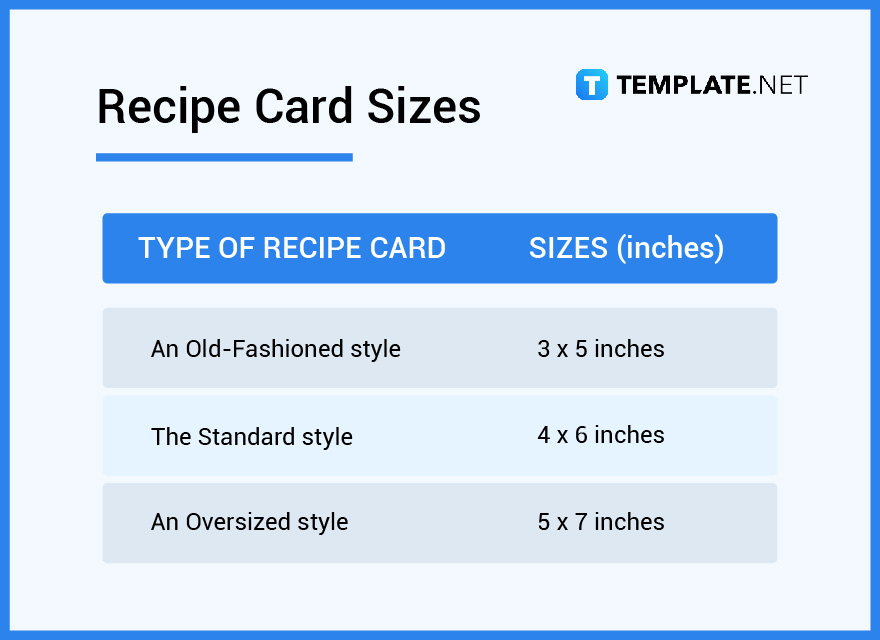
The most common recipe card sizes are 3 x 5 inches and 4 x 6 inches. A 3 x 5 card suits short recipes and compact storage, while a 4 x 6 card gives you more room for ingredients, steps, and notes. A 5 x 7 card is another useful option for long recipes or larger print.
In American kitchens, recipe cards often hold the dishes that bring people back to the table. A handwritten chili recipe, a cookie recipe from a grandparent, or a simple weeknight meal can fit on a small card. The right size helps keep those recipes easy to read, store, and use while cooking.
There is no single size that every recipe card must follow. The 3 x 5 inch and 4 x 6 inch formats are familiar choices, but the best size depends on how much you need to write and where you plan to keep the cards. A recipe for three ingredients needs less space than a holiday meal with several steps, cooking times, and serving notes.
This guide explains common recipe card dimensions, how to choose a size, and how to print cards at home. It also covers recipe boxes, handwriting space, paper choices, and digital templates. The goal is to help you pick a card that works in your kitchen without wasting paper or making recipes hard to follow.
The standard recipe card size usually refers to a familiar card format used to write, print, and store recipes. In many American kitchens, 3 x 5 inch and 4 x 6 inch cards are common options. The term standard describes common use rather than a rule that all recipe cards must follow.
A 3 x 5 inch card measures 3 inches wide and 5 inches tall when held upright. A 4 x 6 inch card measures 4 inches wide and 6 inches tall. Both can fit short recipes, but the larger format offers more writing space and can be easier to read at a glance.
Some people use 5 x 7 inch cards for longer recipes or larger print. Others print recipe sheets on standard US Letter paper, which measures 8.5 x 11 inches, and place them in a binder. Each option serves a different need, so the best size depends on how you use your recipes.
Source: fity.club
3 x 5 inches
A compact format for short recipes, basic ingredient lists, and small recipe boxes.
4 x 6 inches
A roomy everyday format for ingredients, cooking steps, prep notes, and serving details.
5 x 7 inches
A larger format for detailed recipes, larger handwriting, or decorative recipe collections.
8.5 x 11 inches
A full sheet of US Letter paper for binder recipes, multi-part instructions, and kitchen printouts.
Is There One Official Recipe Card Size?
No single recipe card size is required for home cooking. Recipe cards are stationery, so people and businesses can choose the dimensions that suit their needs. A store-bought recipe box may be designed around one format, while a printable template may offer several sizes.
The word standard can also mean different things in different settings. One person may call a 3 x 5 inch card standard because it fits an older recipe box. Another may prefer 4 x 6 inches because it offers more room for a full recipe. Check the intended storage system before choosing a template.
For home use
Pick the format that makes recipes easy to read and store.
For printed sets
Use one consistent size so the cards look neat and fit together.
Recipe Card Size Comparison: 3×5 vs. 4×6 vs. 5×7
The easiest way to compare recipe card sizes is to look at writing space, storage needs, and the type of recipe you plan to record. A small card saves space, while a larger card can reduce cramped writing and make directions easier to follow.
The dimensions also affect the total surface area. A 3 x 5 inch card has 15 square inches of face area. A 4 x 6 inch card has 24 square inches, while a 5 x 7 inch card has 35 square inches. These figures describe the full card surface, not the amount of space available for text after margins and decoration.
Source: recipeprepared.com
3 x 5 inch card
15 square inches of total face area. Best suited to brief recipes and compact storage.
4 x 6 inch card
24 square inches of total face area. A useful balance between writing space and easy handling.
5 x 7 inch card
35 square inches of total face area. Useful for longer directions and larger text.
When Should You Choose a 3×5 Recipe Card?
Choose a 3 x 5 inch card when the recipe is short and you want a compact collection. It can hold a simple dressing, a basic spice mix, or a short list of ingredients with a few directions. The small format also works well when you want to carry a few recipe cards between the pantry and the kitchen.
The main drawback is limited space. Long instructions may need tight handwriting, abbreviations, or a second card. If you often record changes to a recipe, such as less salt or a longer bake time, a larger format may be more practical.
Best for
Short recipes, spice blends, simple sauces, and compact recipe collections.
Watch for
Crowded text, small handwriting, and limited room for changes or notes.
Why Is 4×6 Inches a Useful Everyday Size?
A 4 x 6 inch card offers a useful middle ground. It has more room than a 3 x 5 card without becoming as large as a 5 x 7 card. Many everyday recipes can fit on one side, depending on the font size, line spacing, and length of the directions.
This size can work for family dinners, baked goods, soups, and other recipes with several ingredients. You can add a short note about pan size, oven temperature, or a change that worked well. Leave enough blank space to keep the card readable rather than trying to fit every detail into a tiny area.
Best for
Everyday meals, family recipes, and cards that need both ingredients and directions.
Watch for
Very long recipes that need several stages or detailed notes.
When Does a 5×7 Recipe Card Make More Sense?
A 5 x 7 inch card gives you more room for detailed instructions and larger text. It can be useful for recipes with several parts, such as a cake with frosting, a marinade with cooking directions, or a holiday dish with a long ingredient list.
The trade-off is storage. Larger cards may not fit a recipe box built for 3 x 5 or 4 x 6 cards. They also take up more shelf space. Measure your storage box or drawer before printing a full set.
Best for
Long recipes, large handwriting, extra notes, and decorative recipe collections.
Watch for
Larger storage needs and possible printer layout changes.
How to Choose the Right Recipe Card Dimensions
The right recipe card size depends on the information you need to record and the way you plan to use the card. A card should leave enough room for clear writing, but it should not be so large that it becomes awkward to store or handle.
Start with your longest common recipe rather than your shortest one. If most recipes fit on a 4 x 6 inch card but a few need a second side, that may be a good compromise. If nearly every recipe needs tiny text or extra sheets, move up to a larger format.
Source: getmorsel.com
Check recipe length
Count the ingredients and steps. Recipes with several stages often need more space.
Check handwriting size
Allow enough room to read the card without leaning close or guessing at letters.
Check storage
Measure the inside of the recipe box, card holder, drawer divider, or binder pocket.
Check how you cook
Choose a layout that lets you scan the next step without losing your place.
Check whether you need notes
Leave room for substitutions, family preferences, serving sizes, and changes to cooking time.
Match the Card to the Recipe
A short recipe may need only a title, a few ingredients, and two or three steps. A long recipe may need preparation time, cooking time, oven temperature, ingredient amounts, several stages, and storage notes. These are different writing needs, so they do not have to use the same card size.
For a simple example, a recipe for a quick vinaigrette may fit on a 3 x 5 card. A layered dessert with a crust, filling, topping, and chilling instructions may be easier to read on a 4 x 6 card or a larger sheet. These are layout examples, not fixed rules for every recipe.
Short recipes
Try 3 x 5 inches if all key details fit clearly.
Average recipes
Try 4 x 6 inches for a title, ingredient list, and several steps.
Detailed recipes
Try 5 x 7 inches or a full page if smaller text would be hard to read.
Leave Room for Useful Recipe Notes
A recipe card can do more than list ingredients. You may want to record how many people the dish serves, which pan works best, or whether the sauce thickens as it cools. Those details can be useful when you cook the dish again.
Leave a small blank area for changes rather than filling every inch with text. A card that looks full on a computer screen may feel cramped once printed. Use a test print to see whether the finished layout is easy to read at normal kitchen distance.
Recipe details
Include serving size, prep time, cook time, and temperature when relevant.
Personal notes
Save space for substitutions, taste changes, or reminders for next time.
How to Print Recipe Cards at Home
You can print recipe cards at home with a standard printer, a suitable paper stock, and a template that matches the finished card dimensions. The key is to set the page layout correctly before printing a large batch. A card that looks right on screen may print at the wrong scale if the software changes the size to fit the page.
US Letter paper measures 8.5 x 11 inches and is common in American home printers. Depending on the layout, you may be able to place several smaller cards on one sheet. The number that fit will depend on the card size, printer margins, spacing, and whether you print one or both sides.
Source: fity.club
Choose a template
Select a template that matches the exact finished width and height of your card.
Set the paper size
Choose US Letter or another paper size supported by your printer and template.
Check scaling
Use actual size or 100 percent when the template requires exact dimensions and the printer supports the layout.
Print a test
Print one sheet on plain paper and measure a card before using specialty stock.
Cut with care
Use a ruler and paper trimmer or scissors to cut along the template lines.
How Many Recipe Cards Fit on US Letter Paper?
The number of cards per sheet depends on their orientation and the printable area of the page. A 3 x 5 inch card may fit several times on a sheet, while a 5 x 7 inch card takes up much more room. Printer margins can limit the available space, so do not rely on a layout calculation alone.
As a simple geometric example, four 3 x 5 inch rectangles have a combined area of 60 square inches. A US Letter sheet has 93.5 square inches of total area. That area comparison does not guarantee that four cards will fit in a useful arrangement because the rectangles must also fit within the page’s width, height, and printable margins.
For a 4 x 6 inch card, two cards can often be arranged on a US Letter sheet with a suitable layout, depending on orientation and margins. Check the preview and test the printed dimensions. A template that includes cut lines can make the job easier.
For 3 x 5 cards
Try a multi-card template and confirm that the cut lines leave enough space between cards.
For 4 x 6 cards
Check whether two cards fit within the printable area without shrinking the design.
For 5 x 7 cards
Plan for fewer cards per sheet and check the page preview before printing.
What Printer Settings Should You Check?
Look at the paper size, page orientation, scaling, and print quality settings before you print. A template designed for US Letter paper may shift or shrink if the printer is set to a different paper size. A borderless setting can also behave differently from a standard print setting, depending on the printer.
If the card measures smaller than expected, check whether the software selected fit to page or another scaling option. If the edges are cut off, the design may extend beyond the printer’s printable area. Correct the layout or margins before printing more cards.
Wrong dimensions
Check the scale setting and measure the printed card with a ruler.
Cut-off text
Move text inward and confirm the printer’s printable margins.
Uneven card edges
Check the cut lines and use a straightedge or paper trimmer.
Best Paper and Layout for Recipe Cards
The best paper for a recipe card depends on whether you plan to write by hand, print at home, or keep the card for years. A card should feel firm enough to handle without folding easily, and the surface should suit the ink or pen you use. Check your printer’s paper limits before loading thick card stock.
A plain, matte surface is often practical for handwritten cards because it can be easier to write on than a slick finish. A coated or glossy surface may work for some printed designs, but ink drying and pen compatibility can vary. Test the paper before printing a full set, especially if you plan to add handwritten notes.
Source: etsy.com
Lightweight paper
Useful for drafts and temporary recipe sheets, but it may bend more easily than card stock.
Card stock
Offers a firmer feel for recipe cards, provided the printer supports its thickness.
Matte paper
A practical choice for handwriting and simple designs.
Laminated cards
Can protect printed information from splashes, but ordinary pens may not write well on the surface.
Use a Readable Font and Clear Layout
A good recipe card layout puts the most useful information where the cook can find it quickly. Place the recipe name near the top, list the ingredients together, and keep the directions in the order they should be followed. Use headings or spacing to separate different parts of the recipe.
Avoid shrinking all the text to fit one small card. A larger card with clear print is often easier to use than a tiny card packed with words. If the recipe does not fit, shorten decorative elements, use the back of the card, or choose a larger format.
Title
Make the recipe name easy to spot.
Ingredients
Keep amounts next to the correct ingredient and use consistent units.
Directions
Use numbered steps when the order matters.
Extra details
Include temperature, cooking time, serving size, and storage notes when needed.
Should You Print on One Side or Both Sides?
One-sided printing makes a recipe easy to read while cooking because you do not need to flip the card to find the next step. It also works well when cards are displayed in a stand. The drawback is that long recipes may need a larger card or an extra card.
Two-sided printing can save paper and fit more information into a compact collection. Put the ingredients on one side and the directions on the other, or use the back for notes. If you print both sides, test alignment first so the text does not end up too close to the edge.
One-sided cards
Best when you want the full recipe visible at once.
Two-sided cards
Useful for longer recipes when you want to keep the card compact.
Recipe Box Size and Storage Tips
Your recipe box can determine the best card size just as much as the recipe itself. A card must fit inside the box with enough room to slide in and out without bending. The stated outside dimensions of a box do not tell you its usable inside space, so measure the inside width, depth, and height when possible.
Also consider dividers, labels, and protective sleeves. These can take up space and affect how many cards the box holds. If you already own a collection, measure one of its cards before buying a new box or printing replacements.
Source: etsy.com
Measure the inside
Check the usable space rather than relying only on the box’s outer measurements.
Allow room for dividers
Make sure category tabs do not press against or bend the cards.
Check sleeves
A protective sleeve can add width and height, so measure the sleeved card if you plan to use one.
Sort by category
Group cards by meal, ingredient, or occasion so you can find recipes more quickly.
Can You Put 4×6 Cards in a 3×5 Recipe Box?
A 4 x 6 inch card generally will not fit in a box designed for 3 x 5 inch cards without bending or cutting it. The extra inch in each dimension can make a meaningful difference. Do not force the card into a tight box, since that can damage the card or its edges.
Measure the inside of the box and compare it with the actual card size. If the box is too small, use a larger box, a suitable binder, or a smaller card template. Rewriting or reprinting the recipe is usually better than cutting off part of the card.
Keep the original
Avoid trimming a valued handwritten recipe to make it fit.
Choose a compatible box
Match the storage space to the full card dimensions.
How Can You Protect Recipe Cards From Kitchen Mess?
Recipe cards often sit near flour, oil, water, and food splashes. Store them away from direct heat and active cooking areas when they are not in use. A card stand can keep the recipe visible while leaving the card flat and easier to move.
For recipes you use often, keep a clean digital copy or scan as a backup. Lamination or a clear sleeve can help protect printed cards, but it may not suit a treasured handwritten original. If the card has family value, scan it before adding any protective coating.
Use a stand
Keep the card upright and away from wet counters.
Make a backup
Scan or photograph important recipes before the original gets worn.
Protect the original
Choose a sleeve or storage method that does not require altering the card.
Common Recipe Card Size Mistakes to Avoid
Most recipe card problems come from choosing a size before checking the recipe, storage space, or print settings. A few simple checks can prevent wasted paper and cards that do not fit the intended box.
Keep the finished size in mind throughout the design process. The size of the digital page, the size of the paper in the printer, and the size of the cut card are three separate things. A template may be designed on US Letter paper but still produce smaller individual cards.
Source: cmd.hexagon.com
Choosing by appearance alone
A design may look attractive on screen but leave too little room for real recipe text.
Ignoring storage measurements
A card that does not fit the box may need to be reprinted or stored elsewhere.
Using tiny text
Reducing the font too much can make the recipe difficult to follow while cooking.
Skipping the test print
Printing a full batch before checking dimensions can waste paper and ink.
Forgetting cut margins
Text or decorative lines placed too close to an edge may be trimmed off.
Assuming every printer handles card stock
Check the printer manual for supported paper weights, thickness, and feed direction.
What to Do if the Printed Card Is the Wrong Size
First, measure the printed card with a ruler. Compare the result with the template’s intended dimensions, such as 4 x 6 inches. Check both width and height rather than estimating by eye.
Next, open the print settings and look for options such as actual size, 100 percent, or fit to page. The correct setting depends on the template and printer. Print another test on plain paper before using card stock.
If the dimensions are right but the text is cut off, adjust the page margins or move the content inward. If the card is too small because the template uses a different page size, select the correct paper size and review the print preview again.
Card too small
Check whether the printer scaled the page down.
Card too large
Check the template dimensions and the selected scaling option.
Text cut off
Increase the safe margin and keep essential text away from cut lines.
Recipe Card Size for Gifts, Family Collections, and Digital Use
A recipe card can be a practical gift for a new homeowner, a newly married couple, or a family member who wants to save favorite dishes. For a gift set, choose one card size and use the same layout across the collection. Consistent dimensions help the cards look tidy and make storage easier.
The size can also depend on how the recipe will be shared. A printed card works well for a kitchen drawer or box, while a digital recipe sheet may be better for a long set of directions. A small card is convenient, but a full page gives more room for photos, detailed steps, and serving changes.
Source: template.net
Family recipe collection
Choose a size that fits the existing box and leaves room for notes about the source or occasion.
Recipe gift set
Use matching dimensions, clear labels, and a box or binder that fits the full set.
Digital recipe file
Use a page layout that stays readable on screen and prints at the intended size.
Recipe swap
Ask whether the group prefers a particular card size before making a large batch.
Should You Use a Recipe Card or a Full Recipe Sheet?
Use a recipe card when you want a compact format that is easy to store and handle. Cards are useful for short and medium-length recipes, quick reference, and family collections. A 4 x 6 inch card is a practical starting point when you are unsure how much room a recipe needs.
Use a full recipe sheet when the directions are long or include several separate components. A US Letter sheet can hold a longer ingredient list, detailed steps, a photo, and notes without forcing the text into a small space. You can store printed sheets in a binder or keep a digital copy for easy updates.
Choose a card
When compact storage and quick reading matter most.
Choose a full sheet
When the recipe needs more space for steps, photos, or detailed notes.
Frequently Asked Questions
Q
What Is the Most Common Standard Recipe Card Size?
The 3 x 5 inch and 4 x 6 inch formats are common recipe card sizes. A 3 x 5 card is compact, while a 4 x 6 card gives more room for ingredients and directions. The right choice depends on your recipe and storage space.
Q
Is a 4×6 Recipe Card Bigger Than a 3×5 Card?
Yes. A 4 x 6 inch card has 24 square inches of total face area, compared with 15 square inches for a 3 x 5 inch card. That gives the 4 x 6 format more room for text and notes.
Q
Can I Print Recipe Cards on Regular Printer Paper?
Yes. You can print recipe cards on regular US Letter paper and cut them to size. However, standard printer paper is less firm than card stock. Check the template dimensions and print a test sheet before cutting the full set.
Q
What Size Recipe Card Is Best for Long Recipes?
A 5 x 7 inch card can suit long recipes because it provides more room for ingredients, steps, and notes. If the recipe has several parts or detailed directions, a full US Letter sheet may be easier to read than a card.
Q
How Do I Know Whether a Recipe Card Will Fit My Recipe Box?
Measure the usable inside width and depth of the box, then compare those measurements with the full card dimensions. Allow extra room for dividers or sleeves. Do not rely only on the box’s outside measurements.
Q
What Paper Should I Use for Printable Recipe Cards?
Card stock is a common choice when you want a firmer card, while regular printer paper works for drafts or temporary use. Choose a paper that your printer supports and test whether the surface works with your pen or ink.
Q
Can I Use Both Sides of a Recipe Card?
Yes. You can put ingredients on one side and directions on the other, or use the back for notes. One-sided printing can be easier when you want to see the full recipe while cooking. Test double-sided alignment before printing several cards.
✦ Wrapping Up
Conclusion
The best standard recipe card size is the one that fits your recipes and your storage system. The 3 x 5 inch format works for short recipes and compact collections, while 4 x 6 inches gives more space for everyday cooking. A 5 x 7 inch card or a full sheet can be more useful when the directions are long or the text needs to be larger.
Before printing, check the recipe length, measure your box, and select a template that matches the finished dimensions. Use a test print to confirm the size and make sure the text is easy to read. A little planning can save paper and help keep your favorite recipes neat, clear, and ready to use.
💡 Key Takeaway
Start with a 4 x 6 inch recipe card if you want a versatile everyday format. Measure your storage box, test the longest recipe you plan to include, and print one sample before making the full set.