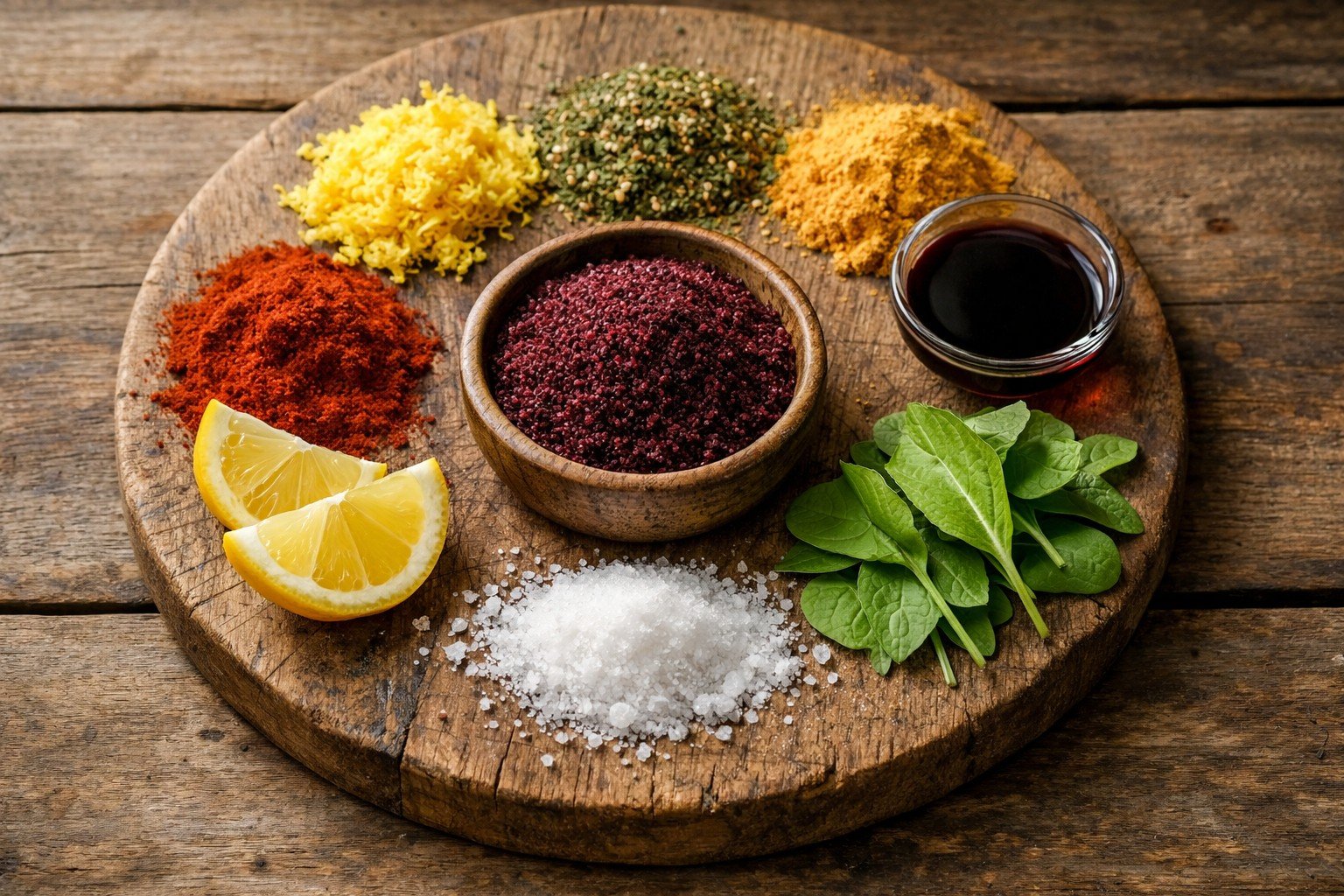
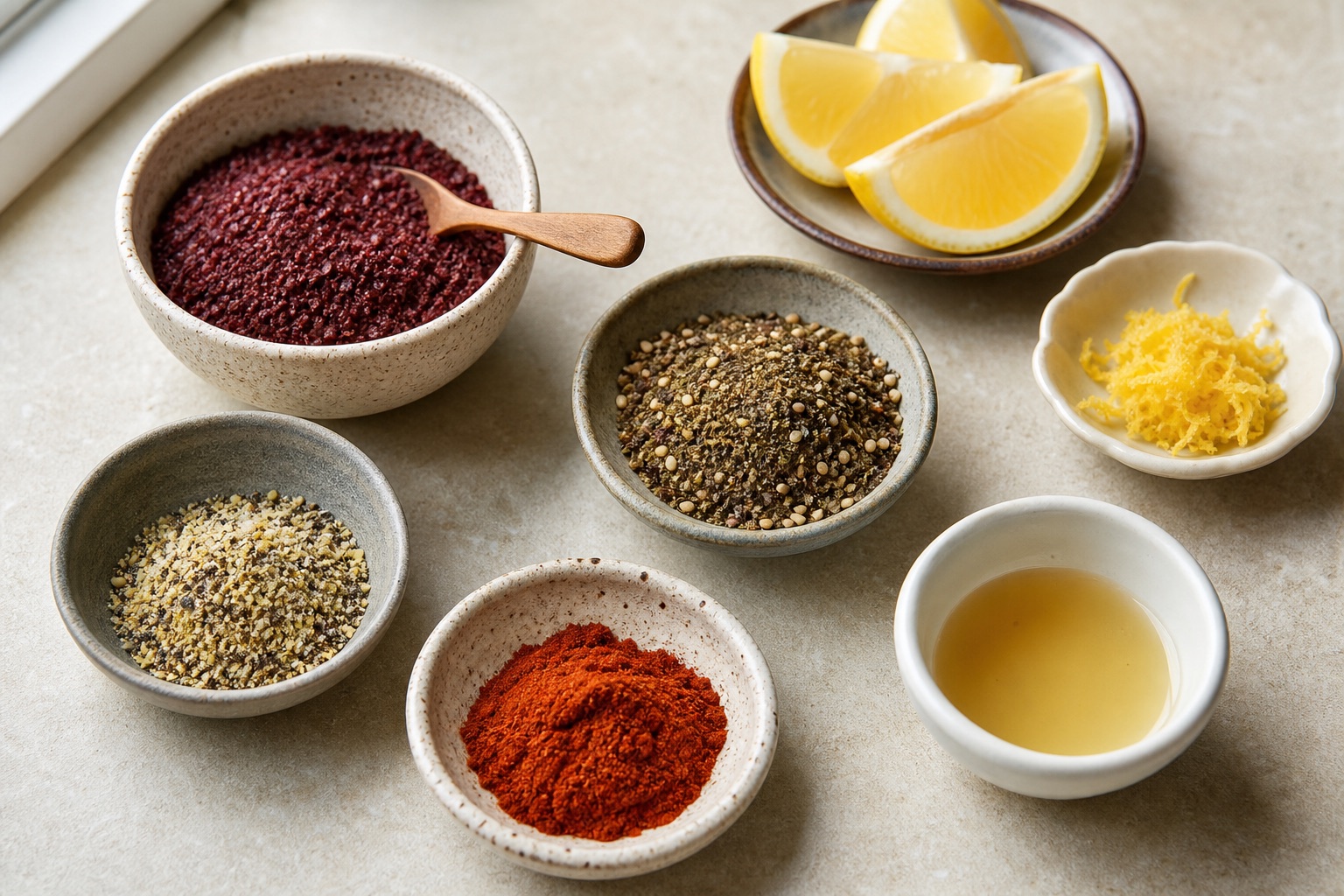
Lemon zest, amchur powder, za’atar, and a little lemon juice can replace sumac in many recipes. For the closest result, choose a dry, tangy substitute when the recipe calls for ground sumac, and use a wet acid only when extra moisture will not hurt the dish.
If you are cooking dinner in an American kitchen and find an empty sumac jar in the spice cabinet, there is no need to start over. You can often save the recipe with lemon zest, a pinch of amchur powder, or another ingredient you already have. The best swap depends on whether you are seasoning chicken, dressing a salad, making hummus, or finishing roasted vegetables.
Sumac has a tart, fresh taste with a hint of fruit. It adds a bright note without making food as wet as lemon juice or vinegar can. Most substitutes bring only part of that flavor, so the goal is to match the dish rather than copy sumac exactly. Start with a small amount, taste, and adjust.
Source: ihealthintrends.com
What Is the Best Substitution for Sumac in Recipes?
Lemon zest is a good starting point for many home cooks because it adds a fresh citrus note without extra liquid. Amchur powder is another strong option when the recipe needs a dry, sour seasoning. Za’atar may be the better choice for hummus, flatbread, and roasted vegetables if its herbs suit the dish.
There is no single replacement that works equally well in every recipe. Sumac is often sprinkled over finished food, mixed into a dressing, or rubbed onto meat. Each use calls for a slightly different balance of tartness, aroma, moisture, and texture.
Try lemon zest or amchur powder. Both can add a tart note without making a dry rub or salad topping wet.
For hummus and dips
Try a small amount of za’atar or lemon zest. Add lemon juice if the dip also needs more acidity.
For salad dressing
Use lemon juice or red wine vinegar. Reduce another acidic ingredient if the dressing already contains one.
For meat and vegetables
Use lemon zest, amchur, or a suitable za’atar blend. Choose based on whether the dish needs sourness, herbs, or both.
Quick Substitution Ratio
As a practical starting point, use about half as much lemon zest or amchur powder as the ground sumac called for. Use za’atar in a similar or slightly smaller amount, depending on its salt content and how strong its herbs taste. These are starting ratios, not exact flavor matches.
For lemon juice or vinegar, begin with a small splash rather than swapping spoon for spoon. Liquid acids can change the texture of a dish, especially a dry spice rub, crisp salad topping, or thick dip.
Taste before adding more
Acidity can become sharp quickly. Mix in a little, taste, and add more only if needed.
The Best Sumac Substitutes and When to Use Them
The most useful alternatives fall into two groups: dry ingredients that season food without adding water, and acidic liquids that bring a sour taste. Dry options are often easier to control when you want the finished dish to stay crisp or firm. Liquid options are useful when the recipe already includes a dressing or marinade.
The choices below are common kitchen alternatives, not exact copies of sumac. Each has its own taste, so match the substitute to the food and the job it needs to do.
Source: ihealthintrends.com
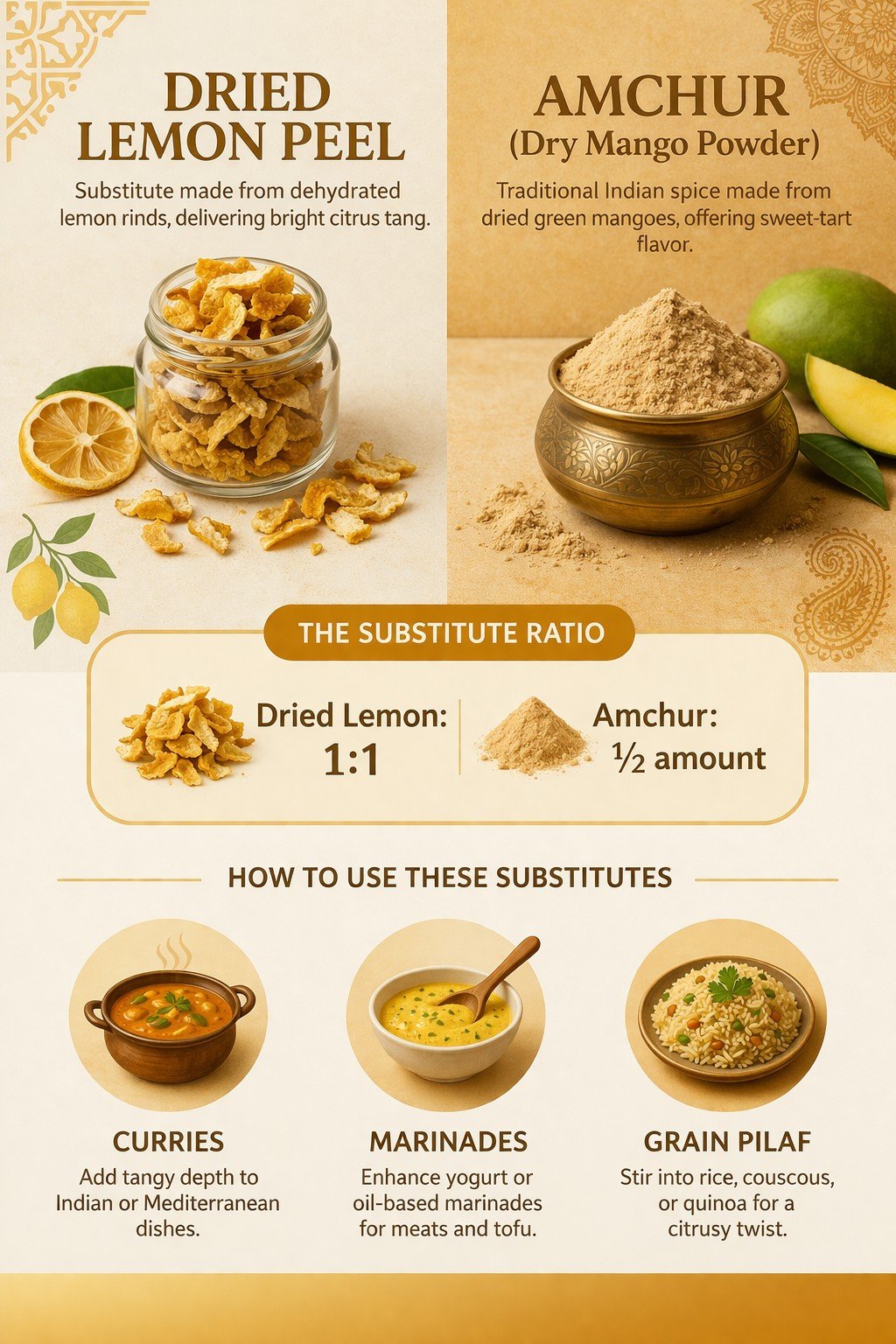
Lemon zest
Best for salads, roasted vegetables, fish, chicken, dips, and dry seasoning blends. It offers a fresh citrus aroma, although it lacks sumac’s full flavor.
Amchur powder
Best for dry rubs, lentils, vegetables, and savory spice mixes. It brings a fruity sour taste without adding liquid.
Za’atar
Best for hummus, flatbread, roasted vegetables, and grilled meat when the herbs and sesame complement the meal.
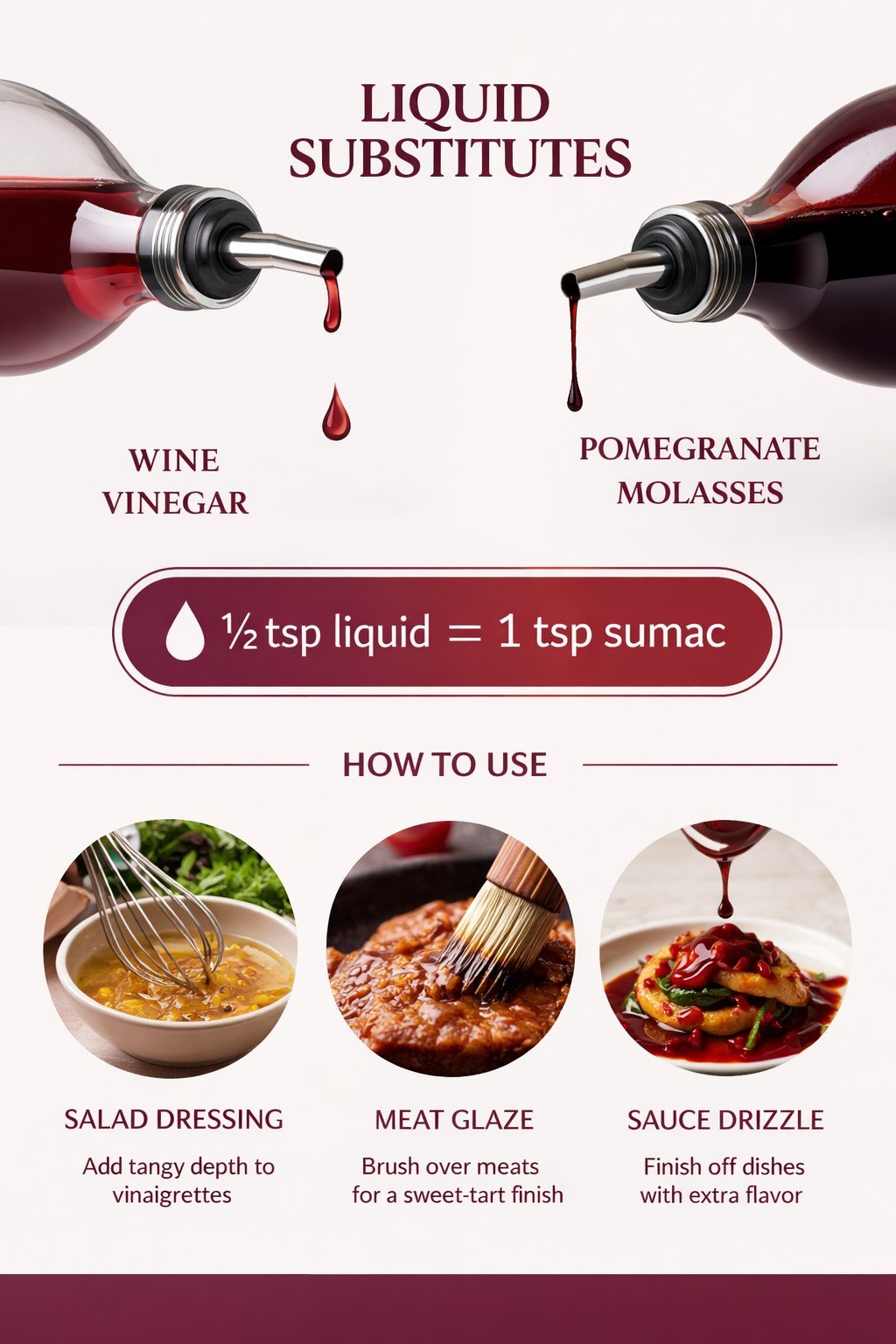
Lemon juice
Best for dressings, marinades, dips, and cooked dishes that need fresh acidity. It adds moisture and can alter texture.
Red wine vinegar
Best for salad dressings, marinades, and savory sauces. Its sharp, fermented taste differs from the fruitier taste of sumac.
Tamarind
Best for sauces, stews, and dishes that can handle a deeper, fruity sour flavor. Use a small amount because its taste is stronger and less citrus-like.
1. Lemon Zest: The Easiest Dry Swap
Fresh lemon zest is often the simplest substitute when a recipe uses sumac as a finishing spice. The thin outer yellow peel contains fragrant oils that give food a lively citrus scent. Use a fine grater and avoid the white pith beneath the peel, which can taste bitter.
Try lemon zest on roasted cauliflower, chickpeas, grilled fish, or a bowl of hummus. For a closer seasoning blend, mix the zest with a little salt and a small pinch of dried herbs if they suit the dish. Fresh zest is moist and perishable, so it will not behave exactly like dried sumac in a stored spice mix.
Starting amount
For 1 teaspoon of sumac, start with about 1/2 teaspoon of finely grated lemon zest. Adjust to taste.
2. Amchur Powder: A Dry, Tart Alternative
Amchur, also called amchoor, is made from dried unripe mango. It is used in Indian cooking to give food a sour, fruity taste without adding lemon juice or vinegar. That makes it useful when a recipe needs tang but should remain dry.
Add it to roasted potatoes, lentils, chickpeas, vegetable dishes, or a spice rub for chicken. Its flavor is not the same as sumac, and some brands taste more sour than others. Begin with less than the recipe calls for, then adjust.
Starting amount
For 1 teaspoon of sumac, try 1/2 teaspoon of amchur powder. Taste before adding more.
3. Za’atar: A Good Fit for Herbs and Flatbread
Za’atar is a seasoning blend that often includes dried herbs, sesame seeds, salt, and sumac, though recipes and commercial blends vary. A blend that contains sumac may supply some of the flavor you need. Even when it does not, its herbs can work well in dishes that suit a savory, aromatic finish.
Sprinkle a little over hummus, pita, roasted carrots, or grilled vegetables. Check the ingredient label before using it, since the blend may already contain salt or other seasonings. Za’atar is not ideal when you need a clean sour taste and do not want added herbs or sesame.
Starting amount
Try about 1/2 teaspoon of za’atar for every teaspoon of sumac, then adjust according to its salt level and flavor.
Can Lemon Juice or Vinegar Replace Sumac?
Yes. Lemon juice and vinegar can replace some of sumac’s tartness, especially in salad dressings, marinades, sauces, and dips. They do not provide the same dry texture or citrus-like aroma, and they can make food wetter. Choose them when the dish can absorb liquid without losing its intended texture.
If a recipe calls for sumac sprinkled over a finished salad, a few drops of lemon juice may help, but it will not leave the same dry coating. In a vinaigrette, however, lemon juice or vinegar can be a natural fit because the dish already needs an acidic liquid.
Source: ihealthintrends.com
Lemon juice
Use it for fresh, bright acidity in dressings, marinades, sauces, and dips. Add it in small amounts so the dish does not become too wet or sour.
Red wine vinegar
Use it in salads, onion dressings, and savory marinades. Its sharper, wine-like taste can stand out, so balance it with oil or other recipe ingredients as appropriate.
Apple cider vinegar
Use a little in dressings or sauces when its mild fruit notes suit the dish. It is not the closest match for a dry sumac topping.
How to Replace Sumac With a Liquid Acid
Do not pour in a full spoonful of vinegar simply because the recipe lists a spoonful of sumac. The ingredients have different strengths and forms. Start with a small splash, mix well, and taste before adding more.
When making a dressing, count the substitute as part of the total acid. If the recipe already includes lemon juice, vinegar, or another sour ingredient, you may need to reduce that amount to keep the flavor balanced.
Check the texture
A thick dip should stay thick, and a dry rub should stay dry. Choose zest or amchur when extra liquid would cause a problem.
How to Choose a Sumac Substitute for Each Dish
The right substitute depends on how sumac is used in the recipe. A seasoning sprinkled on top adds aroma and color as well as taste. An ingredient mixed into a sauce has a different job, so a liquid acid may work better there.
Use this table to narrow down your choice. The amounts are practical starting points for flavor adjustment, not a tested one-to-one formula for every recipe.
Source: theeatdown.com
Hummus and other dips
Try lemon zest or za’atar for a dry topping. Use lemon juice if the dip needs more acidity and can handle extra moisture.
Fattoush and other salads
Try lemon juice or red wine vinegar in the dressing. Use lemon zest when you want citrus aroma without adding more liquid.
Grilled chicken or lamb
Try amchur powder in a dry rub, or lemon zest for a fresh citrus note. Za’atar can work if the herbs fit the other seasonings.
Roasted vegetables
Try lemon zest or za’atar after roasting. Amchur can add sourness to a dry spice blend before cooking.
Rice, lentils, and stews
Try amchur for a dry sour note or a little lemon juice near the end of cooking. Add liquid acid gradually to avoid overpowering the dish.
Marinades and salad dressings
Try lemon juice or vinegar, adjusting the other acidic ingredients to keep the total flavor balanced.
For Hummus and Chickpea Dishes
For hummus, lemon zest works well as a finishing touch because it adds fragrance without thinning the dip. Za’atar is another option if you want a more herbal flavor. If the hummus itself tastes flat, a little lemon juice may be more useful than adding a dry spice alone.
Chickpeas served warm with olive oil, herbs, or vegetables can take amchur or za’atar, depending on the dish. Taste the other seasonings first so the substitute does not clash with garlic, cumin, or fresh herbs.
Keep the topping dry
If you want the hummus to look and feel like a dish finished with ground sumac, use a dry alternative rather than pouring liquid over the surface.
For Meat, Fish, and Roasted Vegetables
Lemon zest and amchur both fit dry rubs because they add flavor without turning the seasoning into a paste. Za’atar adds herbs and sesame, which can be helpful when those flavors belong in the recipe. For fish, lemon zest is often a simple match; for hearty vegetables, amchur can add a more pronounced sour note.
If you are seasoning food before cooking, avoid adding too much acidic liquid without checking the recipe. Excess liquid can affect browning, and strong acid can change the texture of some foods during long marinades.
Finish and taste
For a fresh citrus note, add some lemon zest after cooking. This helps preserve its aroma and gives you more control over the final flavor.
How to Make a Simple Sumac-Style Seasoning
You can make a quick seasoning blend with ingredients from a typical American grocery store. Lemon zest supplies the fresh citrus aroma, while a small amount of salt helps spread the flavor across the food. Dried herbs are optional and should be used only when they fit the recipe.
This blend is best for immediate use. Fresh lemon zest contains moisture, so it is not a direct replacement for a shelf-stable spice blend and should not be stored at room temperature as though it were fully dried seasoning.
Source: i.pinimg.com
A Quick Lemon-Zest Blend
For one small serving, finely grate the yellow peel of a clean lemon. Mix about 1 teaspoon of zest with a small pinch of salt. If the dish suits them, add a pinch of dried oregano or thyme. Use the blend at once over roasted vegetables, fish, chickpeas, or hummus.
For a dry pantry mix
Use a suitable dried ingredient such as amchur powder instead of fresh zest when the recipe needs a dry blend that can be stored.
For less salt
Leave the salt out and season the finished dish separately, especially when the recipe already includes salty ingredients.
Common Mistakes When Replacing Sumac
A substitute can make a dish taste sour without recreating the full flavor of sumac. The most common problem is using too much of a stronger ingredient or choosing a liquid when the recipe needs a dry finish. Small adjustments are easier to fix than an overly sour dish.
Think about the job sumac performs before choosing a replacement. Is it there for tartness, aroma, color, or a final sprinkle? Matching that role often matters more than finding an ingredient with a similar name or appearance.
Source: foodreadme.com
Using too much vinegar
Vinegar can taste sharp and can make food wet. Start with a few drops or a small splash, then taste.
Treating za’atar as pure sumac
Za’atar adds herbs, and some blends contain salt and sesame. Check the label and adjust the other seasonings.
Expecting lemon zest to taste identical
Lemon zest is fragrant and citrusy, while sumac has its own tart, fruity character. Use zest as a practical alternative, not an exact flavor copy.
Adding several sour ingredients at once
Lemon juice, vinegar, amchur, and other acidic ingredients can build up quickly. Add one substitute first and reassess the taste.
Ignoring the recipe’s texture
A wet substitute may thin a dip or change a dry rub. Choose a dry option when texture matters.
What If the Dish Becomes Too Sour?
Stop adding acidic ingredients and taste the food before trying to fix it. Depending on the recipe, you may be able to balance the sharpness with more of the main ingredients, a little oil, or a suitable creamy element. Do not add sugar automatically; sweetness can change the character of savory dishes.
If the food is already too wet, adding more dry ingredients that belong in the recipe may help restore its consistency. For a dressing, adjust the balance with more oil or other dressing ingredients. Make changes in small steps and taste after each one.
Adjust in small amounts
The right fix depends on the dish. Avoid adding extra salt or sugar without tasting, since either can create a new imbalance.
Frequently Asked Questions
Q
What is the closest substitute for sumac?
There is no perfect substitute, but lemon zest is a useful choice when you need a dry, fresh citrus note. Amchur powder is helpful when the main goal is a sour flavor without extra liquid. The closest option depends on the dish and how the sumac is used.
Q
Can I use lemon pepper instead of sumac?
You can use lemon pepper in some savory dishes, but it is not an exact match. Lemon pepper often contains black pepper, salt, dried lemon, or other ingredients. It may work on chicken or vegetables, but check its salt and pepper content before adding it.
Q
Can I replace sumac with paprika?
Paprika can add red color and a mild pepper flavor, but it does not provide sumac’s tartness. Use it only when color and a gentle savory taste are useful. If you also need acidity, pair a small amount with lemon zest or another suitable sour ingredient.
Q
Can I use cream of tartar as a sumac substitute?
Cream of tartar is an acidic powder, but it is not a good general substitute for sumac as a finishing spice. Its flavor and intended culinary use differ, and it can taste harsh when used casually in savory food. Lemon zest or amchur is usually a more practical choice.
Q
Does za’atar always contain sumac?
No. Za’atar recipes and packaged blends vary. Some include sumac, while others focus on herbs, sesame seeds, and salt. Read the ingredient list if you want a blend that supplies sumac’s flavor, and remember that za’atar also adds its own herbal taste.
✦ Wrapping Up
Conclusion
The best substitution for sumac in recipes depends on the role it plays in the dish. Lemon zest is a handy option for a dry, bright finish, while amchur powder brings a fruity sour taste without extra moisture. Za’atar adds herbs as well as seasoning, and lemon juice or vinegar can work when the recipe can handle liquid.
Start with a small amount, taste the food, and adjust the other seasonings as needed. A good substitute does not need to copy sumac exactly. It needs to bring the right balance of tartness, aroma, and texture to the meal you are making.
💡 Key Takeaway
For a quick swap, try 1/2 teaspoon of lemon zest or amchur powder for every 1 teaspoon of ground sumac, then taste and adjust. Choose lemon juice or vinegar for dressings and marinades when extra liquid is suitable.