
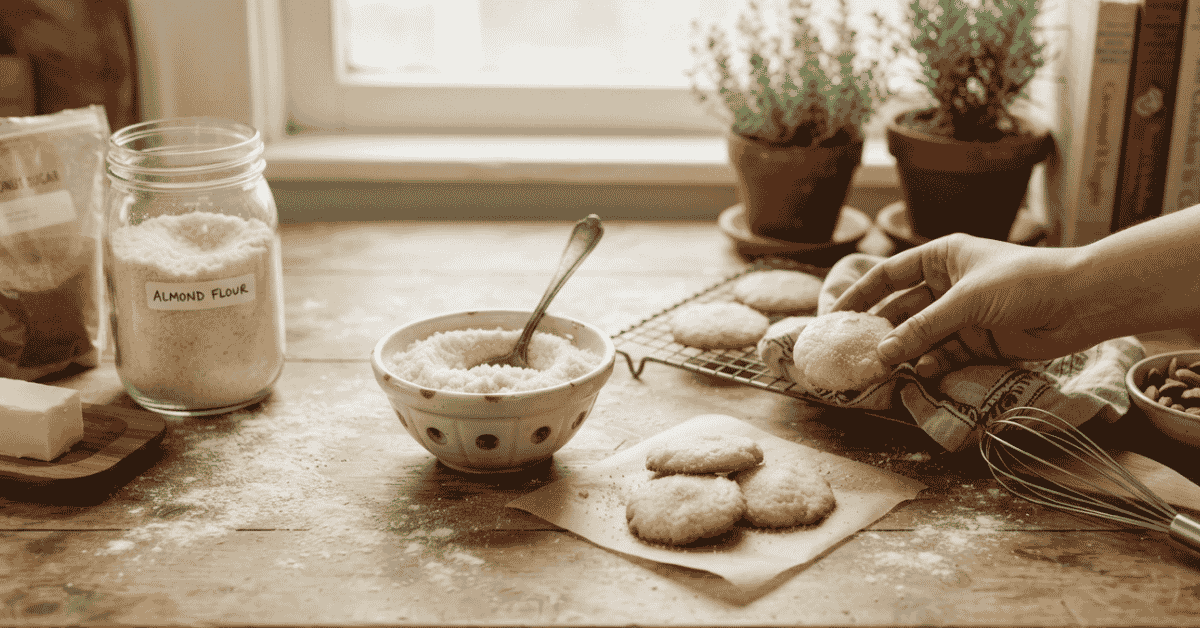
Almond Flour Sugar Cookie Recipe makes soft, sweet cookies with crisp edges, rich vanilla flavor, and an easy gluten-free dough for home baking.
Almond Flour Sugar Cookie Recipe days feel oddly comforting. The dough smells like vanilla, butter, and toasted nuts. I love a cookie that feels simple but still special. Almond flour changes both texture and baking time. I learned that through several soft, crumbly batches. This guide shares my best method, small fixes, and practical baking tips. Try them before your next tray goes inside.
Can an Almond Flour Sugar Cookie Recipe Taste This Good?
An Almond Flour Sugar Cookie Recipe made me skeptical. I expected dry cookies with a grainy bite.
My first good batch changed that view fast. The kitchen smelled warm and sweet within minutes.
Butter and vanilla filled the room first. Then a light nutty scent came from the oven.
I touched one cookie too soon. The center felt soft enough to bend.
That made me nervous at first. I thought the whole tray was underbaked.
Ten minutes later, the cookies had firmed up. The edges stayed crisp while the centers felt tender.
I guess almond flour needs a little trust. Fresh cookies can seem fragile before cooling.
That short wait makes a huge difference.
Life Before I Found This
My early almond flour cookies were messy. Some spread wide while others cracked around the edges.
The dough stuck to my fingers. Fine almond flour dust clung to the counter.
The oven fan gave a low hum nearby. I kept checking through the glass door.
One batch came out far too brown. Another stayed pale but broke when lifted.
I blamed the flour at first. That was not quite fair.
My ratios were simply off. I had too much butter and too little structure.
Once I started weighing ingredients, things improved. Chilling the dough helped even more.
The recipe stopped feeling unpredictable. Baking became much calmer after that.
Why This Matters Right Now
Almond flour has become a useful baking staple. It can add rich flavor and a soft crumb.
It also gives home bakers another flour option. That can help when wheat flour is not preferred.
Still, almond flour behaves differently from regular flour. It has more fat and no wheat gluten.
That changes how dough holds together. It can also change spread and browning.
An Almond Flour Sugar Cookie Recipe needs those differences in mind. Simple flour swaps rarely work perfectly.
I think that is where many batches go wrong. The dough may look normal before baking.
Then the cookies flatten or crumble. A recipe built for almond flour gives far better control.
That makes baking less wasteful and much more fun.
The First Big Lesson
My first big lesson was about moisture. Almond flour already carries plenty of natural fat.
That means butter needs some restraint. Too much can make cookies spread into thin disks.
I use softened butter, not melted butter. Soft butter mixes well without making the dough greasy.
Sugar also affects spread. Fine white sugar gives classic sweetness and lighter texture.
An egg can add structure and moisture. Still, too much egg may make the dough loose.
I usually add vanilla for warmth. A small pinch of salt keeps the sweetness from feeling flat.
Then I chill the dough before shaping. That step feels boring, but it works.
Cold dough holds its form better. It also gives the flour time to absorb moisture.
That simple rest changed my cookies most.
Small Tactics That Actually Work
I measure almond flour with care. Packing it into a cup can add too much.
A kitchen scale gives me better results. I also whisk the flour before mixing.
That breaks up small lumps. The dough feels much smoother afterward.
I cream butter and sugar first. Then I mix in egg and vanilla.
Dry ingredients go in last. I stop mixing once the dough comes together.
For cutout cookies, I chill the dough well. I roll it between sheets of parchment.
That keeps extra flour off the dough. It also makes cleanup much easier.
For round cookies, I scoop even portions. Similar size helps every cookie bake at the same pace.
I let them cool on the tray. Moving them too soon can cause cracks.
A Strange Detail I Noticed
One strange detail surprised me after several batches. Almond flour cookies smell done before they look done.
The nutty scent gets strong quite early. That made me pull one tray too soon.
The centers stayed almost wet. I had trusted my nose more than the oven.
Now I watch the edges instead. A faint golden rim usually tells me more.
The tops may still look soft. That is fine for a tender cookie.
The tray keeps cooking them briefly after baking. I guess that hidden heat does more than expected.
I also listen while they cool. Hot cookies can make tiny crisp sounds near the edges.
That little crackle always makes me smile.
Style Comparison & Data
Different versions can change texture and flavor quite a bit. I pick based on the final cookie I want.
| Cookie Style | Main Change | Final Texture |
|---|---|---|
| Classic vanilla | Vanilla extract | Soft and sweet |
| Lemon sugar | Lemon zest | Bright and fresh |
| Cinnamon sugar | Cinnamon added | Warm and cozy |
| Cutout style | Longer chill | Firm and neat |
| Soft center | Shorter bake | Tender and chewy |
I like classic vanilla most days. Lemon works well when I want something lighter.
Cutout cookies need more chilling. Soft-center cookies need careful bake time.
Small changes can make the same dough feel new.
Non-Obvious Gains
An Almond Flour Sugar Cookie Recipe offers more than a flour swap. Some benefits only show up after practice.
-
Rich flavor: Almond flour adds a mild nutty taste.
-
Soft texture: The centers can stay tender for days.
-
Easy variations: Citrus, spice, and extracts work well.
-
Simple prep: Most dough needs only basic mixing.
-
Good freezer use: Chilled dough portions freeze quite well.
The freezer part surprised me most. I can shape dough and save it for later.
Then I bake a few cookies at once. That keeps fresh cookies within easy reach.
It also stops me from baking huge batches.
Myths vs. My Reality
I used to think almond flour cookies always crumbled. But then chilling fixed much of that problem.
I used to think extra butter made them softer. But then the cookies spread too far.
I used to think brown edges meant failure. But then slight color gave a better bite.
I used to think regular flour ratios would transfer easily. But then the dough behaved very differently.
I also thought all almond flour was basically the same. That was not quite true.
Very fine flour gives me smoother cookies. Coarse almond meal can make the texture more rustic.
Now I choose fine blanched almond flour. I also weigh it when possible.
That gives me far more consistent results.
Essential Principles for Mastery
My basic system has four parts: measure, chill, shape, and cool.
Measure means keeping flour and fat balanced. A scale gives me the best control.
Chill means resting the dough before baking. Cold dough spreads less and handles more easily.
Shape means keeping portions even. Similar cookies bake at similar speeds.
I also leave room between each piece. Almond flour cookies can still spread.
Cool means letting the tray do part of the work. Fresh cookies may feel too soft to move.
I wait several minutes before lifting them. Then I move them to a rack.
For flavor, vanilla is my base. Lemon zest, almond extract, or cinnamon can add variety.
I keep add-ins light. Heavy chunks can make delicate dough harder to hold.
The goal is balance. Soft centers and crisp edges need both time and restraint.
FAQs About Almond Flour Sugar Cookie Recipe
Can I make sugar cookies with only almond flour?
Yes, almond flour can work as the main flour in a sugar cookie recipe. The dough needs ratios made for almond flour, since it has more fat and no wheat gluten. I avoid direct one-for-one swaps.
Why do my almond flour sugar cookies spread?
Warm butter, loose dough, or excess fat can cause extra spread. I chill the dough before baking and use softened butter instead of melted butter. Accurate flour measurement also helps a lot.
Can I make cutout cookies with almond flour?
Yes, but the dough should stay cold. I roll it between parchment sheets, chill it again, then cut shapes. Simple cutters work best because fine details can break more easily.
How long should almond flour sugar cookies cool?
I leave them on the baking sheet for about ten minutes. They can feel fragile right from the oven. Cooling lets the structure firm up before I move them onto a rack.
Can I freeze almond flour sugar cookie dough?
Yes, I freeze shaped portions or a wrapped dough disk. I keep it sealed well to prevent dry edges. Thaw chilled dough in the fridge before rolling, or bake portioned dough as needed.
My Final Takeaway
Almond Flour Sugar Cookie Recipe baking gets easier with patience. I care most about accurate flour, cool dough, and gentle handling.
Use soft butter instead of melted butter. Chill the dough before it reaches the oven.
Then let each cookie cool before moving it. That final wait protects the tender crumb.
Maybe that is the real lesson. Almond flour is not difficult, but it likes calm hands and careful timing.