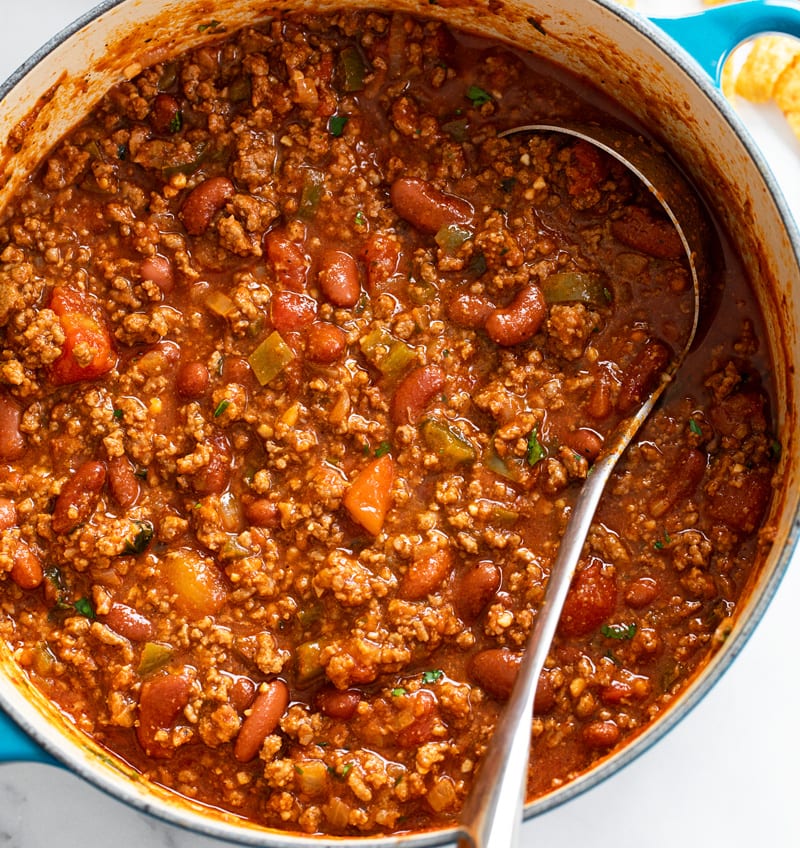
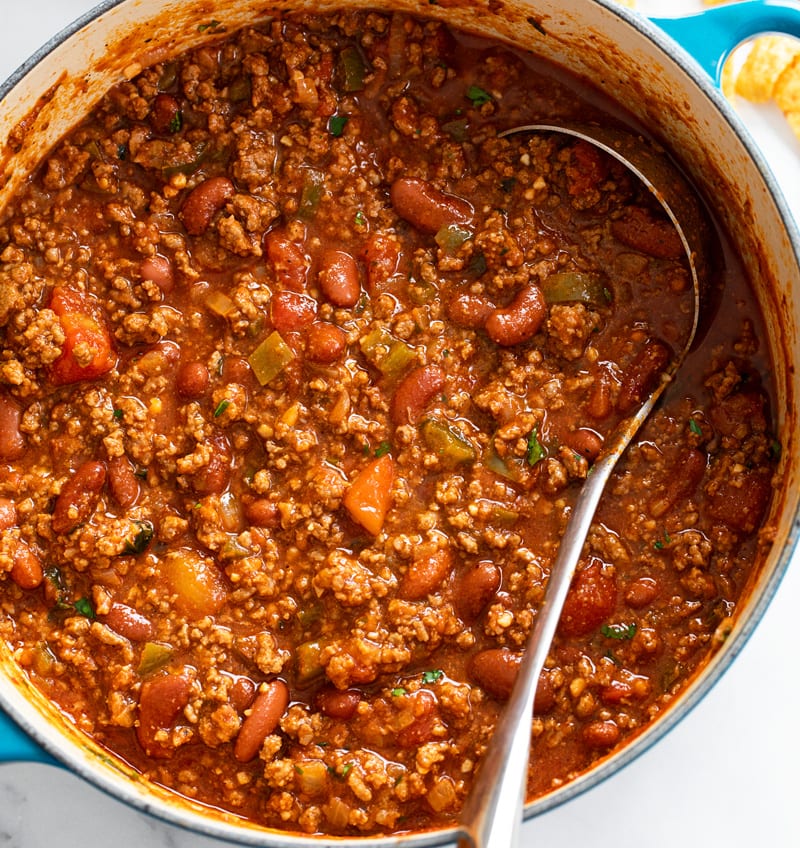
To cook a classic American chili, brown ground beef in a large pot, cook onion and garlic, stir in chili powder and other spices, then add tomatoes, beans, and broth. Simmer for 30 to 45 minutes, stirring now and then, until the chili is thick and full of flavor.
Chili is a familiar meal in many American homes, especially during fall football games, cold winter nights, and casual family dinners. A pot of beef chili needs simple items like ground beef, canned beans, tomatoes, onion, and a few pantry spices. You do not need special tools or hard-to-find foods to make a hearty batch.
The key is to build flavor in stages. Brown the meat first, soften the onion, toast the spices briefly, and let the sauce simmer before serving. This guide explains how to cook a chili on the stovetop, how to adjust its heat and thickness, and how to store leftovers safely.
A basic beef chili uses ground beef, beans, tomatoes, onion, garlic, spices, and a little liquid. These ingredients make a thick stew with a savory taste and a gentle kick of heat. Most of them are easy to find in a typical American grocery store.
The recipe below makes about six servings, depending on portion size. Use a heavy pot or Dutch oven with enough room to stir the meat and sauce without spilling. A wooden spoon, knife, cutting board, and measuring spoons are also useful.
Source: storage.googleapis.com
Ground beef
Use 1 pound of ground beef. Lean beef leaves less fat to drain, while beef with more fat can add flavor.
Beans
Use one 15-ounce can of kidney beans or pinto beans, drained and rinsed. Black beans also work well.
Tomatoes
Use one 28-ounce can of crushed tomatoes and one 15-ounce can of diced tomatoes for a rich sauce with some texture.
Onion and garlic
Use one medium yellow onion and three garlic cloves. They form the savory base of the chili.
Liquid
Keep 1 cup of beef broth or water nearby. You may not need all of it, depending on how thick you like your chili.
Cooking oil
Use 1 tablespoon of olive oil or another neutral cooking oil if the pot needs extra fat to cook the onion.
Which Spices Make Chili Taste Good?
For a balanced homemade chili, start with 2 tablespoons of chili powder, 2 teaspoons of ground cumin, 1 teaspoon of smoked paprika, 1 teaspoon of dried oregano, and 1/2 teaspoon of black pepper. Add salt to taste, starting with about 1 teaspoon if your broth is low in sodium.
Chili powder sold in American grocery stores is often a blend of ground chiles and other spices. It is not always the same as pure ground cayenne or a single type of dried chile. Start with the amount in the recipe, then add more if you want a stronger flavor.
For more heat
Add a small pinch of cayenne pepper or a finely chopped jalapeño.
For smoky flavor
Use smoked paprika or add a small amount of chipotle powder.
For deeper flavor
Stir in 1 tablespoon of tomato paste and cook it briefly before adding the canned tomatoes.
Optional Ingredients For Extra Flavor
A teaspoon of Worcestershire sauce can add a savory note. A small amount of unsweetened cocoa powder can make the sauce taste richer without making it taste like dessert. These extras are optional, so start with the basic recipe if you are cooking chili for the first time.
Bell pepper
Add one chopped green or red bell pepper with the onion for a mild, sweet flavor.
Tomato paste
Add one tablespoon when you want a fuller tomato taste and a thicker sauce.
Corn
Stir in a small amount near the end if you like sweet kernels in your chili.
How To Cook A Chili On The Stovetop
The stovetop method gives you good control over the heat and thickness. Plan for about 15 minutes of preparation and 45 to 60 minutes of cooking, including the time needed to brown the meat and simmer the sauce. You can cook it faster, but a little extra simmer time helps the flavors blend.
Keep the heat at medium or medium-low once the tomatoes and broth go into the pot. A gentle simmer should show small bubbles rising now and then. A hard boil can make the sauce splatter and cook down too quickly.
Source: jessicagavin.com
Step 1: Prepare the ingredients
Dice the onion, mince the garlic, drain and rinse the beans, and measure the spices. Open the cans before you start cooking so everything is ready to add.
Step 2: Brown the beef
Heat a large pot over medium-high heat. Add the ground beef and break it into small pieces with a spoon. Cook until no pink remains and the beef reaches 160°F. Drain excess fat if needed, leaving a little behind for flavor.
Step 3: Cook the onion
Add the diced onion to the pot. Cook for about 4 to 5 minutes, stirring now and then, until it softens. If the pot looks dry, add a small amount of oil.
Step 4: Add the garlic and spices
Stir in the minced garlic, chili powder, cumin, paprika, oregano, and black pepper. Cook for about 30 to 60 seconds, stirring often. Stop before the garlic or spices begin to burn.
Step 5: Add the tomatoes and beans
Pour in the crushed tomatoes and diced tomatoes. Add the drained beans and about 1/2 cup of broth. Stir well and scrape up any browned bits from the bottom of the pot.
Step 6: Bring the chili to a gentle simmer
Let the mixture reach a gentle bubble, then lower the heat. Keep the pot partly covered if you want to reduce splashes, or leave it uncovered for a thicker result.
Step 7: Simmer and stir
Cook for 30 to 45 minutes, stirring every 5 to 10 minutes. Add a splash of broth or water if the sauce becomes too thick or begins to stick.
Step 8: Taste and adjust
Taste a spoonful once the chili has simmered. Add salt, pepper, chili powder, or a small splash of broth as needed. Let it cook for another 5 minutes after a major seasoning change.
Step 9: Serve warm
Turn off the heat and let the chili rest for about 5 minutes. Spoon it into bowls and add toppings such as shredded cheese, sour cream, chopped onion, or sliced jalapeños.
How Do You Know When Chili Is Done?
Chili is ready when the meat is fully cooked, the sauce has thickened to your liking, and the flavors taste balanced. The beans should be tender, and the tomato sauce should cling to the meat rather than run like thin soup. There is no single required simmer time for every pot because ingredients, pot size, and heat can vary.
Use a food thermometer to check that ground beef reaches 160°F. If you started with raw ground beef, do not rely on the sauce color or cooking time alone to judge whether the meat is safe.
The sauce coats a spoon
A spoon dragged through the chili should leave a brief path before the sauce flows back.
The flavor is balanced
The tomato, meat, spices, and salt should work together without one taste overpowering the rest.
The texture looks right
The chili should be thick enough to serve with a spoon but still moist.
How Long Should You Cook Chili?
A simple ground beef chili usually needs about 45 to 60 minutes from the start of cooking to serving. The actual time depends on how quickly the meat browns, how finely the vegetables are cut, and how much liquid the sauce contains. The simmer itself can take 30 to 45 minutes.
You can serve chili after a shorter simmer if the meat is cooked and the beans are ready to eat. However, giving the sauce more time over low heat can help the seasonings spread through the dish and let excess liquid evaporate.
Source: cookinginspirations.com
Quick stovetop chili
Allow about 30 minutes of simmering after the meat and other ingredients are combined. Check the texture and flavor before serving.
Full-flavored stovetop chili
Simmer for 45 to 60 minutes if you have time. Stir regularly and add liquid when needed.
Cook on low for about 6 to 8 hours or on high for about 3 to 4 hours as a general recipe guideline. Brown the beef first, then follow your appliance’s instructions and check that the food reaches a safe temperature.
Should You Cover The Pot While Chili Cooks?
Leave the pot uncovered when the chili is too thin and you want the extra liquid to evaporate. Use a lid set slightly ajar if you want to limit splashes while still allowing steam to escape. A fully covered pot holds more moisture, so the sauce may take longer to thicken.
Stir more often as the sauce gets thick. Tomato-based chili can stick to the bottom of the pot when the heat is too high or the liquid has reduced too much.
For thick chili
Simmer uncovered and stir often.
For a looser chili
Keep the lid partly on and add broth as needed.
How To Make Chili Thicker Or Thinner
The best way to fix chili texture is to change the amount of liquid gradually. A thick chili can cling to a spoon, while a thinner version may work better over rice or pasta. Make one small change at a time so you do not overshoot the texture you want.
Avoid adding flour or cornstarch at the start without a clear need. Chili often thickens naturally as water evaporates and the tomatoes cook down. Beans also release some starch, which can help give the sauce body.
Source: whipupcookup.com
If the chili is too thin
Simmer it uncovered for 10 to 15 more minutes, stirring often. You can also mash a few beans against the side of the pot and stir them back in.
If the chili is too thick
Add broth or water in small amounts, such as 2 to 4 tablespoons at a time. Stir and let it heat through before adding more.
If the chili tastes watery
Check whether it has simmered long enough. A small amount of tomato paste may improve body and tomato flavor.
If the chili sticks to the pot
Lower the heat and stir the bottom with a wooden spoon. Add a little liquid if the sauce has reduced too far.
Can You Fix Chili That Is Too Spicy?
You can soften excess heat by increasing the amount of mild ingredients. Add more beans, tomatoes, or cooked ground beef if you have them. A small spoonful of sour cream or plain yogurt in the bowl can also make each serving feel less hot.
Adding sugar is not a reliable way to remove chile heat, and too much can make the sauce sweet. If the chili is very hot, split it into two pots and mix one half with a mild batch. Taste before adding more spices.
Use dairy as a topping
Sour cream, plain yogurt, or shredded cheese can soften the heat on the plate.
Add mild ingredients
More tomatoes or beans can spread the heat across a larger batch.
Avoid adding more hot sauce
Wait until the chili is served before offering extra heat at the table.
How To Season Chili For The Best Flavor
Good chili seasoning should bring warmth, depth, and a little heat without hiding the taste of the beef and tomatoes. Start with a measured spice blend, then adjust near the end of cooking. The sauce can taste sharper at the beginning and more rounded after a longer simmer.
Salt matters because it helps the other flavors stand out. Canned tomatoes, broth, beans, and seasoning blends may already contain salt, so taste before adding more. If the chili tastes flat, a small pinch of salt may help, but you should also check the balance of spice and acidity.
Source: cookingcircuit.com
Too bland
Add a little salt, cumin, or chili powder, then simmer for a few minutes before tasting again.
Too acidic
Try a little more simmer time or add a small amount of cooked onion or tomato paste. A tiny pinch of sugar can help in some cases, but use it sparingly.
Too salty
Add unsalted tomatoes, beans, or water and increase the batch size if practical. More salt cannot be removed by adding sugar.
Too smoky
Add more plain tomato and beans, or serve with a mild topping. Avoid adding extra smoked paprika.
When Should You Add Chili Powder?
Add chili powder after browning the beef and softening the onion, just before the liquid ingredients. A short cook in the warm fat helps release the spice aroma. Stir constantly because dry spices can burn if left against a hot pot.
You can add a little more near the end, but allow several minutes for it to blend into the sauce. Adding a large amount all at once may create a raw, dusty taste that is hard to balance.
Mild chili
Use the base amount of chili powder and leave out cayenne.
Medium chili
Use the base amount and add a small pinch of cayenne if needed.
Hot chili
Add cayenne or chopped hot pepper in small steps, tasting between additions.
What To Serve With Homemade Chili
Chili works as a full meal on its own, but a few simple sides can make dinner more filling. Cornbread is a classic American pairing because its mild, slightly sweet taste works well with the savory sauce. Rice, baked potatoes, and crackers are also useful when you want a hearty plate.
Set out toppings in small bowls if you are serving a group. Each person can choose the level of heat and richness they like. This is also an easy way to make one pot of chili work for several tastes.
Source: chilipeppermadness.com
Shredded cheddar cheese
Adds a rich, salty finish and melts into the hot chili.
Sour cream
Adds a cool, creamy contrast to spicy tomato sauce.
Chopped green onion
Adds a fresh bite and a mild onion flavor.
Cornbread
Offers a soft or crumbly side that can soak up the sauce.
Rice or baked potatoes
Makes the meal more filling and gives the chili a mild base.
Crackers or tortilla chips
Add crunch and work well for casual meals or game-day spreads.
Can You Serve Chili Over Pasta?
Yes. Some American households serve chili over spaghetti or other pasta, while others prefer it in a bowl or over rice. The best choice depends on how thick the sauce is and what you enjoy eating.
If you plan to serve chili over pasta, keep the sauce slightly thicker than soup. Cook the pasta separately and spoon the chili over it just before serving.
For pasta
Use a thick sauce that clings to the noodles.
For rice
A slightly looser chili can spread across the rice without drying out.
Common Chili Cooking Mistakes To Avoid
A few small mistakes can leave chili bland, greasy, watery, or burnt. Most problems are easy to prevent by managing the heat and checking the sauce as it cooks. You do not need to stir every minute, but you should keep an eye on a thick tomato sauce.
The most useful habit is to taste near the end rather than adding extra salt and spices at the start. Liquid reduces during simmering, so flavors can become more concentrated as the pot cooks.
Source: jessicagavin.com
Skipping the browning step
Browning the beef adds savory flavor. Break it into small pieces and allow moisture to cook away instead of crowding the pot.
Burning the garlic
Garlic cooks quickly. Add it after the onion softens and stir it for less than a minute before adding the liquid.
Using too much liquid
Start with a modest amount of broth. Tomatoes release moisture, and you can add more liquid later if the sauce becomes too thick.
Cooking over high heat for too long
A hard boil can cause splashes and sticking. Lower the heat once the pot begins to simmer.
Adding too much spice at once
Increase heat and salt in small steps. It is easier to add seasoning than to correct an overpowering batch.
Serving before checking the texture
Let the sauce simmer until it reaches the consistency you want. If it is thin, cook it uncovered for a little longer.
Should You Rinse Canned Beans Before Adding Them?
Rinsing and draining canned beans removes much of the packing liquid and can help you control the salt and texture of the chili. It is a useful default for this recipe. Add the beans after the tomatoes so they can warm through without being crushed by heavy stirring.
If you prefer a thicker sauce, mash a few cooked beans and stir them back into the pot. This adds body without the need for flour or cornstarch.
For a cleaner bean flavor
Drain and rinse the beans under cool running water.
For a thicker sauce
Mash a small portion of the beans and mix them into the chili.
How To Store And Reheat Chili Safely
Chili makes useful leftovers, and the flavor may seem more blended after a night in the fridge. Food safety still matters, even when the chili smells and looks fine. Do not leave a large pot on the counter for hours while it cools.
Transfer leftovers to shallow containers so they cool faster, then refrigerate or freeze them promptly. For the best safety and quality, divide a large batch into smaller portions instead of placing one deep, hot pot in the refrigerator.
Source: glossary.menuexplain.com
Refrigerator storage
Refrigerate chili within two hours of cooking, or within one hour when the surrounding temperature is above 90°F. Keep the refrigerator at 40°F or below and use the leftovers within 3 to 4 days.
Freezer storage
Freeze chili in airtight, freezer-safe containers or bags. Leave a little room for expansion and label each portion with the date.
Stovetop reheating
Warm chili in a saucepan over medium-low heat, stirring often. Add a splash of water or broth if it has thickened in the fridge.
Microwave reheating
Place a portion in a microwave-safe dish, cover it loosely, and stir during heating so the center warms evenly.
What Temperature Should Leftover Chili Reach?
Reheat leftover chili to 165°F before serving. Check the temperature with a food thermometer, especially when heating a large portion or a thick batch. Stir well before checking because the center and edges may heat at different rates.
For frozen chili, thaw it in the refrigerator when possible, or reheat it directly from frozen if your cooking method allows enough time for even heating. Do not thaw chili on the counter.
Check the center
Stir the chili and measure the temperature in more than one spot when needed.
Reheat only what you need
Smaller portions heat more evenly and reduce repeated cooling and reheating.
Easy Ways To Change The Basic Chili Recipe
Once you know the basic method, you can adapt chili to suit your pantry and the people at your table. Keep the same cooking order, but change the protein, beans, or vegetables as needed. The main goal is to maintain enough liquid for the ingredients to cook without leaving the sauce watery.
When you replace ground beef with another protein, use the appropriate safe cooking temperature for that ingredient. If you use canned beans and canned tomatoes, the dish mainly needs enough time to heat through and develop its flavor after the raw meat has been cooked.
Source: storage.googleapis.com
Turkey chili
Replace the beef with ground turkey. Add a little oil if the meat is very lean, and cook ground turkey to 165°F.
Vegetarian chili
Leave out the meat and use a mix of kidney beans, black beans, and pinto beans. Add bell pepper, mushrooms, or corn for more texture.
No-bean chili
Leave out the beans and use a little less liquid. Add more beef or vegetables if you want a fuller pot.
Mild family chili
Use the base spice blend without cayenne, then place hot sauce or sliced peppers on the table.
Smoky chili
Use smoked paprika or a small amount of chipotle powder. Taste before adding more because smoky spices can quickly dominate.
Can You Make Chili Ahead Of Time?
Yes. Cook the chili, divide it into shallow containers, and chill it promptly. Refrigerate it for up to 3 to 4 days or freeze it for longer storage. Thaw frozen portions in the refrigerator when possible and reheat them to 165°F before serving.
If you plan to serve chili at a gathering, reheat it thoroughly first. Keep it hot at 140°F or above while serving, and return unused portions to safe storage within the recommended time limits.
For meal prep
Freeze single servings so you can thaw and reheat only what you need.
For a party
Use a slow cooker or another suitable appliance to keep already hot chili at a safe serving temperature.
Frequently Asked Questions
Q
Do You Cook Chili With The Lid On Or Off?
Cook chili uncovered when you want it to thicken as moisture evaporates. Use a partly covered pot when you want to limit splashes or retain more liquid. Stir often near the end of cooking because thick tomato sauce can stick to the bottom.
Q
Can You Cook Chili Without Beans?
Yes. Leave out the beans and adjust the broth to suit the amount of meat and tomatoes. A no-bean chili may need less liquid because there are fewer solid ingredients to absorb and hold the sauce. Add more beef or chopped vegetables if you want a fuller texture.
Q
Should You Drain The Fat From Ground Beef?
Drain excess fat when the beef leaves a large amount in the pot. Keeping a small amount can help the onion and spices cook and add flavor. If you use lean ground beef, you may not need to drain anything.
Q
Can You Put Raw Ground Beef Directly Into A Slow Cooker?
Browning ground beef in a skillet first is the better approach for this recipe because it builds flavor and lets you drain excess fat. Follow your slow cooker’s instructions for raw meat and recipe safety. The finished dish must reach a safe temperature, and you should not use a slow cooker to reheat cold leftovers from the refrigerator.
Q
Why Does Chili Taste Better The Next Day?
After chilling, the seasonings and sauce may taste more blended when the chili is reheated. The change comes from the ingredients sitting together, not from a need to leave the chili at room temperature. Cool and store the chili safely, then reheat it to 165°F before serving.
Q
Can You Use Water Instead Of Beef Broth?
Yes. Water works when you do not have beef broth, though the finished chili may taste less rich. Start with a small amount and add more only if the sauce becomes too thick. Taste near the end and adjust the salt and spices.
✦ Wrapping Up
Conclusion
Learning how to cook a chili starts with a few basic steps: brown the meat, soften the onion, cook the spices briefly, and add the tomatoes, beans, and broth. Let the pot simmer gently until the sauce thickens and the flavors come together. Taste near the end so you can adjust the salt, heat, and liquid without making the chili too strong.
A classic beef chili is easy to change based on what you have in the kitchen. Use different beans, try ground turkey, leave out the meat, or set out toppings so everyone can make their bowl their own. Cook it safely, store leftovers promptly, and keep the basic method in mind for your next pot.
💡 Key Takeaway
Start with 1 pound of ground beef, one onion, three garlic cloves, canned tomatoes, one can of beans, and a measured blend of chili powder and cumin. Brown the beef, add the other ingredients, simmer for 30 to 45 minutes, then taste and adjust before serving.