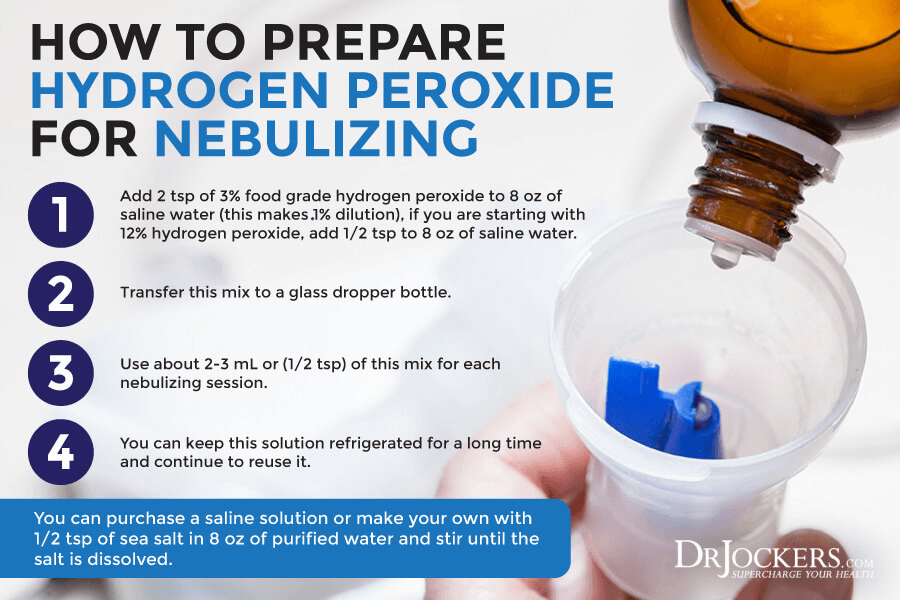
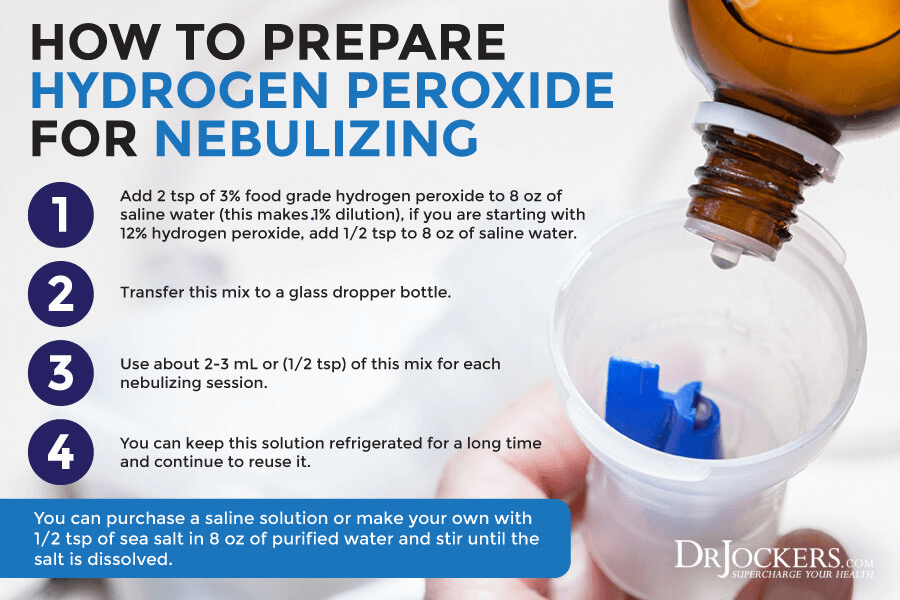
There is no established home recipe for nebulizing food grade hydrogen peroxide that can be recommended as safe. Do not put hydrogen peroxide in a nebulizer unless a qualified medical professional has specifically prescribed an appropriate treatment and product. Food grade does not mean safe to inhale.
In the United States, people searching for a food grade hydrogen peroxide nebulizer recipe may be looking for relief from a cough, stuffy nose, allergies, or another breathing problem. Online posts sometimes suggest mixing hydrogen peroxide with water and breathing the mist through a home nebulizer. These instructions can expose the lungs to a chemical that irritates the airways.
Hydrogen peroxide is an oxidizing chemical. It can damage tissue when it comes into contact with the body, and inhaling its mist can irritate the nose, throat, and lungs. The risk depends on the concentration, amount, and length of exposure. The Agency for Toxic Substances and Disease Registry, part of the US Department of Health and Human Services, warns that inhaling hydrogen peroxide can cause respiratory irritation.
This guide explains why homemade hydrogen peroxide inhalation mixtures are not recommended, what food grade means, and how to choose a safer next step. It does not provide a dilution formula or nebulizer instructions because those details could encourage a harmful exposure. People who need inhaled treatment should use products intended for that purpose and follow instructions from their healthcare professional.
Source: www.amazon.co.jp
What Is a Food Grade Hydrogen Peroxide Nebulizer Recipe?
A food grade hydrogen peroxide nebulizer recipe is an online search term for a mixture that some people propose using in a nebulizer. The idea often involves diluting hydrogen peroxide with water before turning it into a fine mist. However, a popular recipe is not the same as a tested or approved medical treatment.
There is no general home recipe that establishes a safe concentration, dose, frequency, or treatment duration for inhaling hydrogen peroxide. Dilution alone does not establish that a mixture is suitable for the lungs. The source water, chemical additives, storage conditions, and aerosol exposure can also affect safety.
Hydrogen peroxide has legitimate uses in cleaning, disinfection, and certain industrial processes. Those uses do not establish that it treats respiratory illness when inhaled. A substance can be useful on a surface yet harmful when it reaches delicate tissue inside the lungs.
The safest response to this search is to avoid preparing the mixture. If the goal is to ease congestion, treat asthma, or manage another respiratory condition, the appropriate treatment depends on the cause of the symptoms.
Source: amazon.com
The proposed mixture
Online instructions may suggest combining hydrogen peroxide and water, but this does not establish a safe inhaled dose or prove that the mixture helps a respiratory condition.
The medical concern
Hydrogen peroxide mist can contact sensitive airway tissue directly. A homemade mixture may cause irritation or injury rather than provide relief.
The practical next step
Do not prepare the mixture for inhalation. Ask a clinician or pharmacist which treatment is appropriate for your symptoms and equipment.
Does a Recipe Found Online Prove That It Works?
No. A recipe shared on a blog, video, or social media post does not establish medical safety or effectiveness. Personal stories may describe what someone believes happened after a treatment, but they cannot reliably show that the treatment caused an improvement.
A useful medical treatment needs evidence about the condition it treats, the amount used, the expected benefit, and the possible harms. For a substance inhaled into the lungs, the safety of the delivery method matters as much as the substance itself. Without suitable evidence, it is not possible to recommend a homemade hydrogen peroxide mixture.
Look for reliable evidence
Check whether a recommendation comes from a recognized medical authority or a properly conducted clinical study rather than a personal testimonial.
Separate claims from results
A claim that a mixture kills germs on surfaces does not show that inhaling it safely treats an infection.
What Does Food Grade Hydrogen Peroxide Mean?
Food grade hydrogen peroxide is a product category associated with certain food-related processing or handling uses. The label does not mean that the liquid is a food, a medicine, or a substance that is safe to inhale. Its concentration and exact formulation still matter.
Poison Control notes that products described as food grade are often sold at concentrations much higher than ordinary household hydrogen peroxide. A concentrated product can cause serious burns and other injuries if swallowed or mishandled. It should never be treated as harmless because of its label.
Household hydrogen peroxide is commonly sold as a dilute solution, often at 3 percent. More concentrated products also exist. Neither a household product nor a concentrated food grade product should be assumed suitable for a nebulizer. Lower concentration does not prove inhalation safety.
The intended route of exposure is a key distinction. A product may be designed for a particular surface or process, while a nebulizer sends tiny liquid droplets into the breathing passages. The product label, intended use, and clinical evidence must support that route before a solution is used as an inhaled treatment.
Source: Thrive Market
Food grade
This label does not mean edible, safe for self-treatment, or suitable for use in a nebulizer.
Household strength
A common retail concentration is not automatically safe for inhalation, even if it seems weak.
Concentrated peroxide
Higher concentrations can cause more severe injury and require careful handling under the product’s stated safety instructions.
Why Concentration Is Not the Only Safety Factor
Concentration tells you how much hydrogen peroxide is present in a solution. It does not, by itself, establish a safe dose for the lungs. The volume inhaled, the size of the droplets, the duration of exposure, and the condition of the person’s airways can all affect the outcome.
A dilution calculation can show how the concentration changes after mixing liquids. It cannot show that the resulting solution is safe to nebulize. This is why a mathematically correct home mixture should not be mistaken for a medically validated treatment.
Concentration
The percentage on the label describes the strength of the supplied solution, not a recommended inhaled dose.
Formulation
The product may contain ingredients or stabilizers that have not been evaluated for delivery into the lungs.
Exposure
Aerosol delivery can bring a chemical into direct contact with airway tissue, creating a different exposure from surface cleaning.
Why Nebulizing Hydrogen Peroxide Can Be Dangerous
Nebulizing hydrogen peroxide can expose the airways to an irritating chemical mist. The respiratory tract has a delicate lining that helps warm, filter, and protect the air people breathe. Direct chemical exposure can interfere with that lining and cause symptoms that range from irritation to serious breathing problems.
The Agency for Toxic Substances and Disease Registry identifies respiratory irritation as a possible effect of inhaling household-strength hydrogen peroxide. More concentrated exposure can cause more severe irritation and lung injury. Medical guidance also describes cough, throat irritation, chest tightness, and shortness of breath after harmful exposure.
A nebulizer does not make a chemical safer. It changes a liquid into droplets that can be inhaled. That function is useful when the liquid is an appropriate medicine or other solution specifically intended for inhalation, but it can also increase the chance that an unsuitable liquid will reach sensitive tissue.
There is also a risk of delayed symptoms after a significant exposure. Someone may initially feel only mild irritation and then develop worsening respiratory symptoms. Feeling better right after an exposure does not prove that no injury has occurred.
Source: amazon.com
Airway irritation
Possible symptoms include burning in the nose or throat, coughing, hoarseness, and discomfort when breathing.
Chest symptoms
Chest tightness, chest pain, or shortness of breath after exposure needs prompt medical assessment.
More serious lung injury
Substantial exposure can lead to inflammation and fluid accumulation in the lungs. Severe cases can become life-threatening.
Can Diluted Hydrogen Peroxide Still Harm the Lungs?
Yes. Dilution reduces the concentration of a starting solution, but it does not establish that the final mixture is safe to inhale. Health agencies report that even household-strength hydrogen peroxide can irritate the respiratory tract when inhaled.
The absence of immediate pain or a strong smell is not a dependable safety test. Hydrogen peroxide may not provide a clear warning before a harmful exposure occurs. Do not use smell, taste, or the appearance of the liquid to decide whether a mixture is suitable for a nebulizer.
Do not rely on a low percentage
A lower concentration is not proof that a solution is safe for repeated or direct inhalation.
Do not rely on a trial run
Trying a small amount does not establish safety and can still cause harmful exposure.
What Can You Safely Put in a Nebulizer?
Use only a solution or medication that is intended for nebulization and appropriate for your condition and device. A clinician or pharmacist can help confirm which product to use, whether it requires a prescription, and how to follow its label or treatment plan.
Nebulizers are used to deliver certain medicines for conditions such as asthma and other respiratory disorders. Some treatment plans also use sterile saline for a specific purpose. The correct choice depends on the person’s diagnosis, symptoms, age, and medical instructions.
Do not substitute homemade mixtures, tap water, bottled drinking water, essential oils, cleaning products, or food grade chemicals for a prescribed inhalation solution. These liquids are not interchangeable. Some can irritate the lungs, introduce contaminants, or interfere with the function of the equipment.
A pharmacist can also check whether a prescribed solution is compatible with a particular nebulizer. Different devices have different instructions, and not every liquid is suitable for every model. Follow the device manual and the instructions supplied with the medicine.
Source: essentialoxygen.com
Prescribed nebulizer medicine
Use the medicine, dose, and schedule provided by your healthcare professional. Do not change the formulation or mix medicines unless instructed.
Sterile saline
Use only a product intended for the prescribed inhalation purpose and recommended by your healthcare professional. Do not assume every saline product is suitable.
Water
Do not pour tap water, bottled water, or homemade water mixtures into a nebulizer as a substitute for a recommended inhalation solution.
Essential oils and other additives
Do not nebulize essential oils, household disinfectants, or other unapproved additives. Ask a healthcare professional before using any new inhaled substance.
How to Check a Nebulizer Solution Before Use
Read the full product label and confirm that the solution is meant for inhalation. If the package does not clearly identify it as a product for nebulization or inhalation, do not place it in the device. A label that says food grade, natural, pure, or pharmaceutical grade is not enough by itself.
Check the expiration date, packaging condition, and storage instructions. Follow the medicine’s directions for opening, handling, and disposal. If the liquid looks different from its normal appearance or the packaging is damaged, ask a pharmacist before using it.
Clean and dry the nebulizer parts as the manufacturer directs. Cleaning the device does not make an unsafe chemical safe to inhale, but proper device care can help reduce contamination and keep the equipment working as intended.
Confirm the intended route
The label or prescribing instructions must support inhalation through the relevant device.
Check compatibility
Follow the device manufacturer’s instructions for approved solutions and cleaning methods.
Ask before mixing
Do not combine medicines or add another liquid unless a healthcare professional has told you to do so.
Safer Ways to Address Cough, Congestion, and Breathing Problems
The safest alternative depends on what is causing the symptoms. Nasal congestion from a cold, wheezing from asthma, and shortness of breath from a serious lung problem require different responses. Hydrogen peroxide is not a substitute for finding and treating the cause.
For mild nasal congestion, a person may be able to use a commercially prepared saline nasal spray or rinse when appropriate. Nasal products are designed for the nose, not for use in a nebulizer. Follow their directions, including any instructions about the water used in a nasal rinse.
For asthma or another diagnosed respiratory condition, follow the treatment plan provided by the clinician. If a prescribed rescue medicine is not helping as expected, symptoms are getting worse, or the usual treatment is unavailable, contact a healthcare professional promptly. Severe breathing difficulty is an emergency.
A cough that persists, recurs, or comes with fever, chest pain, blood, or worsening breathing also deserves medical review. The right care may depend on an infection, allergy, asthma, medication effect, or another cause. Adding an unapproved chemical can delay care and introduce a new risk.
Source: essentialoxygen.com
For nasal symptoms
Consider a suitable commercial nasal saline product and follow its label. Do not transfer nasal rinse recipes into a nebulizer.
For wheezing
Use prescribed inhaled medicine according to the treatment plan and seek medical advice if symptoms do not respond as expected.
For a persistent cough
Arrange a medical assessment when symptoms continue, worsen, or occur with other concerning signs.
For severe breathing problems
Call 911 in the United States for severe shortness of breath, blue or gray lips, confusion, fainting, or other signs of a medical emergency.
Why the Cause of the Symptoms Matters
A single treatment does not fit every respiratory problem. A medicine that opens narrowed airways may help a person with asthma when prescribed, while a nasal saline product may help with some nasal symptoms. Neither approach should be assumed to treat every cough or infection.
A healthcare professional can help identify the likely cause, assess warning signs, and select a treatment with an appropriate safety profile. Share any home remedies or chemicals already used, including their product names and concentrations. That information can help guide care.
Describe the symptoms
Explain when they began, whether they are worsening, and whether you have fever, wheezing, chest pain, or shortness of breath.
List current medicines
Tell the clinician about prescribed medicines, over-the-counter products, supplements, and any substances already inhaled.
What to Do If You Have Already Nebulized Hydrogen Peroxide
Stop using the mixture and move away from the source of exposure. Do not take another inhalation to see whether the symptoms improve. If you have the product container, keep it available so a healthcare professional can identify the concentration and ingredients.
If you develop breathing difficulty, severe coughing, chest pain, confusion, fainting, or blue or gray lips, seek emergency care immediately. In the United States, call 911. Do not drive yourself if your breathing is seriously impaired.
Even when symptoms seem mild, contact a poison control service or healthcare professional for advice after a meaningful inhalation exposure. In the United States, Poison Control can be reached at 1-800-222-1222 or through Poison.org. A poison specialist can help assess the product, the exposure, and the next steps.
Do not wait for symptoms to become severe before asking for help after exposure to a concentrated product. Some respiratory effects may worsen after the initial exposure. The concentration, amount, exposure time, and symptoms are all useful details to report.
If you live outside the United States, contact your local poison information service or emergency medical service. The US Poison Control number may not work in other countries, so use a local service when needed.
Source: indiamart.com
Stop the exposure
Turn off the nebulizer and move to fresh air, away from the chemical mist.
Get emergency help for severe symptoms
Do not delay care for serious breathing difficulty, chest pain, fainting, or signs of reduced oxygen.
Keep the product details
Provide the container, label, concentration, approximate exposure time, and symptoms to medical staff when possible.
Follow professional advice
Do not attempt to neutralize the chemical, start another inhalation treatment, or use a home remedy without medical guidance.
What Information Should You Give a Poison Specialist?
Be ready to identify the product and explain how the exposure occurred. Mention whether the solution was sold as food grade, its stated concentration, and whether it was mixed with any other liquid. Estimate how long the nebulizer ran and when the symptoms began.
Report all symptoms, even if they seem minor. A specialist may recommend observation, medical evaluation, or emergency treatment based on the details. Follow that advice rather than relying on an online symptom checklist.
Product information
Brand, concentration, ingredients, and any available safety label.
Exposure details
Approximate time, duration, device used, and whether the solution was diluted.
Health information
Current symptoms, existing respiratory conditions, medicines, and whether symptoms are getting worse.
Common Myths About Hydrogen Peroxide Nebulizer Recipes
Many unsafe home-treatment ideas sound convincing because they use familiar terms such as food grade, oxygen, natural, or diluted. Those words do not establish that a chemical is safe for inhalation or that it can treat an illness.
Hydrogen peroxide breaks down into water and oxygen under certain conditions, but that chemical reaction does not make every exposure harmless. The starting chemical can damage tissue before it breaks down. The body also responds to a chemical’s contact with sensitive tissue, not just to the substances left after the reaction.
Another common claim is that a low concentration must be safe. That conclusion is not supported by concentration alone. The dose delivered, formulation, duration, and route of exposure all matter, and a home recipe does not provide the evidence needed to determine a safe inhaled dose.
Finally, a claim that hydrogen peroxide can kill microbes on a surface does not prove that breathing it treats an infection inside the body. Surface disinfection and medical treatment are different uses with different risks. The method that works for one purpose cannot automatically be transferred to another.
Source: deporecipe.co
Myth: Food grade means safe to breathe
Reality: Food grade is not an inhalation safety rating and does not establish a suitable nebulizer formulation.
Myth: Dilution guarantees safety
Reality: Dilution changes concentration, but it does not prove that the resulting mist is safe or effective.
Myth: A stronger chemical effect means better treatment
Reality: A substance that damages microbes may also injure human cells. Chemical activity is not proof of a health benefit.
Myth: A successful personal story proves effectiveness
Reality: A testimonial cannot establish cause, a safe dose, or the likelihood of benefit for another person.
Can Hydrogen Peroxide Replace a Prescribed Nebulizer Medicine?
No. Hydrogen peroxide should not replace a prescribed nebulizer medicine. Medicines are selected for defined conditions, and their benefits and risks are evaluated for their intended use. Hydrogen peroxide does not become an equivalent treatment because it can be delivered through the same device.
If a prescribed medicine is too costly, unavailable, or difficult to use, speak with a clinician or pharmacist about suitable alternatives. Do not stop a prescribed treatment or substitute a household chemical without medical advice.
Keep the treatment plan
Continue to follow the clinician’s instructions unless the clinician changes them or emergency services advise otherwise.
Discuss barriers
Ask about a suitable alternative if the current medicine, device, or treatment schedule is a problem.
How to Make a Safer Decision Before Your Next Treatment
Before using any liquid in a nebulizer, confirm that it is meant for inhalation and that its use matches your medical instructions. If either point is unclear, pause and ask a healthcare professional. This simple check is more useful than trying to adapt a recipe from a website.
Read the label for the intended use, concentration, ingredients, storage directions, and warnings. If a product is sold for cleaning, food handling, or another non-inhalation purpose, do not assume it can be used in a respiratory device. Do not use an online dilution table to turn it into a supposed inhalation medicine.
If you already have a prescription, follow the instructions for the exact medicine and device. Ask the pharmacist whether the solution is compatible with your nebulizer, whether it can be mixed with another prescribed product, and how the equipment should be cleaned. Use only the amount and schedule specified for your treatment.
If you do not have a diagnosis or treatment plan, arrange a medical assessment rather than experimenting with a chemical. Describe the main symptom, how long it has lasted, what makes it better or worse, and any warning signs. Seek urgent care for worsening symptoms or emergency help for severe breathing difficulty.
Source: www.amazon.co.jp
Before treatment
Confirm the liquid, device, dose, and intended purpose with the product instructions or prescribing professional.
During treatment
Use only the prescribed or specifically recommended solution. Stop and seek advice if an unexpected reaction occurs.
After treatment
Follow the device manual for cleaning and storage. Report new or worsening symptoms to a healthcare professional.
What If You Cannot Reach a Doctor Right Away?
Do not use hydrogen peroxide while waiting for medical advice. A pharmacist, nurse advice line, urgent care service, or poison information service may be able to guide you, depending on the problem and where you live. The right option depends on whether you need treatment advice or help after a chemical exposure.
If you have severe or rapidly worsening breathing symptoms, do not wait for a routine appointment or an online response. Contact emergency services. If the symptoms are mild but persistent, seek timely advice rather than testing an unapproved inhalation remedy.
For product questions
Ask a pharmacist to confirm whether the liquid is intended for nebulization and compatible with your prescribed treatment.
For chemical exposure
Contact a poison information service or healthcare professional and provide the product details.
For severe symptoms
Seek emergency medical care without delay.
Frequently Asked Questions
Q
Is there a safe food grade hydrogen peroxide nebulizer recipe?
There is no established home recipe that can be recommended as safe for inhalation. Do not put food grade hydrogen peroxide in a nebulizer or attempt to make it suitable by diluting it. Ask a healthcare professional about an appropriate inhalation treatment for your symptoms.
Q
Can I use 3 percent hydrogen peroxide in a nebulizer?
No. A 3 percent household product should not be assumed safe for nebulization. Health agencies report that inhaling household-strength hydrogen peroxide can irritate the respiratory tract. Use only a solution intended for inhalation and recommended for your treatment.
Q
Can I dilute 35 percent food grade hydrogen peroxide for inhalation?
Do not prepare a diluted mixture for inhalation. Concentrated hydrogen peroxide can cause serious injury, and a dilution calculation does not establish a safe dose or suitable formulation for the lungs. Keep concentrated products away from children and follow their safety labels.
Q
What liquid should I use in my nebulizer instead?
Use the medication or solution prescribed or specifically recommended for your condition and device. Some treatment plans use sterile saline, while others require a particular medicine. Ask a clinician or pharmacist before changing the solution, mixing products, or substituting another liquid.
Q
What happens if I accidentally inhale hydrogen peroxide mist?
Possible effects include nose or throat irritation, coughing, chest tightness, and shortness of breath. Stop the exposure and move to fresh air. Contact a poison information service or healthcare professional for advice. Seek emergency care for severe breathing difficulty, chest pain, confusion, fainting, or other serious symptoms. In the United States, call 911 for a medical emergency.
Q
Does food grade hydrogen peroxide kill respiratory infections?
Claims that inhaled hydrogen peroxide treats respiratory infections are not established by its use as a surface disinfectant. Surface disinfection and treatment inside the body are different applications. Do not use hydrogen peroxide as an inhaled infection treatment without an established medical indication and qualified clinical direction.
Q
Can I use distilled water to dilute hydrogen peroxide for a nebulizer?
No. Using distilled water does not make hydrogen peroxide suitable for inhalation. Water quality is only one consideration, and it does not address the chemical’s effects on airway tissue or establish a safe dose. Do not make a homemade hydrogen peroxide nebulizer solution.
✦ Wrapping Up
Conclusion
Searching for a food grade hydrogen peroxide nebulizer recipe can lead to home treatment advice that sounds simple but carries real risks. Food grade does not mean safe to inhale, and diluting hydrogen peroxide does not establish that it is suitable for the lungs. A nebulizer can deliver an unsuitable chemical directly into the respiratory tract.
The safer choice is to avoid homemade hydrogen peroxide inhalation mixtures. Use only a solution or medicine intended for nebulization and recommended by a qualified healthcare professional. If you have breathing symptoms, seek advice about the cause and the right treatment rather than relying on an unverified recipe.
If exposure has already occurred, stop using the mixture, move away from the mist, and seek appropriate medical or poison information advice. Severe symptoms need emergency care. A cautious decision now can prevent a risky home remedy from becoming a medical emergency.
💡 Key Takeaway
Do not nebulize food grade hydrogen peroxide, even after dilution. Check with a healthcare professional or pharmacist about an appropriate inhalation solution, and seek urgent help if breathing symptoms develop.