Do not make a boric acid eye wash at home. Use a sterile, commercially prepared eye wash only as directed, and seek medical advice for ongoing eye symptoms. For a chemical splash, rinse the eye with clean, lukewarm running water right away.
In the United States, boric acid appears in some commercially made eye wash products. That can make a homemade recipe seem like a simple, low-cost option. Yet a product made for the eyes must meet strict safety needs that go beyond mixing powder with water. The liquid must be suitable for eye contact, and its preparation, handling, and storage must prevent harmful contamination.
A homemade mixture can have the wrong strength, contain unwanted particles, or carry germs. Clear water does not prove that a liquid is sterile. Even clean-looking containers and careful kitchen methods cannot reliably provide the controls needed for a safe eye product. For these reasons, this guide does not give a homemade boric acid eye wash formula.
There are safer ways to handle common eye problems. The right choice depends on what caused the discomfort. Mild dryness, dust in the eye, a chemical splash, and a possible eye infection call for different steps. This guide explains how boric acid eye wash works, why home preparation is risky, which options may help, and when to get medical care.
No. A homemade boric acid eye wash is not a safe choice for routine eye care. Mixing a measured amount of boric acid with water does not create a verified sterile ophthalmic product. The safest approach is to use an appropriate commercially prepared product or follow advice from an eye care professional.
The eye has delicate tissues that can be harmed by chemicals, particles, and germs. Unlike products used on intact skin, eye preparations need special care because they come into direct contact with the surface of the eye. The US Food and Drug Administration explains that ophthalmic products must be sterile to reduce the risk of infection.
This is why a kitchen recipe is not enough. A home mixture may look clear and still contain microbes. Measuring errors can also change its strength, while the water, utensils, container, and storage conditions can introduce contamination. None of these risks can be ruled out by looking at the finished liquid.
Source: speediipl.com
Sterility
A safe eye product needs protection against harmful microbes. Boiling water or washing a jar at home does not provide a reliable substitute for validated sterile manufacturing and packaging.
Correct formulation
The amount of boric acid is only one part of an eye product. Other properties, including acidity, compatibility with eye tissue, and ingredient quality, can affect safety.
Safe storage
A homemade liquid has no verified shelf life. Refrigeration, a tight lid, or a clean-looking bottle does not guarantee that it remains suitable for the eyes.
Why a Simple Recipe Can Be Misleading
Many household recipes focus on a ratio, such as a stated amount of powder mixed with a volume of water. That ratio cannot establish whether the final liquid is sterile, correctly formulated, or safe for a particular eye problem. The same concern applies when a recipe uses a kitchen scale, a measuring spoon, or boiled water.
An eye product also needs a clear purpose. A rinse for removing loose debris is not the same as medicine for an infection. Using the wrong product may delay proper care or make irritation worse.
Do not guess the concentration
Avoid adjusting a recipe by adding more water or more powder. Do not use a homemade mixture even if another person reports that it worked for them.
Do not reuse an old mixture
Never save homemade eye rinse for later use. A stored liquid may become contaminated even when no change in smell, color, or clarity is visible.
What Is Boric Acid Eye Wash?
Boric acid is a chemical compound that has several household, industrial, and limited health product uses. Some commercially prepared eye wash products contain boric acid as part of a formulated solution. Their presence on store shelves does not mean that loose boric acid or borax can be used to prepare an equivalent product at home.
Commercial formulations are made for a defined purpose and have product-specific directions. Their safety depends on the complete formulation, not just on the name of one ingredient. A product may be intended to rinse away loose material or provide temporary relief from minor irritation, depending on its label.
Boric acid eye wash should not be treated as a general cure for red eyes, allergies, dry eyes, or infections. Eye symptoms have many possible causes, and similar symptoms can require different care. A rinse may remove an irritant without treating the reason the eye became irritated in the first place.
Source: i.pinimg.com
Rinsing
An appropriate eye rinse can help wash loose particles or certain irritants from the eye. Follow the product label and use the rinse only for its stated purpose.
Temporary comfort
Some labeled products may offer temporary relief from minor irritation. Relief does not confirm that the underlying cause has been treated.
Medical treatment
A suspected infection, injury, or ongoing eye condition may need a specific treatment. An eye wash should not replace an examination when one is needed.
Boric Acid and Borax Are Not Interchangeable
Boric acid and borax are related boron compounds, but they are not the same substance. Borax is commonly used in cleaning products and some pest control products. Neither household use nor chemical similarity makes a material suitable for direct eye contact.
Never substitute laundry products, pest control powders, cleaning chemicals, or craft ingredients for a labeled eye wash. If a product does not clearly state that it is suitable for the intended eye use, do not put it in the eye.
Check the full product label
Look at the intended use, directions, warnings, and ingredients. Do not rely on a seller’s description or a recipe that names only one ingredient.
Safer Alternatives to Homemade Boric Acid Eye Wash
The best alternative depends on why your eye feels uncomfortable. For minor irritation, an appropriate commercial product may help. For a chemical splash, immediate flushing is the priority. For persistent pain or changes in vision, medical evaluation matters more than trying another rinse.
In the United States, sterile saline eye wash and artificial tears are available for different uses. They are not interchangeable. Sterile saline eye wash is intended for rinsing as described on its label, while artificial tears are used to lubricate the eye and ease certain types of dryness or irritation.
Read the label before use. Do not assume that saline sold for wound care, a contact lens cleaning solution, or a multipurpose household liquid is suitable for direct eye use. Contact lens products can contain ingredients intended for lens cleaning or disinfection, which may irritate the eye if used incorrectly.
Source: cdn11.bigcommerce.com
Sterile commercial eye wash
Consider a product specifically labeled for eye rinsing when you need to remove loose dust or debris. Follow its instructions and warnings. Do not use it to delay care for an injury or chemical exposure.
Artificial tears
These may help with mild dryness or irritation when used as directed. Choose a product intended for your symptoms, and ask a pharmacist or eye care professional if you are unsure.
Clean running water
For a chemical splash, do not delay flushing while searching for a special eye wash. Begin rinsing with clean, lukewarm running water immediately and continue for at least 15 to 20 minutes.
Professional eye care
Seek advice for unexplained redness, discharge, recurring irritation, or symptoms that do not improve. A clinician can help identify the cause and decide whether medicine is needed.
How to Choose the Right Option
Start by identifying what happened. If your eyes feel dry after time in an air-conditioned room, artificial tears may be more suitable than a boric acid rinse. If loose dust has entered the eye, gentle flushing may help. If a chemical has splashed into the eye, treat it as an urgent exposure and rinse immediately.
If the discomfort began after using makeup, a new skin product, or household cleaner, stop using the suspected product. If symptoms persist, get medical advice rather than repeatedly washing the eye or trying several different products.
For mild dryness
Consider artificial tears labeled for eye use. Persistent dryness, pain, or vision changes deserve professional assessment.
For loose dust
Try gentle rinsing with clean water or a suitable sterile eye rinse. Do not rub the eye or attempt to remove an embedded object.
For a chemical splash
Flush immediately with plenty of clean, lukewarm running water for at least 15 to 20 minutes. Remove contact lenses if they come out easily and seek poison control or urgent medical guidance.
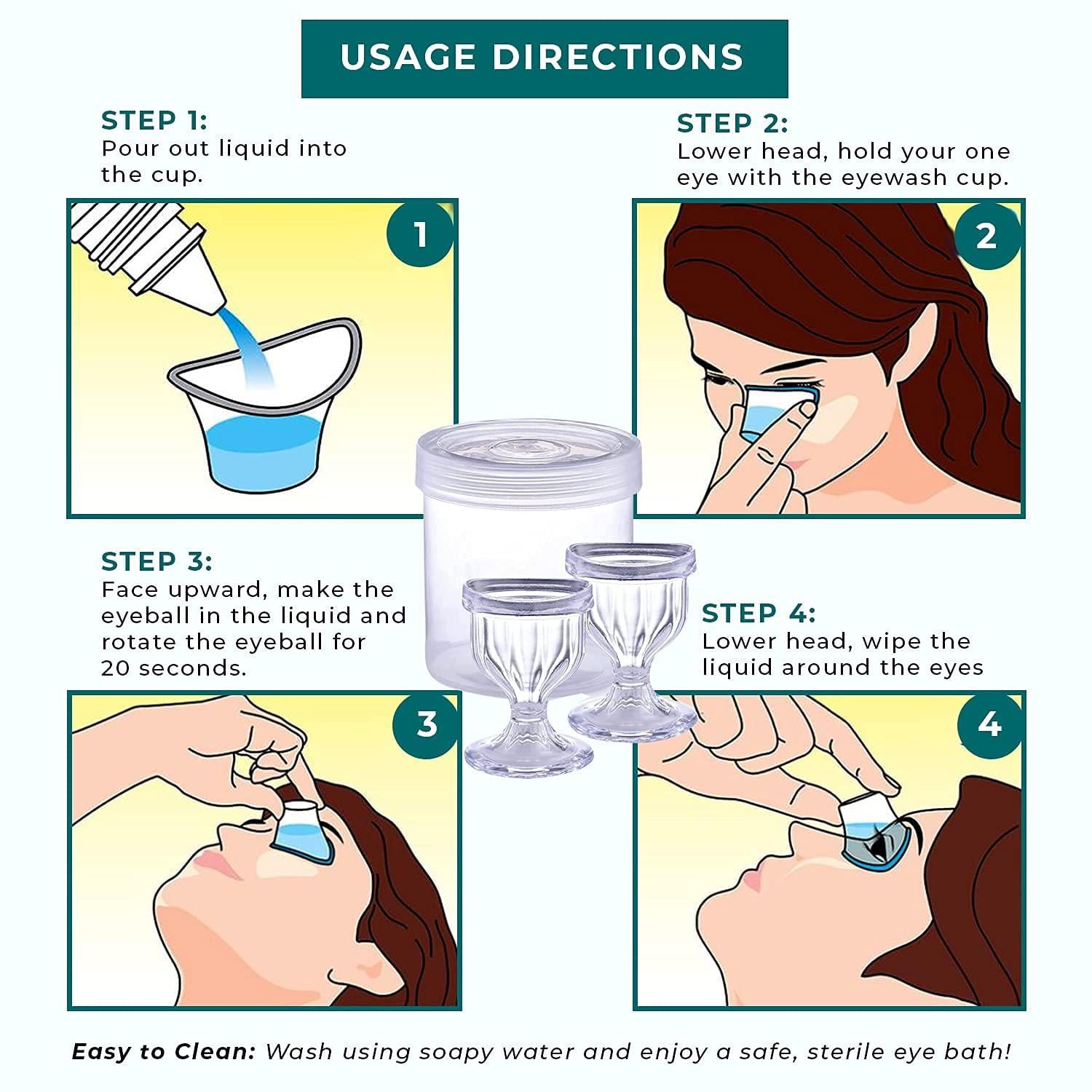
How to Rinse an Irritated Eye Safely
For a minor exposure to loose dust, gentle rinsing may help clear the eye. The steps below are for simple rinsing, not for treating a serious injury. If you suspect a chemical burn, begin flushing at once and seek urgent medical guidance.
Wash your hands before touching the area around the eye. Use clean water or an eye rinse that is specifically labeled for this purpose. Avoid touching the bottle tip to your eye, fingers, or other surfaces because this can contaminate the product.
Do not rub the eye. Rubbing may increase irritation or scratch the clear surface at the front of the eye. If a particle will not wash away, or if you feel as though something remains trapped under the eyelid, get medical care instead of trying to dig it out.
Source: gosupps.com
Step 1: Identify the exposure
Consider whether the problem is dust, dryness, a cosmetic product, a household chemical, or an injury. If the substance is unknown or potentially harmful, treat it cautiously.
Step 2: Choose an appropriate rinse
For routine rinsing, use clean water or a sterile product intended for the eyes. Do not use a homemade boric acid mixture or any cleaning solution.
Step 3: Rinse gently
Allow the liquid to flow gently across the eye without using a forceful stream. Blink naturally during a routine rinse. Stop if the product causes unexpected pain or worsening symptoms, unless you are continuing essential flushing after a chemical exposure.
Step 4: Recheck symptoms
Notice whether the irritation has eased. Persistent pain, redness, tearing, light sensitivity, or a foreign-body feeling can signal a problem that needs examination.
Step 5: Get help when needed
Do not keep trying different rinses if symptoms continue. Contact an eye care professional or seek urgent care according to the severity of the symptoms.
What to Do After a Chemical Splash
A chemical splash is different from ordinary eye irritation. Start flushing the eye immediately with clean, lukewarm running water. Continue for at least 15 to 20 minutes, remove contact lenses if they come out easily, and keep the eyelids open enough for water to reach the eye.
Do not wait to find sterile saline, a boric acid product, or a special eye wash. Time matters when a chemical is in contact with the eye. After flushing, contact a poison center or obtain urgent medical advice. Severe pain or vision changes require emergency assessment.
In the United States, Poison Control can be reached at 1-800-222-1222. Its online service may also help assess an exposure. If the affected person has severe symptoms, do not delay emergency care to make a call or complete an online form.
Do not try to neutralize the chemical
Never add another chemical, vinegar, baking soda, boric acid, or a home remedy to the eye. Mixing substances can worsen the injury.
Keep the product container
If safe, keep the packaging or take a photo of the label for medical staff. The product name and ingredients can help guide treatment.
Risks and Side Effects of Boric Acid Eye Wash
Boric acid eye wash may cause discomfort if a product is unsuitable, contaminated, or used incorrectly. The risk depends on the substance, its concentration, the amount of exposure, and the condition of the eye. A homemade preparation adds uncertainty because its final quality has not been verified.
Possible warning signs include burning, stinging, redness, tearing, swelling, or increased discomfort. These symptoms can also occur with other eye conditions, so they do not identify a cause on their own. Do not keep using a product that seems to make the eye worse.
Boric acid can irritate the eyes, particularly when the material is not formulated for ophthalmic use. Powder intended for pest control, cleaning, or other household purposes must never be substituted for an eye product. Do not assume that a small amount is harmless simply because the substance is sold for common household uses.
Source: i.pinimg.com
Contamination
Germs introduced during mixing, pouring, or storage may reach delicate eye tissues. Contamination may not change the liquid’s appearance.
Incorrect strength
A measuring mistake can produce an unsuitable mixture. Diluting a solution by guesswork does not make it safe.
Delayed treatment
Trying a homemade rinse repeatedly may delay care for an infection, corneal scratch, chemical injury, or other condition.
Accidental ingestion
Boric acid can be harmful if swallowed, especially in significant amounts. Keep it away from children and pets and seek poison control guidance if ingestion occurs.
When to Stop Home Care
Seek urgent medical attention if you have severe eye pain, sudden blurred or reduced vision, marked swelling, significant light sensitivity, or a suspected chemical burn. These symptoms should not be managed with repeated rinsing attempts or home recipes.
Arrange prompt eye care if redness or discomfort persists, the eye produces unusual discharge, the eyelids become swollen, or symptoms keep returning. Contact lens wearers should be especially cautious about a painful red eye because some infections can threaten vision.
If boric acid powder or a non-ophthalmic product gets into the eye, flush immediately with room-temperature or lukewarm water for at least 15 to 20 minutes. Remove contact lenses, if possible, and contact a poison center or clinician for further advice. Seek urgent assessment if pain, redness, tearing, or vision problems continue.
Emergency signs
Sudden vision loss, severe pain, a serious chemical exposure, or a penetrating eye injury needs emergency care.
Persistent symptoms
Ongoing irritation after rinsing deserves an eye examination, even if the discomfort first seemed mild.
Common Mistakes to Avoid
The most common mistake is assuming that a substance is safe for the eyes because it is sold without a prescription or used in other health products. Intended use matters. A product made for the skin, bathroom, laundry, or garden is not a substitute for an eye preparation.
Another mistake is relying on a recipe’s exact measurements while ignoring sterility. A precise ratio does not prove that a liquid is safe. Even when the amounts appear correct, unsuitable water, contaminated equipment, and poor storage can make the result unsafe.
Repeated rinsing is not always the answer. A rinse may remove a loose irritant, but it cannot repair every scratch or treat every infection. If symptoms worsen or fail to improve, stop experimenting and get professional guidance.
Source: cdn11.bigcommerce.com
Using borax instead of boric acid
These compounds are different. Neither should be used as a homemade substitute for a sterile eye product.
Using boiled water as proof of safety
Boiling water at home does not make the finished mixture a validated sterile ophthalmic preparation. Contamination can occur during cooling, mixing, pouring, and storage.
Sharing an eye wash bottle
Sharing products can spread germs and contaminate the container. Follow the label’s handling instructions and avoid touching the applicator tip to any surface.
Using expired or damaged products
Do not use a product past its expiration date or if the seal or container is damaged. Follow any instructions about how long the product remains usable after opening.
Ignoring contact lens warnings
Some eye products are not suitable for use while wearing contacts. Follow the label and remove lenses when directed.
How to Store a Commercial Eye Product
Store an eye product exactly as its label directs. Keep the cap closed, avoid touching the tip, and do not transfer the liquid to a different bottle. These steps help reduce the risk of contamination, although they do not replace the product’s stated shelf life.
Do not add water or another ingredient to stretch the supply. Do not combine different products in one container. If the liquid changes appearance, the container is damaged, or the instructions are unclear, ask a pharmacist or replace the product as appropriate.
Follow the expiration date
Check both the printed date and any after-opening limit provided by the manufacturer.
Keep products out of children’s reach
Store boric acid and all eye preparations securely. Household powders and liquids can cause harm if swallowed or misused.
What Does the Evidence Tell Us?
The main safety point is clear: products intended for the eyes need to be sterile, and household mixing does not reliably establish that standard. The FDA identifies sterility as a key requirement for ophthalmic products because these products reach tissues with limited natural defenses against infection.
Poison Control guidance also supports immediate flushing after a harmful substance enters the eye. Its first-aid advice recommends room-temperature water and irrigation for at least 15 to 20 minutes, followed by poison control guidance. Severe symptoms call for urgent medical care.
These facts do not mean that every commercially prepared boric acid eye wash is right for every person or symptom. The product’s label, ingredients, intended use, and the person’s condition still matter. A commercial product should not be used to self-treat a potentially serious injury or unexplained vision change.
Source: speediipl.com
Documented safety principle
Ophthalmic products need sterility to reduce infection risk. A homemade recipe cannot be assumed to meet that standard.
Documented first-aid principle
For chemical exposure, start flushing immediately instead of waiting to obtain a special rinse.
Important limitation
Neither the presence of boric acid in a commercial product nor a report of personal benefit proves that a homemade solution is safe or effective.
Questions to Ask a Pharmacist or Eye Care Professional
If you are unsure which product to use, describe your symptoms and what may have caused them. Ask whether a rinse, lubricating drops, or an eye examination is the right next step. Mention contact lens use, other eye products, and any known eye condition.
Bring the product label or a clear photo of it when seeking advice. If a substance has already entered your eye, tell the clinician what it was, when exposure occurred, and how long you rinsed. These details can help guide the next steps.
Ask about the intended use
Confirm whether the product is meant for direct eye rinsing, lubrication, or another purpose.
Ask when to seek care
Get clear instructions on warning signs and the time frame for medical assessment if symptoms continue.
Frequently Asked Questions
Q
What is the recipe for boric acid eye wash?
There is no homemade recipe that can be recommended as a reliably safe eye wash. Mixing boric acid with water does not establish sterility, correct formulation, or safe storage. Use a commercially prepared product specifically labeled for eye use, following its directions, or ask an eye care professional what is appropriate for your symptoms.
Q
Can I use boiled water and boric acid in my eyes?
No. Boiled water and boric acid do not automatically produce a safe ophthalmic solution. The finished mixture may have an unsuitable concentration or become contaminated during preparation and storage. Do not put a homemade mixture in your eyes.
Q
Is store-bought boric acid eye wash safe?
A commercially prepared product intended for eye use may be appropriate when used according to its label. Check the ingredients, intended purpose, warnings, expiration date, and storage directions. Do not assume that every product containing boric acid is suitable for every eye condition.
Q
Can boric acid eye wash treat pink eye?
Do not rely on boric acid eye wash to treat pink eye. Redness and discharge can have several causes, including viral, bacterial, allergic, and irritant-related conditions. The correct care depends on the cause. Seek medical advice for significant pain, light sensitivity, vision changes, heavy discharge, or symptoms that persist.
Q
Can I use boric acid eye wash on my cat or dog?
Do not use a homemade boric acid mixture in a pet’s eyes. Animals can have eye injuries, infections, and other conditions that need veterinary care. Ask a veterinarian before using an eye product on a pet, including a product sold for human use. Seek prompt veterinary attention if your pet squints, paws at the eye, has swelling, or develops cloudy eyes or unusual discharge.
Q
What should I do if boric acid powder gets in my eye?
Start rinsing the eye immediately with clean, lukewarm running water for at least 15 to 20 minutes. Remove contact lenses if they come out easily. Do not rub the eye or add another chemical. Contact a poison center or medical professional for guidance, and seek urgent care if pain, redness, tearing, or vision problems continue.
Q
Can I use contact lens solution instead of eye wash?
Not automatically. Contact lens solutions vary in purpose and ingredients. Some are designed to clean or disinfect lenses rather than rinse the eye directly. Use a product only as its label directs, and choose a sterile eye rinse intended for the task when rinsing is needed.
Q
How long does homemade boric acid eye wash last?
Homemade boric acid eye wash has no reliable, validated shelf life. Refrigerating it or keeping it in a sealed container does not guarantee sterility. Do not prepare or store a homemade mixture for eye use. Follow the expiration and after-opening instructions on an appropriate commercial product instead.
✦ Wrapping Up
Conclusion
Searching for a recipe for boric acid eye wash may seem like an easy way to ease eye discomfort at home. Yet a safe eye product needs more than the right ingredients and measurements. Sterility, formulation, packaging, and proper use all matter, so a homemade boric acid mixture is not a recommended option.
For minor dryness, an appropriate artificial tear may help. For loose dust, gentle rinsing with clean water or a suitable sterile eye rinse may be useful. For a chemical splash, begin flushing immediately with clean, lukewarm running water for at least 15 to 20 minutes and seek further guidance. Severe pain, vision changes, and ongoing symptoms should never be ignored.
💡 Key Takeaway
Skip the homemade recipe. Choose a commercially prepared product labeled for the intended eye use, follow its directions, and contact an eye care professional if symptoms persist. If a chemical or boric acid powder enters the eye, flush immediately and seek appropriate medical guidance.