Bake a pie crust for about 15 to 20 minutes at 375°F when partially baking it with pie weights, or about 20 to 30 minutes when fully blind baking it. The exact time depends on the crust, oven, pan, and whether the filling will be baked later.
In American home kitchens, pie crust baking time often comes up when making pumpkin pie for Thanksgiving, apple pie for fall, or a chilled lemon pie for summer. The right baking time depends on what goes into the crust next. A crust that will bake again with its filling needs less oven time than an empty shell meant for a no-bake filling.
For most standard 9-inch pie crusts, 375°F is a useful starting point. A partial bake often takes 15 to 20 minutes with parchment and pie weights, followed by a few more minutes without them. A fully baked shell may need 20 to 30 minutes or longer, depending on its color and texture. Watch the crust as it bakes instead of relying on the clock alone.
This guide explains when to bake a pie crust, how to use pie weights, and how to tell when the crust is ready. It also covers frozen crusts, different oven temperatures, and common problems such as shrinking edges and a soggy bottom.
Most standard pie crusts need 15 to 30 minutes at 375°F, depending on whether you are partially baking or fully baking the shell. A crust that will hold a filling and return to the oven needs less time. A shell for a chilled pie must bake until it is cooked through and ready to use on its own.
These times are general guides for a typical 9-inch pie crust. A deep-dish crust, thick pastry, glass pan, or unusually hot oven can change the result. Start checking a few minutes before the expected finish time.
The best test is the crust itself. The base should look set rather than wet, and the edges should hold their shape. For a fully baked crust, the bottom should be dry and lightly golden, not pale and doughy.
Source: cloudykitchen.com
Partially baked crust
Bake for about 15 to 20 minutes at 375°F with pie weights, then remove the weights and bake for another 3 to 7 minutes if the recipe calls for it.
Fully baked crust
Bake for about 20 to 30 minutes at 375°F, removing the weights after the first 15 to 20 minutes so the base can dry and brown.
Crust baked with its filling
Follow the filling recipe. Many fruit pies and custard pies use an unbaked crust, while some recipes call for a short partial bake first.
Store-bought crust
Use the package directions first. Refrigerated and frozen crusts may have different preparation steps and recommended baking times.
What Is the Difference Between Par-Baking and Blind Baking?
Par-baking means partially baking a crust before adding the filling. The crust gets a head start, which can help the base cook through when the filling is wet or needs less time in the oven than the pastry.
Blind baking means baking the crust without its final filling. Some recipes use the term for a partial bake, while others use it for a fully baked shell. Read the recipe to see which finish it needs.
A partially baked shell may still look pale in the center. A fully baked shell should look dry and golden. Knowing the intended finish prevents you from baking the crust too little or too much.
Use a partial bake for
Pies such as some pumpkin or custard pies when the recipe calls for the crust to be started before the filling goes in.
Use a full blind bake for
Many cream pies, chilled pies, and fillings that do not need to cook in the oven.
Pie Crust Baking Time and Temperature Chart
Use this chart as a starting point for a standard 9-inch pie crust. The listed times are approximate and assume the oven has reached the stated temperature before the crust goes in.
The recipe takes priority when it gives a tested temperature and timing. Some pastry recipes use a hotter oven to set the crust quickly, while others use a lower temperature to control browning.
Source: i.ytimg.com
At 350°F
A partial bake may take about 20 to 25 minutes with weights. A full bake may take about 30 to 40 minutes, depending on the dough and pan.
At 375°F
A partial bake often takes about 15 to 20 minutes with weights, followed by a short bake without them. A full bake commonly takes about 20 to 30 minutes.
At 400°F
A partial bake may take about 12 to 18 minutes with weights. A full bake may take about 18 to 25 minutes, but close checks are needed because the edges can brown quickly.
At 425°F
Some recipes use this hotter temperature, but it is not a universal setting for blind baking. Follow the recipe and check the crust early to prevent dark edges or burnt spots.
How to Choose the Right Oven Temperature
A temperature of 375°F is a practical middle ground for many standard pie crusts. It gives the pastry time to set and brown without making the edges dark too quickly in many home ovens.
If your recipe specifies 350°F or 400°F, do not change the temperature just to match this guide. Different amounts of fat, dough thickness, pan materials, and filling needs can affect the best setting.
Use the middle oven rack unless the recipe says otherwise. An oven thermometer can help if your oven runs hot or cool, since the displayed setting may not match the true oven temperature.
Check oven preheating
Wait until the oven reaches the set temperature before putting the crust inside.
Watch the rim
The rim often browns before the base. Cover it with a pie shield or loose strips of foil if it becomes dark too soon.
How to Blind Bake a Pie Crust Step by Step
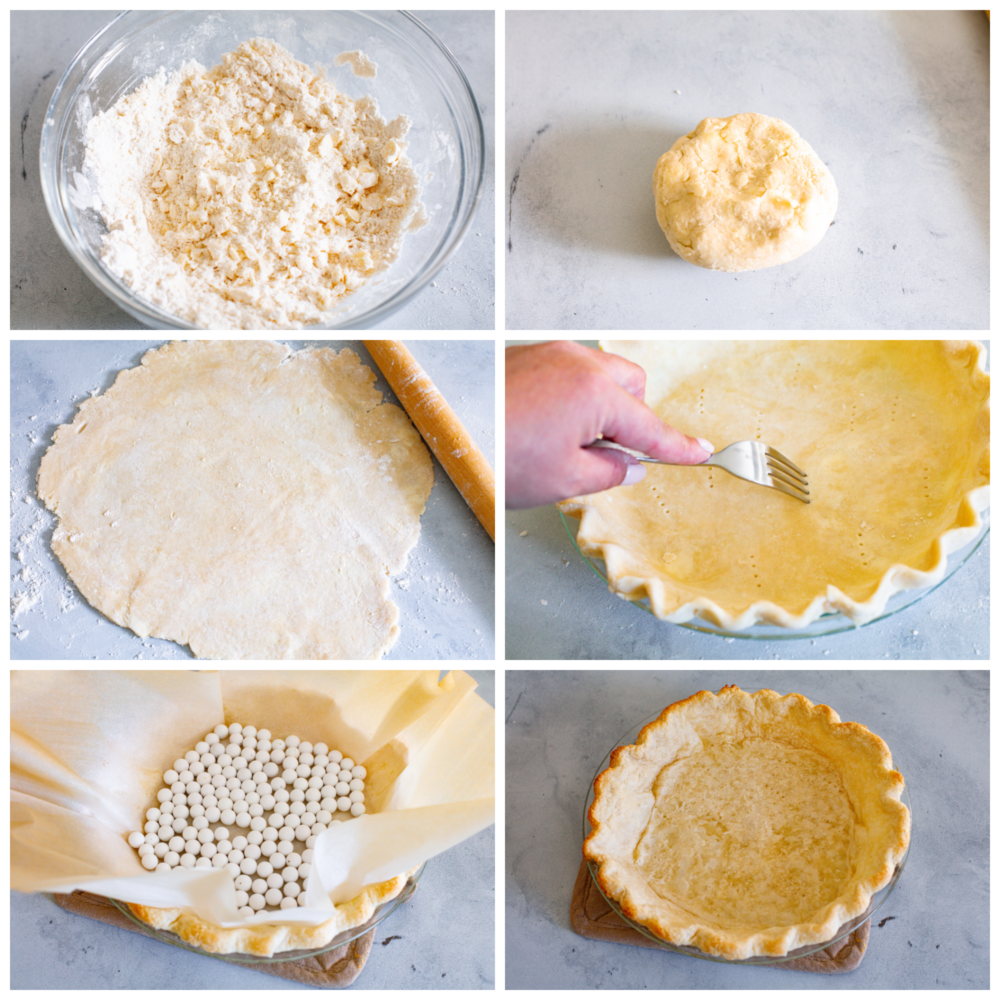
To blind bake a pie crust, shape the dough in the pan, chill it, line it with parchment, add pie weights, and bake. Then remove the weights and continue baking until the crust reaches the finish your recipe needs.
This method helps the sides stay upright while the pastry sets. It also gives steam a way to escape and helps reduce a wet base, which can be a problem with custard, cream, and chilled pie fillings.
Source: preppykitchen.com
1. Prepare the pie dough
Roll the dough to an even thickness and fit it into a 9-inch pie pan. Leave enough dough around the rim to crimp or shape the edge.
2. Chill the shaped crust
Refrigerate the crust for at least 30 minutes when time allows. A firm, cold crust is less likely to slump as the fat melts in the oven.
3. Heat the oven
Preheat to the temperature given in your recipe. If no temperature is supplied, 375°F is a reasonable starting point for many standard crusts.
4. Line the crust
Place a sheet of parchment paper or suitable foil inside the cold crust. Make sure it covers the base and reaches the sides.
5. Add pie weights
Fill the lined shell with ceramic pie weights or dried beans used for this purpose. Spread them over the base and up the sides so the pastry is supported.
6. Bake with weights
Bake for about 15 to 20 minutes at 375°F, or until the dough looks set around the edges. The exact time depends on the recipe and the oven.
7. Remove the weights
Lift out the parchment and weights with care. The weights and pan will be hot, so use oven mitts and avoid spilling them.
8. Finish baking
For a partial bake, return the crust to the oven for roughly 3 to 7 minutes if needed. For a full bake, continue for about 5 to 12 minutes or until the base looks dry and golden.
How Do You Know When the Crust Is Done?
A partially baked crust should look set and dry around the edges, though the base may remain pale. It should not look like raw, shiny dough. This stage gives the crust a head start before the filling is added.
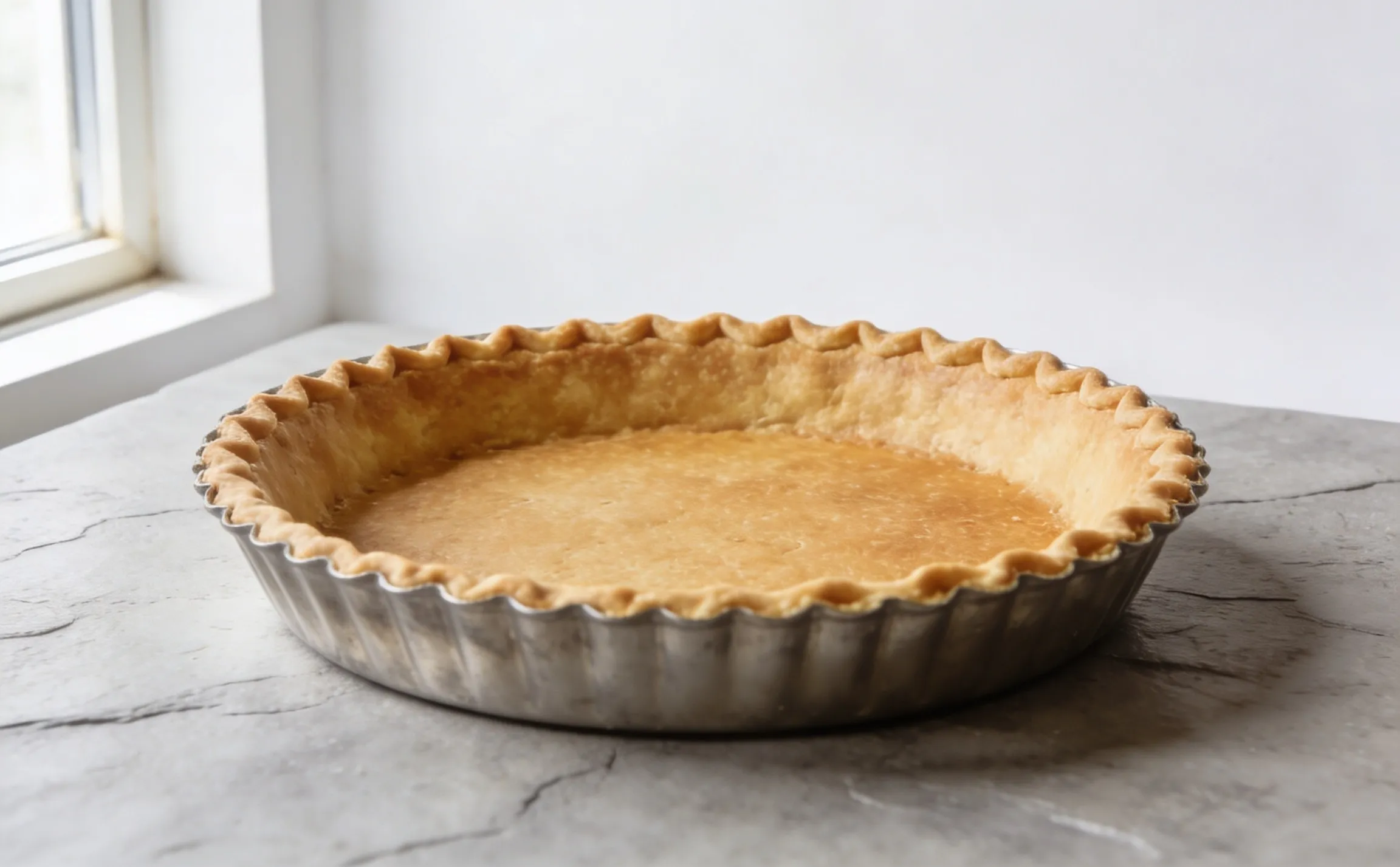
A fully baked shell should have a dry center and an even light-golden color. The bottom should not look wet or feel soft from uncooked dough. If the center is still pale, give it a few more minutes and check again.
Color is a useful guide, but it is not the only one. A crust can brown at the edges while the center remains underdone, especially if the pan is dark or the oven heats unevenly.
Ready for a wet filling
The crust has set and the recipe’s required partial-bake stage is complete.
Ready for a chilled filling
The shell is fully baked, dry in the center, and golden enough to hold the filling without raw pastry.
Too dark at the rim
Protect the edge with a pie shield or foil while the center finishes baking.
Do You Need Pie Weights to Bake a Pie Crust?
Pie weights help stop the bottom from puffing up and the sides from sliding down. They press the pastry against the pan while the dough begins to set, which is useful for both partial and full blind baking.
You do not need a special branded product. Ceramic weights are made for the job, while dried beans or uncooked rice can also serve as weights when placed inside a parchment-lined crust. Keep food used as pie weights separate for that purpose if you do not want to cook with it later.
Source: aredspatula.com
Ceramic pie weights
Reusable weights spread across the base and into the sides. Allow them to cool before storing.
Dried beans
An easy household option. Put them over parchment rather than directly on the dough.
Uncooked rice
Rice can fill gaps around the sides and support the base. Pour it out carefully after baking.
No weights available
Chilling the crust well and docking the base with a fork may help, but neither method fully replaces the support that weights provide. Follow the recipe’s method when possible.
When Should You Remove the Pie Weights?
Remove the weights after the crust has set enough to hold its shape. For many recipes, this happens after about 15 to 20 minutes at 375°F, but some doughs need more or less time.
Lift the lining slowly so you do not pull up the pastry. If the base sticks to the paper, pause and ease it away rather than tearing the crust. Return the shell to the oven to finish baking.
For a partial bake
Remove the weights once the sides are set, then bake for the additional time stated in the recipe.
For a full bake
Remove the weights and continue until the center is dry and golden.
How Long Should You Bake Different Types of Pie Crust?
Pie crust baking time changes with the type of pastry and the pie you plan to make. Homemade all-butter dough, shortening-based dough, refrigerated dough, and frozen shells may not bake at the same rate.
The following guidance is meant to help you plan. It does not replace package directions or a recipe that specifies a method for a particular crust.
Source: theflavorbender.com
Homemade all-butter crust
Use the recipe’s temperature and timing. Butter-rich dough can soften as it warms, so chilling before baking is helpful.
Shortening-based crust
The crust may hold its shape differently from an all-butter crust. Check the recipe for the right chill time and baking method.
Refrigerated store-bought dough
Follow the package instructions for whether to unroll, chill, dock, or use weights. Do not assume every refrigerated crust is ready for blind baking.
Frozen pie shell
Check whether the package directs you to bake it from frozen or thaw it first. A frozen shell may need a different time from fresh dough.
Graham cracker crust
This is a crumb crust, not raw pastry. Many recipes bake it for about 8 to 10 minutes at 350°F, while others chill it without baking.
How Long Do You Bake a Pie Crust at 350°F?
At 350°F, a standard pastry shell generally takes longer than it would at 375°F. A partial bake may take around 20 to 25 minutes with weights, while a fully baked shell may need about 30 to 40 minutes in total.
These are estimates, not fixed rules. Start checking before the end of the range, especially if the crust is thin or your oven tends to run hot. The shell should meet the visual signs for its intended finish.
Partial bake
Check for set edges and a base that no longer looks like wet dough.
Full bake
Look for a dry center and light-golden color, adding time in short intervals if needed.
How Long Do You Bake a Pie Crust at 375°F?
At 375°F, begin checking a standard crust after about 15 minutes when using pie weights. Many shells reach the partial-bake stage in 15 to 20 minutes, followed by several more minutes without weights.
A fully baked shell often needs about 20 to 30 minutes total. A thick crust or a pan that heats slowly may take longer. Remove it when the center is dry and golden rather than waiting for a very dark brown color.
For a partially baked shell
Use the recipe’s timing, then inspect the edges before removing the weights.
For a fully baked shell
Continue until the bottom has dried and the crust has an even golden finish.
Can You Bake a Pie Crust at 400°F?
Yes, if the recipe calls for 400°F. A hotter oven can set the pastry faster, but it can also brown the edges before the center is ready.
Use the stated method and start checking early. If the edge darkens too fast, shield it with foil or a pie shield while the base finishes baking.
Best approach
Use 400°F when supported by the recipe, and do not transfer a time range from a lower-temperature recipe without checking for doneness.
Should You Bake Pie Crust Before Adding the Filling?
You should bake the crust first when the recipe calls for a partial or full blind bake. You do not always need to bake it first. Many fruit pies are assembled with raw pastry and baked with the filling inside, while some custard and cream pies benefit from a pre-baked shell.
The key is to match the crust to the filling. A filling that releases a lot of moisture can leave the base soft, while a filling that needs a long bake may cook well in an unbaked shell if the recipe is designed for it.
Source: beyondfrosting.com
Fruit pies
Apple, cherry, and berry pies often use an unbaked bottom crust. Follow the recipe if it calls for a pre-bake or another method to control moisture.
Pumpkin pie
Some recipes use an unbaked crust, while others call for a partial bake. Use the specific recipe rather than assuming one method works for every pumpkin filling.
Custard pies
A partial bake may help the base cook before the custard sets. The correct approach depends on the recipe and the custard’s baking time.
Cream and chilled pies
These often need a fully baked shell because the filling may not go back into the oven.
How Do You Keep the Bottom From Getting Soggy?
A crisp bottom starts with the right baking method. If the recipe calls for blind baking, do not skip it just to save time. A crust that has set and dried before filling is less likely to stay raw in the center.
Keep the dough cold before it goes into the oven. Make sure the oven is fully preheated, and let the crust bake long enough to reach the required stage. If the filling is especially wet, use a recipe that accounts for that moisture rather than adding extra baking time at random.
Let a fully baked shell cool as directed before filling it. Adding a cold filling to a hot shell, or filling a shell before it has finished baking, can affect its texture and structure.
Chill before baking
A cold shell is less likely to slump before the dough sets.
Use weights correctly
Cover the base and support the sides during the first stage of blind baking.
Bake to the right finish
A shell for a no-bake filling needs a full bake, not just a short partial bake.
Cool before filling
Follow the recipe’s cooling directions so steam and heat do not soften the shell or disturb the filling.
Common Pie Crust Baking Problems and How to Fix Them
Most pie crust problems come from dough that is too warm, weights that do not support the sides, or a bake that ends before the center is ready. The first step is to identify what went wrong rather than simply adding more oven time.
Use the symptom as a clue. A pale base needs a different fix from an edge that has already turned dark brown. Check the crust often during the last few minutes, since pastry can change quickly near the end.
Source: i.pinimg.com
The crust shrinks
The dough may have been warm or stretched while being fitted into the pan. Chill it before baking, and avoid pulling the dough tightly across the base or sides.
The bottom is pale or soft
The crust may need more time without weights. Return it to the oven in short intervals if the recipe permits, while protecting the rim if needed.
The edges burn
The oven may be too hot for the crust or the rim may be too exposed. Shield the edges and keep baking only until the center reaches the required finish.
The base puffs up
The crust may not have been weighed down well enough. Use parchment and enough weights to cover the base, and dock the dough only when the recipe recommends it.
The dough sticks to the parchment
The crust may not have set enough or the lining may have been pressed into soft dough. Lift it gently, and return the shell to the oven if it needs more time.
The crust looks greasy
The fat may have melted before the pastry set, often because the dough was warm or the oven was not ready. Chill the shaped shell and fully preheat the oven before baking.
Can You Fix an Underbaked Pie Crust?
If the crust is still empty and the base looks pale or damp, you can usually return it to the oven. Remove the weights if the sides are set, then bake for a few more minutes and check again.
If the filling is already inside, the fix depends on the pie. Some pies can return to the oven, but a custard or cream filling may not tolerate extra heat without changing texture. Follow the filling recipe and avoid raising the temperature sharply to rush the process.
Empty shell
Continue baking in short intervals until the required finish is reached.
Filled pie
Use the recipe’s baking directions and check whether extra time is suitable for that filling.
Tips for Better Pie Crust Results
A good crust depends on more than oven time. The way you handle the dough, prepare the pan, and judge doneness all affect the final texture.
Small steps make the process easier to control. Chill the dough, support the sides, and check the base before you decide the shell is done.
Source: foodrecipesfactory.com
Keep the dough cold
Cold pastry fat is less likely to melt before the crust sets. If the dough becomes soft while shaping it, place it back in the refrigerator.
Avoid stretching the dough
Fit the dough into the pan without pulling it tight. Stretched dough often pulls back as it bakes.
Use enough weights
Spread the weights over the base and toward the sides to help the crust hold its shape.
Check early
Start inspecting the crust a few minutes before the recipe’s estimated finish time. Oven differences can affect how fast the pastry browns.
Protect the rim
Use a pie shield or carefully fitted foil if the edge is browning too quickly.
Cool it as directed
Let the shell cool before adding a filling that should not be heated. This helps preserve the shell’s structure.
Should You Dock the Pie Crust Before Baking?
Docking means pricking the base with a fork to make small holes that let steam escape. It can help limit large bubbles, but it does not provide the same support as pie weights.
Some blind-baking recipes call for docking, while others rely on weights and leave the dough unpricked. Follow the method for your recipe, especially when the crust needs to hold a liquid or custard filling.
When docking may help
Use it when the recipe recommends holes to reduce puffing in the base.
When to be careful
Avoid making extra holes without a reason if the filling could seep through the crust.
Frequently Asked Questions
Q
How long do you bake a pie crust at 375°F?
For a standard 9-inch crust, plan on about 15 to 20 minutes with pie weights for a partial bake. A fully baked shell often takes about 20 to 30 minutes total, including the time after the weights come out. Follow your recipe and check the crust’s color and texture.
Q
Do you bake a pie crust covered or uncovered?
Blind-bake the crust uncovered, with parchment and pie weights inside during the first stage. You can protect the rim with a pie shield or foil if it browns too quickly. Do not cover the whole shell unless your recipe specifically calls for it.
Q
Should I poke holes in pie crust before baking?
Some recipes recommend pricking the base with a fork, a step called docking. Others use pie weights to prevent puffing and do not require holes. Follow the recipe’s method because holes may not suit every filling or baking style.
Q
Can I blind bake a pie crust the day before?
Yes. Let the fully baked shell cool completely, then store it in an airtight container at room temperature for short-term use if your recipe permits. Keep it dry and protected from moisture. For longer storage, wrap it well and freeze it, then thaw it as directed before filling.
Q
Can I use a frozen pie crust for blind baking?
Often, yes, but check the package directions first. Some frozen shells are meant to go straight into the oven, while others need a different preparation method. Do not assume the timing for homemade dough will work for every store-bought shell.
✦ Wrapping Up
Conclusion
For most standard 9-inch pie crusts, 375°F is a useful starting point. A partial bake often takes 15 to 20 minutes with pie weights, while a fully baked shell may take about 20 to 30 minutes in total. The right time still depends on the dough, pan, oven, and filling.
The main goal is to match the bake to the pie. A crust that will return to the oven needs to be set, while a shell for a chilled filling needs to be fully baked, dry, and golden. Use the recipe’s directions, check the crust near the end, and protect the rim if it browns too fast.
💡 Key Takeaway
Preheat the oven, chill the shaped crust, line it with parchment, and add pie weights. Start checking at 15 minutes for a partial bake. For a full bake, remove the weights when the sides are set and continue until the base is dry and lightly golden.