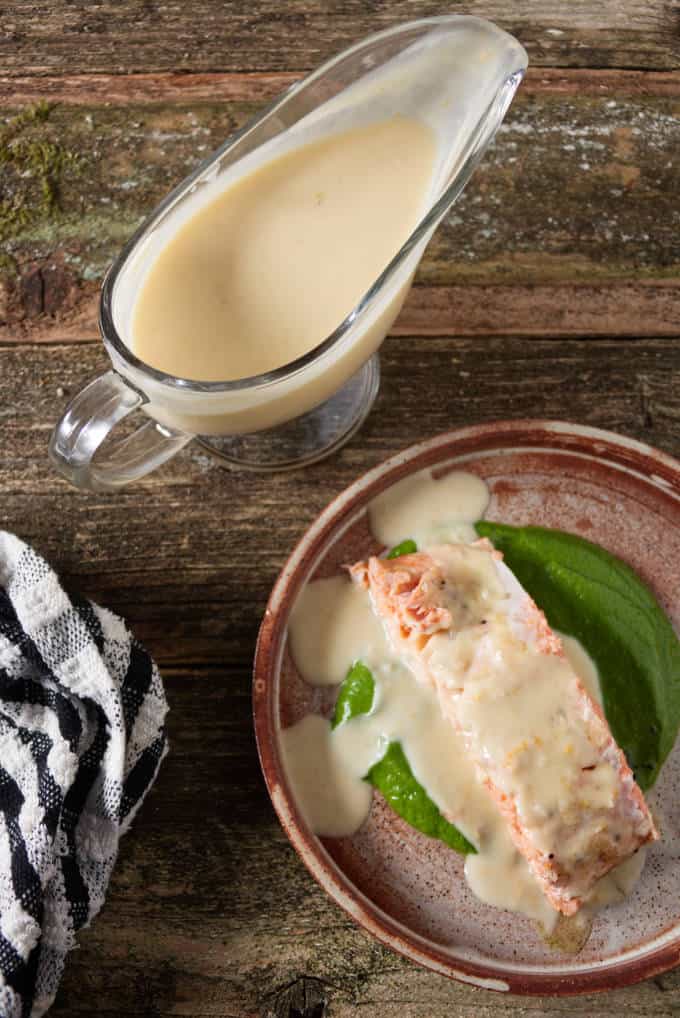
Orange beurre blanc sauce is a smooth French-style butter sauce made with orange juice, white wine, shallots, and cold butter. Its bright citrus taste pairs well with fish, shrimp, scallops, chicken, and roasted vegetables.
In American home kitchens, this sauce can turn a simple weeknight salmon dinner or a holiday seafood meal into something special. It uses common grocery store items, such as fresh oranges, dry white wine, shallots, and unsalted butter. The key is to keep the heat low as you add the butter.
Traditional beurre blanc gets much of its flavor from white wine, vinegar, shallots, and butter. The orange version adds fresh citrus juice and, if desired, a little zest. The result is rich but bright, with a mild tang that works well with foods that might taste heavy under a plain cream sauce.
You do not need special kitchen gear to make it. A small saucepan, a whisk, and a little patience are enough. Once you learn how to reduce the liquid and blend in the butter, you can adjust the sauce to suit the meal.
Orange beurre blanc sauce is a citrus variation of beurre blanc, a French butter sauce known for its rich texture. The name beurre blanc means white butter in French. The classic sauce uses butter blended into a reduced liquid, often made with white wine, vinegar, and shallots.
In the orange version, orange juice replaces some or all of the usual acidic liquid, depending on the recipe. White wine often remains in the mix, while shallots add a mild savory note. A small amount of orange zest can give the sauce a fresh aroma.
The finished sauce should look glossy and creamy. It should coat the back of a spoon without feeling thick like gravy. Its flavor should balance rich butter with bright citrus and a gentle touch of acidity.
This is not the same as a sweet orange glaze. A glaze often uses sugar, honey, or a starch thickener. Orange beurre blanc relies on butter and an emulsion, which is a blend of fat and liquid held together in a smooth mixture.
Source: simplyrecipes.com
Texture
A well-made sauce is silky and spoonable, with no large pools of melted butter.
Flavor
Butter brings richness, orange adds fruit and freshness, and wine provides depth and acidity.
Best use
Serve it over cooked seafood, lean poultry, or vegetables that benefit from a rich citrus finish.
How It Differs From Classic Beurre Blanc
Classic beurre blanc often has a sharp, savory flavor from wine and vinegar. Orange beurre blanc adds a fruit note that softens the sharpness. The sauce may taste slightly sweet, but it should not taste like orange juice poured over melted butter.
Orange juice contains water, acid, and natural sugars. These affect the final balance, so the cook may need less vinegar than a classic recipe calls for. Taste the reduced liquid before adding butter, then adjust it in small steps.
For a sharper taste
Use dry white wine and a small amount of lemon juice or white wine vinegar.
For a stronger orange note
Add a little finely grated orange zest near the end.
Ingredients for Orange Beurre Blanc Sauce
A good orange beurre blanc starts with a short list of ingredients. Fresh juice gives you more control over the flavor, while cold butter helps create the sauce’s smooth texture. Choose a dry wine rather than a sweet one, since the orange already brings natural sugar.
The amounts below make about four small servings, depending on how much sauce you pour over each plate. This is a practical starting point rather than a fixed formula. You can adjust the acidity and orange flavor to match the food.
Source: simplyrecipes.com
1/2 cup fresh orange juice
Use juice from a ripe orange. Strain out seeds and large bits of pulp for a smoother sauce.
1/3 cup dry white wine
Choose a dry wine such as Sauvignon Blanc or Pinot Grigio. Avoid sweet wines that may make the sauce too sugary.
1 small shallot, finely minced
Shallot gives the reduction a mild onion flavor without overpowering the citrus.
1 teaspoon white wine vinegar, optional
Add this if the orange juice tastes very sweet or the sauce needs more sharpness.
8 tablespoons cold unsalted butter
Cut the butter into small cubes. Cold butter is easier to incorporate gradually.
1/2 teaspoon finely grated orange zest, optional
Use only the colored outer peel. The white layer below it can taste bitter.
Salt and white or black pepper
Season lightly at the end, since reduction concentrates the flavor.
Can You Use Bottled Orange Juice?
Yes, but the result can vary by brand. Some bottled juices taste sweeter or less fragrant than fresh juice. Others contain added sugar, which may make the sauce harder to balance.
Choose plain orange juice with no added sugar when fresh oranges are not available. Taste it before cooking, and add vinegar only if the finished reduction needs more acidity. Do not add extra sugar unless you have a clear reason to do so.
Fresh juice
Often gives a lively citrus aroma and lets you add fresh zest.
Bottled juice
Offers convenience, but sweetness and acidity may differ from fresh juice.
How to Make Orange Beurre Blanc Sauce
The main steps are simple: soften the shallot in the liquid, reduce it, and whisk in cold butter a little at a time. The most important part comes near the end. Keep the heat low so the butter blends with the reduced liquid instead of melting into a greasy layer.
Use a small, heavy-bottomed saucepan if you have one. A pan that spreads heat evenly makes it easier to control the reduction. Keep a whisk and a heatproof bowl nearby in case you need to cool the sauce quickly.
Source: alicensetogrill.com
Step 1: Combine the liquids
Add the orange juice, white wine, minced shallot, and optional vinegar to the saucepan. Bring the mixture to a gentle simmer over medium heat.
Step 2: Reduce the mixture
Let it simmer until the liquid has reduced to roughly 2 to 3 tablespoons. The shallot should be soft, and the aroma should smell concentrated rather than harsh. This may take several minutes, depending on the pan and heat.
Step 3: Lower the heat
Turn the heat to low. If the pan is very hot, remove it from the burner for a short moment before adding butter.
Step 4: Whisk in the butter
Add a few cold butter cubes and whisk until they begin to blend into the liquid. Add more cubes gradually, whisking all the while. Do not dump in all the butter at once.
Step 5: Check the texture
The sauce should look glossy and lightly thickened. If it starts to boil, take the pan off the heat and keep whisking.
Step 6: Season and strain
Taste the sauce. Add a little salt, pepper, or orange zest as needed. Strain it through a fine sieve if you prefer a smooth sauce without shallot pieces.
Step 7: Serve at once
Spoon the sauce over freshly cooked food or serve it on the side. Use a warm plate, but do not place the sauce over a high flame to keep it hot.
How to Tell When the Sauce Is Ready
A finished orange beurre blanc should have a uniform, creamy look. It should flow slowly from a spoon and leave a thin coating behind. A few tiny flecks of shallot or orange zest are normal if you do not strain it.
The flavor should feel balanced. Butter will be the main texture, but the orange should remain clear. If the sauce tastes flat, add a few drops of lemon juice or vinegar. If it tastes too sharp, whisk in a small amount of butter off the heat.
Good sign
The sauce is glossy, smooth, and evenly mixed.
Warning sign
A clear layer of melted fat around the edge may mean the emulsion is breaking.
The Science Behind a Smooth Butter Sauce
Orange beurre blanc works because the cook blends fat into a water-based liquid. Butter contains mostly fat but also small amounts of water and milk solids. Whisking helps disperse the fat into tiny droplets, while the liquid and milk components help the mixture hold together for a time.
This mixture is called an emulsion. Mayonnaise is another familiar emulsion, though its structure and ingredients differ. In beurre blanc, the emulsion is delicate, so sudden heat or poor mixing can make the fat separate from the liquid.
The reduced wine and orange juice form the base. Reducing the liquid concentrates its flavor and leaves less water to dilute the butter. Adding the butter slowly gives the droplets time to disperse and helps the sauce become creamy.
Source: simplyrecipes.com
Why Cold Butter Helps
Cold butter melts more slowly than soft butter. This gives you a little more time to whisk the fat into the liquid. Small cubes also melt at a more even rate than a large block.
Cold butter alone cannot save a sauce that is boiling hard. Temperature still matters. If the pan becomes too hot, remove it from the burner before adding more butter.
Cut butter into cubes
Small, even pieces blend in more easily than one large piece.
Whisk as you add
Steady movement helps distribute the fat through the liquid.
Control the heat
A gentle warmth is enough to melt the butter without forcing the sauce to boil.
Why the Reduction Matters
A watery base can leave the sauce thin and weak. A proper reduction concentrates the citrus and wine before the butter enters the pan. The amount of reduction depends on the starting volume, pan width, and burner strength, so watch the liquid rather than relying only on a timer.
Do not reduce the mixture until it burns or becomes a sticky syrup. Orange juice contains natural sugar, which can darken and develop bitter flavors if cooked too far. A small amount of concentrated liquid should remain at the bottom of the pan.
Too much liquid
The finished sauce may be thin and less flavorful.
Too little liquid
The reduction may scorch or taste overly sharp.
Best Foods to Serve With Orange Beurre Blanc
Orange beurre blanc pairs best with foods that have a mild flavor or a clean, savory taste. The citrus cuts through the richness of butter, while the sauce adds moisture to lean fish and poultry. A small spoonful often works better than covering the whole plate.
The sauce can also complement vegetables, grains, and simple sides. Pair it with foods that do not have too many strong sauces of their own. That leaves room for the orange and butter to stand out.
Source: simpleplat.com
Cod
The mild, flaky flesh works well with the citrus and butter. Spoon the sauce over cooked fillets just before serving.
Salmon
The rich flavor of salmon pairs with orange, especially when the fish is roasted or pan-seared with simple seasoning.
Sea bass
Its delicate flavor lets the sauce add richness without taking over the dish.
Shrimp
Toss cooked shrimp lightly with the sauce or serve it on the side for dipping.
Scallops
A small amount of orange butter can complement the sweet taste of well-seared scallops.
Chicken breast
The sauce adds moisture and a fresh citrus note to simply roasted or pan-cooked chicken.
Asparagus and green beans
A light drizzle brings richness to steamed, roasted, or sautéed vegetables.
Rice or couscous
Plain grains can catch the sauce and help round out a seafood meal.
Orange Beurre Blanc for Fish
For fish, cook the fillet first and keep the seasoning simple. Salt, pepper, and a little oil are often enough. Finish the fish with the sauce once it is off the heat, rather than cooking the delicate butter sauce in the same hot pan.
For a crisp skin, keep the skin side uncovered when you add the sauce. Pour it around the fish or over the flesh side so the crisp surface does not turn soft at once. A little fresh orange zest can tie the plate together.
For a mild fish
Use a balanced sauce with a clear orange note and gentle acidity.
For an oily fish
Add a little lemon juice if the sauce needs more lift.
Orange Beurre Blanc for Chicken and Vegetables
Chicken benefits from the sauce when it is cooked with a plain herb or salt-and-pepper seasoning. The orange flavor adds a bright finish without the sweetness of a thick orange glaze. Start with a small serving, then add more if the plate needs it.
For vegetables, use the sauce sparingly. It works well on asparagus, carrots, peas, and green beans. Very sweet vegetables may make the whole dish taste sweeter, so balance them with a little lemon juice or a savory side.
Good vegetable pairings
Asparagus, green beans, cauliflower, and lightly seasoned carrots.
Simple side dishes
Roasted potatoes, steamed rice, or plain couscous can balance the richness.
How to Adjust the Flavor
You can change the taste of orange beurre blanc without changing its basic method. The best adjustment depends on what the sauce lacks. Taste it before adding extra ingredients, since reducing the liquid can make the flavor much stronger than it first seemed.
Orange juice varies in sweetness and acidity. The wine does too. Use small changes, whisk well, and taste again before making another adjustment.
Source: i.pinimg.com
Too sweet
Add a few drops of lemon juice or white wine vinegar. Do not pour in a large amount at once.
Too sour
Whisk in a small amount of cold butter off the heat. A little more orange juice may help, but it can thin the sauce.
Not orange enough
Add a small pinch of finely grated orange zest. Add it gradually to avoid a bitter flavor.
Too rich
Add a few drops of lemon juice or a little warm water while whisking, then taste again.
Too thin
Check that the base was reduced enough. If the sauce is still warm and stable, whisk in a small amount of cold butter.
Too salty
Avoid adding more salt. A small amount of unsalted butter may soften the taste, though it can change the texture.
Should You Add Cream?
Cream is not required for orange beurre blanc. Some cooks use a small amount to make a butter sauce easier to hold, but it changes the classic texture and taste. The result becomes closer to a cream-enriched citrus butter sauce.
For a traditional-style result, focus on the reduction and add cold butter slowly. If you need a sauce that can sit longer during service, a cream-based variation may be worth considering, but it should be treated as a different preparation.
Without cream
The sauce has a clean butter flavor and a delicate emulsion that needs careful heat control.
With cream
The texture may be more forgiving, but the taste and structure will differ from a classic beurre blanc.
Common Problems and How to Fix Them
Most problems with orange beurre blanc come from heat, the amount of reduction, or the pace at which butter is added. The sauce can often be saved if you catch the issue early. Move the pan away from the heat before trying a fix, especially if the sauce looks oily or begins to separate.
Do not keep boiling a broken sauce in the hope that it will thicken. More heat can make the separation worse. A gentle whisk and a small amount of cool liquid are often more useful.
Source: simpleplat.com
The sauce has separated
Remove it from the heat. In a clean bowl or small pan, whisk a teaspoon of cool water, then slowly whisk in the broken sauce. Add it bit by bit, keeping the mixture from getting too hot.
The sauce is greasy
The fat may have melted out of the emulsion. Let the pan cool briefly, then whisk in a teaspoon of cool water. Add more only if needed.
The sauce is too thin
If the butter has blended in, the base may not have reduced enough. A stable sauce can sometimes be thickened with a little more cold butter, added off the heat.
The sauce tastes bitter
The orange zest may include too much white pith, or the juice may have cooked too far. Add a little fresh butter and taste, but a badly scorched reduction may need to be remade.
The sauce tastes flat
Add a few drops of lemon juice or vinegar and a pinch of salt. Make one change at a time.
The sauce is lumpy
Small shallot pieces are normal. For a smoother finish, strain the reduction before adding butter or strain the finished sauce while it is still warm.
Can You Make It Ahead?
Orange beurre blanc is best made close to serving time. Its emulsion is delicate, and reheating can cause the butter to separate. For a dinner party, you can mince the shallot, measure the wine, and squeeze the orange juice ahead of time.
You can also prepare the liquid reduction in advance and chill it promptly in a covered container. Reheat the reduction gently before whisking in cold butter. Once the butter has been added, serve the sauce as soon as practical.
Prepare ahead
Measure ingredients, cut the butter into cubes, and make the liquid reduction.
Finish at serving time
Warm the reduction gently and whisk in cold butter shortly before the meal.
Storage, Reheating, and Food Safety
For the best texture, make only as much orange beurre blanc as you expect to use. The sauce contains butter and fresh juice, and its emulsion can weaken as it cools. If you have leftovers, cool them promptly and place them in a clean, covered container in the refrigerator.
As a general food safety rule, refrigerate perishable foods within two hours, or within one hour when the air temperature is above 90°F. Keep the refrigerator at 40°F or below. These limits apply to the sauce as well as to the fish, chicken, and other foods served with it.
Refrigerated leftovers are not guaranteed to return to their original silky texture. The butter may firm up, and the sauce may split when reheated. Smell and appearance alone cannot confirm that a food is safe, so follow safe storage times and discard food left out too long.
Source: bunnystyleguide.com
How to Reheat Leftover Sauce
Reheat the sauce very gently in a small pan over low heat. Whisk as it warms, and remove it from the heat before it becomes hot enough to boil. If it starts to separate, try whisking in a teaspoon of cool water in a clean bowl.
Avoid repeated cycles of cooling and reheating. If the sauce has been stored for an uncertain amount of time, sat at room temperature too long, or shows signs of spoilage, discard it rather than trying to save it.
Use low heat
A gentle temperature gives you a better chance of keeping the butter blended.
Whisk as it warms
Steady mixing helps bring the fat and liquid back together.
Do not boil
A strong boil can break the emulsion and leave a greasy sauce.
Helpful Tips for a Better Result
Small choices can make the sauce easier to control. Prepare the ingredients before turning on the stove, since the butter needs your attention once it starts to melt. Keep the heat gentle and taste the liquid reduction before adding the fat.
The best result is not the thickest sauce or the strongest orange flavor. It is a balanced sauce that clings lightly to the food and leaves the main ingredient easy to taste.
Source: simplyrecipes.com
Use a small pan
A small amount of liquid is easier to monitor in a compact saucepan.
Cut the butter evenly
Small cubes melt at a similar pace and are easier to whisk into the reduction.
Keep the wine dry
A dry wine helps balance the natural sugar in orange juice.
Add zest with care
A little zest adds aroma. Too much, especially with white pith, may bring bitterness.
Taste before salting
The reduced liquid may already taste intense, so add salt only after the butter is blended.
Use a warm serving dish
A warm plate helps the sauce stay fluid without forcing you to hold it over high heat.
Do not make it too early
The sauce is easiest to serve when freshly made and still stable.
Easy Variations to Try
Once you can make the basic sauce, small changes can suit different meals. Keep the main method the same and change just one or two flavor elements at a time. This makes it easier to tell which change helped.
Orange and herbs work well together, but strong herbs can cover the fruit. Add soft herbs near the end, and use a light hand with ingredients that have a strong aroma.
Orange and tarragon
Add a small amount of finely chopped tarragon for a gentle anise-like note that suits fish and chicken.
Orange and lemon
Blend orange juice with a little lemon juice when the sauce needs a sharper finish.
Orange and thyme
Infuse a small thyme sprig in the reduction, then remove it before adding the butter.
Orange and ginger
Use a small amount of fresh ginger for a warm note. Too much can overpower the delicate butter flavor.
Frequently Asked Questions
Q
What does orange beurre blanc sauce taste like?
Orange beurre blanc tastes rich, buttery, and bright. Orange juice adds a mild fruit flavor, while dry white wine and optional vinegar provide acidity. The finished sauce should taste balanced rather than sugary.
Q
Can I make orange beurre blanc without wine?
Yes. Replace the wine with a suitable stock and use a little lemon juice or white wine vinegar to add acidity. The flavor will differ from a wine-based beurre blanc, so add the acid gradually and taste as you go.
Q
Why did my orange beurre blanc separate?
The sauce may have become too hot, or the butter may have been added too quickly. Remove the pan from the heat and whisk a teaspoon of cool water in a clean bowl. Slowly whisk in the broken sauce until it becomes smooth again.
Q
Can I use salted butter instead of unsalted butter?
Yes, salted butter can work. However, the amount of salt varies by brand, and the reduced liquid already has a strong flavor. Use salted butter if needed, then taste the finished sauce before adding any more salt.
Q
Can orange beurre blanc be frozen?
Freezing is not the best choice for this sauce because the emulsion may separate during thawing and reheating. For better texture, prepare the reduction ahead, chill it safely, and add the cold butter shortly before serving.
✦ Wrapping Up
Conclusion
Orange beurre blanc sauce brings together butter, citrus, wine, and shallots in a smooth French-style sauce. It pairs well with cod, salmon, shrimp, scallops, chicken, and mild vegetables. The fresh orange flavor gives each bite a bright note without needing a thick or sweet glaze.
The method comes down to a well-reduced liquid and cold butter added slowly over low heat. Taste as you go, keep the sauce from boiling, and make small changes when the balance needs help. A little care at the stove can give a simple meal a rich, fresh finish.
💡 Key Takeaway
For your first batch, reduce 1/2 cup orange juice, 1/3 cup dry white wine, and one minced shallot to a few tablespoons. Lower the heat, whisk in 8 tablespoons of cold butter a few cubes at a time, then season and serve right away.