For a restaurant-style baked potato, use a large Russet potato, coat the dry skin with oil, add salt, and bake uncovered at 425°F for about 50 to 70 minutes. The skin should feel crisp, and a fork should slide into the center with little resistance.
In American steakhouses, a baked potato often comes to the table with crisp skin, a steaming center, and a pat of butter that melts into every bite. You can make a similar potato at home with a few basic ingredients and a hot oven. The trick is to bake the potato until it is tender without wrapping it in foil.
This restaurant style baked potato recipe uses Russet potatoes, cooking oil, salt, and a simple oven method. Russets work well because their starchy flesh turns soft and fluffy as they cook. You can serve them beside steak, roast chicken, grilled vegetables, or a bowl of soup. Add sour cream, cheese, chives, bacon, or your own favorite toppings just before serving.
Source: crumbrecipes.com
What Makes a Baked Potato Taste Like a Restaurant Potato?
A good restaurant-style baked potato has two clear features: a tender, fluffy center and skin that is dry, seasoned, and easy to bite through. The contrast makes each bite more satisfying. A potato that is wet on the outside or dense in the middle can miss that familiar steakhouse feel.
The potato itself matters, but the cooking method matters just as much. Dry heat lets moisture escape from the skin while the inside cooks. A light coat of oil helps the skin brown and gives the salt a surface to cling to.
Many American steakhouses serve baked potatoes with butter, sour cream, shredded cheese, bacon, and green onions. You do not need every topping to get the basic result. Start with a well-baked potato, then add what you enjoy.
Source: bstrecipes.com
Crisp skin
Dry the washed potato and bake it uncovered. Oil and salt help build a seasoned outer layer.
Fluffy flesh
Use a starchy Russet potato and cook it until the center is fully tender.
Fresh toppings
Add butter, sour cream, cheese, herbs, or cooked bacon after baking so each topping keeps its intended texture.
Why Russet Potatoes Are the Best Starting Point
Russet potatoes are a strong choice for this recipe because they contain plenty of starch and have a thick skin. When baked, the flesh can break apart into soft flakes instead of staying firm and waxy. Their size also makes them easy to fill with toppings.
Yukon Gold potatoes can work if that is what you have. Their flesh tends to be creamier and less dry, while their thinner skin may not give you the same steakhouse-style texture. Red potatoes are better suited to dishes where you want the pieces to hold their shape.
Best choice
Large Russet potatoes with firm flesh and no soft, wet, or damaged spots.
Size matters
Choose potatoes that are close in size so they finish cooking at about the same time.
Ingredients for This Restaurant Style Baked Potato Recipe
You only need a few ingredients to bake the potatoes. The toppings are flexible, so you can keep the meal simple or make a loaded potato that feels like a full dinner.
The amounts below make four large baked potatoes. If your potatoes are small, they will cook faster. If they are especially large, they may need more time in the oven.
Source: savorousrecipe.com
4 large Russet potatoes
Pick firm potatoes with similar weights and sizes for even cooking.
1 to 2 tablespoons neutral oil
Use canola, vegetable, or another cooking oil that suits high oven heat.
1 teaspoon kosher salt, or to taste
Salt seasons the outer skin. Adjust the amount to suit your salt preference.
Black pepper, optional
Add a little pepper before baking or season the potato after it is cut open.
Butter, sour cream, and toppings
Set out butter, shredded cheese, chopped chives, green onions, or cooked bacon for serving.
What Equipment Do You Need?
A standard oven, a baking sheet or oven-safe rack, a clean kitchen towel, and a fork are enough. A wire rack can help hot air reach more of the potato’s surface, but it is not required.
Use oven mitts when moving the tray. The potato skin and pan will be very hot when the cooking time is over.
Baking sheet
Place the potatoes on a rimmed sheet if you want to catch loose salt or oil.
Fork or thin knife
Use either to check whether the center is tender.
Serving fork
Fluff the cooked flesh before adding butter and other toppings.
How to Make Restaurant Style Baked Potatoes in the Oven
The oven method is simple and needs little hands-on work. Bake the potatoes uncovered at 425°F until the skin is dry and the center is soft. The exact time depends on the potato’s size, shape, and starting temperature.
Allow about 50 to 70 minutes for large Russets as a starting estimate. Very large potatoes may need longer, so use the texture of the center to decide when they are done.
Source: healthydinnermeals.com
Step 1: Heat the oven
Set the oven to 425°F. Let it reach the set temperature before adding the potatoes.
Step 2: Wash the potatoes
Scrub the skin under running water to remove soil. Do not use soap or household cleaners on food.
Step 3: Dry them well
Pat each potato dry with a clean towel. A dry surface helps the skin bake rather than steam.
Step 4: Prick the skin
Make several small holes in each potato with a fork to allow steam to escape during baking.
Step 5: Add oil and salt
Rub a thin coat of oil over the skin, then sprinkle with salt. Avoid soaking the potato in oil.
Step 6: Bake uncovered
Place the potatoes on a baking sheet or oven-safe rack. Leave space between them so hot air can circulate.
Step 7: Check for doneness
After about 50 minutes, test the thickest part with a fork or thin knife. If the center still feels firm, keep baking and check again after 5 to 10 minutes.
Step 8: Open and fluff
Remove the potatoes with oven mitts. Make a lengthwise cut through the top, gently press the ends inward, and fluff the center with a fork.
Step 9: Add toppings and serve
Add butter while the potato is hot, then finish with sour cream, cheese, chives, or other toppings.
How Can You Tell When the Potato Is Done?
A fully baked potato should give way when you press it gently with an oven mitt. A fork or thin knife should slide into the center with little resistance. If the outside looks done but the center still feels hard, the potato needs more time.
For a more precise check, a food thermometer can help confirm that the center is hot. Texture remains useful because a potato can be hot before its starch has softened enough to give a fluffy result.
Ready to serve
The center is tender from one side to the other, and the skin is dry.
Needs more time
The fork meets a firm spot in the middle or the flesh feels dense and hard.
The Best Oven Temperature and Cooking Time
For this recipe, 425°F is a useful balance between browning the skin and cooking the center. A hotter oven can shorten the cooking time, but the outside may darken before a very large potato is soft all the way through. A lower oven can work too, though it usually takes longer.
Use the table as a rough guide, not a fixed rule. Potato weight, thickness, oven accuracy, and the number of potatoes on the tray all affect the time. Begin checking near the lower end of the range.
Source: diyjoy.com
Approximate Baking Times at 425°F
The following estimates apply to whole potatoes baked uncovered in a fully heated oven. They are starting points for planning a meal, not guarantees that every potato of a given size will finish at the same time.
Small potatoes, about 4 to 5 ounces
Allow roughly 35 to 45 minutes, then check the center.
Medium potatoes, about 6 to 8 ounces
Allow roughly 45 to 60 minutes, depending on thickness.
Large potatoes, about 9 to 12 ounces
Allow roughly 50 to 70 minutes and add more time if the center is still firm.
Extra-large potatoes, over 12 ounces
Plan for 70 minutes or longer. Check the center at intervals rather than relying on the clock.
Should You Bake Potatoes at 400°F or 450°F?
Both temperatures can work. At 400°F, potatoes may take longer, which can help if the rest of the meal needs a lower oven setting. At 450°F, the skin may brown sooner, so watch the outside and check the center before taking the potatoes out.
If you are cooking a roast or casserole at another temperature, you can often bake the potatoes alongside it. Keep in mind that a lower oven temperature changes the cooking time and may produce less crisp skin. Always check for tenderness before serving.
How to Get Crispy Skin and a Fluffy Center
Crisp skin starts with a dry potato and enough time in the oven. The fluffy center comes from cooking the starch until the flesh softens all the way through. Neither result requires foil, a special appliance, or a long list of ingredients.
Small changes in preparation can make a noticeable difference. Pay attention to the surface, the cooking space, and what you do once the potato leaves the oven.
Source: hr.horareceita.com
Dry the skin completely
Water left on the outside can slow browning and encourage a steamed texture.
Use a thin layer of oil
Too much oil can make the surface greasy. A light coat is enough to help the skin brown.
Bake without foil
Foil traps moisture around the potato and tends to soften the skin instead of crisping it.
Leave room on the tray
Crowding can reduce airflow and make it harder for moisture to escape from the skin.
Fluff the center right away
Cut the potato open soon after baking. Use a fork to loosen the hot flesh so butter can melt through it.
Is Oil or Butter Better for the Skin?
Oil is a practical choice before baking because it spreads easily over the skin and tolerates the oven heat. Butter is better added after baking, when it can melt into the hot center and provide its familiar flavor.
You can use melted butter on the skin if you prefer its taste, but watch the potato closely because milk solids can brown more quickly than some oils. For a simple steakhouse-style finish, bake with oil and add butter at the table.
Should You Wrap Potatoes in Foil?
Skip foil when crisp skin is the goal. Foil holds moisture close to the potato, so the skin often turns soft. A foil-wrapped potato can still be tender and useful for some meals, but it will have a different texture from an uncovered steakhouse-style potato.
If you need to transport baked potatoes, do not leave them wrapped in foil at room temperature for long periods. Follow safe food storage practices and refrigerate leftovers promptly.
Restaurant-Style Baked Potato Toppings
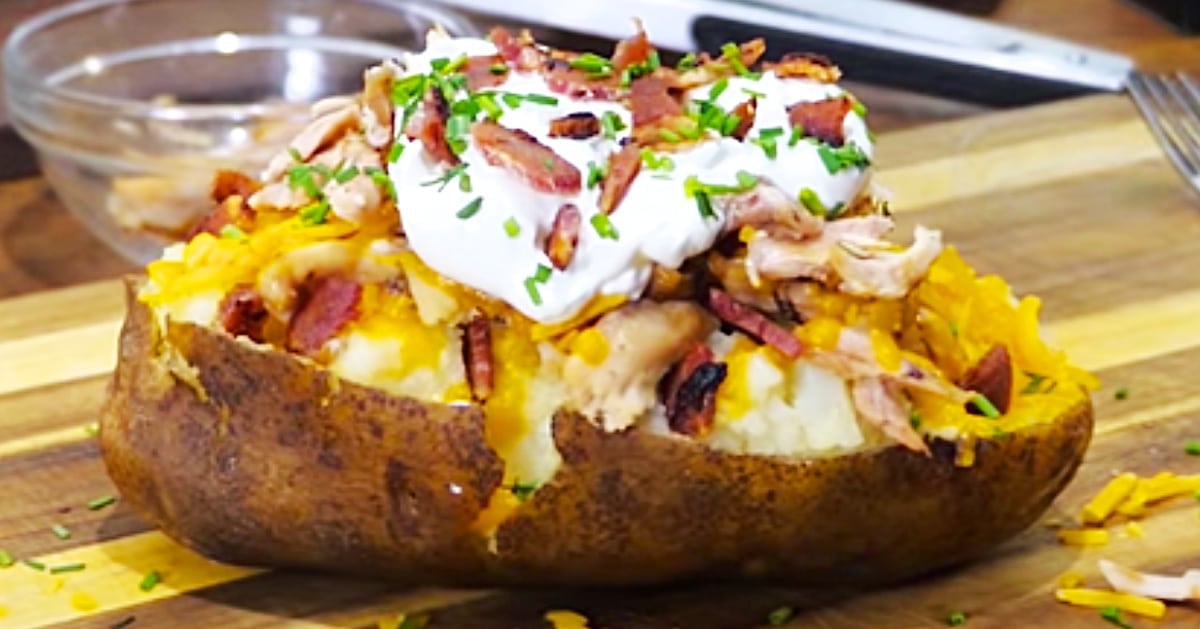
A plain baked potato makes a good side dish, while a loaded potato can become the main part of a meal. Start by splitting the hot potato lengthwise and loosening the inside with a fork. Then add toppings in an order that lets them melt or stay fresh as needed.
For the classic American steakhouse style, use butter, sour cream, shredded cheddar, cooked bacon, and sliced green onions. You can also build a lighter topping set with plain yogurt, herbs, and black pepper. There is no single required topping combination.
Source: grandmmadelights.com
Classic steakhouse potato
Add butter, sour cream, shredded cheddar, cooked bacon, and chives or green onions.
Cheese and broccoli
Top with steamed broccoli and shredded cheddar. Add a small splash of milk if you want a softer cheese topping.
Chili baked potato
Spoon hot chili over the opened potato, then finish with cheese or a little sour cream.
Use butter mixed with minced garlic and chopped parsley or chives.
Simple lighter topping
Use plain Greek yogurt, chopped scallions, black pepper, and a small amount of grated cheese.
Plant-based option
Use olive oil or a plant-based spread with salsa, beans, corn, or dairy-free cheese.
How Much Butter, Cheese, and Sour Cream Should You Use?
For one large potato, start with about one tablespoon of butter, one to two tablespoons of sour cream, and a small handful of shredded cheese. Adjust the amounts to the size of the potato and your taste.
Add the butter first so it melts into the hot flesh. Add cheese next if you want it to soften, followed by cold sour cream and fresh herbs. If you are serving several people, place toppings in separate bowls so everyone can build a potato they like.
Common Baked Potato Problems and How to Fix Them
Most baked potato problems come from uneven cooking, trapped moisture, or taking the potato out too soon. Check the center before changing the oven temperature. A brown skin does not always mean the inside is ready.
Use the following checks to find the likely cause and make a useful adjustment next time.
Source: bstrecipes.com
The skin is soft
The potato may have been wrapped in foil, left wet before baking, or covered after cooking. Dry the skin, bake uncovered, and serve soon after it comes out of the oven.
The center is hard
The potato needs more time, especially if it is large. Return it to the oven and check again after 5 to 10 minutes.
The outside is too dark
The oven may be running hot, or the potato may be too close to a heating element. Lower the temperature slightly and continue until the center is tender.
The flesh is dense
The potato may be undercooked or a variety with less fluffy flesh. Use Russets and make sure the center is fully tender.
The skin tastes too salty
Use less salt next time and spread it evenly over the oiled skin. You can still season the inside to taste after baking.
The potatoes finish at different times
They may differ in size or shape. Remove each potato when it is tender instead of waiting for every potato to finish at once.
Can You Bake Potatoes Ahead of Time?
You can bake potatoes ahead, but the skin may lose some crispness during storage. For the best texture, serve them soon after baking. If you need to prepare them early, cool and refrigerate them promptly, then reheat them in an oven until hot throughout.
Avoid leaving cooked potatoes at room temperature for extended periods. Refrigerate them within two hours of cooking, or within one hour if the surrounding temperature is above 90°F. Store them in a covered container without foil and use them within three to four days.
For reheating, an oven set around 350°F can warm a refrigerated potato, though the time will vary with its size. Check that the center reaches 165°F. A microwave can also heat the inside quickly, but the skin will usually be softer.
For the crispest result
Bake and serve the potatoes fresh whenever your schedule allows.
For leftovers
Refrigerate promptly, keep the potatoes out of foil, and reheat until hot throughout.
Food Safety and Leftover Storage
Baked potatoes need safe handling after cooking, just like other cooked foods. Do not leave them sitting on the counter for hours while the rest of dinner is served. Move leftovers into the refrigerator within two hours, or within one hour when the room or outdoor temperature is above 90°F.
Cool the potatoes promptly in shallow containers and refrigerate them at 40°F or below. Avoid storing cooked potatoes in foil because the low-oxygen environment can create conditions that allow Clostridium botulinum to grow if the potatoes are not cooled and stored correctly. Removing the foil does not replace prompt refrigeration.
Use refrigerated leftovers within three to four days. Reheat them to 165°F in the center. If the potatoes have been left out too long, do not rely on smell, taste, or appearance to decide whether they are safe.
Source: hr.horareceita.com
Refrigerate promptly
Put leftovers away within two hours of cooking, or within one hour when the temperature is above 90°F.
Store without foil
Use a covered food-safe container and keep the refrigerator at 40°F or below.
Reheat thoroughly
Heat the center to 165°F before serving leftover potatoes.
Discard unsafe leftovers
Throw away potatoes that have spent too long at room temperature rather than tasting them to check.
What to Serve With Restaurant Style Baked Potatoes
A baked potato pairs well with foods that bring a different texture or flavor to the plate. Its mild taste works beside grilled meat, roasted vegetables, fish, and hearty soups. A loaded potato can also serve as the main dish when you add enough protein and vegetables.
For a classic American steakhouse meal, serve the potato with steak, a green salad, and steamed vegetables. For a simpler weeknight dinner, pair it with roast chicken or black beans and salsa. Keep rich toppings in balance with something fresh if the potato is already loaded with cheese and bacon.
Source: crumbrecipes.com
Steak or grilled chicken
A classic pairing for a potato topped with butter, sour cream, and chives.
Roasted vegetables
Broccoli, green beans, carrots, or asparagus add color and a fresh contrast.
Soup or salad
Serve a plain potato beside tomato soup or a crisp green salad for a simple meal.
Beans or chili
Add protein and make the potato more filling without needing a separate meat dish.
How Many Potatoes Should You Make Per Person?
Plan on one large potato per adult when the potato is the main side dish. For a loaded baked potato served as the main meal, one large potato may be enough for many people, while larger appetites may call for an extra side.
When serving several side dishes, medium potatoes can be a better fit. Choose similar sizes so you can check them together, but remember to remove individual potatoes as they become tender.
Frequently Asked Questions
Q
What is the best potato for a restaurant style baked potato recipe?
Russet potatoes are the best starting point for a classic steakhouse-style baked potato. Their starchy flesh becomes soft and fluffy, while their thicker skin can turn dry and crisp in the oven. Choose firm potatoes that are close in size.
Q
Should I boil potatoes before baking them?
No. Whole Russet potatoes can go straight into the oven after washing, drying, and pricking the skin. Boiling first adds an extra step and is not needed for a fluffy baked potato.
Q
Why do restaurants put salt on baked potato skin?
Salt adds flavor to the skin and helps create the familiar seasoned finish. A thin coat of oil helps the salt stick. Use enough to season the outside without making the potato too salty.
Q
Is it better to bake potatoes on a rack or a tray?
Both methods work. An oven-safe wire rack allows hot air to reach more of the skin, while a baking sheet is easy to use and clean. Leave space between potatoes and avoid wrapping them in foil if you want crisp skin.
Q
Can I make restaurant style baked potatoes in an air fryer?
Yes. An air fryer can cook whole potatoes with crisp skin and a fluffy center. Cooking time depends on the appliance and potato size, so follow your air fryer’s guidance and check the center for tenderness. The oven method in this recipe is useful when you are cooking several potatoes at once.
Q
Can I cook baked potatoes in the microwave?
Yes, a microwave cooks the inside much faster than an oven, but the skin will usually stay soft rather than crisp. If you want a steakhouse-style finish, microwave the potato until nearly tender, then transfer it to a hot oven to dry and brown the skin. Handle the hot potato with care and check that the center is fully cooked.
Q
Do I need to poke holes in a potato before baking?
Pricking the skin several times with a fork is a sensible step that lets steam escape during baking. Do this before the potato goes into the oven. Avoid tightly wrapping the potato in foil when your goal is crisp skin.
Q
How do I keep baked potatoes warm before serving?
The best option is to time the baking so the potatoes finish close to mealtime. If you need to hold them briefly, keep food safety in mind and use equipment that maintains a safe hot-holding temperature. Do not leave cooked potatoes at room temperature for an extended period or hold them wrapped in foil without proper temperature control.
✦ Wrapping Up
Conclusion
A restaurant style baked potato recipe does not need fancy ingredients or special equipment. Start with a large Russet, dry the skin well, rub it with oil, add salt, and bake uncovered at 425°F until the center is soft. Give the potato enough time to cook through, even if the skin starts to brown before the middle is ready.
For the best meal, split the potato open while it is hot and fluff the center with a fork. Add butter first, then finish with sour cream, cheese, chives, bacon, or any toppings you enjoy. Serve it fresh for the crispest skin, and refrigerate leftovers promptly.
💡 Key Takeaway
Choose four similar-sized Russet potatoes, preheat your oven to 425°F, and allow about 50 to 70 minutes for large potatoes. Check each center with a fork, then serve with butter and your favorite toppings.