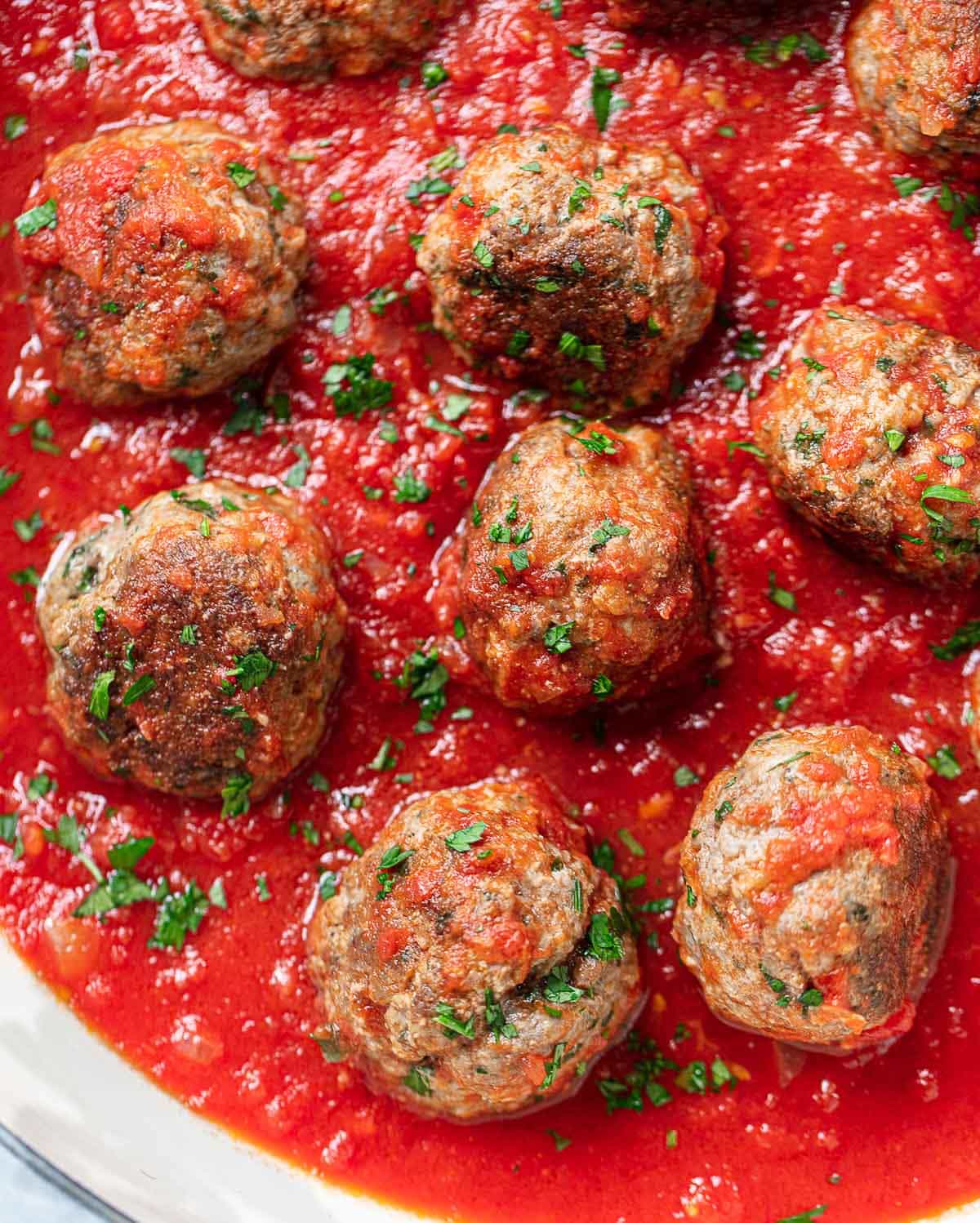
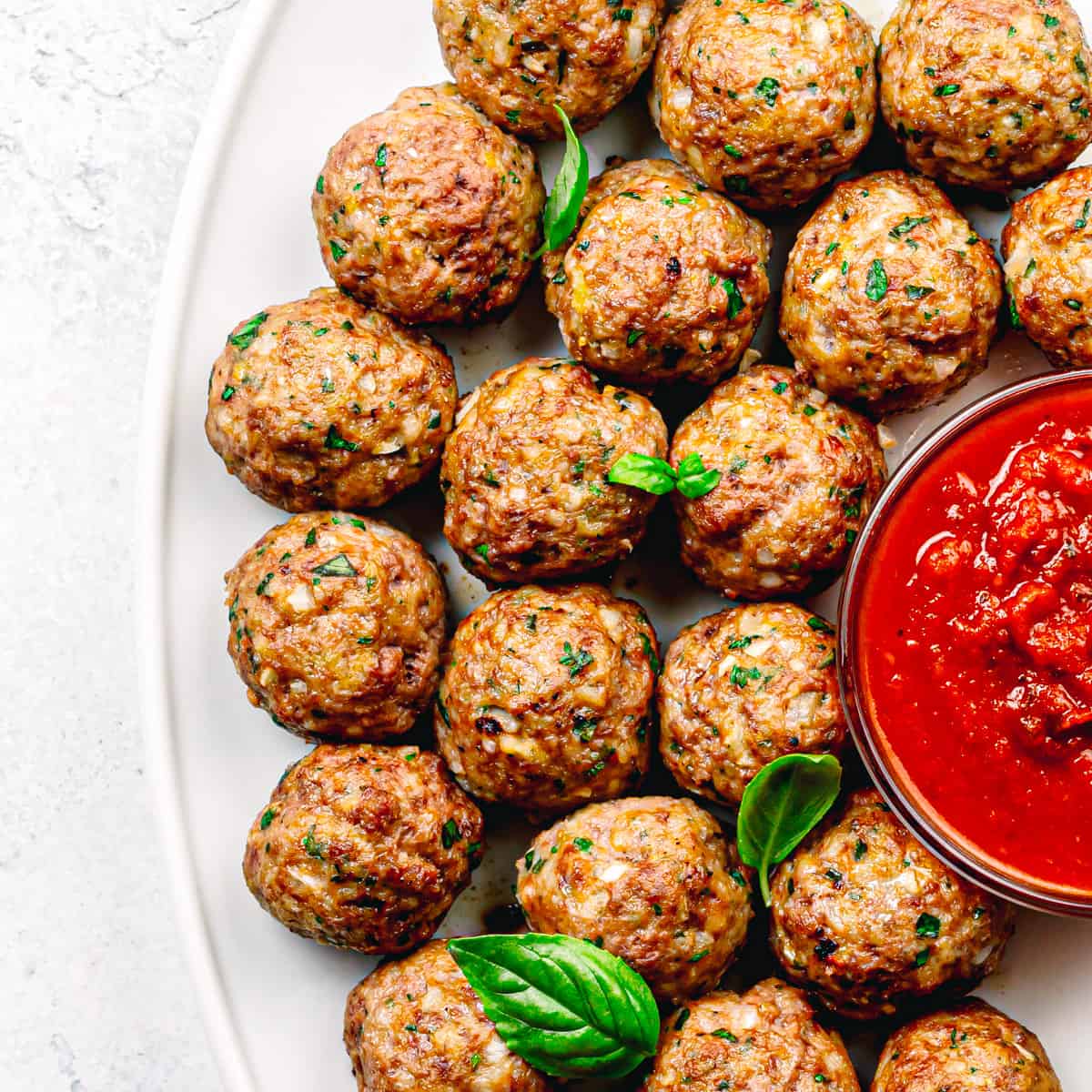
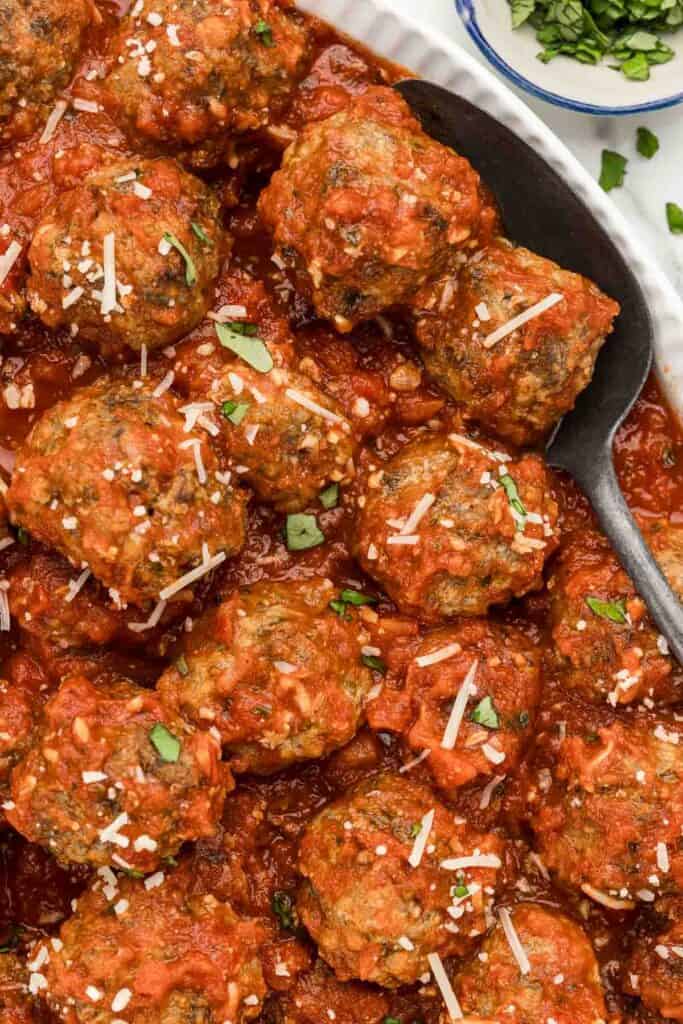
Ground pork and beef meatballs combine the rich taste of beef with the soft, tender texture of pork. Mix the meats with breadcrumbs, milk, egg, garlic, herbs, and cheese, then bake at 400°F until the centers reach 160°F. Serve them with tomato sauce and pasta, or add them to subs, rice bowls, and other easy family meals.
Across the United States, meatballs are a popular choice for weeknight dinners, Sunday meals, and casual family get-togethers. A mix of ground beef and ground pork gives you a useful balance of savory flavor and moisture. The two meats work well with classic Italian seasonings, Parmesan cheese, and a rich tomato sauce.
The best ground pork and beef meatballs do not need a long list of ingredients. A few pantry staples help bind the meat, while milk-soaked breadcrumbs keep the texture soft. Gentle mixing and even sizing also matter. Follow the steps below for tender meatballs that cook evenly and pair well with your favorite sides.
Ground pork and beef make a useful meatball blend because each meat brings a different quality. Beef provides a deep, savory taste, while pork adds its own rich flavor and can help create a softer bite. The final texture still depends on the fat content, the binder, the mixing method, and the cooking time.
An equal blend is a simple place to start. It gives both meats room to shine without making the flavor too heavy. You can adjust the ratio to suit your taste, but a lean blend may produce firmer meatballs unless you add enough moisture.
This mixture works well for Italian-style meatballs, meatball subs, baked meatball dinners, and party appetizers. Season it with garlic, parsley, black pepper, and Parmesan for a classic profile. For a different meal, use cumin, paprika, and a little chili powder instead.
Source: theyummybowl.com
Ground beef
Adds a strong, savory meat flavor. Beef with some fat often gives a softer result than very lean beef.
Ground pork
Brings a mild, rich taste that pairs well with garlic, herbs, and cheese.
Breadcrumbs and milk
Help retain moisture and reduce the risk of a dense, dry texture.
Egg
Helps hold the mixture together as the meatballs cook.
What Meat Ratio Works Best?
For a dependable starting point, use one pound of ground beef and one pound of ground pork. This 1:1 ratio makes enough meatballs for a family meal and leaves room for leftovers. If you prefer a stronger beef flavor, try two parts beef to one part pork.
The fat level can change the result as much as the ratio. Very lean meat may cook up firm, while meat with more fat can release more grease. Choose a blend that fits your taste, then avoid overcooking the meatballs.
Equal parts beef and pork
A balanced starting point for classic Italian-style meatballs.
Two parts beef to one part pork
Useful when you want beef to be the main flavor.
More pork than beef
Can give the blend a milder, richer pork flavor, depending on the cuts and fat levels.
Ingredients for Ground Pork and Beef Meatballs
You can make tender meatballs with common grocery store ingredients. The recipe below uses a blend of beef and pork, plus a simple breadcrumb mixture and Italian seasonings. It makes about 24 medium meatballs, though the final count depends on how large you roll them.
For the best texture, measure the binder ingredients before you begin. Fresh garlic and parsley add a bright flavor, while Parmesan brings a salty, savory note. If you use seasoned breadcrumbs or a salty cheese, adjust the added salt to taste.
Source: poshjournal.com
Ground beef
1 pound, preferably not extremely lean.
Ground pork
1 pound.
Breadcrumbs
1 cup of plain or Italian-style breadcrumbs.
Milk
1/2 cup to soften the breadcrumbs.
Egg
1 large egg to help bind the mixture.
Parmesan cheese
1/2 cup finely grated Parmesan.
Garlic
3 cloves, minced.
Fresh parsley
1/4 cup chopped, or about 1 tablespoon dried parsley.
Seasonings
1 teaspoon dried oregano, 1 teaspoon salt to start, and 1/2 teaspoon black pepper.
Olive oil
A small amount for greasing the baking sheet or brushing the meatballs if needed.
Can You Use Panko or Gluten-Free Breadcrumbs?
Yes. Panko can work in place of regular breadcrumbs, although its larger flakes may absorb moisture a little differently. Mix it with the milk and let it sit before adding the meat. If the mixture feels unusually loose, add a small amount of extra breadcrumbs.
For a gluten-free version, use certified gluten-free breadcrumbs or finely crushed gluten-free crackers. Check the labels on the cheese, seasonings, and other packaged ingredients if you need to avoid gluten strictly. The texture may vary with the binder you choose.
Plain breadcrumbs
A neutral option that lets you control the herbs and salt.
A useful substitute for people who need to avoid gluten.
How to Make Ground Pork and Beef Meatballs
Baking is a simple way to cook a full batch without standing over a skillet. It also makes it easier to cook meatballs in one layer. For a classic dinner, bake the meatballs first, then let them finish in warm tomato sauce if you want a softer, sauce-coated result.
Gather a large bowl, a baking sheet, parchment paper if desired, and a food thermometer. Keep raw meat chilled until you are ready to mix it. Wash your hands and clean any surface that touches raw beef or pork.
Source: borrowedbites.com
Step 1: Heat the oven
Preheat the oven to 400°F. Line a rimmed baking sheet with parchment paper or lightly grease it.
Step 2: Soften the breadcrumbs
Stir the breadcrumbs and milk together in a small bowl. Let the mixture rest for about five minutes so the crumbs can absorb the liquid.
Step 3: Add the seasonings
Mix the egg, Parmesan, garlic, parsley, oregano, salt, and black pepper into the softened breadcrumbs.
Step 4: Add both meats
Add the ground beef and pork. Use clean hands or a fork to mix gently until the ingredients are spread through the meat.
Step 5: Shape the meatballs
Roll the mixture into balls about 1 1/2 inches wide. Keep them close in size so they cook at a similar rate.
Step 6: Arrange on the pan
Place the meatballs in a single layer with a little space between them. Avoid packing them tightly together.
Step 7: Bake and check
Bake for about 18 to 25 minutes, depending on their size and your oven. Check the center of the largest meatball with a food thermometer.
Step 8: Finish in sauce if desired
Once the meatballs reach 160°F, transfer them to gently simmering tomato sauce. Let them sit in the sauce for a few minutes so the flavors can blend.
How Do You Know When Meatballs Are Done?
The safest way to check meatballs is with a food thermometer. Ground beef and ground pork should reach an internal temperature of 160°F. Insert the thermometer into the center of a large meatball rather than relying on the outside color.
Browning alone does not prove that the center is cooked. The outside may turn brown before the inside reaches a safe temperature. If the center is below 160°F, return the meatballs to the oven and check again after a few minutes.
Use the temperature, not the clock alone
Oven performance, meatball size, and pan type can change cooking time.
Check a large meatball
The biggest piece is a useful place to start, but check more than one if their sizes vary.
Avoid cutting every meatball open
A thermometer gives a more reliable check and helps keep the meatballs intact.
Can You Cook the Meatballs in a Skillet?
Yes. Heat a thin layer of oil in a large skillet over medium heat. Add the meatballs in batches, leaving room between them, and turn them gently as the sides brown.
After browning, lower the heat and cook until the centers reach 160°F. You can also transfer the browned meatballs to tomato sauce and simmer them gently until fully cooked. Do not crowd the pan, because crowded meatballs may steam instead of brown.
Use medium heat
Very high heat may brown the outside before the center cooks.
Turn with care
A thin spatula or small tongs can help keep the meatballs from breaking.
Tips for Tender, Juicy Meatballs
Tender meatballs start with the right balance of meat, moisture, and gentle handling. Even a good recipe can turn out dense if the mixture is packed too tightly or mixed for too long. Small changes before cooking often make a bigger difference than adding more seasonings.
The breadcrumb and milk mixture helps distribute moisture through the meat. The egg helps hold the shape, while Parmesan and herbs add flavor. Use these ingredients as a balanced mix rather than adding extra egg or crumbs without checking the texture.
Source: simpleseasonal.com
Do not overmix
Stop as soon as the meat and seasonings are evenly combined. Excessive mixing can make meatballs firm.
Keep the meat cold
Take the meat out of the refrigerator when you are ready to mix it, and work promptly.
Make evenly sized portions
Similar sizes help all the meatballs finish cooking at roughly the same time.
Avoid pressing the balls too firmly
Roll them just enough to hold their shape. Dense packing can lead to a tight texture.
Let the breadcrumbs absorb the milk
This step helps the binder blend into the meat instead of leaving dry crumbs.
Do not overcook
Remove the meatballs from the oven when they reach 160°F. Extra cooking can dry them out.
What If the Mixture Is Too Wet or Too Dry?
A meatball mixture should feel moist and soft but still hold its shape when rolled. If it sticks heavily to your hands and spreads apart, mix in a little more breadcrumbs and let the mixture rest briefly. Add small amounts at a time so the meatballs do not become dry.
If the mixture feels crumbly, check whether the breadcrumbs absorbed enough milk. A small splash of milk can help, but add it gradually. The goal is a mixture that holds together without feeling stiff.
Too wet
Add one tablespoon of breadcrumbs at a time, then check the texture again.
Too dry
Add a small splash of milk and mix gently.
Falling apart
Check that the egg and breadcrumb mixture are evenly distributed. Chill the shaped meatballs briefly if they are very soft.
Best Sauces and Seasonings for Beef and Pork Meatballs
Tomato sauce is a classic partner for beef and pork meatballs, but it is not the only option. The meat blend has a savory taste that works with tomato, cream, herbs, and mild spice. Choose the sauce based on how you plan to serve the meal.
For a simple Italian-style dinner, warm marinara sauce in a saucepan and add the cooked meatballs. Let them simmer gently for about five to ten minutes so the sauce coats each piece. If the sauce is thick, add a little water or low-sodium broth to loosen it.
Source: blogspot.com
Marinara sauce
A tomato-based option with garlic and herbs. Serve with spaghetti, penne, or crusty bread.
Creamy mushroom sauce
A rich choice for meatballs served over mashed potatoes, egg noodles, or rice.
Barbecue sauce
Works well for party meatballs served with toothpicks or as part of a casual meal.
Sweet and tangy sauce
A blend of chili sauce and a sweet preserve can suit appetizer-style meatballs. Keep the sauce at a gentle simmer.
Garlic and herb sauce
A light butter or olive oil sauce can highlight the flavor of the meat without covering it.
How to Add More Italian Flavor
Use dried oregano, parsley, garlic, and Parmesan for a familiar Italian-style flavor. A little onion, finely grated or minced, can add moisture and sweetness. Avoid adding large pieces of raw onion, since they may make the meatballs harder to shape.
Red pepper flakes can add heat, while fresh basil works well in the finished sauce. Season the sauce separately and taste it before adding extra salt to the meatballs. Parmesan and packaged breadcrumbs may already contain a fair amount of salt.
For a mild flavor
Use parsley, garlic, oregano, and a modest amount of black pepper.
For a stronger herb flavor
Add basil or a small amount of Italian seasoning.
For a little heat
Add a pinch of red pepper flakes to the meat mixture or sauce.
What to Serve With Ground Pork and Beef Meatballs
These meatballs can be the main dish for a relaxed family dinner or a small part of a larger meal. Pasta is a natural match, but potatoes, vegetables, rice, and bread also work well. Think about the sauce when choosing your sides so the whole plate feels balanced.
For a traditional American weeknight dinner, serve meatballs in marinara over spaghetti with a side salad. On a cold evening, pair them with mashed potatoes and roasted green beans. Leftovers can also make a quick lunch when packed with rice or tucked into a sandwich roll.
Source: blogspot.com
Pasta
Spaghetti, rigatoni, and penne hold tomato sauce well. Add grated Parmesan at the table.
Mashed potatoes
A good match for meatballs with brown gravy or creamy mushroom sauce.
Meatball subs
Place meatballs and warm marinara in a toasted roll, then top with mozzarella if desired.
Rice bowls
Serve the meatballs over rice with steamed vegetables and a sauce that suits the seasoning.
Roasted vegetables
Broccoli, carrots, zucchini, and green beans add color and a fresh contrast.
Crusty bread
Use bread to soak up extra tomato sauce or gravy.
Easy Meatball Dinner Ideas
A few small changes can turn one batch into several different meals. Keep some meatballs in tomato sauce for pasta, then serve another portion with a different side. This helps make leftovers feel less repetitive without requiring a new recipe.
Classic pasta night
Serve meatballs with spaghetti, marinara, and a green salad.
Casual sandwich night
Fill toasted rolls with meatballs, sauce, and melted cheese.
Simple comfort meal
Pair meatballs with mashed potatoes and steamed peas.
Party snack
Serve smaller meatballs with a warm dipping sauce and small forks.
How to Store, Freeze, and Reheat Meatballs
Cooked beef and pork meatballs are useful for meal prep because they can be chilled or frozen in portions. Let the meatballs cool briefly, then place them in shallow containers and refrigerate them promptly. Do not leave cooked meat at room temperature for more than two hours, or more than one hour when the temperature is above 90°F.
Store cooked meatballs in the refrigerator for three to four days. For longer storage, freeze them in airtight, freezer-safe containers or bags. Label the package with the date so you can keep track of what needs to be used first.
Source: poshjournal.com
Refrigerator
Keep cooked meatballs at 40°F or below and use them within three to four days.
Freezer
Freeze cooked meatballs in airtight packaging. For best quality, use frozen leftovers within about two to three months.
Reheating
Reheat leftovers to 165°F in the center. Add a little water or sauce if the meatballs seem dry.
Room temperature
Discard cooked meatballs left out beyond the safe time limit. Smell and appearance cannot reliably show whether food is safe.
Can You Freeze Raw Meatballs?
Yes. Shape the raw meatballs and arrange them on a lined tray with space between each one. Freeze until firm, then transfer them to a freezer-safe bag or container to save space.
Keep raw meatballs frozen until you are ready to cook them. Thaw them in the refrigerator rather than on the counter, and cook them promptly after thawing. If you cook them from frozen, allow extra time and confirm that the center reaches 160°F before serving.
Freeze in one layer first
This helps prevent the raw meatballs from sticking together.
Use sealed packaging
Remove excess air from freezer bags to help protect the meat from freezer burn.
Check the center temperature
Frozen meatballs may need much longer to cook, so do not rely on a standard time alone.
How to Reheat Without Drying Them Out
The stovetop is a good option for meatballs stored in sauce. Place them in a covered pan over low to medium-low heat, add a splash of water if the sauce is thick, and stir gently as they warm. Check the center with a food thermometer to make sure the leftovers reach 165°F.
For plain baked meatballs, use a covered oven-safe dish with a little broth or sauce. A microwave also works for a quick portion. Cover the dish, heat in short intervals, and turn or stir the food when possible so it warms evenly.
Use sauce or broth
A little liquid helps limit moisture loss during reheating.
Cover the dish
A lid or microwave-safe cover helps retain steam.
Avoid repeated reheating
Warm only the amount you plan to eat and return the remaining food to safe storage promptly.
Common Meatball Problems and How to Fix Them
Most meatball problems come from the texture of the mixture, the size of the balls, or the cooking method. A few checks can help you find the likely cause before changing the whole recipe. Adjust one thing at a time so you can see which change helps.
Source: storage.googleapis.com
The meatballs are tough
Overmixing, firm shaping, very lean meat, or excess cooking time may be the cause. Mix gently and use the thermometer to avoid cooking them longer than needed.
The meatballs fall apart
The mixture may be too wet or the binder may not be evenly mixed. Add a little breadcrumb if needed, and chill the shaped meatballs briefly before cooking.
The outside burns before the center cooks
The oven may be too hot for the size of the meatballs, or the balls may be too large. Check the oven setting and make smaller, even portions.
The meatballs are greasy
The meat blend may contain more fat, or excess fat may collect on the pan. Drain the pan carefully if needed, then transfer the cooked meatballs to sauce.
The flavor is bland
The mixture may need more herbs, garlic, or salt. Season in a measured way, remembering that Parmesan and seasoned breadcrumbs add salt too.
The meatballs are dry
They may have cooked too long or lacked enough moisture in the binder. Let the breadcrumbs soak in milk and check doneness with a thermometer.
Should You Brown Meatballs Before Adding Sauce?
Browning can add a deeper, roasted flavor and create a darker outer crust. Baking offers a simpler method for a large batch, while pan browning gives you more control over the color. Neither method replaces the need to cook the center to a safe temperature.
You can bake the meatballs until they reach 160°F and then add them to warm sauce. If you brown raw meatballs in a skillet first, continue cooking them until they reach the same safe temperature. Do not assume that a browned outside means the inside is ready.
Choose baking
Useful when you want less hands-on work and space to cook a full batch.
Choose skillet browning
Useful when a browned surface is a priority and you do not mind cooking in batches.
Finish in sauce
Useful for coating the meatballs and bringing the flavors together before serving.
Frequently Asked Questions
Q
Can I make ground pork and beef meatballs without Parmesan?
Yes. You can leave out the Parmesan or replace it with a small amount of another finely grated hard cheese. The meatballs will still hold together because the egg and breadcrumbs help bind the mixture. Taste the mixture before cooking only if you use a method that makes raw meat safe to sample; otherwise, cook a small test portion and adjust the seasonings for the next batch.
Q
Is it better to bake or fry beef and pork meatballs?
Baking is convenient for a large batch and needs less active attention. Pan-frying or skillet browning can create a deeper brown crust, but it usually requires more hands-on work and cooking in batches. Choose the method that fits your time and preferred texture, and make sure the center reaches 160°F either way.
Q
Can I make these meatballs ahead of time?
Yes. You can mix and shape the meatballs ahead of cooking, then cover and refrigerate them for a short period before baking. Keep raw ground meat at 40°F or below, and do not leave it out while preparing other parts of the meal. You can also cook the meatballs in advance, refrigerate them within two hours, and reheat them to 165°F before serving.
Q
Why do my beef and pork meatballs shrink?
Meatballs shrink as the proteins tighten and fat and water leave the meat during cooking. A blend with more fat may release more grease, while overcooking can increase moisture loss. Gentle mixing, even sizing, and cooking only until the safe internal temperature is reached can help limit the problem.
Q
Can I cook meatballs directly in tomato sauce?
Yes, raw meatballs can be cooked in gently simmering sauce, but they need enough time and careful temperature checks. Keep the sauce at a steady simmer rather than a hard boil, which may break the meatballs apart. Check the center of several meatballs and confirm that each reaches 160°F before serving.
Q
What temperature should ground pork and beef meatballs reach?
Meatballs made with ground beef and ground pork should reach 160°F in the center. Use a food thermometer to check the thickest part. If you are reheating cooked leftovers, heat them to 165°F.
Q
How many meatballs does this recipe make?
With two pounds of meat, this recipe makes about 24 medium meatballs when each one is roughly 1 1/2 inches wide. Smaller meatballs make a larger batch, while larger ones produce fewer portions and may need more cooking time. Check the center temperature rather than relying on size or cooking time alone.
✦ Wrapping Up
Conclusion
Ground pork and beef meatballs are easy to fit into a busy week. The beef brings a savory taste, while the pork adds a rich note that pairs well with garlic, herbs, and Parmesan. Milk-soaked breadcrumbs, gentle mixing, and even shaping help create a soft texture without a long list of ingredients.
Bake the meatballs at 400°F, then check that the centers reach 160°F before serving. Add them to warm marinara for a classic pasta dinner, or serve them with mashed potatoes, rice, roasted vegetables, or toasted rolls. Store leftovers safely and freeze extra portions when you want an easy meal later.
💡 Key Takeaway
Start with one pound each of ground beef and ground pork, soak one cup of breadcrumbs in half a cup of milk, and mix in one egg, Parmesan, garlic, parsley, oregano, salt, and pepper. Shape evenly, bake at 400°F, and use a thermometer to confirm 160°F in the center.