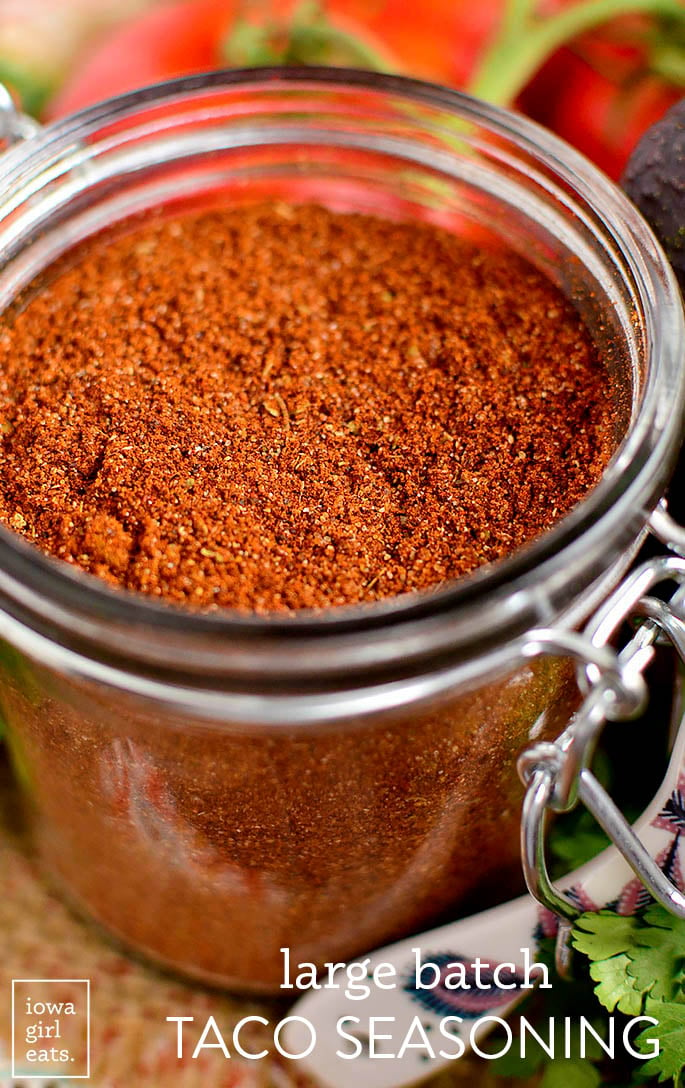
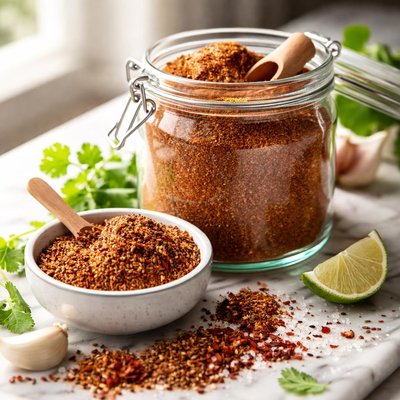
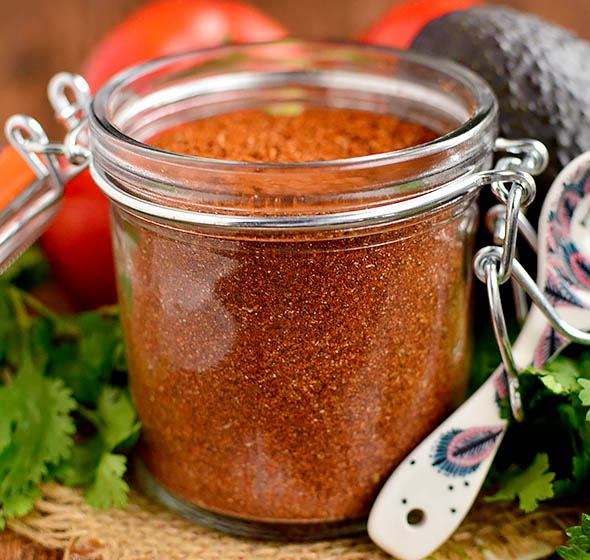
Mix 1/2 cup chili powder, 1/4 cup ground cumin, 2 tablespoons paprika, 2 tablespoons garlic powder, 2 tablespoons onion powder, 1 tablespoon dried oregano, 1 tablespoon salt, 2 teaspoons black pepper, and 1 to 2 teaspoons cayenne pepper for a large jar of homemade taco seasoning. Use about 2 tablespoons per pound of ground meat, adjusting to taste.
In American kitchens, taco night often means ground beef, warm tortillas, shredded cheese, salsa, and a quick dash of spice. A large batch taco seasoning recipe makes this weeknight meal easier because you can mix your own spice blend once and keep it ready for future dinners. There is no need to open a new seasoning packet every time tacos appear on the menu.
This homemade taco seasoning uses common pantry spices and lets you control the salt and heat. The blend works with ground beef, turkey, chicken, beans, and roasted vegetables. You can also use it in taco soup, rice bowls, quesadillas, and casseroles. The recipe below gives you a practical starting point, along with storage tips, serving amounts, and ways to adjust the flavor.
A large batch saves time and keeps your favorite taco flavor close at hand. Instead of measuring several spices while meat cooks, you can scoop the blend straight from the jar. That small step can make dinner feel less rushed, especially on busy school nights or after work.
Homemade seasoning also gives you more control over the ingredients. Many store-bought packets contain salt, starch, sugar, or other ingredients that help create a thick sauce or keep the mix free-flowing. Your homemade blend can focus on the spices you enjoy, while you add salt and thickening ingredients only when needed.
The main trade-off is that a dry homemade blend does not automatically make a thick taco sauce. You may need a little water or broth after adding the spices to meat. Once you know the flavor and texture you like, the same jar can help season many meals.
Source: www.pinterest.com
Less prep at dinner
Mix the spices ahead of time and measure one blend whenever tacos are on the menu.
Control over salt and heat
Use less salt, skip cayenne, or add more chili pepper to suit your household.
More ways to use it
Season meat, beans, vegetables, rice, soups, and dips with the same basic mix.
Easy to scale
Double or halve the ingredients while keeping the proportions consistent.
Ingredients for a Large Batch Taco Seasoning Recipe
This recipe makes roughly 1 to 1 1/4 cups of seasoning, depending on how finely the spices are ground and how they settle in the measuring cup. The exact volume can vary, so use the listed measurements as the main guide. You can make a smaller test batch first if you are unsure about the chili powder or cayenne.
Chili powder forms the base of the blend. In the United States, standard chili powder is often a mix of ground chile peppers and spices, rather than pure ground chile alone. Cumin adds an earthy, warm note, while paprika brings color and a mild pepper flavor. Garlic powder and onion powder round out the savory taste.
Oregano adds a gentle herbal note, and black pepper gives the mix a little bite. Salt brings the flavors forward, while cayenne adds heat. The cayenne is optional, and the amount can vary widely based on the kind of chili powder you use.
Source: www.pinterest.com
1/2 cup chili powder
Use a standard American-style chili powder blend for a balanced base.
1/4 cup ground cumin
Adds a warm, earthy flavor that pairs well with beef, chicken, and beans.
2 tablespoons paprika
Adds color and mild pepper notes. Sweet paprika is a good everyday option.
2 tablespoons garlic powder
Gives the blend a savory, full flavor without fresh garlic.
2 tablespoons onion powder
Adds a mild onion flavor that spreads evenly through the mix.
1 tablespoon dried oregano
Adds a light herbal note. Crush the leaves between your fingers if they are coarse.
1 tablespoon fine salt
Start here for a moderately seasoned blend, or leave it out for more control.
2 teaspoons black pepper
Adds gentle heat and a sharp, savory edge.
1 to 2 teaspoons cayenne pepper
Use less for mild seasoning or more if your household likes extra heat.
Optional Ingredients for a Different Flavor
You can adjust the blend without changing its basic purpose. A little smoked paprika adds a smoky note, while a small amount of ground coriander gives it a citrus-like aroma. A pinch of sugar may soften sharp flavors, but it is not required.
Avoid adding fresh garlic, fresh onion, lime juice, or other wet ingredients to the storage jar. Those ingredients add moisture and can cause the dry blend to clump or spoil. Add fresh ingredients during cooking instead.
Smoked paprika
Replace some or all of the regular paprika when you want a smoky flavor.
Ground coriander
Add 1 to 2 teaspoons to the full batch for a mild citrus-like note.
Crushed red pepper
Use a small amount for a different kind of heat, though the flakes may make the texture less uniform.
Dried cilantro
Add a little if you enjoy its herbal flavor, but keep fresh cilantro for serving.
How to Make Homemade Taco Seasoning
Making this seasoning takes only a few minutes. You do not need a stove, blender, or food processor. A dry bowl, measuring spoons, and a clean jar are enough for a smooth, even mix.
The main goal is to spread the fine spices throughout the blend. If you pour each spice into a jar and shake it only a few times, heavier or coarser ingredients may settle in different spots. Mixing in a bowl first helps distribute the salt, cumin, and chili powder more evenly.
Source: www.pinterest.com
Step 1: Gather your tools
Set out a medium bowl, measuring cups, measuring spoons, a whisk or spoon, and a clean, fully dry airtight jar.
Step 2: Measure the spices
Measure each ingredient with dry utensils. Level off the cups and spoons so the proportions stay close to the recipe.
Step 3: Combine the ingredients
Add all the spices to the bowl. Whisk for about 30 to 60 seconds, breaking up any small clumps.
Step 4: Check the blend
Look for an even color without large pockets of paprika, cumin, or salt. Smell the mix to check that the spices have a balanced aroma.
Step 5: Transfer and label
Pour the blend into your dry jar. Label it with the name, ingredients, and date you mixed it.
How to Tell When the Blend Is Ready
The finished blend should have a fairly even reddish-brown color and a strong smell of chili powder, cumin, and garlic. A few small flakes of oregano are normal. The mix should be dry and loose rather than damp or sticky.
If you notice hard clumps, break them apart with a clean spoon before storing the mix. If the spices feel wet, smell musty, or show signs of mold, do not use them. Moisture is a reason to discard the blend rather than try to dry it for later use.
Even color
The spices look blended, with no large areas of a single ingredient.
Dry texture
The mix pours freely and has no damp or sticky patches.
Fresh aroma
The smell is warm and savory, not stale, musty, or rancid.
How Much Taco Seasoning Should You Use?
Start with about 2 tablespoons of homemade taco seasoning for every 1 pound of ground meat. This is a practical starting point, not a fixed rule. The right amount depends on how strong your chili powder is, how much salt is in the blend, and how boldly you like your tacos seasoned.
For ground beef, brown the meat in a skillet over medium heat, breaking it into small pieces as it cooks. Drain excess fat if needed, then stir in the seasoning and about 1/3 to 1/2 cup of water or broth. Let the mixture simmer for several minutes until the liquid reduces and coats the meat.
Ground turkey and chicken can also work well with this blend. These meats may be leaner than ground beef, so watch the pan and add a little more liquid if the mixture starts to dry out. Cook poultry to a safe internal temperature of 165°F, measured with a food thermometer.
Source: www.pinterest.com
1 pound of meat
Begin with 2 tablespoons of seasoning and adjust after cooking.
2 pounds of meat
Use about 4 tablespoons, or 1/4 cup, as a starting point.
3 pounds of meat
Use about 6 tablespoons, then taste and adjust.
4 pounds of meat
Use about 8 tablespoons, or 1/2 cup, as a starting point.
Should You Add Water to Taco Seasoning?
Water is useful when you want a moist filling that clings to the meat. It helps the dry spices spread across the pan and gives them time to flavor the food. Without added liquid, the seasoning may stick to the meat unevenly or taste dusty.
Start with 1/3 cup of water per pound of meat and add more if needed. Simmer until the liquid has reduced to a light sauce. Broth can add more savory flavor, but check its sodium content if your seasoning already contains salt.
Too dry
Add water a tablespoon or two at a time and stir well.
Too watery
Simmer uncovered until the extra liquid cooks off.
Too salty
Add more unseasoned meat or beans if practical, or serve with unsalted rice and vegetables.
Adjust the Recipe for Mild, Spicy, or Low-Sodium Tacos
The best part of making taco seasoning at home is that you can change it to suit your own taste. Chili powders vary in heat, so the same recipe may taste mild with one brand and much hotter with another. Make small changes first, then record the amounts you like.
If you cook for children or people who dislike spicy food, leave out the cayenne. You can serve hot sauce on the side so each person can control the heat. For a deeper flavor without much extra heat, try smoked paprika or a little more cumin.
For a lower-sodium blend, reduce or omit the salt. The spices still provide flavor, although the finished taco filling may taste less like a typical commercial packet. Check the labels on your chili powder and other spice mixes, since some blends may already contain salt.
Source: dailyration.net
For mild tacos
Skip the cayenne and use a mild chili powder. Keep black pepper at the listed amount or reduce it.
For spicy tacos
Increase the cayenne in small steps. Test the mix on a cooked spoonful of meat before seasoning a large pan.
For low-sodium meals
Leave out the salt or reduce it to 1 teaspoon per full batch. Add a small amount during cooking only if needed.
For smoky flavor
Replace some of the sweet paprika with smoked paprika.
For more garlic flavor
Add another teaspoon or two of garlic powder to the full batch.
How to Fix a Blend That Tastes Too Hot
If your seasoning is hotter than expected, mix in more chili powder, cumin, paprika, garlic powder, and onion powder without adding more cayenne. This increases the total amount of blend while lowering the proportion of the hottest ingredient.
Do not try to fix an overly spicy jar by adding sugar alone. Sugar may change the flavor, but it will not remove the pepper heat. For the next batch, begin with less cayenne and test a small portion with cooked meat.
Reduce the heat
Add more of the base spices while keeping the cayenne out of the adjustment mix.
Test a small serving
Cook a spoonful of meat with a measured amount before using the blend for a full meal.
How to Store Bulk Taco Seasoning
Store homemade taco seasoning in a clean, dry, airtight container in a cool cupboard away from sunlight, heat, and steam. A glass spice jar or food-safe storage container with a tight lid works well. Keep the jar away from the stove, where heat and moisture can reach it each time you cook.
Dry spice blends do not spoil in the same way as fresh food, but their flavor and aroma fade over time. Ground spices often lose their strongest flavor before they show obvious signs of age. For the best taste, make a batch you can use while the spices still smell fresh and lively.
There is no single guaranteed shelf life for every homemade blend. It depends on the age of the individual spices, storage conditions, and how often moisture enters the jar. Use the dates on your original spices as a guide, and replace the blend when its aroma becomes weak or its condition changes.
Source: www.pinterest.com
Use a dry spoon
Never dip a wet spoon into the jar. Moisture can cause clumps and spoilage.
Keep the lid closed
Close the jar after each use to limit air and moisture exposure.
Label the jar
Write the mixing date and note whether the blend contains salt or cayenne.
Check before use
Discard the seasoning if it becomes damp, smells musty, or shows signs of mold.
Can You Freeze Taco Seasoning?
You usually do not need to freeze a dry seasoning blend. An airtight jar in a cool, dry cupboard is easier to use and helps keep moisture out. Freezing can cause condensation if a cold container is opened before it warms to room temperature.
If you make a very large quantity, divide it into small, airtight containers. Keep one container in regular use and leave the others sealed until needed. This reduces the number of times the entire supply is exposed to air and kitchen moisture.
For regular use
Keep a small jar in the cupboard and refill it from a sealed reserve container.
For long-term storage
Prioritize cool, dry conditions and fresh spices instead of relying on freezing to preserve flavor.
Ways to Use Homemade Taco Seasoning Beyond Beef
A large jar of taco seasoning can do more than flavor ground beef. Its blend of chili powder, cumin, garlic, and paprika works with many savory foods. Start with a small amount, especially when seasoning dishes that already contain salt or strong flavors.
For chicken, rub the spices over the meat with a little oil before cooking. For beans, stir a measured amount into the pot near the end of cooking and add a splash of water if needed. For vegetables, coat them lightly with oil and seasoning before roasting, then taste before adding extra salt.
You can also add the blend to taco soup, rice bowls, quesadillas, or homemade dips. The best method depends on the dish. Foods with more liquid can handle the seasoning differently from dry roasted vegetables, so add it gradually.
Source: www.pinterest.com
Chicken and turkey
Season before cooking, or stir the blend into cooked shredded meat with a little broth.
Black beans and pinto beans
Add a small amount while warming the beans, then taste before adding more.
Roasted vegetables
Toss cauliflower, peppers, onions, or potatoes with oil and seasoning before roasting.
Rice bowls
Stir a little seasoning into cooked rice with beans, corn, and a squeeze of lime.
Taco soup
Add the blend to the broth with beans, tomatoes, vegetables, and your chosen protein.
Quesadillas
Season the cooked filling before adding it to tortillas with cheese and vegetables.
Using Taco Seasoning Without Meat
For a meat-free meal, use taco seasoning with lentils, beans, mushrooms, or crumbled tofu. Cook the main ingredient first, then stir in a measured amount of seasoning and enough water or broth to help it coat the food. Taste before adding salt, especially if canned beans or broth are already salted.
A little lime juice, fresh cilantro, or chopped onion added just before serving can brighten the dish. Keep these fresh ingredients out of the dry storage jar, but feel free to use them in the meal itself.
For lentils
Stir in the blend after the lentils are tender and let the mixture simmer briefly.
For tofu
Crumble firm tofu, cook off excess moisture, and add the spices with a little oil.
For mushrooms
Cook until their released moisture has mostly evaporated before adding the seasoning.
Common Taco Seasoning Mistakes to Avoid
The most common problem with homemade taco seasoning is using too much before tasting it. Chili powder blends differ, and some are stronger or hotter than others. Begin with the suggested amount, cook the filling, and then add more if needed.
Another mistake is assuming that every taco seasoning blend has the same salt level as a store-bought packet. Homemade recipes vary, and this one includes salt as an ingredient you can adjust. If you use salted broth, canned beans, or other seasoned foods, account for those ingredients before adding more salt.
Finally, do not store the seasoning in a damp jar or above a steaming pot. Even a dry mix needs protection from moisture. A clean, dry container and a closed lid help preserve its flavor and condition.
Source: Iowa Girl Eats
Adding too much at once
Start with 2 tablespoons per pound of meat, then adjust after cooking.
Replace spices that have lost their aroma. Old spices may add color without much flavor.
Forgetting the liquid
Add water or broth when making a moist meat filling, then simmer to the desired texture.
Ignoring the salt in other foods
Taste the whole dish before adding extra salt, especially when using canned or packaged ingredients.
Storing a wet blend
Keep fresh garlic, lime juice, chopped herbs, and other wet ingredients out of the dry jar.
Frequently Asked Questions
Q
How much homemade taco seasoning equals one packet?
About 2 tablespoons is a useful starting point for replacing a typical taco seasoning packet in 1 pound of ground meat. Packet sizes and recipes vary, so the flavor and salt level may differ. Start with 2 tablespoons, add water or broth as needed, and taste before adding more.
Q
How many pounds of meat will this large batch season?
This recipe makes roughly 1 to 1 1/4 cups of seasoning, depending on the spices and how they settle. At 2 tablespoons per pound of meat, that is enough for about 8 to 10 pounds. You may use less or more based on the strength of your spices and your taste.
Q
Can I make taco seasoning without salt?
Yes. Leave the salt out of the recipe and add it to the food only when needed. The spice blend will still add flavor, and you will have more control over the sodium in each meal. Check any broth, canned foods, or other seasonings you add during cooking.
Q
Is homemade taco seasoning gluten-free?
A blend made only from pure spices is generally free of gluten-containing ingredients, but the recipe alone cannot guarantee that every spice product is free from cross-contact. Read the labels on the ingredients you buy and choose products with suitable gluten-free labeling if you need to avoid gluten for medical reasons.
Q
How long does homemade taco seasoning last?
There is no exact shelf life that applies to every homemade spice blend. Its flavor depends on the freshness of the spices and how well the jar protects them from air, heat, light, and moisture. Store it in a clean, airtight container in a cool, dry cupboard and replace it when the aroma fades or its condition changes.
Q
Can I use this taco seasoning for chicken and vegetables?
Yes. The blend works with chicken, turkey, beans, lentils, tofu, and roasted vegetables. Start with a small amount and adjust after cooking. For chicken, use a little oil to help the spices coat the meat, and cook poultry to an internal temperature of 165°F.
Q
Can I make this seasoning less spicy?
Yes. Omit the cayenne pepper and use a mild chili powder. If the blend is still too hot, mix in more cumin, paprika, garlic powder, and onion powder without adding more cayenne. Test a small portion before using the adjusted blend for a large meal.
✦ Wrapping Up
Conclusion
This large batch taco seasoning recipe gives you a simple way to keep a useful spice blend ready for weeknight meals. Chili powder, cumin, paprika, garlic, onion, oregano, salt, black pepper, and cayenne create a savory base that works with meat, beans, vegetables, soups, and rice bowls. You can also change the heat and salt to suit your needs.
Mix the spices in a bowl, transfer them to a dry airtight jar, and label the container. When taco night comes around, start with about 2 tablespoons per pound of meat and add water or broth to make a moist filling. Taste as you cook, since spice blends can vary in strength.
💡 Key Takeaway
Gather your pantry spices and make one batch today. Start with 2 tablespoons per pound of meat, adjust the salt and heat to your taste, and store the remaining blend in a cool, dry cupboard.