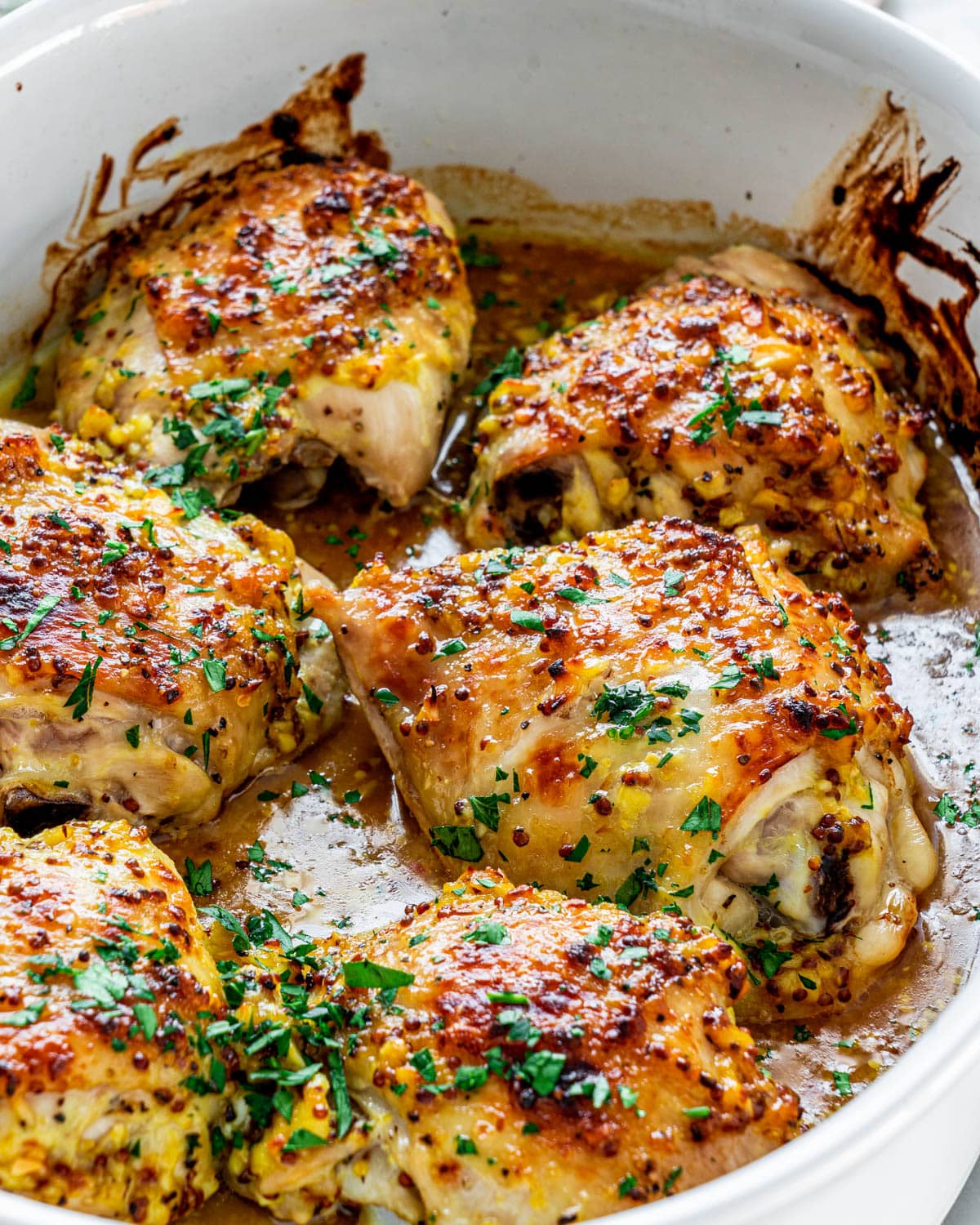
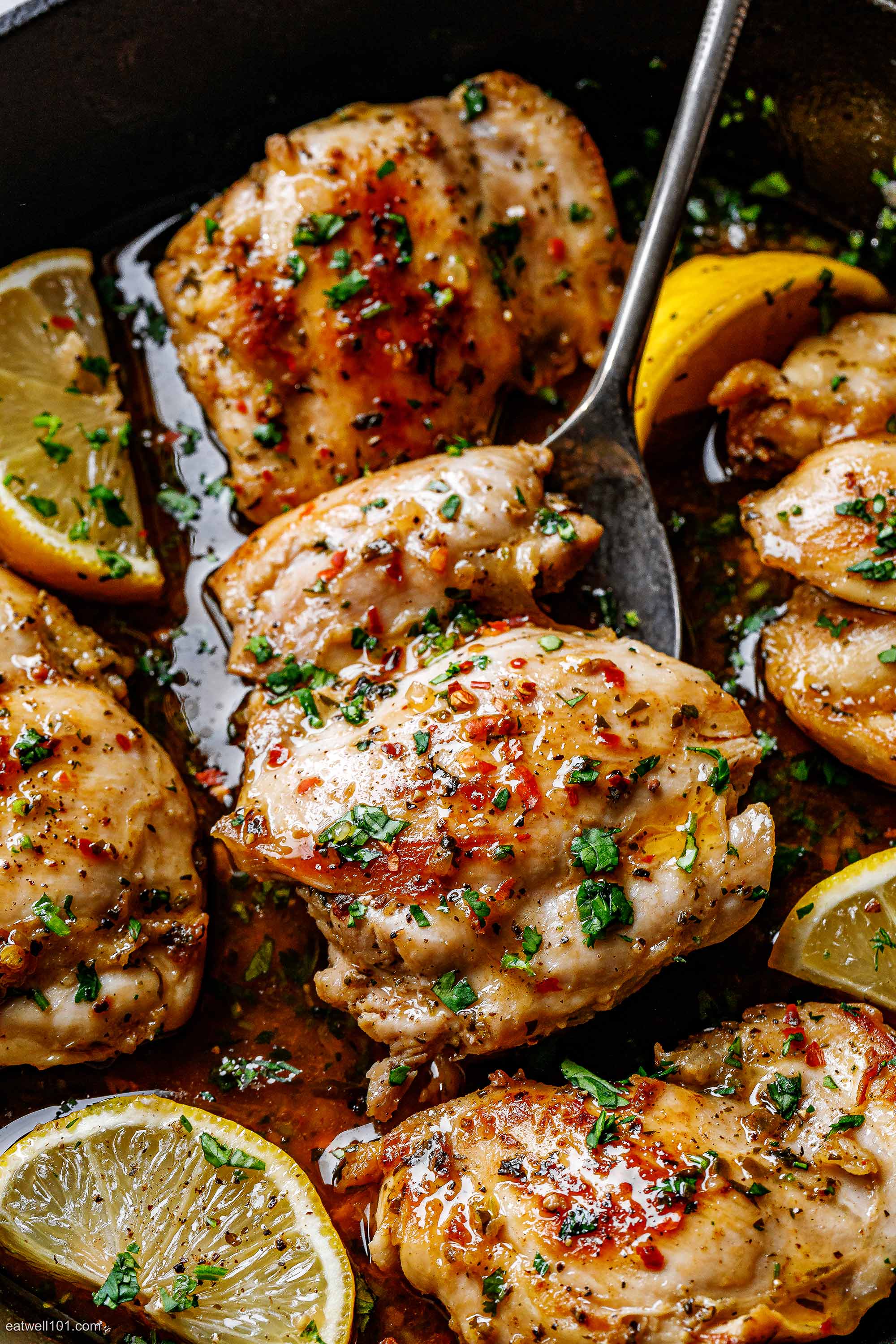
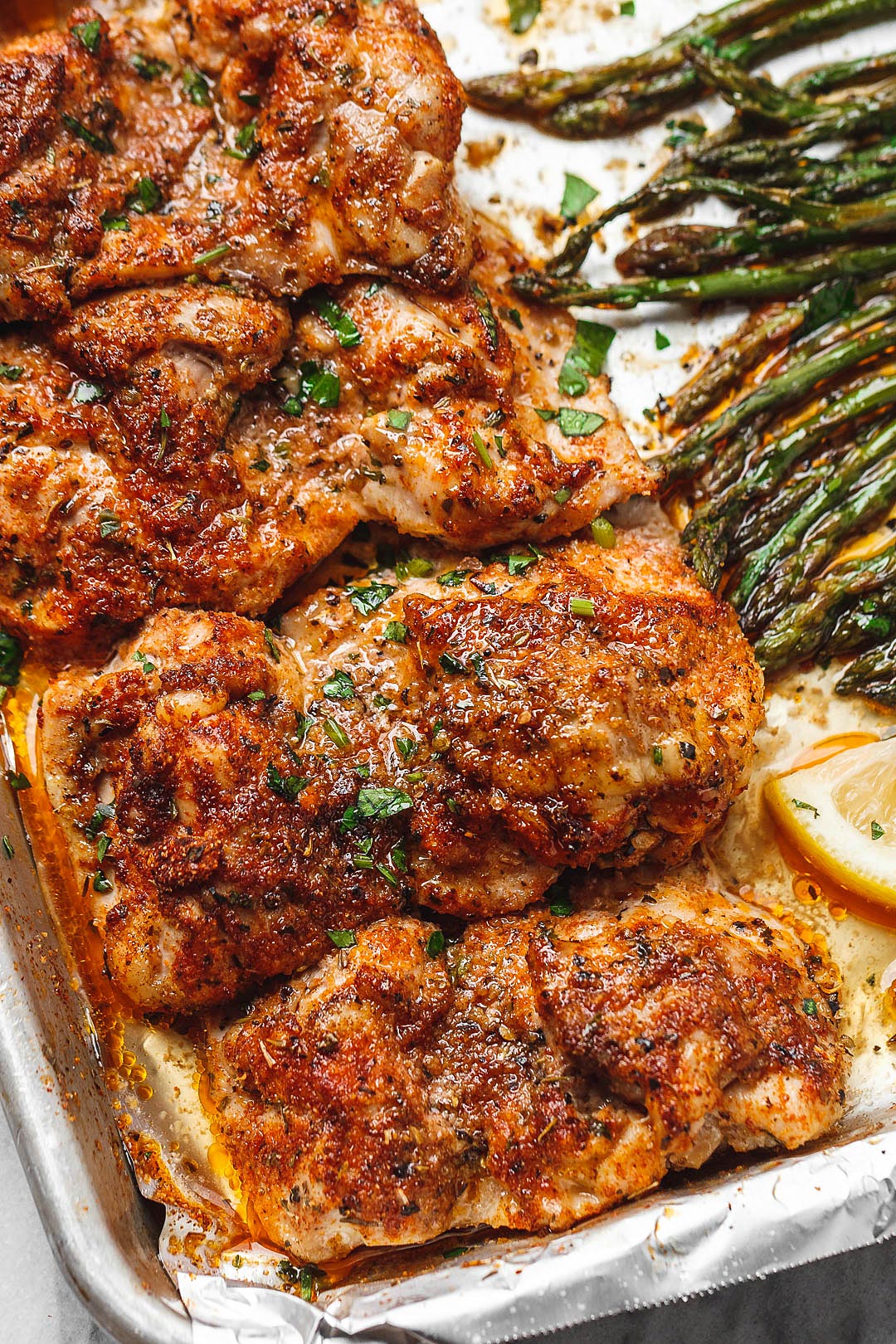
For juicy oven-baked chicken thighs, heat your oven to 400°F. Season the chicken, place it in a baking dish or on a sheet pan, and roast until the thickest part reaches 165°F. Bone-in thighs with skin often take 35 to 45 minutes, while boneless thighs may take 20 to 30 minutes, depending on their size.
In American home kitchens, oven-baked chicken thighs make an easy dinner for busy weeknights, Sunday family meals, and casual cookouts when the weather turns cold. They pair well with mashed potatoes, roasted vegetables, rice, biscuits, or a crisp green salad. You can make them with a short list of pantry staples and still get rich flavor without much fuss.
Chicken thighs contain more fat than chicken breasts, which helps keep the meat moist as it cooks. Bone-in cuts tend to need more time, while boneless thighs cook faster and are easy to slice for wraps, salads, and grain bowls. Skin-on thighs can develop a crisp, golden surface when you dry the skin well and leave space around each piece. The key is to match the cooking time to the cut and use a food thermometer rather than relying on color alone.
Chicken thighs are a useful choice when you want a filling meal without a long prep list. They have a rich taste and stay moist when cooked with care. The oven also lets you cook several portions at once, which helps when feeding a family or preparing meals for the week.
Another benefit is how well thighs take on seasoning. A simple mix of salt, black pepper, garlic powder, and paprika gives them a savory crust. Lemon juice and fresh herbs add a bright taste, while a little honey or brown sugar can create a sweet glaze. You can change the flavor without changing the basic cooking steps.
The best method depends on the cut you buy. Skin-on, bone-in thighs suit a classic roast with crisp skin. Boneless thighs work well for fast meals and dishes with sauce. Both can be tender, but they need different cooking times.
Source: static01.nyt.com
Good for weeknights
Most of the work involves seasoning the chicken and letting the oven do the cooking.
Easy to change
Use dry spices, fresh herbs, citrus, or a sauce to make a new meal from the same cut.
Works with many sides
Serve the chicken with potatoes, rice, green beans, carrots, corn, or a simple salad.
Bone-In or Boneless Chicken Thighs
Bone-in thighs take longer to cook because the bone affects how heat moves through the meat. They are a good pick for a classic roast and can be especially satisfying with crisp skin. Boneless thighs cook faster and are easier to cut into strips after baking.
Skin-on thighs are useful when a crisp outer layer is the goal. Skinless thighs are a good option when you prefer less fat on the surface or plan to use a sauce. Neither cut is always better; the right one depends on your meal and the time you have.
Choose bone-in
Use it for a slower roast with a hearty texture and crisp skin when skin-on.
Choose boneless
Use it for faster cooking, meal prep, wraps, and easy serving.
The Best Oven Temperature for Chicken Thigh Recipes
A temperature of 400°F is a practical starting point for most oven-baked chicken thighs. It cooks the meat at a steady pace and helps skin-on pieces brown. The exact time depends on the size of each thigh, whether it has a bone, and how cold the meat was when it went into the oven.
You can use other temperatures, too. A 375°F oven works well when the chicken shares a dish with vegetables or sauce that needs a gentler bake. A 425°F oven can help skin brown faster, but small pieces may finish sooner than expected. Whatever temperature you choose, check the chicken with a food thermometer.
Place the oven rack near the center for even heat. Preheat the oven before adding the chicken, and avoid crowding the pan. When pieces touch or overlap, steam can build up and slow browning.
Source: eatwell101.com
375°F
A useful choice for covered dishes, saucy recipes, or meals with vegetables that need more time.
400°F
A good all-purpose temperature for juicy meat and browned skin.
425°F
Can help crisp skin, but check smaller thighs early to avoid overcooking.
How Long Should Chicken Thighs Bake?
At 400°F, bone-in thighs often take about 35 to 45 minutes, while boneless thighs may take about 20 to 30 minutes. These are estimates, not guarantees. Large pieces, a crowded pan, or an oven that runs cool can add time.
Start checking boneless thighs near the lower end of the range. Insert a thermometer into the thickest part of the meat without touching the bone. The chicken is ready when it reaches at least 165°F. If it has not reached that temperature, return it to the oven and check again after a few minutes.
Small boneless thighs
Check early because they can finish faster than large pieces.
Large bone-in thighs
Allow extra time and check the thickest part of each piece.
Frozen thighs
Thaw safely before using a recipe designed for fresh or thawed chicken. Frozen chicken needs a different cooking plan and more time.
A Simple Recipe for Crispy Oven-Baked Chicken Thighs
This basic recipe uses common seasonings and needs little prep. It works best with bone-in, skin-on thighs, though you can use boneless pieces if you reduce the cooking time and check the temperature early. Serve the chicken as the main dish or add it to a plate of roasted vegetables.
For four servings, use about four medium chicken thighs. Adjust the amount of seasoning if your pieces are especially large or small. A rimmed sheet pan or shallow baking dish works well, as long as the pieces fit in one layer.
Source: sweetandsavorymeals.com
Ingredients
Four bone-in, skin-on chicken thighs; one tablespoon olive oil; one teaspoon kosher salt; half a teaspoon black pepper; one teaspoon garlic powder; one teaspoon paprika; and half a teaspoon dried thyme.
Equipment
An oven, a rimmed sheet pan or baking dish, paper towels, and a food thermometer.
Step 1: Heat the Oven and Prep the Chicken
Preheat the oven to 400°F. Remove the chicken from its package and pat each thigh dry with paper towels. Dry skin helps it brown better, while excess moisture can make the surface steam instead of crisp.
Keep the work area clean
Wash your hands after handling raw poultry, and clean any surface that comes into contact with raw juices.
Step 2: Add Oil and Seasoning
Place the thighs in a bowl or on the pan. Rub a thin coat of olive oil over the chicken, then add the salt, pepper, garlic powder, paprika, and thyme. Coat all sides, but focus on the skin if you are using skin-on thighs.
Build flavor
Add a little onion powder or dried rosemary if you like those flavors.
Step 3: Arrange the Thighs on the Pan
Set the thighs skin-side up in a single layer. Leave a little room between pieces so hot air can move around them. Do not cover the pan if crisp skin is your goal.
Use a rimmed pan
The rim helps contain fat and juices as the chicken cooks.
Step 4: Bake and Check the Temperature
Bake the thighs for about 35 to 45 minutes, checking the temperature near the end of the estimated cooking time. Insert the thermometer into the thickest part of the meat without touching the bone. Every piece must reach at least 165°F before you serve it.
Need more time?
Return the pan to the oven and check again after a few minutes if the meat has not reached 165°F.
Step 5: Rest and Serve
Let the chicken rest for about five minutes before serving. This short pause gives the juices time to settle and makes the meat easier to handle. Serve it with potatoes, steamed rice, green beans, or your favorite side dish.
Finish with fresh flavor
Add a squeeze of lemon or a sprinkle of chopped parsley just before serving.
Easy Flavor Ideas for Baked Chicken Thighs
Once you know the basic oven method, a few changes to the seasoning can give the meal a whole new taste. You do not need a new cooking technique for every recipe. Start with the same oil and salt base, then add herbs, spices, citrus, or a sauce that suits your meal.
For most dry rubs, season the chicken just before baking or let it sit in the fridge for a few hours. If you marinate it, keep the chicken refrigerated and discard any marinade that touched raw poultry unless you bring it to a full boil before using it as a sauce. Never leave raw chicken on the counter to marinate.
Source: theflavoursofkitchen.com
Garlic and lemon
Mix minced garlic, lemon zest, a little lemon juice, olive oil, black pepper, and parsley. Add most of the lemon juice in moderation so the surface does not become too wet.
Smoky paprika
Combine paprika, garlic powder, onion powder, black pepper, and a small pinch of cayenne for a warm, savory flavor.
Honey mustard
Mix Dijon mustard with a little honey and olive oil. Brush it on during the later part of cooking so the honey is less likely to burn.
Italian herb
Use dried oregano, basil, thyme, garlic, and black pepper. Pair it with roasted zucchini or potatoes.
Buffalo-style
Bake the thighs with a mild dry rub, then toss or brush them with prepared hot sauce and a little melted butter after cooking.
Garlic Lemon Chicken Thighs
Garlic and lemon give chicken a fresh, savory taste that works well for spring and summer meals. Mix olive oil, minced garlic, lemon zest, black pepper, and dried oregano. Coat the chicken and bake at 400°F until it reaches 165°F inside.
Add a small amount of lemon juice before baking, or squeeze fresh lemon over the chicken after it comes out of the oven. The second option gives a brighter finish and avoids adding too much liquid to the pan.
Serving idea
Pair the chicken with rice, roasted asparagus, green beans, or a cucumber salad.
Creamy Oven-Baked Chicken Thighs
A creamy version makes a cozy dinner with mashed potatoes or egg noodles. Season and brown the chicken in an oven-safe skillet if desired, then add a sauce made with broth, garlic, a modest amount of cream, and herbs. Transfer the skillet to the oven if the pan is oven-safe, or move everything to a baking dish.
Cream sauces may not brown like a dry roast, and they can thicken as they cook. Check that the chicken reaches 165°F in the thickest part. If the sauce becomes too thick, stir in a little warm broth after cooking.
Keep the sauce smooth
Avoid a hard boil, which can cause some cream sauces to separate. Add delicate dairy ingredients according to the recipe.
How to Bake Boneless Chicken Thighs in the Oven
Boneless chicken thighs are handy when dinner needs to be ready sooner. They have no bone to work around, so they are easy to portion and slice. They also fit well into meal prep because you can use them in salads, sandwiches, wraps, rice bowls, and pasta.
Heat the oven to 400°F and pat the thighs dry. Toss them with olive oil, salt, pepper, garlic powder, and paprika, then spread them in a single layer in a baking dish or on a sheet pan. Start checking after about 20 minutes, although larger pieces may need closer to 30 minutes or longer.
Use a thermometer to confirm that the thickest part reaches 165°F. Avoid cutting into every piece to check doneness because that releases juices and does not give a dependable temperature reading. If the pieces vary a lot in size, remove the smaller ones when ready and leave the larger ones in the oven.
Source: oursaltykitchen.com
For juicy meat
Use enough oil to coat the surface lightly, but do not drown the chicken in liquid.
For even cooking
Spread out the thighs and avoid stacking them.
For meal prep
Bake a plain or lightly seasoned batch, then use different sauces when serving to keep meals varied.
Can Boneless Thighs Get Crispy?
Boneless, skinless thighs can brown, but they will not have the same crisp skin as skin-on thighs. Dry the surface, use a lightly oiled pan, and leave space between pieces. A metal sheet pan can encourage browning when the chicken has room to roast rather than steam.
If you want more color, use the broiler briefly at the end only when needed. Stay beside the oven and watch closely because the surface can burn fast. Confirm that the chicken has reached 165°F before serving.
Avoid excess sauce at first
Bake the thighs with dry seasoning, then add a sauce near the end or after cooking.
How to Get Crispy Skin Without Dry Meat
Crispy chicken skin starts with a dry surface, enough heat, and space around each thigh. If the skin stays damp, it is more likely to soften than turn crisp. Patting the chicken dry and roasting it skin-side up are two simple ways to improve the result.
Do not pour a lot of broth or sauce over the skin before baking. Liquid in the pan is useful for a braise, but it can prevent the surface from crisping. For a saucy dish, you can roast the chicken first and add sauce later, or accept a softer skin as part of the recipe.
A thermometer helps prevent overcooking. Once the thickest part reaches 165°F, the chicken has met the recommended minimum safe temperature. If the skin needs more color, you can broil it briefly while watching it closely, provided the chicken is already cooked through or continues to be monitored until safe.
Source: i.pinimg.com
Dry the skin
Use paper towels before seasoning, especially when the chicken comes from a wet package.
Keep the thighs apart
Air needs room to circulate, so avoid piling the pieces together.
Use a shallow pan
A shallow pan lets the hot oven air reach more of the chicken surface.
Watch the broiler
A brief finish can add color, but a few extra minutes may burn spices or skin.
Should You Cover Chicken Thighs While Baking?
Leave skin-on thighs uncovered when crisp skin is the goal. Covering the pan traps steam and softens the surface. If you are making a covered casserole or a dish with plenty of sauce, covering may help the meat cook gently, but the texture will be different.
If a recipe calls for a covered bake followed by an uncovered finish, follow those steps. Removing the cover near the end can help the surface brown, but the thermometer still determines when the chicken is safe to eat.
Uncovered
Best for roasting and browning the skin.
Covered
Useful for moist, saucy dishes where crisp skin is not the main goal.
Common Mistakes and How to Fix Them
Most problems with oven-baked chicken thighs come from excess moisture, uneven piece sizes, too much heat for the sauce, or guessing when the meat is done. Small changes can make a clear difference without adding much work.
If the outside looks done but the center is still below 165°F, keep cooking. If the meat has reached a safe temperature but the skin looks pale, use a short broil to improve the color while watching it closely. Do not use skin color or clear juices as the only sign of doneness.
Source: munchkintime.com
The skin is soft
Pat the thighs dry, leave the pan uncovered, and avoid crowding. Too much sauce can also keep the skin from crisping.
The meat is dry
Check the temperature earlier and remove each piece when it reaches the safe minimum. Smaller thighs can finish well before larger ones.
The seasoning tastes weak
Season the whole surface, including the underside. Use enough salt for the amount of chicken, and add fresh lemon or herbs after baking if the flavor needs a lift.
The spices are burning
Reduce the heat if the recipe allows, move sugary glazes toward the end of cooking, and avoid placing the pan too close to the broiler.
The pan has too much liquid
The chicken may be releasing juices or the pan may be crowded. Use a larger pan next time, and spoon off excess liquid only if you can do so safely.
Why Are My Chicken Thighs Still Pink?
Chicken can retain some pink color even after it reaches a safe temperature. Color alone cannot confirm whether poultry is safe to eat. Measure the temperature in the thickest part of the meat and avoid touching the bone with the thermometer tip.
If the reading is below 165°F, keep cooking and check again. If the chicken reaches 165°F, it has met the USDA minimum safe temperature even if a little pink color remains. When you are unsure about the reading, take another measurement in a nearby thick part.
Use a clean thermometer
Wash it after contact with raw poultry and before using it on cooked food.
Best Side Dishes and Meal Prep Tips
Oven-baked chicken thighs pair well with sides that soak up their juices or balance their rich flavor. For a classic American dinner, serve them with mashed potatoes and green beans. Rice, roasted carrots, corn, broccoli, or a leafy salad also work well.
For a one-pan meal, choose vegetables that can cook at a similar rate. Potato chunks and carrots may need more time than small pieces of zucchini or asparagus, so cut them to suit the cooking time or add them in stages. Keep raw chicken separate from ready-to-eat foods while preparing the meal.
Chicken thighs also work well for meal prep. Cook enough for the next few meals, cool leftovers promptly, and store them in shallow, covered containers in the refrigerator. Reheat only the portion you need so the rest stays chilled.
Source: allrecipes.com
Potatoes
Roast small potato chunks on the same pan when they can cook through in the available time. Toss them with oil and seasonings first.
Green vegetables
Add broccoli, green beans, or asparagus at a suitable point so they do not become too soft.
Rice and grains
Serve the chicken over rice, quinoa, or another cooked grain with a spoonful of pan juices.
Fresh sides
A green salad, tomato salad, or sliced cucumber can balance a rich roast.
How to Store and Reheat Leftovers
Refrigerate cooked chicken within two hours of cooking, or within one hour when the room or outdoor temperature is above 90°F. Store it in a covered container at 40°F or below and use it within three to four days. Freeze it if you need to keep it longer.
For best texture, reheat the chicken in an oven set to about 325°F until the center reaches 165°F. Add a small splash of broth to boneless pieces if they seem dry, but keep in mind that extra liquid may soften crisp skin. A microwave can also work for a quick meal; cover the food and heat it evenly, checking the temperature before serving.
Cool and chill promptly
Divide a large batch into shallow containers so it cools more quickly.
Reheat safely
Bring leftovers to 165°F before eating, whether you use an oven or microwave.
Frequently Asked Questions
Q
What Is the Best Temperature for Oven-Baked Chicken Thighs?
A 400°F oven is a useful starting point for both bone-in and boneless chicken thighs. Bone-in thighs often need about 35 to 45 minutes, while boneless thighs may take about 20 to 30 minutes. The actual time depends on size and your oven, so use a food thermometer and cook every piece to at least 165°F.
Q
Is It Better to Bake Chicken Thighs at 350°F or 400°F?
Both temperatures can work. At 350°F, chicken generally takes longer and may brown more slowly. At 400°F, the skin can brown faster while the meat cooks. Choose the temperature that fits your recipe, and check the internal temperature rather than relying on time alone.
Q
Should I Use Foil When Baking Chicken Thighs?
You do not need foil for a standard roast. Leave skin-on thighs uncovered when you want crisp skin. Foil can help cover a saucy dish or reduce surface browning, but trapped steam will make the skin softer. Follow the recipe if it calls for covering the pan for part of the cooking time.
Q
How Do I Keep Boneless Chicken Thighs From Drying Out?
Use a little oil, avoid crowding the pan, and begin checking the temperature early. Boneless thighs can cook quickly, especially when the pieces are small. Remove each piece when it reaches 165°F, and let it rest briefly before slicing.
Q
Can I Bake Chicken Thighs Straight From Frozen?
Chicken can be cooked from frozen in the oven, but it takes longer and may cook unevenly if the pieces are frozen together. Follow a reliable recipe https://en.wikipedia.org/wiki/Recipewritten for frozen poultry, separate pieces when safe to do so, and verify that every thigh reaches 165°F. For more predictable timing and seasoning, thaw chicken in the refrigerator first. Never thaw raw chicken on the counter.
Q
How Do I Know When Chicken Thighs Are Fully Cooked?
Use a food thermometer inserted into the thickest part of the meat without touching the bone. Chicken thighs must reach at least 165°F for safety. Do not rely on browned skin, cooking time, or the color of the juices as the only test.
Q
Can I Prepare Chicken Thighs Ahead of Time?
Yes. You can season the chicken and keep it covered in the refrigerator before baking, or cook a batch ahead for later meals. Keep raw poultry refrigerated while marinating, and cook it within a safe storage period. Store cooked leftovers in the refrigerator for three to four days or freeze them for longer storage.
✦ Wrapping Up
Conclusion
Oven-baked chicken thighs are simple to make, easy to season, and suited to many weeknight meals. A 400°F oven works well for a classic roast, while garlic, lemon, paprika, herbs, and sauces let you change the flavor without learning a new method. Bone-in thighs offer a hearty roast, and boneless thighs save time when you need dinner on the table sooner.
The most useful habits are also the simplest: dry the chicken before seasoning, give each piece room on the pan, and use a thermometer to check doneness. Cook the thickest part to at least 165°F, rest the meat briefly, and refrigerate leftovers promptly. These steps help you serve chicken that is flavorful, moist, and safe to eat.
💡 Key Takeaway
For your next dinner, season four chicken thighs with olive oil, garlic powder, paprika, salt, and pepper. Roast them at 400°F, check the thickest part with a food thermometer, and serve them with potatoes or green vegetables once every piece reaches 165°F.