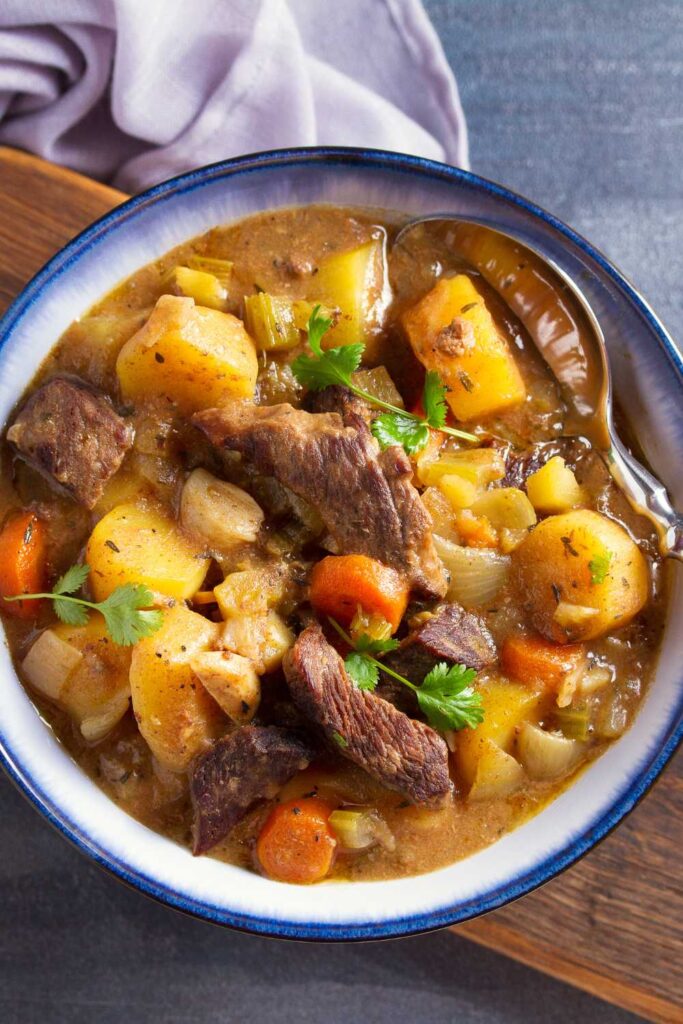
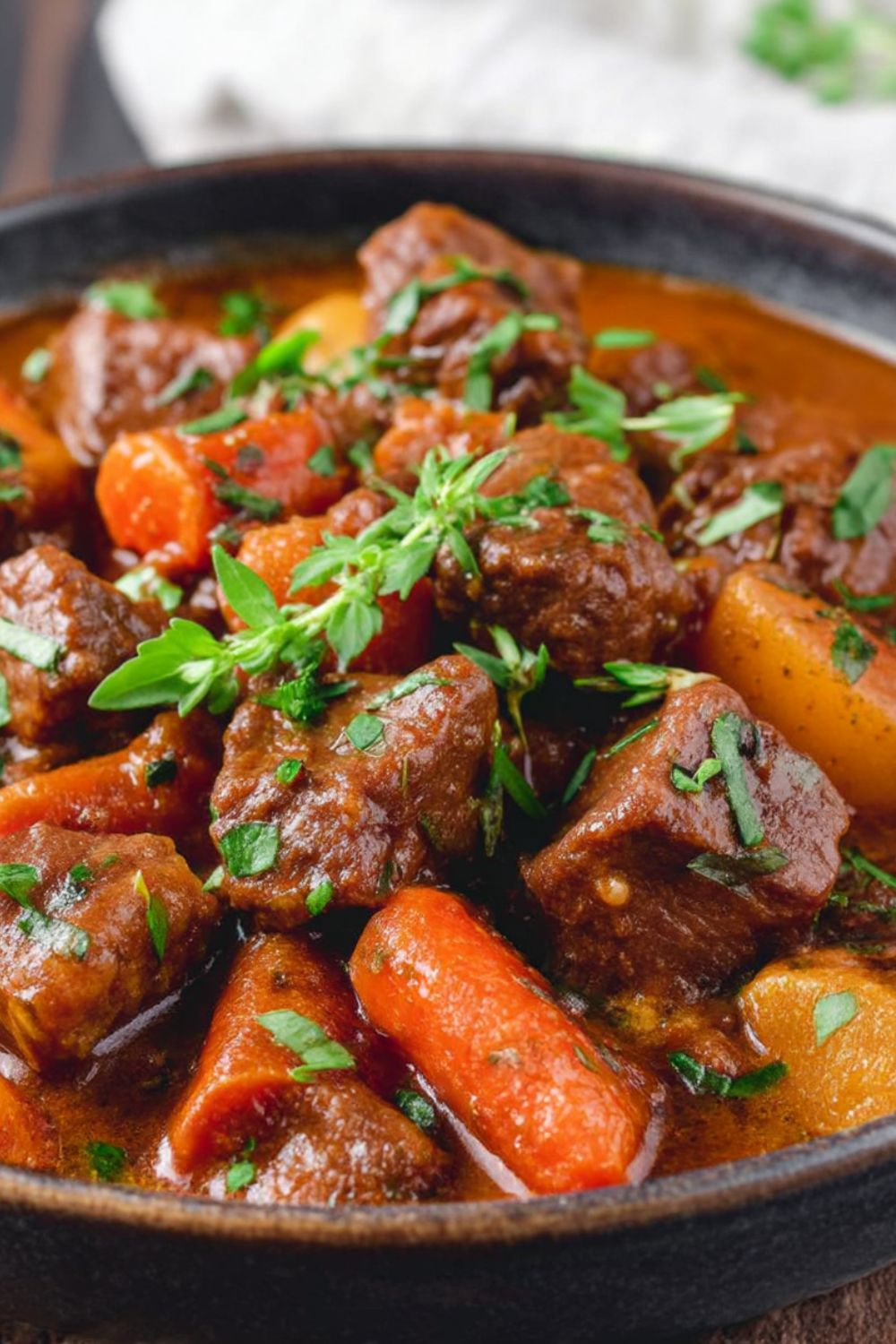
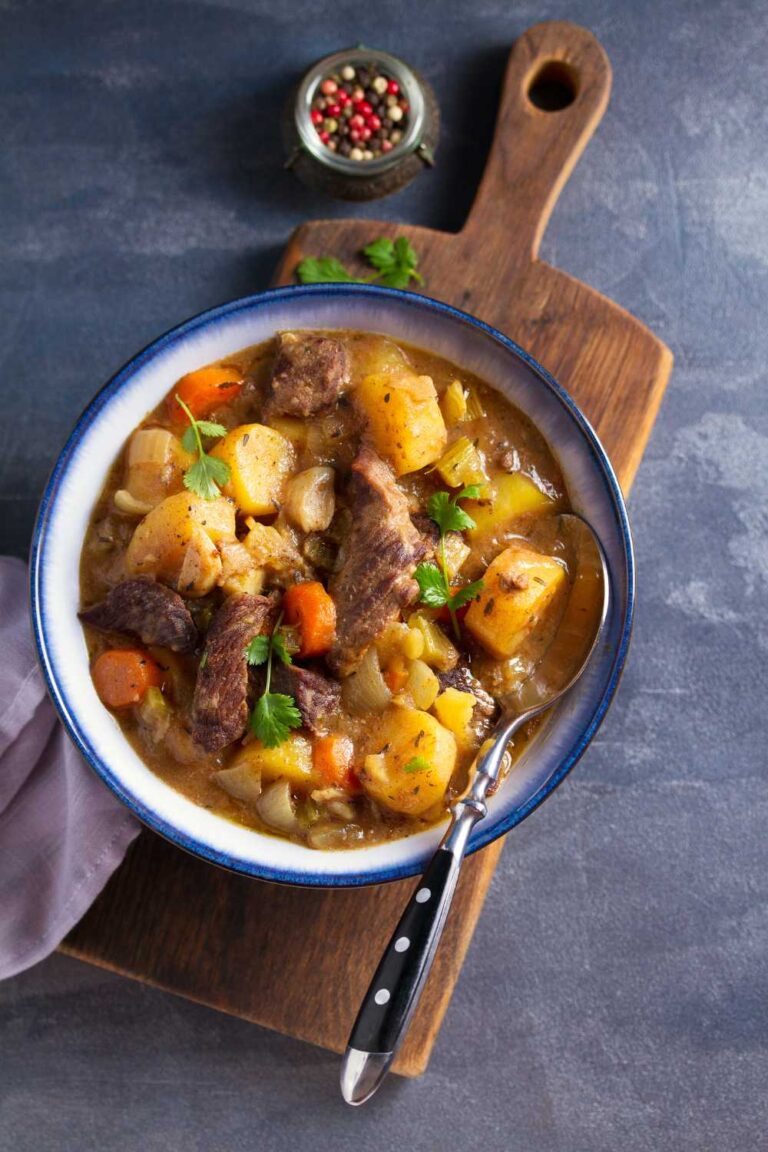
A hearty beef stew inspired by the bold flavors linked with Bobby Flay can be made with browned beef, onions, carrots, potatoes, broth, tomato paste, garlic, and herbs. This is an independently developed home-style recipe, not a verified official Bobby Flay recipe.
Across the United States, beef stew is a welcome sight on chilly fall evenings, cold winter days, and busy Sunday afternoons. A pot of tender beef, soft potatoes, sweet carrots, and thick brown gravy can turn basic pantry items into a filling family meal. The key is to brown the beef well, build flavor in layers, and give the meat enough time to become tender.
People searching for a beef stew recipe Bobby Flay style often want a deeper, bolder flavor than a plain meat-and-potato stew. This home recipe uses a rich beef broth, tomato paste, garlic, black pepper, thyme, and a splash of red wine if desired. It draws on familiar American stew methods while keeping the ingredients easy to find at a regular US grocery store. It should not be mistaken for a tested or officially published recipe by Bobby Flay.
A good beef stew has more going on than chunks of meat floating in broth. Its flavor starts with the browned beef, then grows as onions, garlic, tomato paste, herbs, and stock cook together. The result should taste savory and full, with a slight sweetness from the vegetables and enough acidity to keep the broth from feeling heavy.
For this home-style version, the goal is a hearty American beef stew with a bolder flavor profile. Black pepper, thyme, garlic, and tomato paste add depth without hiding the taste of the beef. Red wine is optional. If you prefer not to cook with wine, use extra beef broth and a small splash of Worcestershire sauce instead.
Bobby Flay is known for cooking that often draws on strong seasoning and layered flavors, but that general association does not establish the ingredients or method of a specific recipe. This version uses those broad flavor principles as inspiration rather than claiming to reproduce a verified dish from his kitchen.
Source: forknbite.com
Deep beef flavor
Brown the meat well and use a good-quality beef broth to create a rich base.
Balanced seasoning
Use garlic, black pepper, thyme, and tomato paste for savory depth, then taste before adding more salt.
Tender vegetables
Cut carrots and potatoes into even pieces so they cook at a similar rate.
The Best Cut of Beef for Stew
Beef chuck is a dependable choice because it contains connective tissue that softens during slow cooking. As the stew simmers, the meat becomes easier to cut with a spoon and gives the broth a fuller texture. Look for chuck roast at a US grocery store, then cut it into roughly 1½-inch cubes and trim away any very large, hard pieces of fat.
Beef chuck
Best all-around option for a rich, tender stew.
Stew meat
Convenient when time is short, although the cut and size can vary from package to package.
Lean steak cuts
Usually less suited to long simmering because they can turn dry or firm before the broth develops the same depth.
Ingredients for a Hearty Beef Stew
This recipe makes about six servings and uses common ingredients from an American supermarket. You will need a large Dutch oven or heavy pot with a lid. A heavy pot holds heat well and helps the beef cook at a steady temperature, although a sturdy stockpot can also work.
Measure the ingredients before you begin. The first stage moves quickly once the pot is hot, and having the onions, garlic, broth, and seasonings ready helps prevent the tomato paste or garlic from burning.
2 tablespoons neutral cooking oil and ¼ cup all-purpose flour, divided as needed for coating or thickening.
Vegetables
1 large yellow onion, 3 carrots, 2 celery stalks, 1½ pounds Yukon Gold or red potatoes, and 4 garlic cloves.
Flavor base
2 tablespoons tomato paste, 4 cups beef broth, 1 cup dry red wine if desired, 1 tablespoon Worcestershire sauce, 1 teaspoon dried thyme, and 1 bay leaf.
Seasoning
Kosher salt, freshly ground black pepper, and chopped parsley for serving.
Easy Ingredient Swaps
You can replace the red wine with extra beef broth if you prefer a wine-free stew. A small splash of balsamic vinegar near the end can add brightness, but start with a little and taste before adding more. Use low-sodium broth if you want greater control over the salt, especially if your Worcestershire sauce is already salty.
Yukon Gold potatoes hold their shape fairly well and have a creamy texture. Russet potatoes also work, though they tend to break down more during cooking and can make the broth thicker. For a gluten-free version, skip the flour coating and thicken the stew with a cornstarch slurry made with cold water.
For more vegetables
Add mushrooms or peas. Stir peas in near the end so they keep their color and shape.
For extra depth
Add a little more tomato paste or Worcestershire sauce, then taste before changing the salt.
How to Make Bobby Flay-Inspired Beef Stew
Plan for about 25 to 35 minutes of preparation and roughly 2 to 3 hours of cooking, depending on the beef and the size of the pieces. These times are estimates, not a guarantee. The stew is ready when the beef is fork-tender and the vegetables are cooked through without turning to mush.
Keep the heat under control throughout the process. A hard, rolling boil can make the meat tighten and break apart unevenly, while a gentle simmer gives the connective tissue time to soften. Check the pot now and then, stir the bottom, and add a little broth or water if the liquid falls too low.
Source: urbanorganic.com
Step 1: Dry and season the beef
Pat the beef cubes dry with paper towels. Season with salt and black pepper. Toss with a light coating of flour if you want a slightly thicker stew, shaking off the excess.
Step 2: Brown the meat in batches
Heat the oil in a Dutch oven over medium-high heat. Add enough beef to form a single layer with space between pieces. Brown the cubes on several sides, then transfer them to a plate. Repeat with the remaining beef, adding a little oil if needed.
Step 3: Cook the onion and celery
Lower the heat to medium. Add the onion and celery to the same pot. Stir for about 4 to 5 minutes, scraping up the browned bits. Add the garlic and cook for about 30 seconds, just until fragrant.
Step 4: Toast the tomato paste
Stir in the tomato paste and cook for 1 to 2 minutes. It should darken slightly and coat the vegetables. This short step helps build a deeper flavor before the liquid goes in.
Step 5: Deglaze the pot
If using red wine, pour it in slowly and scrape the bottom with a wooden spoon. Let it simmer for a few minutes. If you are skipping wine, use a portion of the beef broth and scrape up the browned bits in the same way.
Step 6: Add broth and herbs
Return the beef and any juices to the pot. Add the beef broth, Worcestershire sauce, thyme, and bay leaf. The liquid should mostly cover the beef. Add a little more broth or water if needed.
Step 7: Simmer until the beef softens
Bring the liquid to a gentle simmer, then lower the heat and cover the pot. Cook for about 1½ hours before checking the beef. Continue cooking until it starts to become tender.
Step 8: Add the carrots and potatoes
Stir in the carrots and potatoes. Cover and simmer for another 30 to 45 minutes, or until the vegetables are tender and the beef yields easily to a fork. If the meat still feels tough, give it more time rather than turning up the heat.
Step 9: Adjust the broth
Remove the bay leaf. Taste the stew and add salt, pepper, or a small splash of Worcestershire sauce if needed. If the broth is too thin, simmer uncovered for a few minutes or use the thickening method below.
Step 10: Rest and serve
Turn off the heat and let the stew rest for about 10 minutes. Sprinkle with chopped parsley if desired. Serve hot in wide bowls with bread, biscuits, or a simple green salad.
How to Know When the Stew Is Ready
The beef should yield easily when pressed with a fork, and a piece should break apart with gentle pressure. Carrots should be soft enough to bite but not disintegrating. The broth should taste rounded and savory, without a strong raw tomato flavor or a watery finish.
If the meat remains tough after two hours, that does not always mean something went wrong. Some pieces need longer for their connective tissue to soften. Keep the stew at a gentle simmer and check it every 20 to 30 minutes until the texture improves.
Beef is tough
Continue cooking gently with enough liquid in the pot.
Vegetables are soft but beef is firm
Lift out the vegetables with a slotted spoon and keep cooking the beef, then return the vegetables near the end.
How to Get Thick, Rich Beef Stew Gravy
The broth should cling lightly to the beef and vegetables without feeling pasty. Start by checking how much liquid remains. If the flavor is good but the broth is thin, simmer the stew uncovered for 5 to 15 minutes, stirring now and then so the bottom does not scorch.
For more control, use a cornstarch slurry. Mix 1 tablespoon of cornstarch with 1 tablespoon of cold water until smooth. Stir a little into the simmering stew, wait a minute or two, and add more only if needed. The broth will thicken as it heats.
Source: hungarianchef.com
For a classic, slightly thick gravy
Lightly coat the raw beef in flour before browning, then allow the broth to simmer slowly.
For a quick fix
Use a small cornstarch slurry and add it gradually to avoid an overly thick texture.
For a deeper flavor
Let the liquid reduce gently instead of adding a large amount of flour at the end.
Why Your Stew May Be Too Thin
Too much broth, a tight-fitting lid, or vegetables that release moisture can leave the stew thinner than expected. Remove the lid and let some liquid evaporate. Avoid adding dry flour straight into the hot pot because it can form lumps. If the broth tastes weak, reducing it may improve both the flavor and texture.
Avoid over-thickening
The stew will thicken slightly as it rests, so stop when the broth lightly coats a spoon.
Common Beef Stew Mistakes to Avoid
Most disappointing beef stews come from a few simple problems: pale meat, too much heat, poorly timed vegetables, or seasoning that never gets adjusted. You can prevent many of these issues by watching the pot instead of relying only on the clock.
A heavy pot and a low simmer do much of the work for you. Keep the lid on for most of the cooking time to limit evaporation, but uncover the pot near the end if the broth needs to reduce. Taste before serving because the broth can change as it cooks down.
Source: i.pinimg.com
Crowding the pot
Too much meat at once releases moisture and prevents good browning. Work in batches instead.
Boiling too hard
A strong boil can make the meat cook unevenly and break the vegetables apart. Lower the heat until you see only gentle bubbles.
Adding every vegetable at the start
Potatoes and carrots may become too soft before the beef is ready. Add them after the meat has begun to tenderize.
Adding too much salt early
The broth can reduce as the stew cooks. Season in stages and make the final adjustment near the end.
Using the wrong cut
Very lean beef may not turn as tender or provide the same rich texture as chuck during a long simmer.
Can You Make This Recipe in a Slow Cooker?
Yes. Brown the beef in a skillet first, then cook the onion, garlic, and tomato paste briefly to build flavor. Transfer everything to the slow cooker with the broth, seasonings, and herbs. Follow the appliance maker’s directions, and add the potatoes and carrots at a point that allows them to finish tender without falling apart.
Slow cookers vary in heat and timing, so use the appliance manual as your guide. Check that the beef is tender before serving, and thicken the liquid near the end if needed. For food safety, do not use a slow cooker to reheat cold leftovers; reheat them to 165°F first.
For a richer result
Brown the beef before adding it to the slow cooker rather than skipping this step.
What to Serve With Beef Stew
This stew can stand alone as a full meal, but a simple side makes dinner feel more complete. Choose something that soaks up the gravy or adds a fresh contrast to the rich beef. In many American homes, crusty bread, biscuits, or a crisp salad are easy choices.
If the stew already contains plenty of potatoes and carrots, you may not need another starch. A green vegetable or light salad can balance the meal without adding much work. For a casual family dinner, place the pot on the table and let everyone serve their own bowl.
Source: i.pinimg.com
Crusty bread
Use it to soak up the broth and catch the last bits of gravy.
Buttermilk biscuits
Their soft center and golden top pair well with a rich beef stew.
Green salad
Lettuce, cucumber, and a light vinaigrette add a fresh contrast.
Steamed green beans
A simple vegetable side adds color and keeps the meal from feeling too heavy.
Simple Ways to Change the Flavor
You can adjust the stew to suit your household without changing the core method. Add mushrooms for an earthy taste, peas for a touch of sweetness, or a pinch of smoked paprika for gentle warmth. Make one change at a time and taste as you go, so the beef remains the main flavor.
For a brighter finish
Add a small splash of vinegar or a little parsley just before serving.
For a richer bowl
Serve with a spoonful of mashed potatoes or a slice of toasted bread.
How to Store and Reheat Leftover Stew
Let the stew cool slightly, then place it in shallow, covered containers and refrigerate it promptly. Do not leave cooked beef stew at room temperature for more than two hours, or more than one hour when the temperature is above 90°F. Refrigerate at 40°F or below and use the leftovers within 3 to 4 days.
For longer storage, freeze the stew in meal-size portions. Leave a little space at the top of each container because the liquid expands as it freezes. The potatoes may become softer after thawing, but the broth and beef should still make a satisfying meal.
Source: delishsides.com
Refrigerator
Store in sealed containers for 3 to 4 days.
Freezer
Freeze in airtight, freezer-safe containers. For best quality, use within about 2 to 3 months.
Reheating on the stove
Heat over medium-low heat, stirring now and then, until the stew reaches 165°F throughout.
Reheating in a microwave
Cover loosely, stir partway through, and check several spots with a food thermometer to confirm it reaches 165°F.
Can You Make Beef Stew Ahead?
Yes. Beef stew is well suited to advance preparation because the flavors can blend during chilling. Cool and refrigerate it promptly, then reheat it thoroughly the next day. If the broth has thickened in the fridge, add a small splash of water or broth while reheating and taste again before serving.
Keep the texture in mind
If making it ahead, cook the potatoes until just tender rather than very soft, since reheating can soften them further.
Frequently Asked Questions
Q
Is this the official Bobby Flay beef stew recipe?
No. This is an independently written, Bobby Flay-inspired home recipe. It uses familiar beef stew methods and bold seasonings, but it has not been verified as an official recipe published or endorsed by Bobby Flay. If you need his exact version, check his official recipe sources and compare the ingredient list and method.
Q
How long does beef stew take to cook?
Plan for roughly 2 to 3 hours of stovetop cooking after preparation, depending on the cut and size of the beef. Start checking the meat after about 1½ hours of simmering. It is ready when a fork slides in easily and the beef breaks apart with gentle pressure.
Q
Why is my beef stew meat still tough?
The beef may need more time for its connective tissue to soften. Keep the pot at a gentle simmer and make sure there is enough liquid. Check again every 20 to 30 minutes. Raising the heat to a hard boil is not a reliable shortcut to tender beef.
Q
Can I make beef stew without red wine?
Yes. Replace the wine with additional beef broth. You can add a small splash of Worcestershire sauce for depth, then taste before adding more salt. Wine is optional in this recipe and is not required for a rich, flavorful result.
Q
What is the best way to thicken beef stew?
First, simmer the stew uncovered to reduce excess liquid. If it still needs thickening, mix 1 tablespoon of cornstarch with 1 tablespoon of cold water and stir a little of the slurry into the simmering broth. Wait a minute or two before adding more, since the stew will thicken as it heats.
Q
What temperature should leftover beef stew reach?
Reheat leftovers to 165°F throughout. Stir the stew during reheating so cold spots do not remain, and check the temperature in more than one place if using a microwave. Refrigerate leftovers promptly and use them within 3 to 4 days.
✦ Wrapping Up
Conclusion
A hearty beef stew does not need a long list of costly ingredients. Beef chuck, onions, carrots, potatoes, garlic, broth, and a few herbs can create a rich meal when you give each step the time it needs. Browning the beef first, cooking at a gentle simmer, and adding the vegetables at the right stage make the biggest difference to the final texture.
This Bobby Flay-inspired version is designed for home cooks who want bold, savory flavor without a complicated process. It is not presented as the chef’s official recipe, but it gives you a practical starting point for a cozy American dinner. Once you have made the basic version, you can adjust the herbs, broth, and vegetables to fit your taste.
💡 Key Takeaway
Start with beef chuck, brown it in batches, and simmer it gently until fork-tender. Add the potatoes and carrots later, taste the broth before serving, and refrigerate leftovers within two hours.