
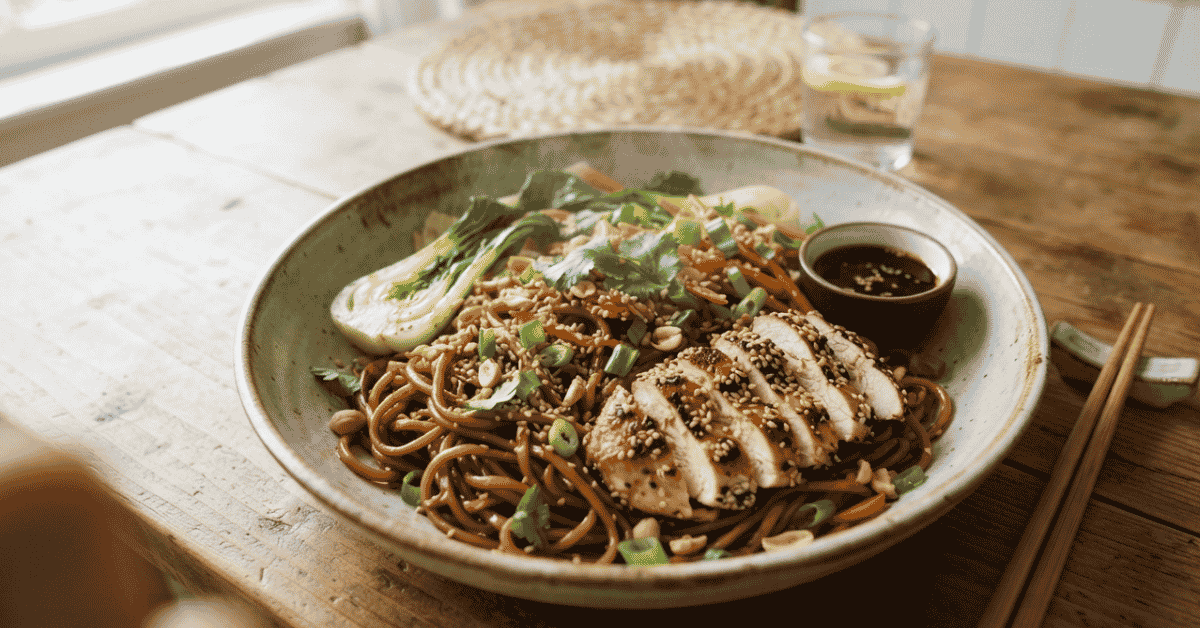
Asian Chicken and Noodles Recipe brings tender chicken, soft noodles, crisp veggies, and a savory sauce into one fast, cozy weeknight meal.
Asian Chicken and Noodles Recipe nights feel easy to love. Warm sauce, soft noodles, and seared chicken fill the kitchen fast. I like meals that feel rich without much fuss. This one gives that kind of comfort. You can tweak the heat, veggies, and noodle type. Keep reading for the method, small tricks, and mistakes I avoid.
Can an Asian Chicken and Noodles Recipe Be This Easy?
An Asian Chicken and Noodles Recipe once felt complicated. I pictured ten sauces and a sink full of pans.
Then I tried a much simpler version. The pan hissed as thin chicken strips hit hot oil.
Garlic gave off that warm, sharp smell I love. Steam fogged the edge of my glasses.
The sauce took less time than expected. Soy sauce, a touch of sweet, and sesame oil did enough.
The noodles soaked up flavor very fast. I guess that was the part I had missed.
This meal does not need a huge ingredient list. Good balance matters more than extra bottles.
Salt, sweet, heat, and tang can do plenty.
Life Before I Found This
My old noodle dinners were usually a mess. The noodles stuck while the chicken turned dry.
Sauce sat at the bottom of the bowl. The top tasted plain and oddly dull.
I could hear the pot boil too hard. Steam made the whole kitchen feel damp.
Sometimes the noodles became soft before dinner began. Other nights, the chicken needed five more minutes.
Nothing seemed to finish at once. That timing drove me crazy.
I also used too much sauce. The dish became salty instead of rich.
Once I changed the order, things improved fast. Prep first, then cook, then toss.
That simple flow made the meal feel calm.
Why This Matters Right Now
Fast meals matter on busy weeknights. Most of us want less cleanup and fewer steps.
This recipe fits that need quite well. Chicken adds protein, while noodles make the meal filling.
Veggies can bring crunch, color, and fresh taste. I often use bell pepper, carrot, or green onion.
The whole dish can cook in one main pan. That means fewer dirty dishes after dinner.
It also works well with pantry basics. Soy sauce, garlic, oil, and noodles cover most needs.
I like that kind of meal planning. It feels flexible instead of strict.
Maybe that is why noodle bowls stay in my weekly rotation.
They are fast, warm, and hard to get bored with.
The First Big Lesson
The first big lesson was about chicken size. Thin, even strips cook much better here.
I used to cut random chunks. Some turned dry while thick ones stayed pale inside.
Now I slice across the grain. I keep each strip close in size.
That helps the chicken brown fast. It also lets sauce coat more surface.
I season lightly before cooking. Soy sauce later can add plenty of salt.
High heat works well at first. The chicken should sizzle instead of steam.
I avoid crowding the pan too much. Crowded chicken releases water and loses that browned edge.
Once cooked, I move it out briefly. Then I cook vegetables in the same pan.
That keeps the meat tender. It also gives the veggies space to stay crisp.
Simple timing makes a huge difference.
Small Tactics That Actually Work
I prep every ingredient before turning on heat. Noodle dishes move fast once cooking starts.
The sauce goes into a small bowl first. I mix soy sauce, honey, sesame oil, and a little vinegar.
Garlic and ginger go in next. A small spoon of chili sauce adds heat.
I cook noodles just shy of fully done. They finish in the pan with sauce.
That helps them stay firm. Soft noodles can turn mushy after one extra minute.
I also save a little noodle water. A splash can loosen thick sauce.
For vegetables, I keep pieces thin. They cook fast but still hold some bite.
I add green onions near the end. Their fresh smell stays brighter that way.
Sesame seeds come last. They add a tiny nutty crunch without much work.
A Strange Detail I Noticed
One strange detail surprised me after many batches. Cold noodles can sometimes toss better.
Fresh, hot noodles tend to stick more. Noodles cooled for a few minutes feel easier to separate.
I noticed this by accident one night. Dinner got delayed while my phone rang.
The noodles sat near the stove. Their steam faded, and the surface felt less sticky.
Once tossed in sauce, they stayed apart better. I guess a short rest can help.
That does not mean chilling them fully. Just avoid rushing them straight from boiling water.
A quick rinse may help some noodle types too. I use it only when the package suits that method.
Tiny texture changes matter here.
Style Comparison & Data
Different noodle choices change the whole dish. I pick based on texture, speed, and sauce grip.
| Noodle Type | Best Feature | Texture |
|---|---|---|
| Lo mein noodles | Great sauce grip | Soft and chewy |
| Rice noodles | Light and quick | Smooth and tender |
| Udon noodles | Thick bite | Soft and springy |
| Ramen noodles | Fast cooking | Thin and bouncy |
| Spaghetti | Easy pantry swap | Firm and familiar |
I usually choose lo mein or ramen. Both hold savory sauce well.
Rice noodles feel lighter. Udon makes the meal feel much more filling.
Spaghetti works too when that is all I have.
Non-Obvious Gains
This Asian Chicken and Noodles Recipe offers more than speed. Some gains become clear after a few tries.
-
Easy leftovers: The flavors often taste deeper next day.
-
Flexible veggies: Small fridge scraps can fit quite well.
-
Simple portions: Add more noodles for bigger appetites.
-
Better control: Homemade sauce lets me manage salt and heat.
-
Less waste: Leftover chicken can work in later batches.
I value the fridge-cleaning part most. Half a pepper can find a home here.
So can cabbage, carrots, peas, or broccoli. The recipe rarely feels too strict.
That makes weeknight cooking less stressful.
Myths vs. My Reality
I used to think noodle dishes needed lots of oil. But then a smaller amount worked fine.
I used to think more soy sauce meant more flavor. But then the dish became far too salty.
I used to think veggies should cook until soft. But then crisp pieces made the bowl much better.
I used to think chicken needed long marinating. But then thin strips took on sauce quickly.
I also thought takeout-style flavor needed rare ingredients. That idea faded after a few simple batches.
Garlic, ginger, soy sauce, sweetener, and sesame oil can go far.
Now I keep the sauce short and balanced. I taste before adding extra salt.
That habit keeps the meal bright instead of heavy.
Essential Principles for Mastery
My simple framework has four parts: prep, sear, toss, and finish.
Prep means cutting everything before heat begins. Chicken strips, vegetables, sauce, and noodles should all be ready.
Sear means giving chicken room to brown. Hot pan contact adds far more flavor than slow steaming.
Toss means adding noodles only after sauce enters. I use tongs so strands get coated well.
A little noodle water can help. It lets sauce spread without making the dish oily.
Finish means adding fresh parts last. Green onion, sesame seeds, lime, or chili can brighten the bowl.
I also taste for balance. Too salty gets a touch of sweet or acid.
Too sweet gets more vinegar or chili. Too dry gets noodle water.
That small taste check matters most. I never trust the first sauce mix blindly.
FAQs About Asian Chicken and Noodles Recipe
What noodles work best for Asian Chicken and Noodles Recipe?
Lo mein, ramen, udon, and rice noodles all work well. I like lo mein for chewy texture and good sauce grip. Spaghetti also works in a pinch if you need an easy pantry option.
Can I make this recipe less spicy?
Yes, just skip chili sauce or reduce it. I often serve extra chili on the side instead. That keeps the base mild while giving each person control over heat at the table.
Can I use chicken thighs instead of breasts?
Yes, chicken thighs work very well. They stay juicy and have a richer taste. I still slice them thin so they cook fast and evenly. Remove excess fat if you want a lighter finished dish.
Which vegetables can I add?
Bell peppers, carrots, cabbage, broccoli, snap peas, and green onions all work. I cut them thin so they cook fast. I also mix firm and soft vegetables for better texture.
Can I make Asian Chicken and Noodles Recipe ahead?
Yes, though I prefer it fresh. You can prep sauce, slice chicken, and cut vegetables early. Cooked leftovers also keep well for short-term fridge storage and reheat best with a splash of water.
My Final Takeaway
Asian Chicken and Noodles Recipe nights feel easy now. I keep the sauce simple and the pan hot.
Thin chicken strips cook fast without drying out. Firm noodles hold sauce better than soft ones.
I add crisp veggies for color and bite. Then I finish with green onion and sesame seeds.
Maybe that is the whole charm here. Simple parts, good timing, and one warm bowl can feel like plenty.