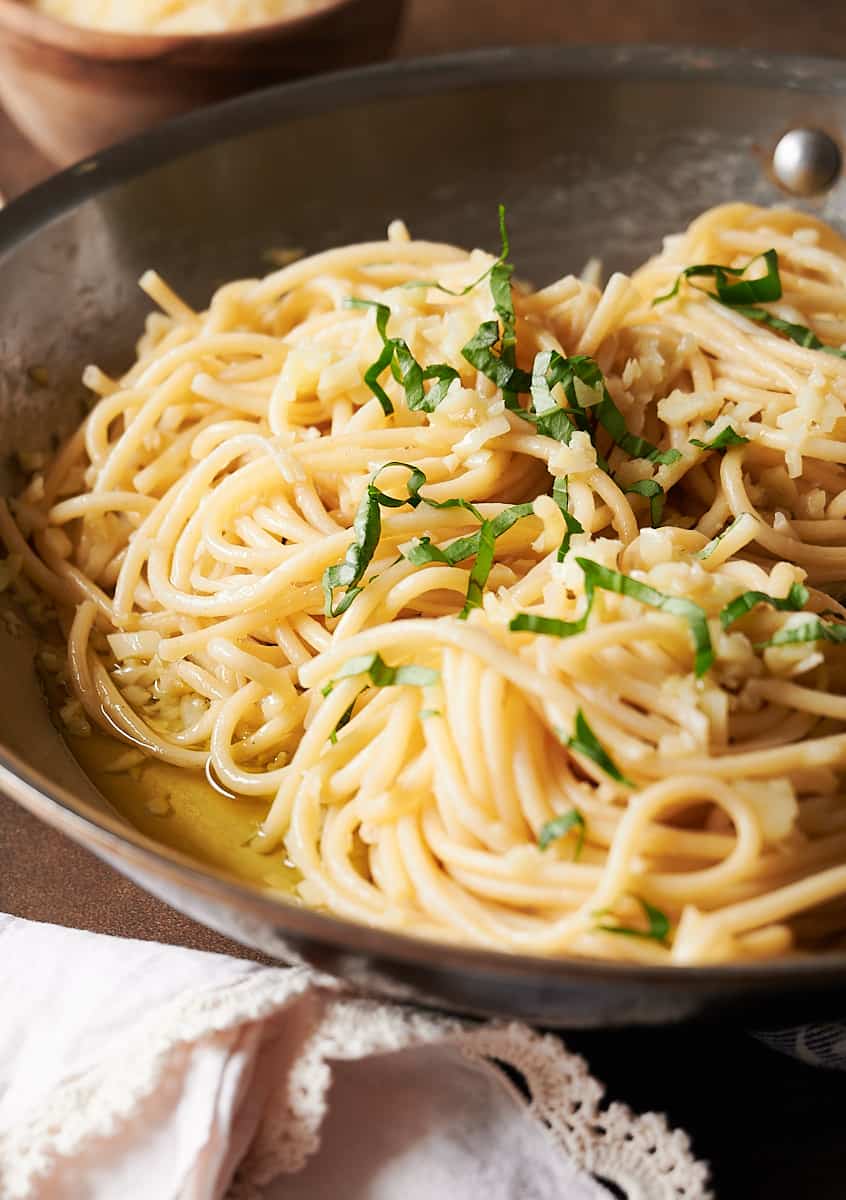
Brown butter garlic sauce for pasta is a simple sauce made with butter, fresh garlic, salt, black pepper, and a splash of pasta water. Cook the butter until its milk solids turn golden brown, add the garlic, and toss with hot pasta. Parmesan, lemon juice, and fresh herbs are optional additions.
A bowl of pasta with brown butter garlic sauce can turn an ordinary weeknight dinner into a cozy meal. In American home kitchens, this sauce works well with spaghetti, fettuccine, linguine, and short pasta shapes. You need only a few basic items, and the whole sauce comes together while the pasta cooks.
The main trick is to watch the butter closely. As it heats, the milk solids settle and turn brown, giving the sauce a nutty smell and a rich taste. Fresh garlic adds a savory note, while a little pasta water helps the butter cling to each strand. Cook the garlic with care, since burnt garlic can make the whole dish taste bitter.
Brown butter garlic sauce is a warm butter sauce made by heating butter until its milk solids turn golden brown, then adding garlic and seasoning. The heat changes the butter’s flavor. Instead of tasting only creamy and mild, it develops toasted, nutty notes that pair well with pasta.
This sauce is often called beurre noisette, a French term for browned butter. It does not require cream or flour. Pasta water can provide the moisture needed to turn the melted butter into a sauce that clings to noodles.
The garlic adds a strong savory taste, while salt and black pepper bring the other flavors into balance. Parmesan gives the dish a salty, cheesy finish, but it is not required for a good sauce.
Brown butter garlic sauce differs from plain garlic butter because the butter itself is cooked until its milk solids brown. It also differs from a cream sauce, which usually has a thicker, softer texture and a richer dairy taste.
Source: fridaysfeast.com
Flavor
Nutty, rich, savory, and lightly toasted, with the sharp aroma of fresh garlic.
Texture
Light and glossy when mixed with pasta water, rather than thick like an Alfredo sauce.
Best use
A quick coating sauce for long noodles, filled pasta, gnocchi, and simple vegetable pasta dishes.
Why Browned Butter Tastes Different
Butter contains fat, water, and milk solids. As the water cooks away, the milk solids can toast and develop a deeper flavor. This browning process creates the nutty scent that makes the sauce stand out.
The change happens quickly near the end of cooking. Pale yellow butter can become golden, then brown, in a short time. Dark brown or black flecks and a harsh smell can signal that the butter has burned.
Ingredients for Brown Butter Garlic Pasta Sauce
You can make a basic sauce with butter, garlic, salt, and pepper. Pasta water helps bring the ingredients together, while cheese and herbs add more flavor. The amounts below make enough sauce for about 8 ounces of dry pasta, which usually serves two to three people depending on portion size and side dishes.
Use fresh garlic for the clearest garlic flavor. Mince it finely so it spreads through the sauce, but do not add it too early. Garlic cooks faster than butter browns, so timing matters.
Unsalted butter gives you more control over seasoning. Salted butter also works, but taste the sauce before adding extra salt. Parmesan can make the dish saltier, especially when combined with salted butter and heavily salted pasta water.
Source: cypasta.com
Unsalted butter
Use 6 tablespoons. It provides the rich base and the milk solids that create the browned flavor.
Fresh garlic
Use 3 to 4 medium cloves, finely minced or thinly sliced.
Pasta water
Reserve about 1/2 cup before draining the pasta. You may need only a few tablespoons.
Salt and black pepper
Add to taste. Start with a small amount because the pasta water and cheese may already contain salt.
Parmesan cheese
Use 1/4 cup finely grated Parmesan for a savory finish. Leave it out for a dairy-free cheese-free version, though the butter itself still contains dairy.
Fresh herbs or lemon
Try chopped parsley, thyme, or a small squeeze of lemon juice to add freshness.
Which Butter Works Best?
Regular unsalted butter is the easiest choice for this recipe. It browns well and lets you adjust the salt after the garlic and pasta water are added. European-style butter may contain more butterfat, so the amount of water and milk solids can differ by brand.
Salted butter is fine when that is what you have at home. Reduce the added salt and taste the sauce before serving. Avoid spreading butter or butter blends if you want a straightforward browned butter flavor, since their ingredients and water content can vary.
Best everyday option
Unsalted butter for a clear flavor and easy seasoning.
Convenient substitute
Salted butter, with less added salt.
Can You Use Garlic Powder?
Fresh garlic is the better choice when you want visible garlic pieces and a fresh, savory aroma. Garlic powder can work in a pinch, but it will not provide the same texture or flavor.
For a powder-based version, brown the butter first, remove it from the heat, and stir in a small pinch of garlic powder. Add it gradually and taste as you go. Powder can clump if added in a large amount to hot fat.
How to Make Brown Butter Garlic Sauce for Pasta
The best way to make this sauce is to cook the pasta and brown the butter at nearly the same time. That way, the noodles are still hot when you toss them with the sauce. Keep the pasta water nearby, and use a light-colored pan if possible so you can see the butter’s color change.
A small stainless steel or light-colored skillet makes it easier to spot the milk solids as they brown. A dark pan can make the color harder to judge. Use medium-low to medium heat and lower it if the butter browns too fast.
Source: fridaysfeast.com
Step 1: Cook the pasta
Bring a pot of water to a boil, salt it, and cook 8 ounces of pasta according to the package directions. Stop when it is just tender, or al dente. Reserve about 1/2 cup of pasta water before draining.
Step 2: Melt the butter
Place 6 tablespoons of butter in a skillet over medium-low to medium heat. Let it melt, then swirl the pan now and then so the butter heats evenly.
Step 3: Watch for the color change
The butter will foam as its water cooks off. Small brown flecks will begin to appear at the bottom of the pan, and the butter will smell nutty. Swirl the pan and watch closely.
Step 4: Add the garlic
When the butter is golden brown, reduce the heat or remove the pan from the burner. Add the minced garlic and stir for about 30 to 60 seconds, using the pan’s residual heat. If the garlic is still raw, return the pan to very low heat briefly.
Step 5: Add pasta water
Pour in 2 tablespoons of reserved pasta water. Stir or swirl the pan to help the water and butter combine. The mixture may bubble at first, so add the water with care.
Step 6: Toss with pasta
Add the drained pasta and toss until each piece has a light, glossy coat. Add another tablespoon or two of pasta water if the sauce looks dry.
Step 7: Finish and serve
Take the pan off the heat. Add Parmesan, black pepper, and chopped parsley if desired. Taste the pasta, adjust the salt, and serve right away.
How to Tell When the Butter Is Ready
Look for golden-brown flecks on the bottom of the pan and a nutty smell. The butter should still smell pleasant and toasted, not smoky or harsh. A gentle foam may remain on top, so look through it as you swirl the pan.
Do not wait for every part of the butter to turn dark. The milk solids can burn soon after they reach the right color. If the butter is ready before the pasta, move the pan off the heat to slow the cooking.
Ready
Golden-brown specks, a nutty aroma, and a warm amber color.
Needs more time
The butter is pale, and the milk solids have not yet developed brown flecks.
Likely burned
Blackened solids, a smoky smell, or a sharp bitter taste.
Why Pasta Water Matters
Pasta water contains starch released by the noodles during cooking. A small amount helps the melted butter spread across the pasta instead of pooling at the bottom of the bowl. The result is a more even coating.
Add the water in small amounts while tossing. Too much water can make the sauce thin, while too little may leave the pasta greasy. The exact amount depends on the pasta shape, pan, and how much sauce remains.
Best Pasta Shapes for Brown Butter Garlic Sauce
Long pasta shapes are a natural match for brown butter garlic sauce because tossing helps spread the butter along the noodles. Spaghetti, linguine, and fettuccine all work well. Thin strands may feel lighter, while wide noodles give the sauce a more substantial bite.
Short pasta is another good option, especially when you want small pieces that catch garlic and Parmesan. Choose a shape that is easy to stir in your pan and serve with the other foods on your table.
Source: www.pinterest.com
Spaghetti
A classic choice that works well with a light butter coating and finely grated cheese.
Linguine
A flat noodle that holds the sauce well and pairs nicely with lemon and parsley.
Fettuccine
A wider noodle that gives the dish a fuller feel without needing cream.
Penne or rigatoni
Short tubes that can catch bits of garlic and cheese in their openings.
Ravioli
A useful choice for cheese or squash fillings because the nutty butter adds flavor without hiding the filling.
Gnocchi
Soft potato dumplings that pair well with browned butter and herbs.
Should You Rinse the Pasta?
Do not rinse pasta for this sauce unless you have a specific reason to cool it. Rinsing removes much of the starch on the surface, which can make it harder for the butter and pasta water to cling to the noodles.
Drain the pasta and transfer it straight to the skillet. If it has to sit for a short time, reserve enough pasta water to loosen it before serving.
Easy Ways to Change the Flavor
Brown butter garlic sauce is easy to adjust without changing the basic method. Small additions can make it brighter, cheesier, more herbal, or a little spicy. Add only what suits the pasta and the rest of the meal.
Keep the browned butter as the main flavor. Too much cheese, lemon, or strong seasoning can cover the nutty taste that makes this sauce different from plain garlic butter.
Source: www.pinterest.com
Parmesan
Stir finely grated Parmesan into the pasta after taking the pan off the heat. Add a little pasta water if the cheese gathers into clumps.
Lemon juice
Add a small squeeze near the end to cut through the richness. Start with a little, then taste before adding more.
Fresh parsley
Chop the leaves and stir them in just before serving for a fresh herbal note.
Red pepper flakes
Add a pinch for gentle heat. Stir them into the warm butter briefly without letting the garlic burn.
Sage or thyme
Add a few fresh leaves or a small amount of thyme to give the sauce an herbal flavor. Sage is especially good with ravioli and gnocchi.
Toasted breadcrumbs
Sprinkle toasted breadcrumbs over the finished pasta for crunch. Keep them separate until serving so they stay crisp.
Brown Butter Garlic Parmesan Sauce
For a cheesy version, use the basic butter and garlic sauce, then finish it with finely grated Parmesan. Take the skillet off the heat before adding the cheese. This helps prevent the cheese from melting into tight clumps.
Add pasta water a tablespoon at a time while tossing. Parmesan absorbs moisture, so the sauce may need a little extra liquid. Keep the pan warm rather than very hot, and serve once the sauce looks glossy.
Brown Butter Garlic Sauce With Herbs
Fresh herbs can make the sauce smell bright and savory. Parsley works with nearly any pasta, while sage brings a deeper herbal note that suits squash ravioli. Thyme can work well with mushrooms and roasted vegetables.
Add delicate herbs near the end so their flavor stays fresh. If you use sage leaves, let them sizzle briefly in the butter before adding the garlic, then watch closely to avoid darkening the milk solids too far.
What to Serve With Brown Butter Garlic Pasta
This pasta works as a simple main dish or as a side for a larger meal. Since butter gives it a rich flavor, fresh vegetables, lean protein, or a crisp salad can balance the plate. You do not need a heavy side dish to make the meal feel complete.
For an easy weeknight dinner, pair the pasta with roasted broccoli or green beans. A green salad with a light vinaigrette can also balance the richness. If you want more protein, add cooked chicken, shrimp, white beans, or sautéed mushrooms.
Source: Cravings of a Lunatic
Vegetables
Try broccoli, asparagus, peas, spinach, or roasted zucchini. Add tender greens near the end so they wilt without turning mushy.
Protein
Serve with cooked chicken, shrimp, or white beans. Season them separately and add them after the sauce is ready.
Salad
A simple salad with lemon or vinegar adds a fresh, sharp contrast to the butter.
Bread
A small piece of crusty bread can help scoop up the sauce left in the bowl.
How to Add Vegetables Without Making the Sauce Watery
Cook vegetables until tender before mixing them into the pasta. Watery vegetables can dilute the butter sauce, especially if they release liquid in the skillet. Drain or cook off excess moisture before tossing everything together.
Spinach can be stirred into the hot pasta near the end. Peas can be warmed in the sauce, while broccoli and asparagus are often easier to cook separately. Add pasta water only after the vegetables are mixed in, then adjust the texture.
Common Problems and How to Fix Them
Most problems with brown butter garlic sauce come from heat, timing, or the amount of pasta water. The sauce has few ingredients, so small changes can affect the taste and texture. Check the butter first, then adjust the liquid and seasoning.
Source: artofit.org
The butter tastes bitter
The milk solids may have burned. If they are black and the sauce smells harsh, it is best to start again with fresh butter. Adding cheese or sugar will not reliably remove the burnt taste.
The garlic is too dark
Garlic can burn quickly in hot butter. Remove the pan from the heat as soon as the butter browns, then stir in the garlic. If the garlic has turned dark brown and tastes bitter, replace it rather than hiding the flavor.
The sauce looks greasy
Add a tablespoon of hot pasta water and toss the noodles well. Repeat in small amounts until the butter coats the pasta instead of pooling at the bottom.
The sauce looks watery
Keep tossing over low heat for a short time so some moisture can evaporate. Avoid adding more pasta water until the excess liquid has reduced.
The cheese forms lumps
The pan may be too hot, or the cheese may be too coarsely grated. Remove the skillet from the heat, add a little pasta water, and toss. Finely grated cheese usually blends more easily.
The pasta tastes bland
Taste before serving. Add a small pinch of salt, more black pepper, or a little Parmesan. A few drops of lemon juice can also make the flavors feel brighter.
The sauce becomes firm as it cools
Butter naturally firms up at cooler temperatures. Reheat the pasta gently with a splash of water, tossing until the sauce loosens.
Can You Save Burnt Brown Butter?
Butter with slightly over-browned milk solids may have a stronger toasted taste, but butter that smells smoky or tastes sharply bitter is difficult to fix. Straining out dark solids will not always remove the burnt flavor already in the fat.
When the butter is clearly burned, starting again is the most reliable option. Use lower heat and remove the pan from the burner sooner on the next attempt. Residual heat continues cooking the milk solids even after the skillet leaves the stove.
How to Store and Reheat Leftover Pasta
Brown butter garlic pasta tastes best right after it is made, but leftovers can be saved. Transfer the pasta to a clean, shallow container and refrigerate it within two hours of cooking. If the room temperature is above 90°F, such as during a hot summer day, refrigerate it within one hour.
For general food safety, cooked leftovers should be kept at 40°F or below and used within three to four days. Discard pasta that has been left out too long or shows signs of spoilage. Do not taste food to decide whether it is safe.
The butter may turn firm in the fridge, and the sauce may look less glossy when cold. That is normal. Gentle heat and a splash of water can help bring the sauce back together.
Source: josieandnina.com
Stovetop method
Place the pasta in a skillet over low heat. Add a splash of water, cover briefly if needed, and toss until hot throughout.
Microwave method
Put the pasta in a microwave-safe dish with a small splash of water. Cover loosely, heat in short intervals, and stir between intervals until steaming hot.
Avoid high heat
Very high heat can dry out the pasta and cause the butter to separate. Warm it slowly and add liquid as needed.
Can You Make the Sauce Ahead?
You can brown the butter ahead of time, but it is best to cook the garlic close to serving. Cool the browned butter, place it in a clean covered container, and refrigerate it. When ready to cook, warm it gently and add the garlic, taking care not to burn the milk solids.
For the best texture, cook the pasta just before serving and combine it with the sauce while hot. Pasta water is easiest to use when freshly reserved from the pot.
Frequently Asked Questions
Q
Can I make brown butter garlic sauce without Parmesan?
Yes. Parmesan is optional, and the sauce still tastes rich and savory without it. Brown the butter, add the garlic, and toss the pasta with a little pasta water, salt, and black pepper. Fresh parsley or lemon juice can add flavor without cheese.
Q
Does brown butter garlic sauce need cream?
No. The classic version does not need cream. Butter supplies the fat, and starchy pasta water helps create a light coating. Add cream only if you want a different, richer sauce with a softer texture.
Q
How much brown butter sauce do I need for one pound of pasta?
For 1 pound of dry pasta, start with about 12 tablespoons of butter and 6 to 8 garlic cloves, then adjust to taste. Reserve at least 1 cup of pasta water, but add it gradually. The amount needed depends on the pasta shape and how rich you want the finished dish.
Q
Can I use salted butter for this recipe?
Yes. Salted butter works well, but it can make the finished sauce saltier, especially if you add Parmesan. Use less extra salt at first and taste after tossing the pasta with the sauce.
Q
Can I make brown butter garlic sauce dairy-free?
Traditional brown butter contains dairy, so it is not dairy-free. Some plant-based butter substitutes may brown differently because their ingredients and water content vary. Check the product label and use one intended for cooking, but expect a different flavor and texture from dairy butter.
Q
Why does my brown butter sauce separate?
The fat can separate from the water when the sauce is too hot or does not have enough liquid to coat the pasta. Lower the heat, add a tablespoon of hot pasta water, and toss until the sauce looks more even. Add more water in small amounts only as needed.
Q
Can I use dried herbs instead of fresh herbs?
Yes. Dried parsley, thyme, or sage can work, though their flavor and texture differ from fresh herbs. Use a small amount at first because dried herbs can taste more concentrated. Add them while the warm butter is off the heat or over very low heat so they do not scorch.
✦ Wrapping Up
Conclusion
Brown butter garlic sauce for pasta is an easy way to make a simple bowl of noodles taste rich and full of flavor. The key is to brown the butter until the milk solids turn golden, add the garlic near the end, and use a little pasta water to help the sauce cling to the noodles.
You can keep the recipe simple or add Parmesan, lemon, parsley, sage, or red pepper flakes. Spaghetti and linguine are easy choices, but ravioli, penne, and gnocchi also work well. Watch the heat closely, since burnt butter or garlic can leave a bitter taste that is hard to fix.
💡 Key Takeaway
Cook 8 ounces of pasta, brown 6 tablespoons of butter, stir in 3 to 4 minced garlic cloves, and toss everything with a few tablespoons of reserved pasta water. Finish with black pepper and Parmesan if desired, then serve while hot.