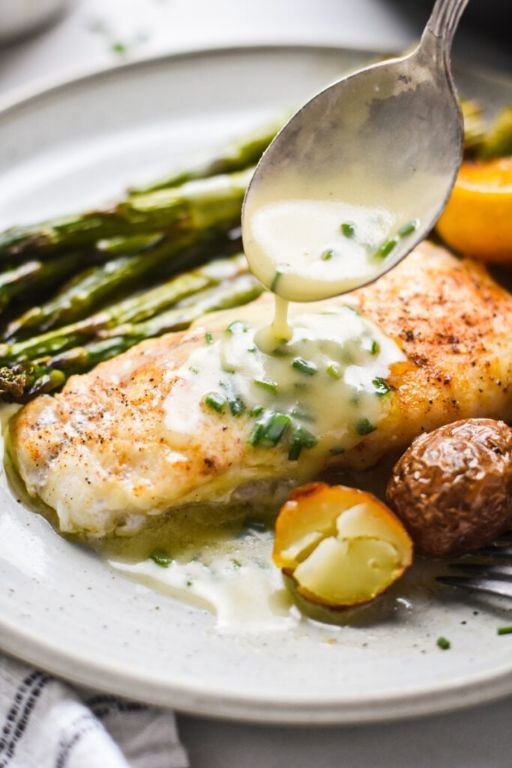
Beurre blanc with tarragon is a French butter sauce made with white wine, shallots, and cold butter, finished with fresh tarragon for a mild anise flavor. Serve it with fish, scallops, chicken, asparagus, or other tender vegetables.
In American home kitchens, this sauce can turn a simple weeknight dinner or a holiday meal into something special. A piece of pan-seared salmon, roasted asparagus, or baked cod needs only a small spoonful of this rich, bright sauce. The best part is that you can make it with common grocery store ingredients and a small saucepan.
The method is simple, but the heat matters. First, cook white wine and minced shallots until the liquid has reduced. Then whisk in cold butter a few pieces at a time over low heat. Fresh tarragon adds a gentle herbal note that works well with seafood and poultry without taking over the dish.
This guide explains the ingredients, cooking steps, texture checks, and fixes for common problems. It also covers ways to adjust the sauce, make it ahead, and pair it with a full meal. No special kitchen tools are needed, and a little patience helps more than fancy equipment.
Beurre blanc is a French sauce made by whisking cold butter into a reduced mix of wine and shallots. The name means white butter. The finished sauce is rich, smooth, and pale yellow, with a mild tang from the wine. Tarragon adds a fresh, lightly sweet flavor that can remind some people of anise or licorice.
Unlike a thick cream sauce, a classic beurre blanc gets much of its body from butter. The small amount of liquid and the way you whisk the butter help form an emulsion. An emulsion is a blend of liquids and fats that would normally separate. In this case, careful heat and steady whisking help the butter stay mixed with the wine reduction.
Tarragon beurre blanc is useful when a dish needs both richness and freshness. Butter coats the food, while the wine and herb help keep each bite from tasting too heavy. The sauce should taste balanced, not sharply sour or strongly herbal.
Source: weekendatthecottage.com
Flavor
Rich butter, mild acidity, soft shallot flavor, and a gentle herbal note from tarragon.
Texture
Smooth and glossy, with enough body to coat the back of a spoon.
Best use
A finishing sauce for cooked fish, shellfish, poultry, and vegetables.
How Tarragon Changes the Sauce
Tarragon has a distinct flavor that sets it apart from parsley, chives, and thyme. Its mild anise note pairs well with delicate fish and shellfish. It can also bring fresh flavor to chicken and spring vegetables.
Fresh tarragon is usually the best choice for this sauce because its aroma is bright and green. Dried tarragon can work, but it has a more concentrated and less fresh taste. Start with a small amount and add more only if needed.
Fresh tarragon
Chop the leaves finely and stir them in near the end of cooking.
Dried tarragon
Use less than you would of fresh herbs, and allow time for its flavor to spread through the sauce.
Beurre Blanc Versus Other Butter Sauces
Beurre blanc differs from a simple melted butter sauce because it begins with a wine reduction and is whisked into an emulsion. It also differs from hollandaise, which uses egg yolks to help hold the sauce together. A cream-based white sauce relies on cream and often a thickener, while classic beurre blanc does not need either.
Melted herb butter
The simplest option, but it does not have the same wine-based flavor or emulsified texture.
Hollandaise
An egg-yolk and butter sauce with a different method and a richer, custard-like body.
Cream sauce
Often thicker and more stable, with a softer dairy flavor.
Ingredients for Tarragon Beurre Blanc
A good beurre blanc needs only a few ingredients. Each one has a clear job, so fresh flavor and sound technique matter more than a long ingredient list. For a first batch, keep the recipe simple and adjust the seasoning after the butter has been added.
The amounts below make about four small servings of sauce, depending on how generously you serve it. The yield will vary with the amount of liquid you reduce and the amount of butter you use. A modest serving is often enough because the sauce is rich.
Source: bunnystyleguide.com
Dry white wine, 1/2 cup
Choose a dry wine such as Sauvignon Blanc or Pinot Grigio. Avoid sweet wine, which may leave the sauce too sugary.
Shallot, 1 small
Peel and mince it finely so it softens quickly and spreads its flavor through the reduction.
Unsalted butter, 8 ounces
Cut cold butter into small cubes. Unsalted butter lets you control the final salt level.
Fresh tarragon, 1 to 2 tablespoons
Use finely chopped leaves. Begin with 1 tablespoon if you prefer a mild herbal taste.
White wine vinegar or lemon juice, optional
A small splash can sharpen the flavor if the sauce tastes too rich. Add it carefully.
Salt and white or black pepper
Season lightly at the end. The butter may soften the salt level, so taste before adding more.
Choosing the Right Butter
Use real butter rather than a tub spread or a product designed mainly for spreading. Butter supplies the fat that forms the sauce. Cold butter also gives you better control as you whisk it into the warm reduction.
Unsalted butter is useful because brands vary in salt content. If you only have salted butter, use it and wait until the end to season. The sauce may need little or no extra salt.
Cut butter into small cubes
Small pieces melt at a more even rate and are easier to whisk into the liquid.
Keep the butter cold
Cold butter helps slow the melting process, giving the sauce time to form an emulsion.
Can You Use Dried Tarragon?
Yes, dried tarragon can work when fresh leaves are not available. Its flavor can be stronger in some brands and less bright than fresh tarragon. Start with a small pinch, taste, and add more only if the sauce needs it.
Dried herbs can soften as they sit in warm liquid, so you may add them during the final part of the reduction. Fresh leaves are better added near the end to preserve their green aroma and delicate flavor.
Start small
A little dried tarragon goes a long way. Avoid adding a large amount at once.
Taste before serving
The herb should support the wine and butter rather than dominate them.
How to Make Beurre Blanc With Tarragon
The key to this sauce is to reduce the wine first, then whisk in the cold butter over gentle heat. Do not rush the process by turning the burner to high. Strong heat can cause the fat to separate from the liquid, leaving a greasy sauce instead of a smooth one.
Use a small, heavy-bottomed saucepan and a whisk. A wide pan can speed up evaporation, so watch the reduction rather than relying on the clock alone. Have the butter cut and the tarragon chopped before you start.
Source: challengedairy.com
Prep time
About 5 to 10 minutes, including chopping the shallot and tarragon.
Cook time
About 10 to 15 minutes, depending on the pan, burner, and rate of reduction.
Equipment
A small saucepan, a whisk, a knife, and a cutting board.
Step 1: Reduce the Wine and Shallot
Place the wine and minced shallot in the saucepan. Set the pan over medium heat and bring the liquid to a gentle simmer. Let it cook until most of the wine has evaporated and only a small amount of liquid remains around the shallots.
The reduction should smell fragrant rather than sharply alcoholic. Do not let the pan become fully dry or allow the shallots to brown heavily. If the liquid disappears too soon, lower the heat and add a small splash of water to keep the shallots from scorching.
Look for a small amount of liquid
The base should be concentrated, with the shallots soft and moist.
Keep the color pale
Browned shallots can change the delicate taste and color of the finished sauce.
Step 2: Lower the Heat and Add Cold Butter
Turn the heat to low. Add a few cubes of cold butter to the warm reduction and whisk steadily until they begin to blend. Add the next pieces before the earlier butter has fully disappeared into a pool of melted fat. Keep whisking as you work through the remaining butter.
The liquid should turn creamy and glossy as the butter blends with the reduction. If the sauce begins to bubble hard, remove the pan from the burner for a short time and keep whisking. Gentle heat gives the emulsion time to form.
Add butter in batches
Small additions make it easier to control the texture.
Watch the heat
The sauce should stay warm but should not boil hard after the butter goes in.
Step 3: Add Tarragon and Season
Once the butter has blended into a smooth sauce, take the pan off the heat or keep it over the lowest setting. Stir in the chopped tarragon. Taste the sauce, then add a small amount of salt and pepper if needed.
If the sauce tastes too rich, add a few drops of lemon juice or white wine vinegar. Stir and taste again before adding more. A good balance lets the tarragon shine while the butter remains the main source of richness.
Add fresh herbs near the end
This helps preserve the fresh aroma and green color of the tarragon.
Season with care
A few drops of acid can brighten the sauce, but too much may make it sharp.
Step 4: Check the Texture and Serve
Dip a spoon into the sauce and lift it out. The sauce should coat the spoon in a thin, even layer. It should look glossy, not oily, and the butter should not sit in yellow pools around the edges.
Serve the sauce soon after cooking. Spoon it over cooked fish or chicken, or serve it beside vegetables so diners can control the amount. If the sauce must wait briefly, keep it warm without direct high heat and stir it gently from time to time.
Correct texture
Smooth, shiny, and able to coat food without looking thick like gravy.
Best timing
Finish the sauce close to serving time for the best texture and aroma.
The Best Foods to Serve With Tarragon Beurre Blanc
Tarragon beurre blanc works best with foods that have a mild taste or a lightly browned surface. The sauce adds richness, while the wine and herbs bring contrast. It is especially useful for fish and vegetables that might otherwise need little more than salt, pepper, and oil.
You do not need to cover the plate in sauce. A spoonful over the top or a small pool beneath the food is often enough. This keeps the dish from feeling heavy and lets the main ingredient stay in focus.
Source: storage.googleapis.com
White fish
Serve with cod, haddock, halibut, or sole. The mild flavor of these fish pairs well with butter and tarragon.
Salmon
Use a modest amount over pan-seared or baked salmon. The sauce adds a smooth contrast to the fish’s rich texture.
Scallops and shrimp
Add the sauce just before serving. Its wine and herb notes complement the sweet flavor of shellfish.
Chicken
Spoon it over roasted or pan-seared chicken breast, especially when the seasoning is simple.
Asparagus and green beans
Use a light drizzle over steamed, blanched, or roasted vegetables.
Potatoes
Serve beside boiled baby potatoes or small roasted potatoes for a rich, herb-filled finish.
Pairing the Sauce With Fish
For a simple American-style dinner, serve baked cod with tarragon beurre blanc, steamed green beans, and roasted potatoes. Season the fish with salt and pepper, cook it until done, then add the sauce at the table. This gives the fish a rich finish without hiding its mild flavor.
For salmon, consider serving the sauce in a small bowl rather than pouring it over the whole fillet. Salmon already has a rich taste, so a little sauce can be enough. A squeeze of lemon over the side vegetables can also help balance the plate.
Keep fish seasoning simple
Salt, pepper, and a little oil leave room for the sauce to stand out.
Dry the fish before searing
Pat the surface dry to help it brown instead of steam in the pan.
Pairing the Sauce With Vegetables
Asparagus is a natural match because its fresh, green flavor works well with tarragon. Steam or roast it until tender but not mushy, then add a small amount of sauce just before serving. Green beans, peas, and cauliflower can work in the same way.
For a full meal, pair the vegetables with chicken or fish and a plain starch. Rice, boiled potatoes, or crusty bread can help catch any extra sauce. Avoid adding several other rich sauces to the same plate.
Roasted asparagus
The browned edges add a savory note that balances the smooth sauce.
Steamed green beans
Their clean, fresh taste helps keep the meal light.
Common Beurre Blanc Problems and How to Fix Them
Most beurre blanc problems come from heat, timing, or the balance between liquid and butter. The sauce can split if it gets too hot, become too thin if the reduction is weak, or taste too sharp if the wine is not reduced enough. Checking the texture as you cook makes these issues easier to spot.
A separated sauce may still be usable. Remove it from the heat first, then try to bring the fat and liquid back together with gentle whisking. Do not try to fix every problem by adding more butter, since that can make an already greasy sauce harder to balance.
Source: storage.googleapis.com
The sauce looks oily
The heat may be too high, or the butter may have been added too quickly. Remove the pan from the heat and whisk in a teaspoon of warm water to help restore the emulsion.
The sauce is too thin
The wine reduction may contain too much liquid, or the butter may not be fully incorporated. If the sauce is still stable, whisk gently over low heat. Avoid boiling it.
The sauce tastes too sour
The wine may not have reduced enough, or too much vinegar or lemon juice may have been added. Whisk in a small amount of butter if the sauce is stable and taste again.
The sauce tastes flat
It may need a small pinch of salt or a few drops of lemon juice. Add each in small amounts and taste between additions.
The shallots taste burnt
Burnt shallots can leave a bitter flavor. It is usually better to start a new reduction than to hide the burnt taste with more butter.
How to Rescue a Split Sauce
First, take the pan off the heat. If the sauce is very hot, let it cool for a short moment while you whisk. Add a teaspoon of warm water and whisk steadily. If the sauce starts to look creamy again, continue slowly until the texture is smooth.
If that does not work, place a teaspoon of warm water in a clean bowl and gradually whisk the split sauce into it. Start with a small amount and add the rest in a thin stream. This gives the fat another chance to disperse through the liquid.
A rescued sauce may not look quite as polished as a fresh batch, but it can still taste good. If it remains greasy or separates again, avoid hard boiling or repeated reheating. A fresh batch is the most reliable option when appearance matters.
Use gentle heat
High heat makes the butter more likely to separate from the liquid.
Add water in small amounts
A teaspoon at a time gives you better control than pouring in a large splash.
How to Avoid a Greasy or Grainy Texture
Keep the butter cold until you are ready to use it. Add a few cubes at a time, whisking well before adding more. The sauce should remain warm enough to melt the butter, but not so hot that the fat separates.
If the sauce feels grainy, check whether the butter has separated or whether pieces of shallot or herb are creating the texture. Finely mince the shallot and chop the tarragon before cooking. Straining the wine reduction before adding butter is also an option if you prefer a very smooth sauce.
Keep the reduction controlled
A small, concentrated amount of liquid gives the butter a better base.
Whisk steadily
Consistent whisking helps the fat spread through the liquid.
Ways to Adjust the Flavor
You can change the flavor of tarragon beurre blanc without changing its basic method. The most useful adjustments are the amount of herb, the level of acidity, and the type of wine. Make one change at a time so you can tell what the sauce needs.
The classic version is a good starting point because it lets the butter, wine, shallot, and tarragon work together. Once you know the balance you like, you can use small changes to match a particular main dish.
Source: storage.googleapis.com
For a brighter taste
Add a few drops of lemon juice or white wine vinegar after the butter has blended.
For a stronger herb note
Add a little more finely chopped fresh tarragon just before serving.
For a milder herb flavor
Begin with 1 tablespoon of fresh tarragon and add more only after tasting.
For a softer wine taste
Reduce the wine well before adding the butter, while avoiding a dry or scorched pan.
For a shallot-free version
Omit the shallot and reduce the wine carefully. The sauce will have a simpler flavor and may need more careful seasoning.
Should You Add Cream?
Some modern beurre blanc recipes use a little cream to make the sauce more forgiving. Cream can help create a fuller base, but it changes the traditional butter-and-wine method and the finished flavor. You do not need cream to make a classic beurre blanc.
If you are new to the sauce and have trouble keeping it together, focus first on gentle heat, cold butter, and slow additions. These are the key parts of the classic method. A cream-based variation is an option, not a required ingredient.
Classic method
Wine and shallots form the reduction, and cold butter creates the sauce.
Cream variation
Cream changes the texture and may make the sauce easier to manage, but it is a different version.
Can You Add Lemon?
Yes. Lemon can make the sauce taste fresher, especially when you serve it with fish or steamed vegetables. Add just a few drops after the butter has blended, then taste before adding more.
Too much lemon can overwhelm the tarragon and make the sauce sharply sour. If you already used a tart white wine, you may not need any extra acid.
Use fresh lemon juice
Fresh juice gives you direct control over the flavor.
Add it at the end
Small additions let you adjust the taste without disrupting the reduction.
Can You Make Beurre Blanc Ahead of Time?
Beurre blanc is best served soon after it is made because the butter emulsion can break as the sauce cools or gets too hot. You can prepare the shallot and wine reduction ahead of time, then add the cold butter and tarragon close to dinner. This saves time without leaving the finished sauce waiting for long.
If you have leftover sauce, cool it promptly and place it in a covered container in the refrigerator. Since this is a dairy-rich sauce, do not leave it at room temperature for more than two hours, or more than one hour when the room or outdoor temperature is above 90 degrees Fahrenheit. Refrigerate promptly and use within a short period, ideally within two days for best quality.
Source: swich.com
Prepare the reduction early
Cook the wine and shallots, then cool and refrigerate the reduction in a covered container.
Finish just before serving
Warm the reduction gently and whisk in cold butter, then add the tarragon.
Store leftovers safely
Refrigerate promptly in a covered container and avoid leaving the sauce out during a long meal.
How to Reheat Leftover Sauce
Reheating beurre blanc is tricky because the butter can separate. For the best chance of success, use very low heat and stir or whisk gently. If the sauce becomes too thick, a small amount of warm water may help loosen it.
Do not bring the sauce to a rolling boil. If it looks oily, remove it from the heat and try whisking in a teaspoon of warm water. The texture may not return to its original state, so finishing a fresh batch for guests is often the better plan.
Use a small pan
A small amount of sauce is easier to warm evenly.
Warm slowly
Gentle heat gives you more control and lowers the chance of separation.
Can You Freeze Beurre Blanc?
Freezing the finished sauce is not the best choice if you want a smooth texture. The emulsion may separate during freezing and thawing, and the sauce can be difficult to restore. For better results, freeze only the main dish when appropriate and make the sauce fresh.
You can also prepare and refrigerate the wine reduction in advance. This small step shortens the final cooking time and avoids the texture problems that may come with freezing the butter sauce.
Best plan
Freeze the main dish if suitable, then make the sauce fresh.
Avoid quality loss
Do not rely on frozen finished sauce for a smooth, glossy result.
Common Mistakes to Avoid
A few small mistakes can change the sauce more than you might expect. The most common are using too much heat, adding butter too fast, and adding herbs or acid without tasting first. A calm pace makes the method easier to control.
The sauce does not need to be perfect on the first try. If the flavor is balanced and the texture is smooth enough to coat the food, it can still make a very good meal. Focus on the main method before trying more complex variations.
Source: weekendatthecottage.com
Boiling after adding butter
A hard boil can break the emulsion. Keep the heat low and remove the pan from the burner if the sauce gets too hot.
Adding warm or melted butter
Cold cubes give you better control. Melted butter can separate more easily from the reduction.
Using sweet wine
Sweet wine can make the finished sauce taste unbalanced. Use a dry white wine instead.
Adding too much tarragon
The herb has a distinct flavor. Start with a small amount and adjust after tasting.
Leaving the pan unattended
The reduction can evaporate quickly near the end. Stay close and lower the heat if needed.
Making the sauce too early
The texture is most reliable when the sauce is finished close to serving time.
How to Tell When the Sauce Is Ready
Look for a glossy surface and a pale yellow color. The sauce should move as one creamy mixture when you tilt the pan. You should not see a layer of clear yellow fat sitting apart from the liquid.
Taste a small spoonful before serving. The butter should taste rich, the wine should give a mild tang, and the tarragon should add freshness. If one flavor dominates, make a small adjustment and taste again.
Appearance
The sauce is smooth and glossy rather than greasy or grainy.
Consistency
It coats a spoon but still flows easily.
Flavor
The wine, butter, and tarragon work together without one taking over.
Frequently Asked Questions
Q
What does tarragon beurre blanc taste like?
It tastes rich and buttery, with a mild tang from white wine and a fresh herbal note from tarragon. Tarragon has a gentle anise flavor that can remind you of licorice, but it should not dominate the sauce. The finished flavor should be smooth, balanced, and savory.
Q
What wine is best for beurre blanc?
A dry white wine is the best starting point. Sauvignon Blanc and Pinot Grigio are useful choices because they provide acidity without adding much sweetness. Choose a wine you would be comfortable drinking, and avoid sweet wines that may leave the sauce sugary.
Q
Can I make beurre blanc with tarragon without shallots?
Yes. You can reduce the wine on its own, then whisk in the cold butter and add tarragon at the end. Shallots provide a gentle savory flavor, so leaving them out will make the sauce simpler. Taste before serving and adjust the salt and acidity if needed.
Q
Can I use dried tarragon instead of fresh?
Yes, dried tarragon works when fresh leaves are not available. Start with a small pinch because its flavor can be concentrated and may vary by brand. Taste the sauce before adding more, since too much tarragon can overwhelm the butter and wine.
Q
Why did my beurre blanc separate?
The sauce may have become too hot, or the butter may have been added too quickly. Remove the pan from the heat and whisk in a teaspoon of warm water. If needed, start with a little warm water in a clean bowl and slowly whisk the separated sauce into it.
Q
Can I use beurre blanc with chicken?
Yes. Tarragon beurre blanc works well with roasted or pan-seared chicken. Keep the chicken seasoning simple so the wine, butter, and herb remain easy to taste. Serve a modest spoonful over the chicken or alongside it.
Q
How long does homemade beurre blanc last in the fridge?
For best quality, use leftover sauce within about two days and keep it covered in the refrigerator. Cool it promptly and do not leave it at room temperature for more than two hours, or more than one hour when temperatures are above 90 degrees Fahrenheit. Reheat gently, since strong heat can cause the butter to separate.
✦ Wrapping Up
Conclusion
Beurre blanc with tarragon is a simple way to add French-style flavor to an everyday meal. The sauce combines dry white wine, shallots, cold butter, and fresh tarragon in a smooth, rich blend. It works especially well with fish, scallops, chicken, asparagus, and other mild foods.
The main trick is to control the heat. Reduce the wine first, then whisk in cold butter a few pieces at a time. Add the tarragon near the end, taste the sauce, and serve it while it is warm and glossy. If it separates, gentle whisking and a little warm water may help bring it back together.
💡 Key Takeaway
For your first batch, use 1/2 cup dry white wine, 1 small minced shallot, 8 ounces cold unsalted butter, and 1 tablespoon fresh tarragon. Reduce the wine and shallot, whisk in the butter over low heat, season to taste, and serve with fish or asparagus.