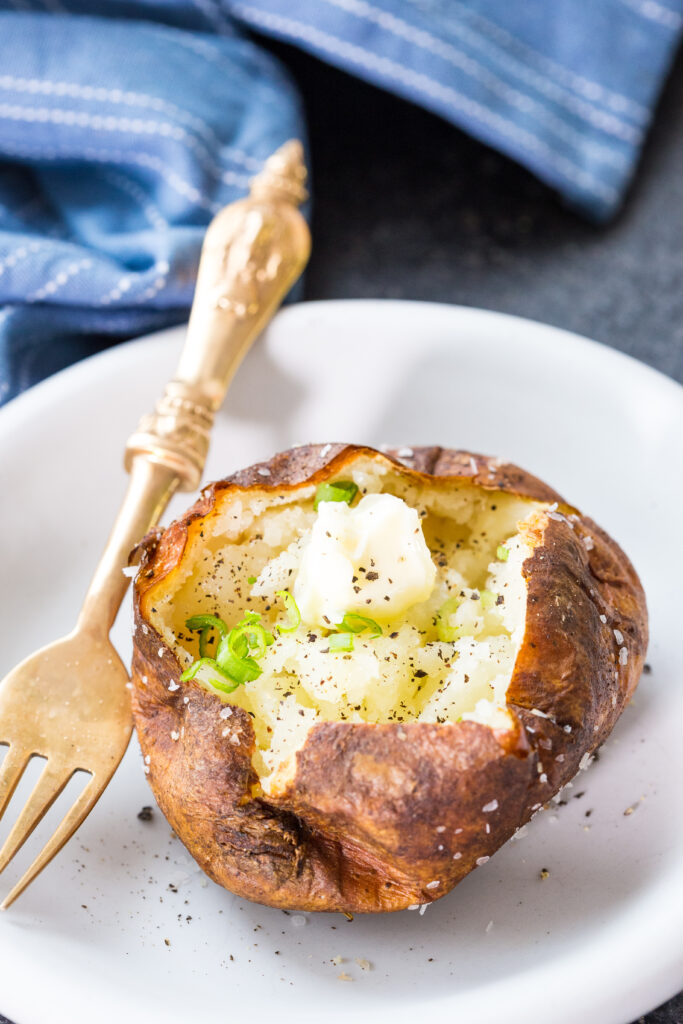
Bake scrubbed, dry russet potatoes at 425°F for about 45 to 60 minutes, after coating the skins with oil and coarse salt. The potatoes are ready when the skins feel crisp and a fork slides easily into the centers.
A baked potato is a classic American side dish. It fits right in with a steak dinner, a summer cookout, or a simple weeknight meal. The best ones have a firm, salty skin and a soft, fluffy center. You can make them at home with a few basic items from your kitchen.
Salted baked potatoes in the oven need little prep, but a few small choices can change the result. Potato size affects cooking time, dry skin helps the oil and salt stick, and the oven temperature helps the outside brown while the inside cooks through. This guide covers the method, the best salt to use, ways to check for doneness, and fixes for common problems. The timing is a general guide, so check each potato before serving.
Salted baked potatoes are whole potatoes baked in the oven with a coating of oil and salt on the skin. The salt adds flavor and a pleasant bite, while the hot oven cooks the flesh until it is soft. The result is a simple side dish with a tasty outside and a tender center.
This method differs from salt-baked potatoes cooked inside a thick mound of salt. For this recipe, the salt stays on the skin instead of surrounding the whole potato. That makes the process easier and calls for much less salt.
You can serve these potatoes with butter, sour cream, cheese, herbs, or your favorite toppings. They also work well beside roasted chicken, grilled fish, burgers, and vegetables.
Source: eazypeazymealz.com
Crisp skin
Oil helps the skin brown, while coarse salt adds flavor and texture.
Fluffy inside
A hot oven gives the center time to soften while moisture escapes through the skin.
Simple ingredients
Potatoes, oil, salt, and an oven are enough for the basic recipe.
Why Bake Potatoes Instead of Boiling Them?
Baking gives you a dry, firm skin and a soft center. Boiled potatoes cook in water, so their skins do not develop the same browned finish. A baked potato also needs little attention once it goes into the oven.
Choose baking when you want a whole potato with a crisp outside. Boiling is more useful when you plan to mash the potatoes or mix them into a salad.
Ingredients for Salted Baked Potatoes in the Oven
You only need a few ingredients to make this recipe. Each one has a clear job, from adding flavor to helping the skin brown. Start with good potatoes and use enough oil to coat the surface without leaving it greasy.
Source: bakeitwithlove.com
4 medium russet potatoes
Russets have a starchy flesh that turns light and fluffy when baked. Choose potatoes of similar size so they finish at about the same time.
1 to 2 tablespoons olive oil or another neutral oil
Oil helps the salt cling to the skin and supports browning. Use just enough to make a thin, even coat.
1 to 2 teaspoons coarse kosher salt
Coarse salt gives the skin a noticeable salty bite. Start with less if your salt has large crystals or you prefer a mild flavor.
Optional black pepper
A light sprinkle adds a warm, savory note without covering the natural potato flavor.
Optional toppings
Butter, sour cream, chopped chives, shredded cheese, or cooked bacon can turn a side dish into a more filling meal.
Which Potatoes Work Best?
Russet potatoes are the first choice for a classic baked potato. Their high starch content helps the inside become fluffy, and their thick skins hold up well in the oven.
Yukon Gold potatoes also work, though their centers tend to be creamier and less fluffy. Red potatoes have a waxier texture and thinner skin, so they are better suited to roasting in pieces when you want browned edges.
Best for a fluffy center
Choose medium or large russet potatoes.
Best for a creamy texture
Use Yukon Gold potatoes and expect a denser center.
Best for smaller portions
Use small potatoes, but begin checking them earlier because they cook faster.
What Salt Should You Use?
Coarse kosher salt is a useful choice because its grains are easy to spread over the oiled skin. Fine table salt also works, but its small grains can create a more intense salty taste in the same spoonful. Add it sparingly and adjust the amount to suit your taste.
Sea salt is another option. Large flakes may not stick as evenly as smaller grains, so press them gently onto the oiled skin. The kind of salt matters less than using a measured amount and spreading it evenly.
How to Make Salted Baked Potatoes
The basic method is simple: prepare the potatoes, coat the skins, season them, and bake until tender. Plan on about 10 minutes of prep and 45 to 60 minutes in the oven for medium russets. Large potatoes may need more time, so leave room in your schedule to check them.
Source: vegetarianmamma.com
Step 1: Heat the oven
Set the oven to 425°F. Allow it to preheat fully before adding the potatoes so they begin cooking at the intended temperature.
Step 2: Wash the potatoes
Scrub the skins under running water to remove dirt. Trim away damaged spots with a clean knife, but keep the skin intact where possible.
Step 3: Dry them well
Use a clean kitchen towel or paper towels to remove surface water. Dry skin helps the oil coat the potatoes evenly and supports better browning.
Step 4: Prick the skins
Use a fork to make several small holes in each potato. This allows steam to escape during baking and reduces the risk of a potato bursting.
Step 5: Add the oil
Rub a thin layer of oil over the whole surface. Cover the ends and sides without leaving pools of oil on the skin.
Step 6: Season with salt
Sprinkle the coarse salt over each potato. Turn the potatoes as needed so the salt reaches more than just the top.
Step 7: Arrange on a baking sheet
Place the potatoes in a single layer with space between them. A rimmed baking sheet makes handling easier and catches loose salt or oil.
Step 8: Bake until tender
Bake for about 45 to 60 minutes, depending on size. Turn the potatoes once if you want to encourage more even browning, though this is optional.
Step 9: Test the center
Push a thin knife or fork into the thickest part of each potato. It should slide in with little resistance. If the center still feels firm, bake for another 5 to 10 minutes and test again.
Step 10: Open and serve
Use an oven mitt to remove the tray. Let the potatoes rest briefly, then cut a slit along the top and gently press the ends inward to open the center. Add your toppings and serve while hot.
Should You Wrap Potatoes in Foil?
Skip the foil when crisp skin is your goal. Foil holds moisture close to the potato, which can make the skin softer rather than dry and crisp.
You can use foil if you prefer a softer skin or need to hold cooked potatoes briefly. It changes the texture, though, so it is not the best choice for a classic salty, crisp finish.
Can You Bake Potatoes Directly on the Oven Rack?
Yes. A clean oven rack allows hot air to move around each potato. Place a baking sheet on a lower rack if you want to catch any oil or salt that falls.
A baking sheet is easier to handle, especially when you are cooking several potatoes. Either method can work, so choose the one that feels safest in your kitchen.
How Long Do Salted Baked Potatoes Take?
Most medium russet potatoes take about 45 to 60 minutes at 425°F. The exact time depends on their size, shape, starting temperature, and how your oven heats. A large potato can take 60 to 75 minutes or longer.
Use these times as a starting point rather than a guarantee. Potatoes that look brown on the outside may still be firm in the center. A fork test is the simplest way to tell when they are ready.
Source: artofit.org
Estimated Baking Times by Potato Size
The table below gives general estimates for whole potatoes baked at 425°F in a fully preheated oven. Potato sizes are approximate, and the times are not exact cooking limits.
Small potatoes, about 2 to 3 inches long
Begin checking after 30 to 40 minutes. Smaller potatoes often finish sooner, especially when they are narrow.
Medium potatoes, about 3 to 4 inches long
Allow about 45 to 60 minutes, then check the thickest part with a fork or thin knife.
Large potatoes, about 4 to 5 inches long
Allow about 60 to 75 minutes or more. Large, thick potatoes need extra time for the heat to reach the center.
How Can You Tell When a Potato Is Done?
The best sign is a tender center. Insert a fork or thin knife into the thickest part of the potato. If it slides in easily and the flesh feels soft, the potato is ready.
The skin should look dry and may have a browned, crisp surface. Color alone is not enough, though. If the skin is ready but the center is still firm, lower the oven temperature slightly and continue baking until the inside softens.
Ready
The fork enters easily, and the potato gives slightly when handled with an oven mitt.
Needs more time
The center feels hard or the knife meets clear resistance.
May be overbaked
The flesh is very dry, the skin is unusually hard, or the potato has shriveled more than expected.
Tips for Crisp, Salty Potato Skins
Crisp skins come from good surface prep, enough heat, and the right amount of oil. You do not need a special appliance or a complicated seasoning mix. Focus on keeping the skins clean and dry before the potatoes go into the oven.
Source: eazypeazymealz.com
Dry the potatoes completely
Water left on the skin can slow browning at first. Pat each potato dry after washing, including the ends and any shallow dents.
Use a thin coat of oil
Too little oil can leave the salt unevenly spread, while too much can make the skin greasy. Rub on a light, even layer.
Choose coarse salt
Coarse kosher salt gives the skin a clear salty crunch. Start with a small amount and add more the next time if needed.
Leave space around each potato
Crowding can reduce airflow and make cooking less even. Spread the potatoes across the tray rather than stacking them.
Bake without foil
An uncovered potato can release moisture more freely, which helps the skin dry and brown.
Serve soon after baking
The skin gradually softens as steam moves out of the hot flesh. Open the potatoes shortly before serving for the best texture.
Should You Add Salt Before or After Baking?
For this recipe, add the salt before baking. The oil helps it stick to the skin, and the oven warms the seasoning along with the potato. Some grains may fall onto the tray, so a light, even coating is more useful than piling salt in one spot.
You can add a small pinch after baking if the skin needs more flavor. Taste the potato first, especially if you plan to use salted butter, cheese, or bacon as toppings.
Can You Use Butter Instead of Oil?
You can use melted butter, but oil is a practical choice for coating potatoes before baking at 425°F. Butter contains milk solids that can brown or darken during a long bake, so the skin may not look the same.
For a buttery flavor, bake with oil and add a pat of butter when you open each potato. The butter melts into the fluffy center without requiring you to coat the skin with it first.
Common Mistakes and How to Fix Them
A baked potato can look ready before the center is soft, or the skin can turn out less crisp than you hoped. Most problems come from uneven potato sizes, excess moisture, too much salt, or stopping the bake too early. Use the signs below to find the likely cause and make a useful adjustment.
Source: storage.googleapis.com
The skin is soft instead of crisp
The potatoes may have been wrapped in foil, left wet after washing, or removed from the oven before the skin dried. Bake them uncovered, dry them well, and allow more time if the center is still firm.
The inside is still hard
The potatoes may be larger than expected or the oven may not have reached the set temperature. Return them to the oven for 5 to 10 minutes at a time and test the center again.
The skin tastes too salty
Too much salt may have been added, or fine table salt may have been used in the same amount as coarse salt. Brush off loose crystals before serving and reduce the amount next time.
The skin is greasy
A thick layer of oil can leave the surface slick. Use less oil and spread it evenly with clean hands or a pastry brush.
Some potatoes finish before others
The potatoes may differ in size or shape. Remove each potato when it becomes tender instead of waiting for every potato to finish at the same time.
The flesh seems dry
The potato may have baked too long or been held hot for too long after cooking. Check the center near the expected finish time and serve soon after it becomes tender.
What If the Potato Skin Splits?
A small split does not mean the potato is ruined. Steam can build inside a whole potato as it heats, and the skin may open during cooking. Pricking the skin several times before baking helps steam escape.
If a potato splits, finish baking until the center is tender. Handle it with oven mitts because hot steam can escape through the opening. For the next batch, prick each potato before adding oil and salt.
Easy Ways to Season and Serve Baked Potatoes
Salted baked potatoes have a mild, earthy flavor that pairs with many toppings. Start with a small amount of butter or another topping, then add more to taste. If you use salty cheese or bacon, go easy on extra salt.
Source: getrecipecart.com
Classic butter and black pepper
Split the hot potato, fluff the inside with a fork, and add butter and black pepper. This simple topping lets the salty skin stand out.
Sour cream and chives
Add a spoonful of sour cream and chopped chives for a cool, tangy contrast to the hot potato.
Cheddar and broccoli
Top the potato with cooked broccoli and shredded cheddar. The heat helps soften the cheese, while the broccoli adds color and texture.
Bacon and cheese
Sprinkle on cooked, crumbled bacon and shredded cheese. Keep the portions modest if you want the potato to remain the main part of the dish.
Garlic and herbs
Add chopped parsley, chives, or a little garlic butter after baking. Fresh herbs are best added at the end so their flavor stays bright.
Chili topping
Spoon warm bean chili or meat chili over the opened potato for a hearty meal. Add the chili after baking so the skin has a chance to crisp in the oven.
What Should You Serve With Salted Baked Potatoes?
These potatoes fit well with grilled chicken, roast beef, baked fish, burgers, or meatloaf. Their mild flavor also works with roasted carrots, green beans, broccoli, and a fresh salad.
For a simple dinner, serve one medium potato with a protein and a vegetable. Add a topping such as plain yogurt, sour cream, or cheese to suit the meal and your taste.
How to Store and Reheat Leftover Baked Potatoes
Cool and store leftover baked potatoes safely rather than leaving them on the counter for hours. Place them in the refrigerator within two hours of cooking, or within one hour when the surrounding temperature is above 90°F. Keep the potatoes in a covered container and use them within three to four days.
Do not leave baked potatoes wrapped in foil at room temperature. If you baked them in foil, remove the foil before refrigerating so the potatoes cool more readily. Discard potatoes that have been left out too long, even if they still smell normal.
Source: artofit.org
Refrigerator
Store cooked potatoes at 40°F or below in a covered container. Use them within three to four days.
Freezer
You can freeze cooked potato flesh, but the texture may change after thawing. The skin may also lose its crispness, so freezing is less useful when texture is the main goal.
Reheating
Reheat leftovers in an oven set to 350°F until the center reaches 165°F. A microwave also works, though the skin will usually be softer.
How to Make Leftover Skin Crisp Again
An oven or air fryer can help restore some crispness to refrigerated potatoes. For the oven, heat it to 375°F, place the potatoes on a tray, and warm them until the center is hot and the skin feels drier. The time depends on the potato’s size and how cold it is.
Avoid relying on skin color alone to judge reheating. The center must become hot as well. Use a food thermometer to confirm 165°F in the middle, especially when reheating a large potato.
Frequently Asked Questions
Q
What temperature is best for salted baked potatoes?
A temperature of 425°F works well for whole russet potatoes with crisp, salty skins. It provides enough heat for the skin to brown while the center cooks. Begin checking medium potatoes at about 45 minutes and allow more time for larger ones.
Q
Do you need to boil potatoes before baking them?
No. Whole russet potatoes can go straight into the oven after you wash, dry, prick, oil, and salt them. Boiling is not needed for this method and would add an extra step.
Q
Why do you prick potatoes before putting them in the oven?
Pricking the skin creates small openings that help steam escape as the potato heats. Use a fork to make several small holes before adding the oil and salt. This does not guarantee that a potato will never split, but it is a useful preparation step.
Q
Can you make salted baked potatoes without oil?
Yes. You can sprinkle salt over dry potatoes and bake them without oil, but the salt may not stick as well and the skin may be less crisp or evenly browned. If you want to avoid oil, use a modest amount of salt and judge the result by texture rather than expecting the same finish.
Q
Can you prepare the potatoes ahead of time?
You can wash and dry raw potatoes ahead of time, then keep them in a cool, dry place with good airflow until you are ready to bake. For the best skin texture, add the oil and salt shortly before baking. If you cook them in advance, refrigerate them promptly and reheat until the center reaches 165°F.
Q
How much salt should you use for each potato?
For four medium potatoes, start with about 1 to 2 teaspoons of coarse kosher salt in total. The amount that sticks will vary with potato size, oil coverage, and salt grain size. Start with less if you use fine table salt or plan to add salty toppings.
Q
Can you cook several potatoes at once?
Yes. Arrange the potatoes in a single layer with space between them so hot air can circulate. A full tray may take longer than a small batch, so check the centers individually and leave extra time if needed.
✦ Wrapping Up
Conclusion
Salted baked potatoes in the oven are easy to make with a few basic ingredients. Russet potatoes, a light coat of oil, coarse salt, and an oven set to 425°F give you a good starting point for crisp skins and fluffy centers. Medium potatoes often take 45 to 60 minutes, but size and oven performance can change the timing.
For the best result, wash and dry the potatoes, prick the skins, season them evenly, and bake without foil. Check the thickest part with a fork before serving. Add butter, herbs, cheese, or another topping you enjoy, and store any leftovers in the refrigerator within two hours.
💡 Key Takeaway
Heat your oven to 425°F, prepare four medium russet potatoes with oil and coarse salt, and bake for 45 to 60 minutes. Test each center for tenderness, then open and serve the potatoes while hot.