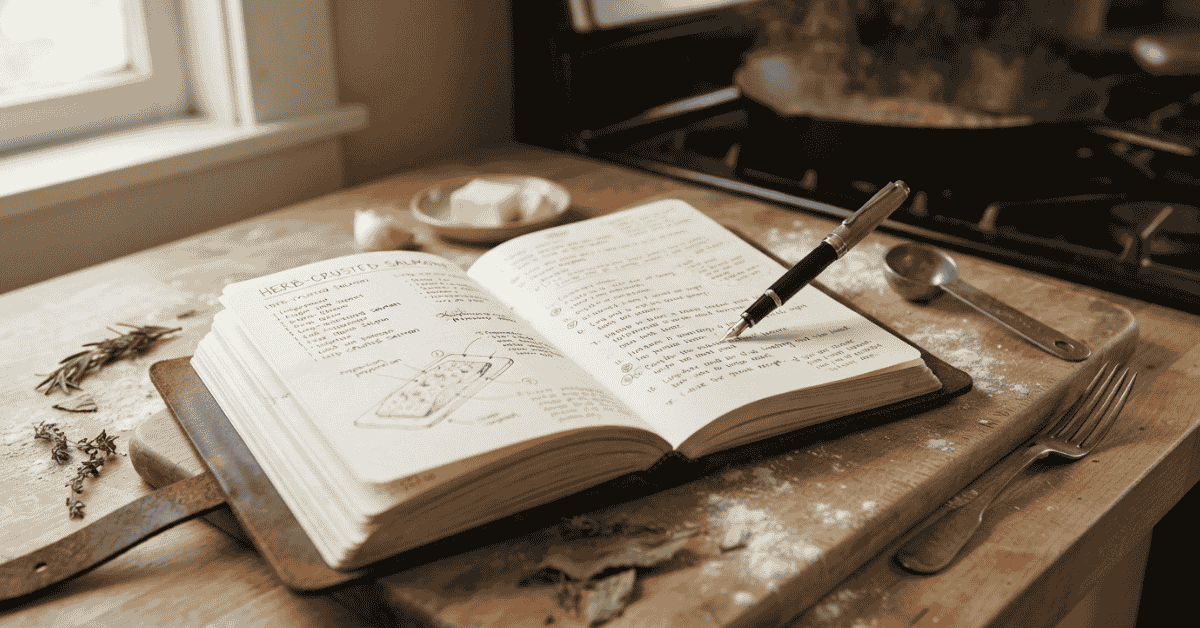
Write your own recipes cookbook and something shifts in your kitchen. I used to lose recipes on sticky notes. Torn papers. Random screenshots. Nothing matched. Then I started building my own blank cookbook two years ago. I almost gave up during week one. I’m glad I kept going. Below, I share what worked, what failed, and how you can start your own tonight.
Why I Started My Own Recipe Cookbook
My recipes lived everywhere and nowhere. Napkins. Text messages. My mom’s voice on the phone.
I wanted one place. Something personal. Something that felt like mine, not a store-bought book full of strangers’ meals.
I remember my first blank page. It felt intimidating at first, like staring at snow with no footprints. That feeling faded fast once I began writing.
What Pushed Me to Start
- Recipes kept getting lost
- Family meals had no written history
- I wanted a gift for my kids someday
- Store cookbooks felt impersonal
Choosing the Right Format for My Cookbook
I tried three formats before finding what worked.
Options I tested:
- A blank lined journal
- A printable template binder
- A digital app with export options
The binder won for me. It let me add pages, remove mistakes, and rearrange sections easily. Journals felt too rigid once I made errors.
Sections I Created
- Breakfast and brunch
- Weeknight dinners
- Slow-cooked comfort meals
- Desserts and baking
- Family traditions and holidays
My First Written Recipe: Grandma’s Sunday Sauce
This recipe started everything. I wrote it down after watching my grandmother cook without measurements for years.
What I recorded:
- 2 cans crushed tomatoes
- 4 garlic cloves, sliced thin
- 1/4 cup olive oil
- Fresh basil, torn by hand
- Salt to taste
Steps I documented:
- Warm olive oil gently in a large pot.
- Add garlic and cook until fragrant, not browned.
- Pour in tomatoes and simmer for two hours.
- Stir in basil during the last ten minutes.
Writing this felt emotional. I wasn’t just recording food. I was saving a memory. The sauce simmered slowly, filling my kitchen with something warm and familiar.
How I Structure Each Recipe Page
Consistency made my cookbook easier to use later. I created a simple template for every entry.
My page structure includes:
- Recipe name and date created
- Ingredient list with exact measurements
- Numbered steps in short sentences
- A small note about who inspired it
This format kept things clear. I never had to guess what I meant months later.
Comparison Table: DIY Cookbook Methods
I get asked often which method works best for beginners. Here’s what I found through testing all three.
| Method | Flexibility | Durability | Best For |
|---|---|---|---|
| Blank Journal | Low | Medium | Quick, simple notes |
| Printable Binder | High | High | Editing, organizing sections |
| Digital App | Very High | Depends on backup | Sharing, searching recipes fast |
The binder gave me the best balance. I could fix mistakes without ruining the whole page.
Mistakes I Made While Building Mine
I won’t pretend this process was flawless.
- I forgot to date early recipes. Now I can’t remember which versions came first.
- I skipped writing prep times. This made planning dinners harder later.
- I used pencil on some pages. Smudging made a few recipes hard to read.
Now I always date entries and use permanent ink. Small habits saved me real frustration.
Adding Personal Stories to Each Recipe
This part surprised me most. Recipes felt flat without context.
I started adding short notes beside each dish. A sentence about who taught me. A memory tied to the smell or season.
Example note I wrote:
“Made this during our first winter in this house. The kitchen window fogged up completely.”
These small details turned my cookbook into something closer to a memoir than a manual.
Recipe I Still Use Weekly: Simple Skillet Cornbread
This recipe earned its spot through repetition. I made it so often, I finally wrote it down properly.
Ingredients:
- 1 cup cornmeal
- 1 cup flour
- 2 tablespoons sugar
- 1 cup buttermilk
- 2 eggs
- 1/4 cup melted butter
Steps:
- Mix dry ingredients in one bowl.
- Whisk wet ingredients in another bowl.
- Combine both gently until just mixed.
- Pour into a hot, greased skillet.
- Bake at 400°F for 20 minutes.
The edges turn crisp while the center stays soft. This recipe now has three sticky splashes on its page, proof of how often I’ve made it.
Tips for Keeping Your Cookbook Organized
- Use tabs or dividers for each food category.
- Leave blank pages for future recipes.
- Store it somewhere dry, away from stove splatter.
- Consider photographing pages as digital backup.
I learned the backup tip too late. One spilled glass of water nearly ruined an entire section.
Making It a Family Project
Eventually, I invited my family to contribute pages. My sister added her lasagna recipe. My dad wrote down his grilling notes, barely legible but full of personality.
This turned a solo project into something shared. Handwriting differences made each page feel more alive, not messier.
FAQ Section
What’s the best way to start writing your own recipes cookbook?
Start small with one favorite recipe, then build sections gradually as you cook and record more family meals over time.
Should I use a binder or a bound journal?
A binder works better for beginners since it allows editing and reorganizing pages without ruining your entire cookbook layout.
How do I keep handwritten recipes from fading over time?
Use permanent ink instead of pencil, and store your cookbook away from direct sunlight, moisture, or kitchen splatter areas.
Can I include family stories inside recipe pages?
Yes, adding short personal notes beside recipes creates emotional context and makes your cookbook feel more meaningful than a simple recipe list.
Is it worth backing up a handwritten cookbook digitally?
Absolutely, photographing each page protects your recipes from damage. Learn more about preserving handwritten family recipes safely and effectively.
My Final Takeaway
I still hear the soft scratch of my pen these days, though sometimes it’s my keyboard clicking instead, kitchen light fading gently as I write. This cookbook became more than recipes. It became a quiet record of who we are. If you’re curious, start with one dish tonight. Let the pages fill slowly, one memory at a time.