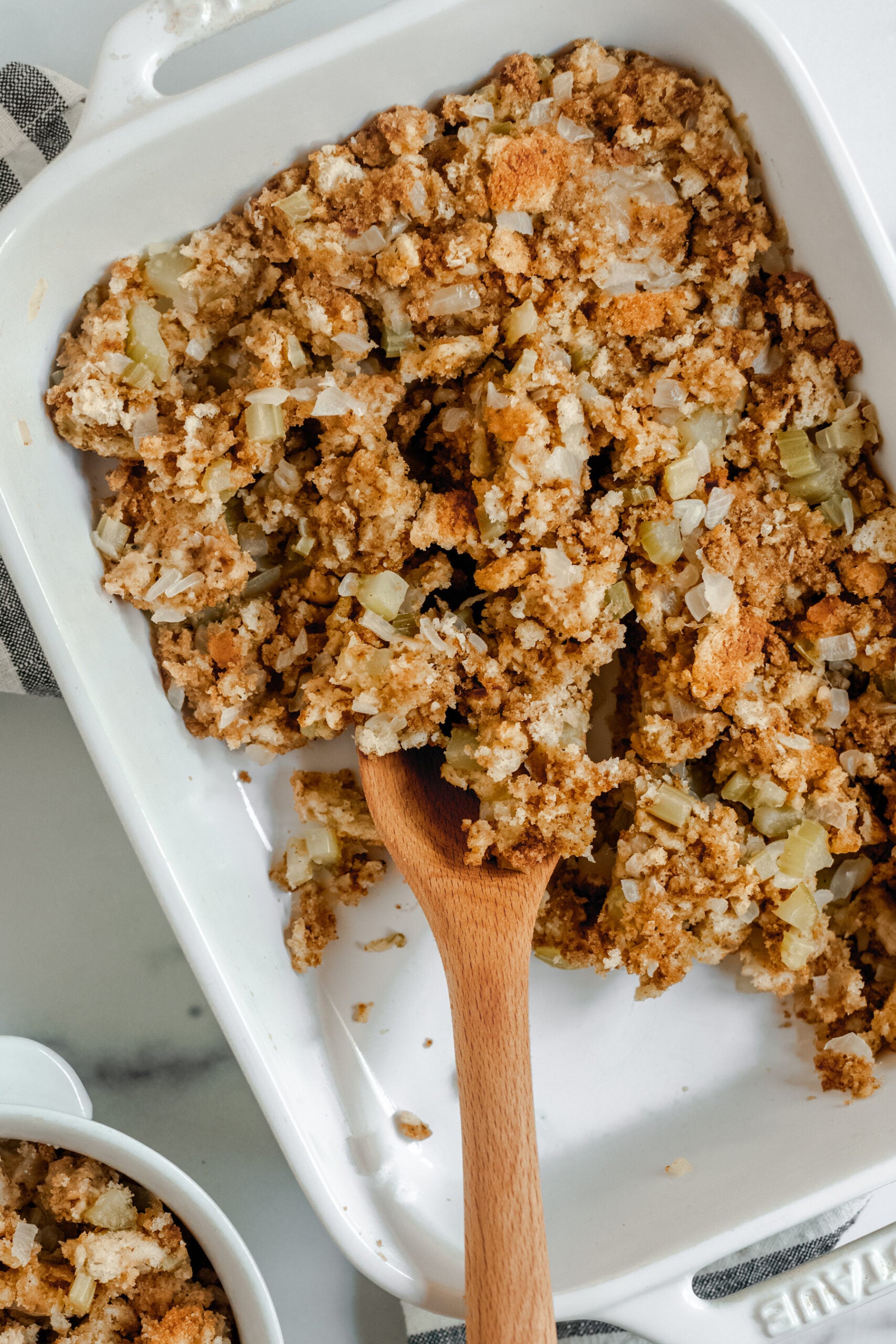
A classic Pepperidge Farm stuffing recipe combines seasoned bread cubes, butter, chopped onion, celery, broth, and herbs. Mix the ingredients, place them in a baking dish, and bake until the center is hot and the top is lightly crisp.
On Thanksgiving tables across the United States, bread stuffing is a familiar side dish served with roast turkey, gravy, mashed potatoes, and green beans. Pepperidge Farm stuffing makes this dish easier because the bread cubes provide a ready base for the recipe. You can build a simple herb stuffing around them without cutting and drying a whole loaf of bread.
This guide covers a classic baked version with butter, onion, celery, broth, and poultry seasoning. The method also explains how to adjust moisture, prepare the dish ahead, add sausage or apples, and handle leftovers safely. Since bread cube sizes and seasoning blends vary, use the recipe as a practical starting point and check the texture before baking.
This classic recipe uses seasoned bread cubes, vegetables, butter, broth, and a small amount of extra seasoning. It works well as a side for Thanksgiving dinner, Christmas dinner, Sunday roast chicken, or any meal that needs a warm bread-based dish.
The recipe below makes about 8 servings, depending on portion size and the rest of the meal. It is designed for a standard 9-by-13-inch baking dish. Check the package directions for the stuffing product you buy, since package sizes and preparation instructions can vary.
Source: justlovecooking.com
Prep time
About 15 minutes for chopping the vegetables and mixing the ingredients.
Cook time
About 35 to 45 minutes in a 350°F oven, with additional time if needed to reach a safe center temperature.
Yield
Approximately 8 side-dish servings.
Equipment
A large skillet, mixing bowl, measuring cups, spoon, and 9-by-13-inch baking dish.
Ingredients
Gather the ingredients before you begin. This makes it easier to judge how much broth the bread needs and keeps the vegetables from cooling for too long before mixing.
Bread
One 12-ounce bag of Pepperidge Farm Herb Seasoned Classic Stuffing, or an equivalent amount of seasoned bread cubes. Confirm the package size and follow its directions.
Butter
8 tablespoons unsalted butter, divided as needed for cooking the vegetables and greasing the baking dish.
Onion
1 medium yellow onion, finely chopped.
Celery
3 celery ribs, chopped into small pieces.
Broth
About 3 cups low-sodium chicken broth, added gradually. You may need less or more depending on the bread.
Herbs
1 teaspoon poultry seasoning, plus black pepper to taste. Add salt only after tasting the seasoned bread and broth.
Fresh parsley
2 tablespoons chopped parsley, optional, for a fresh herbal note.
Egg
1 large egg, lightly beaten, optional if you prefer a more cohesive, sliceable stuffing. Keep the mixture refrigerated if you prepare it ahead with raw egg.
Step-by-Step Instructions
Step 1: Heat the oven to 350°F. Grease a 9-by-13-inch baking dish with a little butter. Set the dish aside while you prepare the vegetables.
Step 2: Melt the remaining butter in a large skillet over medium heat. Add the chopped onion and celery. Cook for about 8 to 10 minutes, stirring now and then, until the vegetables soften. They should smell sweet and savory rather than browned or burned.
Step 3: Transfer the seasoned bread cubes to a large mixing bowl. Add the cooked vegetables and any butter left in the skillet. Sprinkle in the poultry seasoning, black pepper, and parsley if using.
Step 4: Pour in about 2 cups of broth and toss gently. Add more broth in small amounts until the cubes feel evenly moist. The bread should hold some shape and should not be swimming in liquid. Stir in the beaten egg, if using, after the mixture has cooled slightly.
Step 5: Spoon the mixture into the prepared dish. Spread it into an even layer without pressing it down too firmly. A loose mixture allows heat to move through the dish and helps prevent a heavy texture.
Step 6: Cover the dish with foil and bake for about 25 minutes. Remove the foil and continue baking for another 10 to 20 minutes, until the center reaches 165°F and the top is lightly crisp. If the top browns too quickly, cover it again.
What Makes Pepperidge Farm Stuffing a Convenient Choice?
The main convenience is the bread. Packaged stuffing cubes save you from slicing a loaf, drying the pieces, and seasoning every batch from scratch. The bread cubes also give the dish a familiar texture that works well with butter, broth, and cooked vegetables.
Seasoned bread cubes already contain flavorings, so extra herbs should be added with care. The final taste depends on the exact product, the broth, and the amount of salt in the other ingredients. A low-sodium broth gives you more control over the result.
Source: bigoven-res.cloudinary.com
Less preparation
There is no need to cut a full loaf into cubes or wait for fresh bread to dry.
Flexible flavor
Onion, celery, parsley, sage, thyme, mushrooms, apples, or cooked sausage can change the flavor without changing the basic method.
Easy to scale
You can adjust the recipe for a smaller meal or a larger gathering, provided the baking dish is not filled too deeply.
Stuffing Versus Dressing
The words stuffing and dressing often refer to similar bread-based side dishes. In many American kitchens, stuffing means a mixture cooked inside poultry, while dressing means a similar mixture baked in a separate dish. Everyday usage varies by region and family tradition.
For this recipe, the mixture is baked separately in a casserole dish. That makes it easier to check the center temperature, adjust the top texture, and serve it without handling a whole bird. If you prefer the word dressing, the ingredients and basic method remain the same.
For a softer texture
Use enough broth to moisten the bread and keep the dish covered for most of the baking time.
For a crisp top
Uncover the dish toward the end of baking and watch the edges closely.
How Much Broth Should You Add?
Broth controls the texture of bread stuffing, so add it gradually rather than pouring in the full amount at once. Dry bread cubes absorb liquid at different rates. The size of the cubes, the time the mixture rests, and the product’s seasoning all affect how much broth you need.
Start with about 2 cups for the recipe above. Toss the mixture and let it stand for a minute or two. Add more broth in small splashes until the bread is moist throughout but still has some structure. The right amount may be less than the full 3 cups.
Source: i.pinimg.com
If the bread looks dry
Add broth a few tablespoons at a time, toss gently, and check the center of the mixture before adding more.
If the bread looks soggy
Stop adding liquid. If the dish has not gone into the oven, fold in a little more dry stuffing bread if available. Bake uncovered for part of the cooking time to release excess moisture.
If the edges seem dry
Cover the dish and check whether the center is hot. A small amount of warm broth can help, but do not add liquid blindly if the middle is already wet.
Chicken Broth, Turkey Broth, or Vegetable Broth?
Chicken broth is a common choice because its mild savory flavor suits the herbs and vegetables. Turkey broth works well with a Thanksgiving meal, while vegetable broth makes the dish suitable for a vegetarian menu if every other ingredient is also vegetarian.
Read the broth label and check the stuffing package if you are cooking for someone with food allergies or dietary restrictions. Seasoned bread products may contain wheat and other ingredients that some diners need to avoid.
Low-sodium broth
A useful option when the bread cubes are already seasoned or when gravy will be served alongside the stuffing.
Homemade broth
A practical choice when you have unsalted cooking liquid from a previous meal. Chill and store it safely before use.
Vegetable broth
A meat-free option, provided the bread cubes, butter substitute, and other additions fit the dietary needs of your guests.
Easy Ways to Change the Classic Recipe
The basic bread, broth, butter, onion, and celery mixture is easy to adapt. Choose one or two additions that complement the meal rather than mixing in every ingredient in the refrigerator. Extra ingredients add moisture, salt, fat, and cooking time, so check the texture before baking.
Source: i.pinimg.com
Sausage stuffing
Brown about 1 pound of ground pork sausage, breaking it into small pieces. Drain excess fat and mix the fully cooked sausage into the bread and vegetable mixture. Check the finished stuffing’s center temperature before serving.
Mushroom stuffing
Cook 1 to 2 cups of chopped mushrooms with the onion and celery until their released liquid has mostly evaporated. This helps prevent a watery casserole.
Add 1 small peeled or unpeeled apple, diced into small pieces. Cook it with the vegetables until slightly tender for a mild sweet note.
Extra herbs
Use a little fresh sage, thyme, or rosemary. Start with small amounts because rosemary and sage can dominate the flavor.
Nutty stuffing
Fold in a small handful of chopped pecans or walnuts if allergies are not a concern. Toast them separately first for a deeper flavor.
How to Make Sausage and Herb Stuffing
Sausage adds a richer taste and makes the stuffing more filling. Cook the meat fully in a skillet before combining it with the bread. Do not put raw sausage directly into the stuffing and assume it will cook safely in the same time as the bread.
After adding sausage, check the broth level again. The meat releases fat and may change the way the mixture feels. Bake until the center reaches 165°F, using a food thermometer rather than relying on the browned top.
Choose the sausage
Mild pork sausage keeps the herb flavor in focus, while sage sausage gives the dish a stronger traditional profile.
Balance the salt
Taste the cooked vegetables and broth before adding extra salt, since sausage and seasoned bread may both be salty.
How to Make a Vegetarian Version
Replace chicken broth with vegetable broth and leave out the sausage. Use butter or a suitable plant-based alternative, depending on the needs of the diners. Check the bread product’s ingredient label rather than assuming that every seasoned stuffing mix is vegan or free from animal-derived ingredients.
Mushrooms, diced apples, and fresh herbs can add variety without meat. Cook watery vegetables first, then mix them with the bread and broth so the final dish does not become heavy.
For deeper savory flavor
Cook mushrooms until tender and most of their released liquid has evaporated.
For a fresh finish
Add chopped parsley after baking or just before serving.
Can You Make Pepperidge Farm Stuffing Ahead?
Yes. Preparing the vegetables ahead can save time on a busy holiday morning. You can chop the onion and celery in advance, cook them in butter, and refrigerate them in a covered container. Assemble the full stuffing closer to baking time when possible, especially if the recipe contains raw egg.
You can also assemble the stuffing ahead and refrigerate it, but keep the dish cold and covered. For best food safety, cook the mixture promptly after assembly, and do not leave it at room temperature while other dishes are being prepared. A cold casserole may take longer to heat through than one that goes into the oven immediately after mixing.
Source: i.pinimg.com
The day before
Chop the vegetables, measure the dry seasonings, and prepare the baking dish. Store perishable ingredients in the refrigerator.
Before baking
Check the mixture’s moisture and add a little broth if the bread has absorbed most of the liquid. Bake until the center reaches 165°F.
For a holiday meal
Plan oven space and cooking time around the turkey and other dishes. Do not use a fixed baking time as a substitute for checking the center temperature.
Can You Freeze the Stuffing?
You can freeze baked stuffing when it has been cooled and packed properly. Divide it into shallow, airtight containers so it cools more quickly and is easier to reheat in smaller portions. Label the containers with the date.
For quality, use frozen stuffing within a few months. Thaw it in the refrigerator rather than on the counter. Reheat it until the center reaches 165°F, adding a small splash of broth if the bread has dried out.
Freeze in portions
Small containers make it easier to reheat only what you plan to eat.
Protect the texture
Use airtight packaging to limit freezer burn and moisture loss.
How to Fix Common Stuffing Problems
Most stuffing problems come from the balance between bread, broth, heat, and cooking time. A browned surface does not guarantee that the center is hot, and a long bake does not always fix a mixture that started with too much liquid. Make small changes and check the center before serving.
Source: blogger.googleusercontent.com
The stuffing is too dry
If it is still baking and the center is not hot, cover the dish and check the temperature again later. If the mixture is fully cooked but dry, drizzle a little warm broth over the portion before serving.
The stuffing is too wet
If the center is already hot, uncover the dish and bake briefly longer to help excess moisture escape. Avoid adding more butter or broth.
The top is too dark
Cover the dish loosely with foil and continue baking until the center reaches 165°F.
The flavor is bland
Taste a cooked portion before serving. Add a modest amount of black pepper or fresh herbs. Salt should be added carefully because the bread, broth, and gravy may already contain sodium.
The texture is dense
Next time, toss the bread gently and avoid packing the mixture tightly into the baking dish. Add broth gradually rather than soaking the cubes all at once.
How to Tell When the Stuffing Is Done
Use a food thermometer to check the center of the dish. The stuffing should reach 165°F. If the recipe contains egg, sausage, or poultry juices, this temperature check is especially important.
The surface may look crisp and golden before the middle is ready. Insert the thermometer into the thickest central area, avoiding contact with the baking dish. If the center has not reached the target temperature, return the dish to the oven and check again.
Temperature
165°F at the center is the key safety check for cooked stuffing.
Appearance
A lightly crisp top and moist interior are useful texture signs, but appearance alone cannot confirm food safety.
Food Safety, Storage, and Leftovers
Stuffing contains moist bread and often cooked vegetables, broth, eggs, or meat. Treat it as a perishable cooked dish. Refrigerate leftovers within two hours of cooking, or within one hour when the surrounding temperature is above 90°F.
Store leftovers in shallow, covered containers in a refrigerator set at 40°F or below. Use refrigerated leftovers within three to four days. Reheat stuffing to 165°F throughout, and discard food that has been left out too long or has an uncertain storage history.
Source: cdn.foodfanatic.com
Cool promptly
Divide a large casserole into smaller, shallow portions rather than leaving the whole deep dish out to cool.
Keep it chilled
Do not leave stuffing on the table for hours while guests return for seconds.
Reheat safely
Use an oven or microwave and check the center with a food thermometer. Stir microwave portions when practical to reduce cold spots.
Avoid repeated warming
Reheat only the amount you expect to eat, and return remaining portions to the refrigerator promptly.
Is It Safer to Bake Stuffing Inside or Outside the Turkey?
Baking stuffing in a separate dish makes it easier to heat evenly and check the center temperature. When stuffing is cooked inside a turkey, both the turkey meat and the stuffing must reach 165°F. The center of the stuffing may take longer to heat than the surrounding meat.
If you do stuff a bird, place the mixture in loosely just before roasting and use a thermometer to verify the stuffing temperature. Never rely on the turkey’s skin color or the juices alone to determine whether the meal is safe.
Separate baking
Offers direct access to the center of the dish and allows you to control the crust more easily.
Inside the bird
Requires careful temperature checks in the stuffing as well as in the poultry.
Frequently Asked Questions
Q
Do I need to dry Pepperidge Farm stuffing cubes before using them?
Packaged stuffing cubes are generally prepared for use according to the package directions, so extra drying is not usually needed. Check the label for the specific product you have. Add broth gradually because the cubes may absorb liquid differently from homemade dried bread.
Q
Can I make Pepperidge Farm stuffing without celery?
Yes. You can leave out the celery and use a little extra onion, or add cooked mushrooms instead. Celery contributes a mild savory flavor and some texture, but the stuffing can still work without it. Check the moisture before baking because any replacement vegetables may release different amounts of liquid.
Q
Can I use water instead of broth?
Water can moisten the bread, but it provides less savory flavor than broth. If water is your only option, taste the cooked vegetables and season carefully with herbs and pepper. Avoid adding too much salt because the packaged bread cubes may already be seasoned.
Q
How much stuffing should I make for eight people?
The recipe in this guide is designed to make about eight side-dish servings. Portions vary with appetite and the number of other dishes on the table. For a large holiday meal with several sides, one serving per guest may be enough, while a stuffing-loving group may need a larger batch.
Q
Can I prepare this stuffing in a slow cooker?
A slow cooker can be used for some bread stuffing recipes, but cooking times and moisture levels vary by appliance and recipe. Use a tested slow-cooker method designed for stuffing, follow the appliance instructions, and verify that the center reaches 165°F. Do not assume that a standard oven recipe will cook in the same way in a slow cooker.
✦ Wrapping Up
Conclusion
A classic recipe pepperidge farm stuffing needs only seasoned bread cubes, butter, onion, celery, broth, and a few herbs. The main trick is to soften the vegetables first and add the broth a little at a time. That gives the bread enough moisture without turning the dish into a heavy, wet casserole.
You can keep the recipe simple or add cooked sausage, mushrooms, apples, or fresh herbs to suit your meal. Bake it in a separate dish, check the center with a thermometer, and store leftovers promptly. With those steps, this familiar American side dish fits a holiday feast or an ordinary roast-chicken dinner.
💡 Key Takeaway
Start with about 2 cups of broth, toss the bread cubes gently, and add more only as needed. Bake at 350°F until the center reaches 165°F, then serve warm with turkey, chicken, gravy, or roasted vegetables.