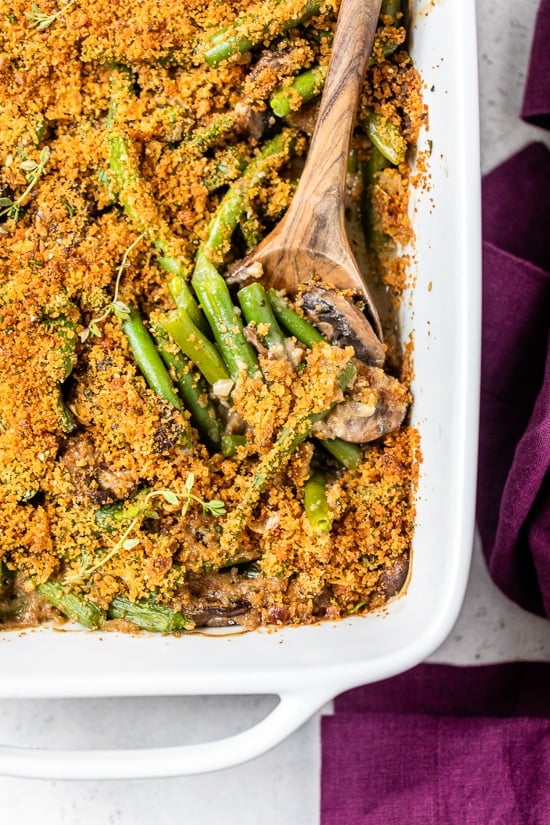
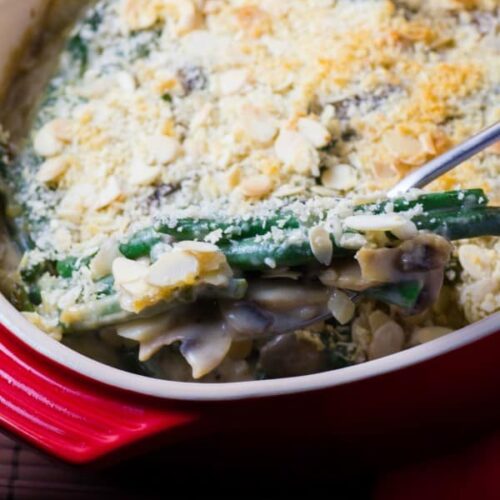
Lightened green bean casserole is a lighter take on the classic American holiday side dish. It uses tender green beans, a creamy mushroom sauce, and a crisp onion topping, with simple ingredient swaps that can reduce added fat and sodium.
Across the United States, green bean casserole is a familiar sight at Thanksgiving dinner. It often sits beside roast turkey, mashed potatoes, gravy, and cranberry sauce. The classic version usually combines green beans, canned cream of mushroom soup, milk, and crispy fried onions. It tastes rich and comforting, but the sauce and topping can add plenty of fat and salt.
A lightened green bean casserole keeps the flavors that make this dish popular while changing a few ingredients. Fresh or frozen green beans provide a tender, colorful base. A homemade mushroom sauce made with broth and milk can replace condensed soup, while a measured layer of crispy onions adds crunch without covering every inch of the dish. These changes can make the casserole feel less heavy while keeping it suitable for a family meal.
This guide explains how to make the casserole, which ingredients work best, how to prepare it ahead, and how to avoid a watery sauce. It also covers dairy-free options, ingredient swaps, food safety, and ways to adjust the recipe to your needs. The nutrition benefit depends on the ingredients and serving size, so the best approach is to compare the amounts used rather than assume every lighter version is automatically low in calories or sodium.
A lighter green bean casserole changes the ingredients that contribute most to its richness without removing the creamy texture or savory flavor. The main opportunities are the sauce, the amount of added fat, and the crispy onion topping. You do not need to remove every rich ingredient to make a meaningful change.
Traditional recipes often use condensed cream of mushroom soup and a generous layer of fried onions. Those ingredients are convenient, but their nutrition values vary by brand and portion. A homemade sauce gives you more control over the amount of butter, milk, salt, and broth. A smaller amount of crispy onions can still give each serving a familiar crunch.
The goal is balance, not a promise that one version fits every diet. Green beans add fiber and several vitamins, while mushrooms provide savory flavor. Milk contributes protein and calcium, depending on the type used. The complete nutrition profile still depends on the portion size and every ingredient in the dish.
Source: diethood.com
Use a lighter sauce
Replace some or all of the condensed soup with a homemade mushroom sauce made from broth, milk, mushrooms, and flour.
Measure the topping
Use enough crispy onions to create a golden, crunchy finish without burying the vegetables.
Keep the beans central
Use a generous amount of green beans so the dish remains a vegetable side rather than mostly sauce and topping.
Control the salt
Choose lower-sodium broth when available and taste the sauce before adding extra salt.
Is Lightened Green Bean Casserole Healthy?
It can be a useful way to serve vegetables with less added fat or sodium than some traditional versions. However, healthy means different things to different people. A person watching sodium may focus on the broth and packaged onions, while someone reducing saturated fat may pay more attention to butter, cream, and cheese.
There is no single nutrition value for every lightened green bean casserole. The best comparison uses the actual ingredient labels, quantities, number of servings, and final portion size. If you need a specific nutrition target, calculate the recipe using the ingredients you plan to use.
For less sodium
Choose low-sodium broth, compare canned soup labels if using soup, and add salt only after tasting.
For less saturated fat
Use low-fat milk and limit butter or other high-saturated-fat ingredients.
For more control
Make the sauce from scratch so you can adjust its ingredients to your needs.
Ingredients for a Creamy Lightened Green Bean Casserole
This recipehttps://recipesdot.com/recipes/ serves about six as a side dish and uses everyday ingredients found in many US grocery stores. The sauce starts with mushrooms, garlic, broth, and milk. A little flour helps it thicken, while crispy fried onions provide the crunch associated with classic green bean casserole.
Fresh green beans offer a firm texture and bright color. Frozen beans are a convenient option, especially during a busy holiday week. Canned beans can also work, but they are usually softer and may contain added sodium. Drain canned beans well and adjust the cooking time to avoid a mushy result.
Use plain milk rather than sweetened plant milk. Unsweetened soy milk or another suitable unsweetened alternative may work, although the taste and thickness can differ. If you use a packaged topping or broth, check its label when sodium, allergens, or other dietary needs matter.
Source: greengiantvegetables.com
Green beans
About 1 1/2 pounds fresh green beans, trimmed and cut into bite-size pieces, or an equivalent amount of frozen beans.
Mushrooms
Eight ounces of sliced cremini or white mushrooms for a deep, savory flavor.
Aromatics
Two cloves of minced garlic and about 1/2 cup finely chopped onion.
Cooking fat
One tablespoon of olive oil or a modest amount of butter for cooking the vegetables.
Flour
Two tablespoons of all-purpose flour to help thicken the sauce.
Milk and broth
One cup of low-fat milk and one cup of low-sodium vegetable or chicken broth.
Seasoning
Black pepper, a small pinch of dried thyme, and salt to taste.
Crispy onions
About 3/4 cup packaged crispy fried onions, divided between the casserole and its topping.
Can You Use Fresh, Frozen, or Canned Green Beans?
All three options can work, but they need slightly different preparation. Fresh beans offer a firm bite and a fresh vegetable flavor. Frozen beans save trimming time, while canned beans are the quickest option for a last-minute side dish.
For fresh beans, blanch them in boiling water until bright green and just tender, then drain and cool them briefly. Frozen beans should be prepared according to the package directions and drained well. For canned beans, drain and rinse them if you want to remove some surface sodium, then let excess water run off before mixing them with the sauce.
Fresh beans
Best when you want a firm texture and have time to trim and blanch them.
Frozen beans
Useful for quick prep; remove excess moisture before adding the sauce.
Canned beans
Convenient and soft; drain well and shorten the baking time if they are already very tender.
How to Make Lightened Green Bean Casserole
The key to a good casserole is to cook the beans until just tender, build a smooth mushroom sauce, and avoid adding too much liquid. The oven finishes the dish and lets the flavors blend. For the best texture, add the crispy onions near the end rather than leaving them in the oven for the full cooking time.
Preheat the oven to 375°F. Lightly grease a medium baking dish, about 2 quarts in capacity. If you are using a shallow dish, check the casserole early because the sauce may bubble and brown faster than it would in a deeper pan.
Source: i.pinimg.com
Step 1: Prepare the green beans
Blanch fresh beans in boiling water until bright green and just tender, usually around 4 to 5 minutes depending on thickness. Drain well. For frozen beans, follow the package directions and remove excess moisture.
Step 2: Cook the mushrooms
Heat the oil in a skillet over medium heat. Add the chopped onion and mushrooms. Cook for about 6 to 8 minutes, stirring now and then, until the mushrooms release their moisture and begin to brown.
Step 3: Add the garlic
Stir in the minced garlic and dried thyme. Cook for about 30 seconds, just until fragrant. Garlic can burn quickly, so do not leave it unattended.
Step 4: Make the sauce
Sprinkle the flour over the mushroom mixture and stir for about one minute. Slowly pour in the broth while whisking or stirring to prevent lumps. Add the milk gradually and simmer gently until the sauce thickens enough to coat the back of a spoon.
Step 5: Combine the ingredients
Taste the sauce and add black pepper and salt as needed. Fold in the drained green beans and about 1/4 cup of crispy onions. Stir until the beans are coated, then transfer the mixture to the prepared baking dish.
Step 6: Bake the casserole
Bake for about 20 minutes, or until the sauce bubbles around the edges and the center is hot. Add the remaining crispy onions during the final 5 to 8 minutes so they can turn golden without becoming too dark.
Step 7: Rest and serve
Let the casserole stand for about 5 minutes before serving. The sauce will settle slightly as it cools, making it easier to spoon onto plates.
How Do You Know When the Casserole Is Ready?
Look for small bubbles around the edges, a hot center, and a topping that has turned golden brown. The sauce should coat the beans instead of pooling like thin soup. The green beans should be tender but still hold their shape.
If the sauce bubbles but remains watery, the beans may have released too much moisture or the sauce may not have thickened enough before baking. Remove the dish from the oven if the onions are already brown. You can serve the casserole once it is thoroughly hot, but a very thin sauce may need a little more reduction during stovetop preparation the next time you make it.
Watery sauce
Drain the beans more thoroughly and simmer the mushroom sauce until it thickens before combining the ingredients.
Dry casserole
Stir in a small splash of warm broth or milk before serving if the sauce has become too thick.
Burning onions
Add the topping later in the baking process and cover loosely with foil if the surface browns too quickly.
Simple Ways to Customize the Recipe
A lightened casserole can fit different tastes and meal plans without losing its main character. Mushrooms and green beans provide the base flavor, so small changes to the herbs, milk, or topping can make a noticeable difference. Start with one change at a time so you can see how it affects the texture.
If your family likes a richer sauce, a small amount of grated Parmesan can add savory depth. If you prefer a fresher taste, add a little chopped parsley after baking. These additions are optional, and their nutrition impact depends on the quantity used.
Source: thecuriousplate.com
Add more herbs
Try thyme, a small amount of rosemary, or chopped parsley. Use rosemary sparingly because its flavor can overpower the mushrooms.
Boost the savory flavor
Let the mushrooms brown before adding the liquid. Browning adds depth without requiring extra cream or cheese.
Use a different topping
A small amount of whole-grain breadcrumbs mixed with a little olive oil can replace some or all of the crispy onions, though the flavor and crunch will differ.
Add cheese carefully
A light sprinkle of Parmesan can make the sauce taste richer. Check the salt level first because cheese can add sodium.
How to Make It Dairy-Free
For a dairy-free version, use an unsweetened plant-based milk and vegetable broth. Unsweetened soy milk is one option because it often has more protein than many other plant milks. Choose a variety with a mild flavor and check that it is suitable for your dietary needs.
Use olive oil instead of butter, and confirm that the crispy onion topping contains no milk ingredients if dairy avoidance is necessary. The sauce may be thinner or taste slightly different from one made with dairy milk. Simmer it until it reaches the desired consistency before mixing it with the beans.
Check labels
Packaged onions, broth, and plant-based milk can contain ingredients that matter for allergies or dietary restrictions.
Avoid sweetened milk
Vanilla or sweetened plant milk can create an unexpected flavor in a savory casserole.
How to Make It Gluten-Free
Replace the all-purpose flour with a suitable gluten-free flour blend or use a cornstarch slurry to thicken the sauce. For a slurry, mix cornstarch with cold water until smooth, then whisk it into the simmering liquid in small amounts. Let it cook briefly until thickened before adding the beans.
Check the broth and crispy onions for gluten-containing ingredients and cross-contact statements. If you are cooking for someone with celiac disease, use ingredients that meet their requirements and keep preparation surfaces and utensils free from gluten-containing crumbs.
Choose a suitable thickener
Use a labeled gluten-free flour blend or cornstarch instead of ordinary wheat flour.
Verify the topping
Fried onion products vary, so do not assume every brand is gluten-free.
Nutrition, Portions, and Ingredient Choices
A lighter recipe does not have one fixed calorie count. The amount of oil, type of milk, quantity of crispy onions, and serving size all affect the final result. A homemade sauce may make it easier to manage sodium and saturated fat, but the exact difference depends on what it replaces.
For a reliable nutrition estimate, enter the quantities and brands you actually use into a recipe calculator. Divide the total by the number of portions you serve. If you change the recipe after calculating it, update the estimate rather than reusing the old number.
A serving of this casserole is generally intended as one part of a larger meal. Pairing it with a source of protein and other vegetables can help create a balanced plate. If you follow a medically prescribed diet, use the nutrition information that matches your needs rather than relying on a general label such as light or healthy.
Source: irepo.primecp.com
For lower sodium
Use low-sodium broth, compare packaged topping labels, and taste before adding salt.
For lower saturated fat
Choose lower-fat milk and measure the cooking fat rather than pouring it freely.
For portion control
Divide the casserole into six similar portions so the nutrition estimate matches the serving size.
For more vegetable volume
Add more green beans while keeping the sauce thick enough to coat them. Increase seasoning gradually if the batch becomes larger.
Does the Topping Make a Big Difference?
It can. Crispy fried onions add flavor and texture, but they also contribute fat, calories, and sodium. The amount used matters, so measuring the topping is more useful than removing it without considering the result.
A measured layer spread across the top can give each serving a crunchy finish. If you replace the onions with breadcrumbs, the nutrition values will change according to the bread, oil, and amount used. Compare the labels when the difference matters to your meal plan.
Keep the crunch
Reserve the topping for the final minutes of baking so less of it becomes soggy.
Measure before adding
Use a measuring cup instead of adding handful after handful.
Make-Ahead, Storage, and Reheating Tips
Preparing the beans and sauce ahead can make holiday cooking easier. You can blanch the beans, cook the mushroom sauce, and store them separately in the refrigerator. For the best topping, wait until just before baking to add the crispy onions.
You can also assemble the casserole ahead of time, but the beans may release moisture as they sit. If you prepare it the day before, cool the cooked components promptly, refrigerate them in covered containers, and assemble the chilled ingredients shortly before baking. Allow extra time for the center to heat through, and do not rely on a fixed baking time alone.
For food safety, refrigerate perishable cooked food within two hours, or within one hour when the surrounding temperature is above 90°F. Keep the refrigerator at 40°F or below. Use refrigerated leftovers within three to four days, and reheat them to 165°F as measured with a food thermometer.
Source: noshingwiththenolands.com
Refrigerate leftovers
Place leftovers in shallow, covered containers and refrigerate promptly rather than leaving the casserole on the table for hours.
Reheat gently
Warm individual portions in the microwave or reheat the casserole in an oven until the center reaches 165°F.
Restore some crunch
If the topping has softened, add a small fresh portion of crispy onions near the end of reheating.
Freeze with care
The casserole can be frozen, but the creamy sauce may separate and the beans may soften after thawing. Freeze in a suitable airtight container and reheat thoroughly.
Can You Assemble the Casserole the Night Before?
Yes. For the best result, prepare the sauce and beans, cool them promptly, and store them covered in the refrigerator. Combine them in the baking dish when convenient, or keep them separate if you want more control over moisture.
Do not add the crispy onion topping until the casserole is ready to bake. Bake until the center is thoroughly hot and the sauce bubbles. If the dish goes into the oven cold, it will need more time than a freshly assembled casserole.
Keep the topping separate
Store crispy onions in their original package or another dry container.
Check the center
Use a food thermometer when needed to confirm that reheated leftovers reach 165°F.
Common Mistakes and How to Fix Them
Most problems with green bean casserole come from excess moisture, an under-thickened sauce, or a topping that spends too long in the oven. The good news is that each problem has a simple cause to check. Focus on the beans and sauce first because the topping cannot hide a watery base.
A creamy casserole should cling to the beans. It does not need to be stiff, but it should not look like a bowl of thin soup. Preparing the sauce to the right thickness before baking gives you more control over the final texture.
Source: skinnytaste.com
Mistake: Adding wet beans
Water clinging to blanched, frozen, or canned beans can thin the sauce. Drain them well and pat them dry when needed.
Mistake: Pouring in all the liquid at once
Adding broth and milk gradually while stirring helps prevent lumps and makes it easier to judge the sauce’s thickness.
Mistake: Cooking the topping too early
Fried onions can darken before the casserole heats through. Add them near the end of baking.
Mistake: Adding too much salt
Broth and packaged toppings can already be salty. Taste the sauce before seasoning it further.
Mistake: Overcooking the beans
Beans that are very soft before baking may turn mushy. Blanch them only until just tender.
What If the Sauce Is Too Thin?
If the casserole has not gone into the oven yet, return the sauce to the skillet and simmer it gently until it thickens. Stir often so the milk does not scorch. If needed, mix a little cornstarch with cold water and add the slurry gradually while stirring.
If the casserole is already baking, avoid stirring the entire dish unless the texture truly needs it. Remove it when the center is hot, let it stand for a few minutes, and assess the sauce. Resting can help it settle, but a large amount of extra liquid may not disappear during that time.
Before baking
Thicken the sauce on the stove and drain the beans more thoroughly.
After baking
Let the casserole stand briefly and serve it once hot. Make a thicker sauce next time if the result remains loose.
How to Serve This Lighter Holiday Side Dish
Lightened green bean casserole fits naturally into a Thanksgiving or Christmas meal, but it is not limited to the holidays. Its creamy mushroom sauce pairs well with roast chicken, turkey breast, baked fish, or a simple lentil main dish. It also works beside roasted potatoes and a crisp green salad for a smaller dinner.
For a holiday spread, place the casserole near the other warm sides so guests can serve themselves while the topping is still crisp. If you are feeding a crowd, consider making two smaller dishes instead of one very deep casserole. Smaller dishes can heat more evenly and give you more control over the timing.
If you are serving guests with dietary restrictions, label the dish and mention the main ingredients. Milk, wheat flour, and packaged crispy onions may be relevant to people managing allergies or avoiding certain foods. Confirm the labels rather than assuming a familiar brand or recipe is suitable for every guest.
Source: flirtyfood.com
For Thanksgiving
Serve with roast turkey, mashed potatoes, cranberry sauce, and another vegetable side.
For a weeknight dinner
Pair with roast chicken, baked potatoes, or a plant-based protein.
For a larger group
Use shallow baking dishes and keep the crispy topping separate until the final stage.
Frequently Asked Questions
Q
Can I make lightened green bean casserole without cream of mushroom soup?
Yes. A homemade sauce made with mushrooms, broth, milk, and flour can replace condensed cream of mushroom soup. Cook the mushrooms first, stir in the flour, and add the liquids gradually. Simmer until the sauce coats a spoon before mixing it with the green beans.
Q
Can I use frozen green beans for this recipe?
Yes. Frozen green beans are a convenient substitute for fresh beans. Prepare them according to the package directions, then drain away excess moisture. Avoid overcooking them before baking because they will soften further in the oven.
Q
How can I reduce sodium in green bean casserole?
Use low-sodium broth, compare the labels on packaged crispy onions, and add salt only after tasting the sauce. If you use canned beans or condensed soup, compare brands because sodium levels can vary. The total amount in each serving also depends on how many portions the recipe makes.
Q
Can I make green bean casserole the day before Thanksgiving?
Yes. Prepare the beans and sauce, cool them promptly, and refrigerate them in covered containers. Assemble the casserole before baking and add the crispy onions near the end. Bake until the center is thoroughly hot, allowing extra time if the ingredients are cold.
Q
How long does green bean casserole last in the refrigerator?
Store leftovers in covered containers in a refrigerator set at 40°F or below and use them within three to four days. Refrigerate the casserole within two hours of cooking, or within one hour when temperatures are above 90°F. Reheat leftovers to 165°F before serving.
Q
Why is my lightened green bean casserole watery?
Excess water from the green beans or a sauce that was not thick enough before baking is a common cause. Drain the beans well and simmer the sauce until it coats a spoon. If you use frozen or canned beans, remove as much extra liquid as practical before combining them with the sauce.
✦ Wrapping Up
Conclusion
Lightened green bean casserole offers a practical way to keep a familiar American holiday side dish on the table while giving you more control over the ingredients. Tender green beans, browned mushrooms, a smooth milk-based sauce, and a measured crispy onion topping deliver the creamy texture and savory taste many people expect. You can also adjust the recipe for dairy-free or gluten-free needs with careful ingredient choices.
The most useful changes are simple: drain the beans well, thicken the sauce before baking, measure the topping, and season gradually. Prepare the components ahead when needed, keep the casserole at a safe temperature, and use a food thermometer when reheating leftovers. These steps help you serve a casserole that tastes good and fits your meal plan more closely.
💡 Key Takeaway
Start with 1 1/2 pounds of green beans, make the mushroom sauce with low-sodium broth and low-fat milk, and measure the crispy onions. Bake at 375°F until hot and bubbling, then serve after a short rest.