
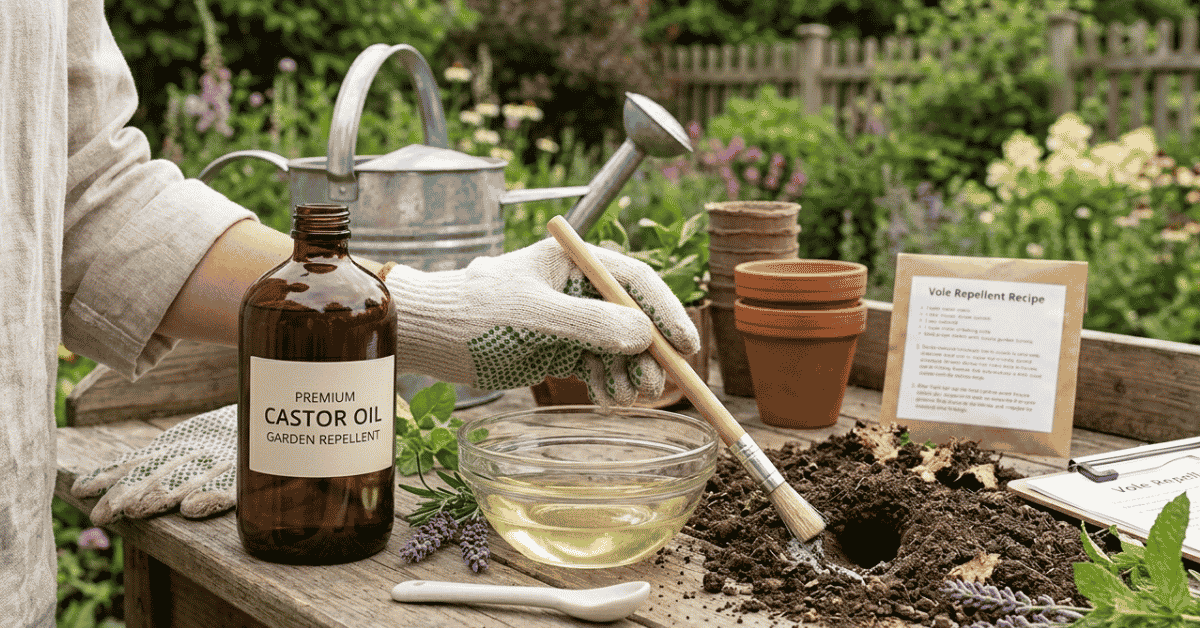
Need a simple castor oil vole repellent recipe that may help protect your yard? Learn easy steps, tips, and common mistakes. Try it today.
One spring morning, I walked into my yard and saw fresh tunnels near my flower beds. My heart sank. Weeks of work looked ruined. That was when I first tried a castor oil vole repellent recipe. After testing different methods over several seasons, I learned what works, what does not, and how to get better results.
Does a Castor Oil Vole Repellent Recipe Really Work?
In my experience, it can help.
The goal is not to kill voles. The goal is to make the area less appealing.
Castor oil may help because it affects the soil smell and taste. Many gardeners believe voles dislike it.
What I noticed:
- Less digging activity
- Fewer fresh tunnels
- Better plant protection
- Improved results with repeat use
Still, no repellent works perfectly every time.
Weather, soil, and vole numbers all play a role.
What Are Voles and Why Are They a Problem?
Many people confuse voles with mice.
They look similar but behave very differently.
Voles spend much of their time:
- Tunneling
- Digging
- Feeding on roots
- Damaging plants
I learned this the hard way.
One summer, several young shrubs suddenly died. When I checked the roots, vole damage was clear.
Common Signs of Voles
Watch for:
- Surface runways
- Small tunnels
- Chewed roots
- Damaged bulbs
- Dead plants
Early action helps limit damage.
Why Gardeners Use Castor Oil
Castor oil has become popular among gardeners.
It is easy to find and simple to use.
Benefits
Many people choose it because:
- It is easy to apply
- It is widely available
- It can cover large areas
- It is often less expensive than some products
I like that it fits into a broader yard care plan.
Limitations
It is important to stay realistic.
Castor oil may not:
- Remove all voles
- Work overnight
- Stay effective after heavy rain
That is why repeated treatment often helps.
My Favorite Castor Oil Vole Repellent Recipe
This is the recipe I use most often.
It is simple and quick.
Ingredients
You will need:
- 6 ounces castor oil
- 2 tablespoons mild dish soap
- 1 gallon water
Directions
- Mix castor oil and dish soap.
- Stir until blended.
- Add the mixture to water.
- Mix thoroughly.
- Pour into a garden sprayer.
How To Apply
Spray:
- Lawn areas
- Garden beds
- Tunnel zones
- Plant edges
Water lightly after application.
This helps move the mixture into the soil.
Why Dish Soap Matters
Many people skip this step.
I made that mistake once.
The results were poor.
Soap Helps Blend The Mixture
Oil and water do not mix well.
Dish soap acts as a bridge.
Benefits include:
- Better coverage
- More even spraying
- Improved distribution
Without soap, the oil tends to separate.
Best Times To Apply The Recipe
Timing matters.
Some days work better than others.
Spring
Spring is one of my favorite times.
New vole activity often starts then.
Fresh treatment can help discourage them.
Fall
Fall is another good choice.
Voles often prepare for colder months.
Protecting beds before winter can help.
After Rain
Heavy rain may reduce effectiveness.
Reapply if needed.
I often check for fresh tunnels after storms.
Areas That Need Extra Attention
Some spots attract more vole activity.
Flower Beds
Voles love areas with cover.
Dense flower beds can become hiding spots.
Shrub Bases
Young shrubs often suffer damage.
I pay special attention to these areas.
Vegetable Gardens
Root crops can attract feeding activity.
Watch these areas closely.
Castor Oil Vole Repellent Recipe vs Other Methods
Different methods offer different results.
A combination often works best.
| Method | Cost | Effort | Long-Term Help |
|---|---|---|---|
| Castor Oil Spray | Low | Low | Moderate |
| Traps | Moderate | Moderate | Good |
| Fencing | Higher | High | Strong |
| Habitat Control | Low | Moderate | Good |
| Commercial Repellents | Moderate | Low | Moderate |
I rarely depend on just one method.
Layered protection works better.
Extra Steps That Improved My Results
The biggest gains came from combining methods.
Reduce Hiding Spots
I remove:
- Tall weeds
- Thick grass
- Brush piles
Less cover means fewer places to hide.
Protect Valuable Plants
For prized plants, I use barriers.
Simple wire guards can help.
Monitor Often
Frequent checks matter.
I walk my yard every few days during peak seasons.
This helps me spot new activity quickly.
Common Mistakes To Avoid
I made several of these myself.
Learning from them saved time later.
Applying Too Little
A weak treatment may not cover enough ground.
Follow the recipe closely.
Ignoring New Tunnels
Fresh tunnels signal active voles.
Treat those areas promptly.
Expecting Instant Results
Repellents take time.
Patience is important.
Skipping Reapplication
One treatment is rarely enough.
Regular maintenance helps.
How Often Should You Reapply?
This depends on conditions.
Normal Conditions
I often reapply every few weeks.
Heavy Rain
Rain can wash away treatment.
Additional applications may help.
High Activity Areas
Problem zones may need extra attention.
These spots often show new tunnels first.
Signs The Recipe May Be Working
Results vary.
Still, I watch for several clues.
Fewer New Tunnels
This is usually the first sign.
Fresh digging starts to slow down.
Less Plant Damage
Healthy plants suggest lower vole pressure.
Reduced Surface Runways
Visible travel paths become less common.
I noticed this after about two weeks in one heavily affected garden bed.
Is This The Perfect Solution?
No.
There is no perfect vole solution.
That is an important truth.
What It Does Well
The castor oil vole repellent recipe may:
- Help discourage activity
- Support other control methods
- Protect vulnerable areas
What It Does Not Do
It does not:
- Guarantee complete removal
- Eliminate large infestations
- Replace good yard maintenance
A balanced approach works best.
Why I Still Use This Recipe
After years of gardening, I keep returning to this method.
It is affordable.
It is simple.
It fits into a larger vole control plan.
Most important, I have seen fewer tunnels and healthier plants when I stay consistent.
That consistency matters more than any single product or trick.
FAQs
How often should I use a castor oil vole repellent recipe?
Most gardeners reapply every few weeks or after heavy rain. Consistent treatment often provides better protection than a single application. Learn more about timing.
Can a castor oil vole repellent recipe remove all voles?
No. A castor oil vole repellent recipe may discourage activity, but complete removal often requires multiple control methods. Learn more about vole management.
Is castor oil safe for garden plants?
When diluted and applied properly, many gardeners use castor oil around lawns and beds without harming plants. Learn more about safe application.
What is the best place to spray the mixture?
Focus on tunnels, runways, garden beds, shrub bases, and areas with fresh activity. These spots often show the most vole traffic. Learn more about placement.
Does rain affect a castor oil vole repellent recipe?
Yes. Heavy rain may reduce effectiveness by washing the mixture deeper into the soil. Reapplication may be needed afterward. Learn more about maintenance.