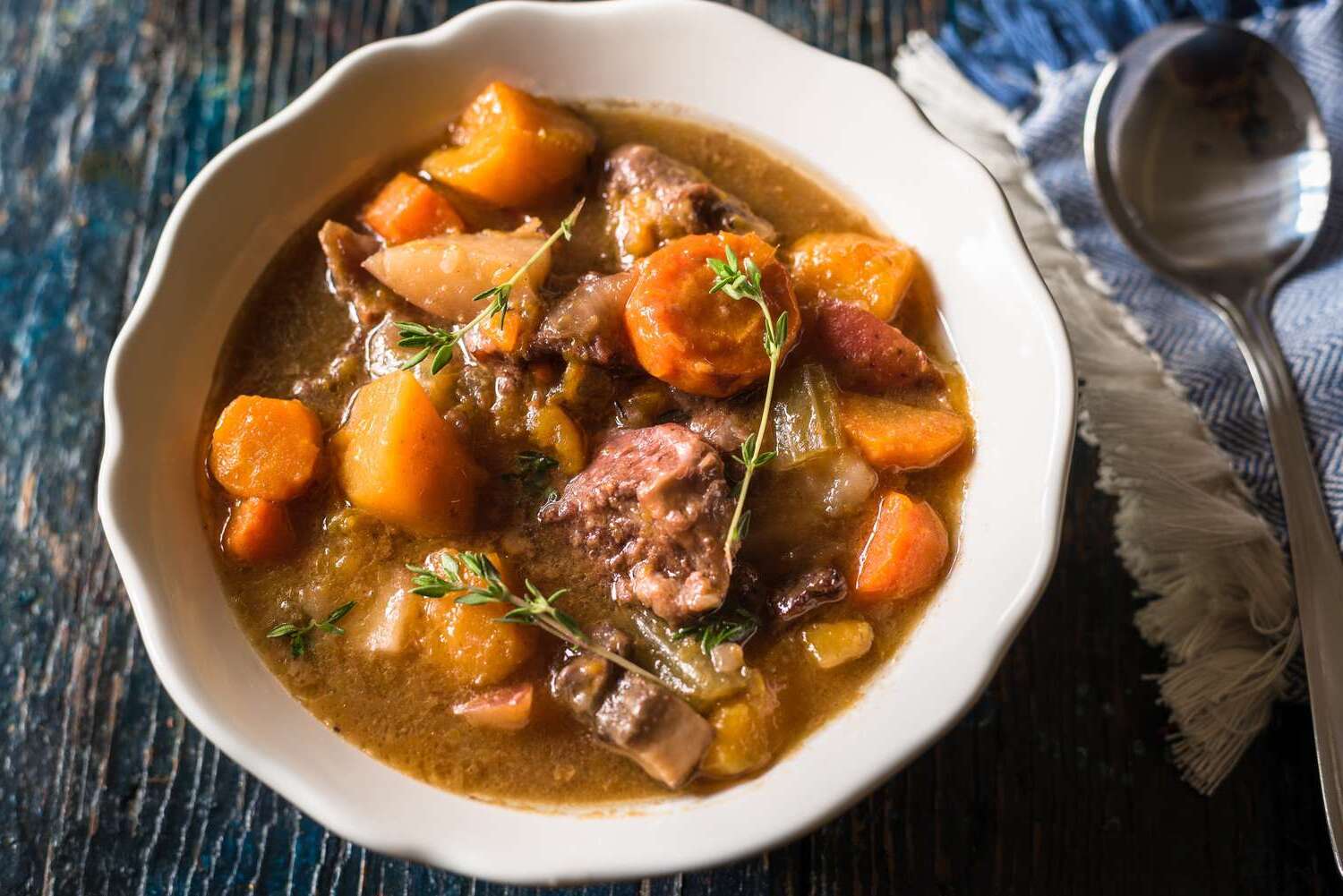
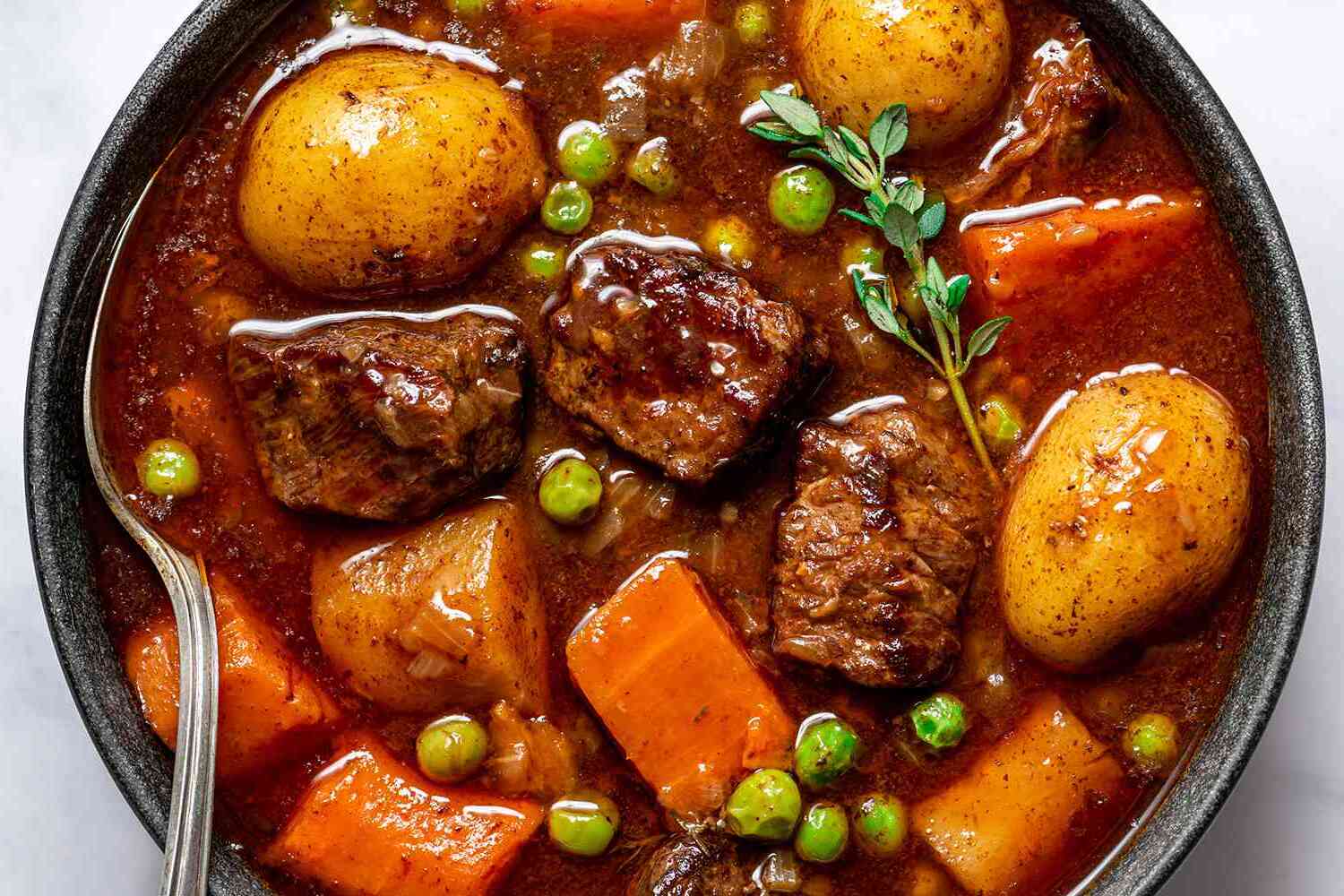
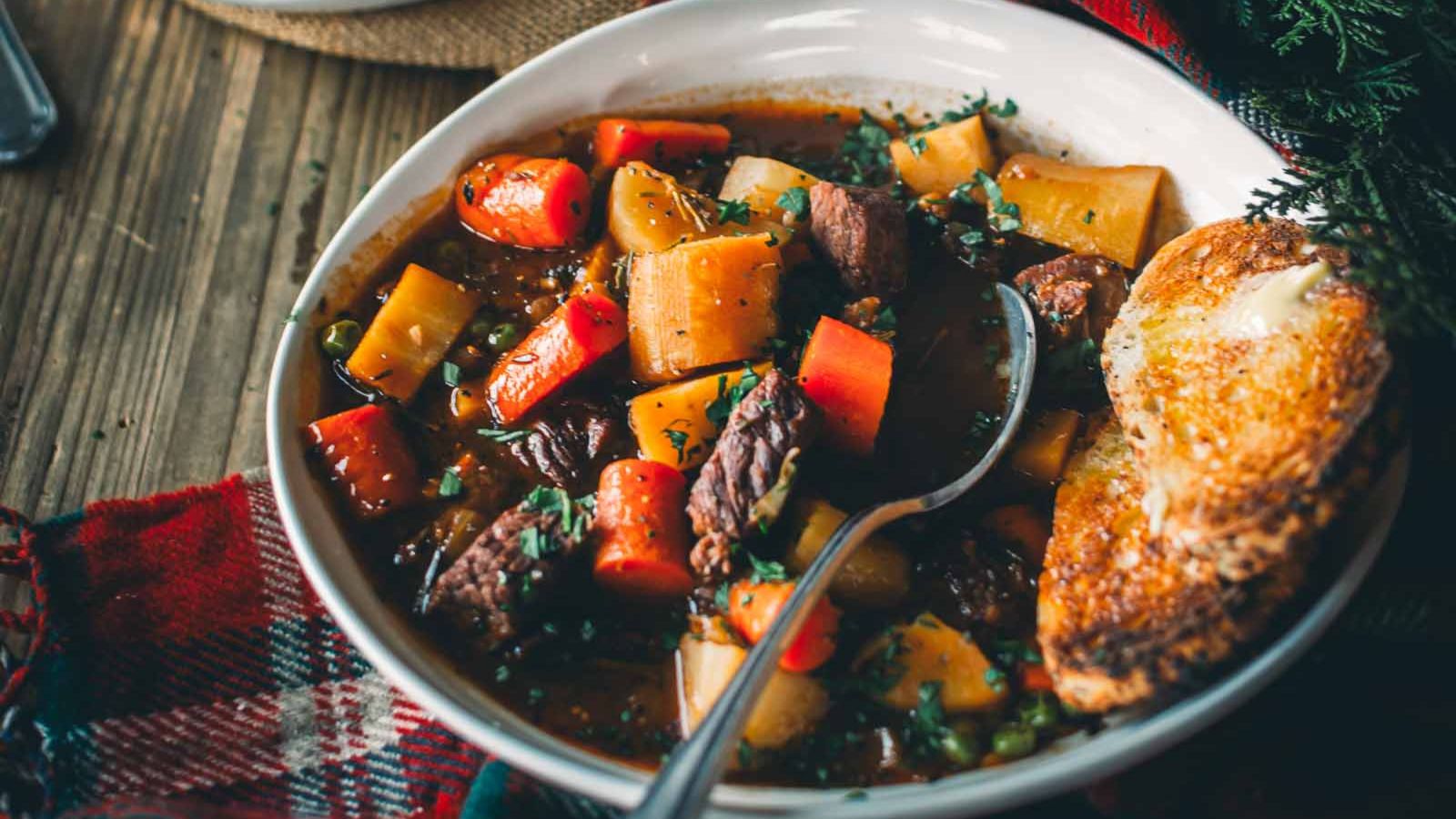
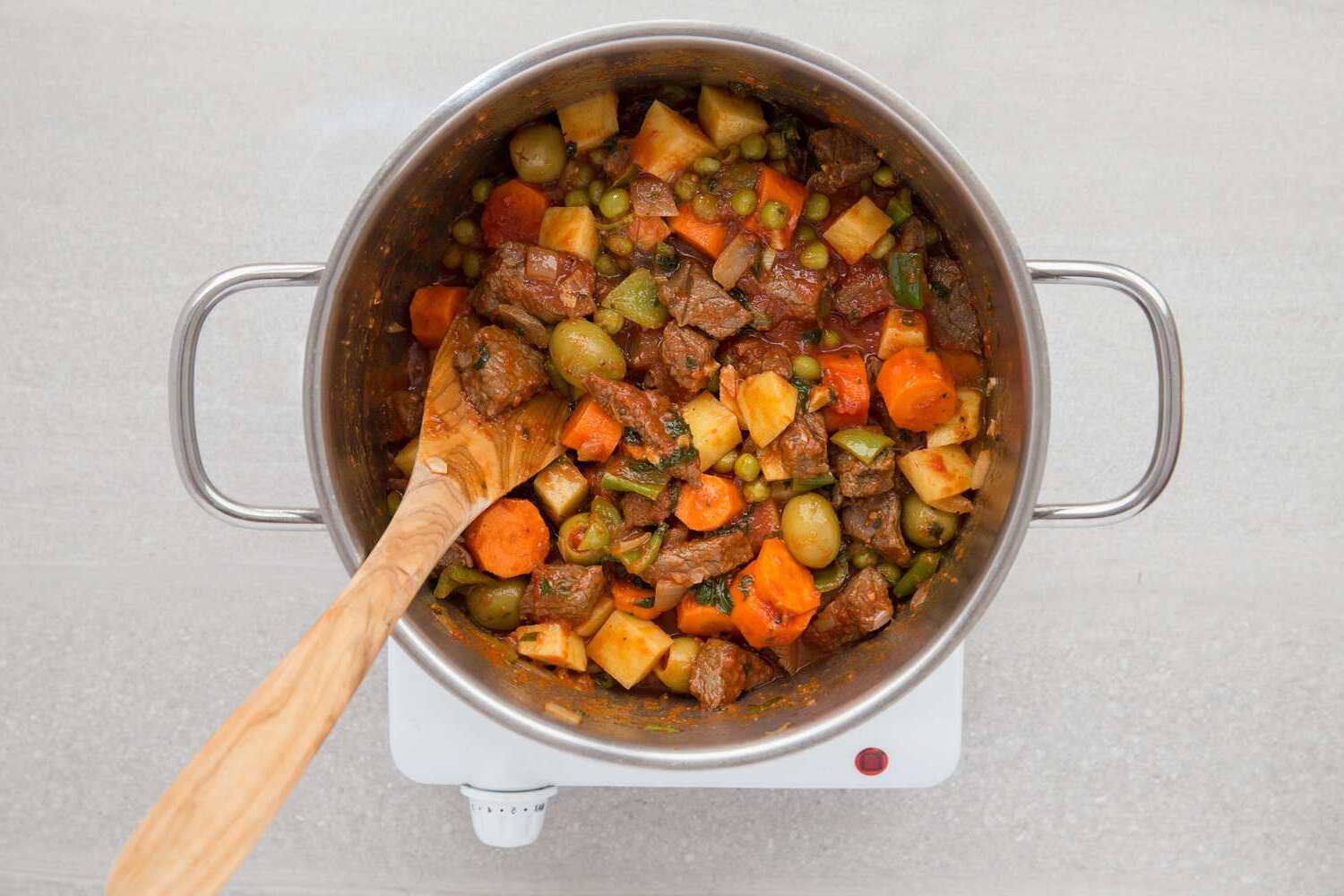
A carnivore beef stew recipe uses tender beef, animal fat, salt, and water or unsalted meat broth to make a rich stew without plant-based ingredients. Slow cooking helps tough cuts soften and gives the broth a deep, meaty taste.
Across the United States, beef stew is a familiar comfort food on cold evenings, busy weekdays, and relaxed family weekends. A traditional American stew often includes potatoes, carrots, onions, and peas. This carnivore version takes a different path. It puts beef at the center of the pot and leaves out vegetables, grains, flour, and other plant-based additions.
The result is a simple meal built around meat, fat, salt, and cooking liquid. You can make it with beef chuck, stew meat, or other suitable cuts that benefit from long cooking. The broth can be light and clear or rich and thick, depending on your method. Since there are no potatoes or flour to thicken it, the cooking process and choice of meat play a larger role in the final texture.
This guide explains how to prepare carnivore beef stew on the stove, in a slow cooker, or in a pressure cooker. It also covers useful cuts, broth choices, food safety, storage, and common cooking problems. The recipe is flexible, but the basic goal stays the same: tender beef in a savory broth with no added plant foods.
A carnivore beef stew focuses on animal foods instead of the mix of meat and vegetables found in a standard stew. The core ingredients are beef, salt, animal fat, and water or a broth made from suitable animal ingredients. Some versions also use eggs or dairy, but those ingredients are optional and may not fit every person’s interpretation of the diet.
The word carnivore can mean different things in practice. Some people eat only meat, salt, and water, while others include eggs, butter, ghee, cream, or certain dairy products. For that reason, check every ingredient against your own dietary rules. A packaged broth may contain onion powder, yeast extract, sugar, or vegetable flavorings even when the front label emphasizes beef.
This recipe uses a simple base so you can decide whether to add other animal foods. It does not rely on flour, cornstarch, tomato paste, wine, or vegetables for flavor or thickness. The broth gains body from the beef itself and from the fat and gelatin released during cooking.
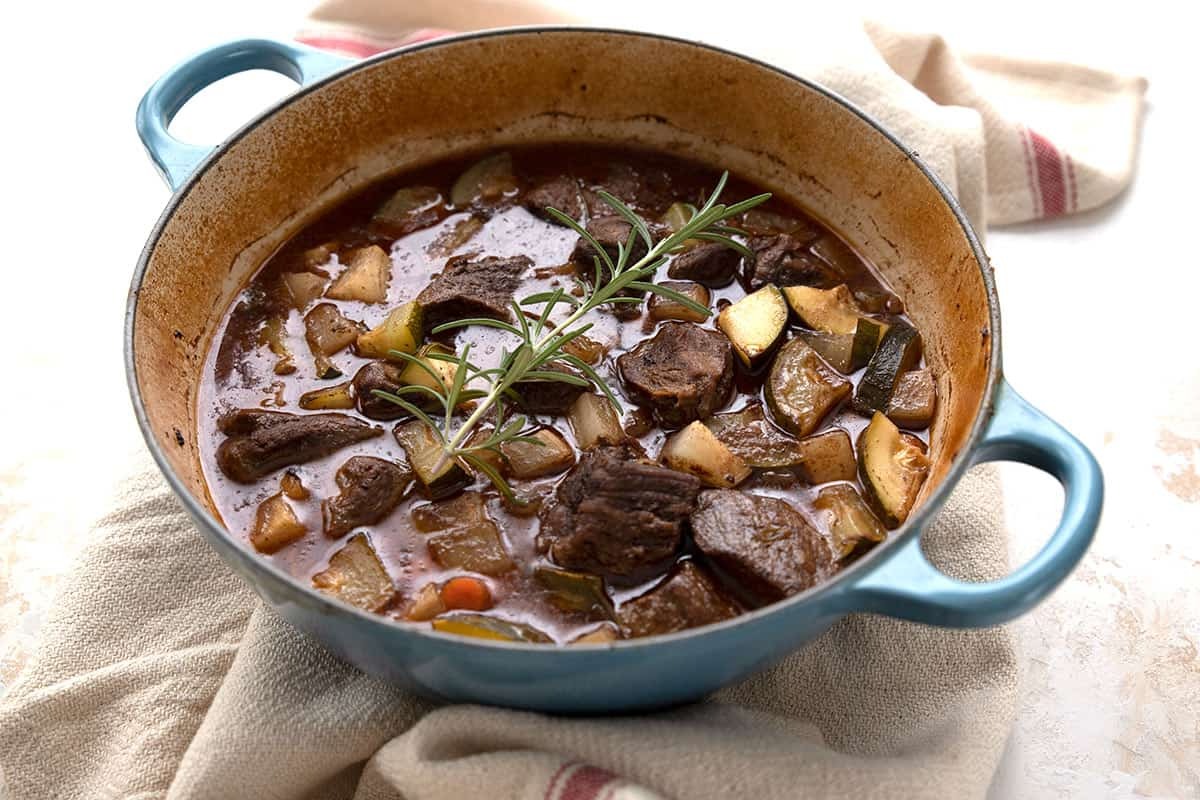
Source: homepressurecooking.com
Beef
Use chuck roast cut into chunks or plain beef stew meat. Cuts with connective tissue usually work well for long, moist cooking.
Cooking fat
Beef tallow or rendered beef fat helps brown the meat. Butter or ghee may suit less restrictive versions.
Cooking liquid
Water is the simplest option. A verified beef broth can add more flavor if its ingredients fit your dietary approach.
Seasoning
Salt is the basic choice. Pepper and dried herbs are common in ordinary stew, but they are plant ingredients and do not fit a strict carnivore recipe.
Is Carnivore Beef Stew Really Zero Carb?
A stew made only with unseasoned beef, salt, animal fat, and water contains no intentionally added carbohydrate ingredients. However, it is better not to promise an exact zero-carb value without checking the ingredients and nutrition data. Packaged broth, seasoning blends, dairy products, and processed meat can add small amounts of carbohydrate.
Beef itself contains protein and fat, but its fat content varies by cut. Nutrition also changes with portion size and how much rendered fat remains in the serving. If you track carbohydrate intake closely, check the labels on all packaged ingredients and use a reliable nutrition database for the beef you buy.
For a strict approach
Use plain beef, salt, animal fat, and water, and check any packaged item before adding it.
For a flexible approach
Consider eggs or dairy only if they fit your own food rules and personal tolerance.
Ingredients for Carnivore Beef Stew
This recipe makes about four servings and uses a short ingredient list. For the best texture, start with beef that has some connective tissue and give it enough time to cook. Very lean meat can become dry or stringy when it is cooked for too long, especially if the liquid level drops too far.
Buy a chuck roast and cut it into even chunks if you have time. Pieces about 1 1/2 inches across are a useful starting point. Store-bought stew meat can save time, although the package may contain a mix of cuts that soften at different rates.
Source: homepressurecooking.com
2 pounds beef chuck
Cut into roughly 1 1/2-inch chunks. Plain stew meat is a convenient alternative.
1 to 2 tablespoons beef tallow
Use enough to coat the pot and brown the beef. Add more only if the pan looks dry.
1 teaspoon salt to start
Adjust after cooking. Broth can already contain salt, so taste before adding more.
4 cups water or suitable beef broth
Add enough liquid to support gentle cooking. The meat does not need to be fully submerged in every cooking method.
Optional animal-based additions
A small amount of bone broth, marrow, or beef drippings can enrich the stew if these fit your version of the diet.
Which Beef Cut Works Best?
Beef chuck is a dependable choice because it has a useful balance of muscle, fat, and connective tissue. During slow cooking, the connective tissue softens and releases gelatin, which can give the broth a fuller feel. The meat becomes tender when the cooking time and temperature allow enough breakdown.
Brisket and beef shank can also work, although each cut has its own texture and cooking needs. Shank often contains a good deal of connective tissue and may include bone. Brisket can produce rich meat but may need a long cook to soften well. If you use a very lean round roast, watch it closely because it may not produce the same rich texture.
Best general choice
Chuck roast offers a practical balance of flavor, fat, and tenderness after slow cooking.
For extra gelatin
Beef shank can add body to the broth, though the meat may need more cooking time.
For convenience
Precut stew meat reduces prep work, but check the pieces as they cook because mixed cuts may soften at different rates.
How to Make Carnivore Beef Stew on the Stove
The stovetop method gives you direct control over browning, simmering, and the final broth. It takes longer than a pressure cooker, but the steps are simple. Plan for around 2 1/2 to 3 1/2 hours of gentle cooking, with extra time if your beef chunks are large or your chosen cut is especially tough.
Use a heavy pot with a lid. A Dutch oven works well because it holds heat and keeps the liquid from boiling away too quickly. Keep the heat low after the stew reaches a simmer. A hard boil can make the liquid evaporate faster and may leave the meat firm or dry before the connective tissue has softened.
Source: homepressurecooking.com
Step 1: Prepare the beef
Pat the beef dry with clean paper towels. Cut large pieces into even chunks and trim only excess hard fat or unwanted tissue.
Step 2: Brown the meat
Heat the tallow in the pot over medium-high heat. Add the beef in batches and brown several sides. Avoid crowding the pot because packed meat tends to steam rather than brown.
Step 3: Add liquid
Return all browned beef to the pot. Add the salt and enough water or suitable beef broth to come partway up the meat.
Step 4: Simmer gently
Bring the liquid to a gentle simmer, then lower the heat and cover the pot. Check occasionally to make sure the liquid has not fallen too far.
Step 5: Check tenderness
Begin checking after about two hours. Continue cooking until a fork slides into the beef with little resistance and the chunks break apart easily.
Step 6: Adjust the broth
Taste the liquid and add salt if needed. Simmer uncovered for a short time if you want a more concentrated broth, or add a little hot water if it has become too strong.
How to Tell When the Beef Is Tender
Tenderness is the main sign that the stew is ready. A fork should enter the beef easily, and the meat should pull apart without a lot of force. If the center still feels rubbery or the fibers resist the fork, keep cooking and check again in 20 to 30 minutes.
Food safety and tenderness are different checks. Whole cuts of beef have a minimum safe cooking temperature, but stew meat often needs a much longer cook to reach the soft texture people expect. Use a food thermometer when needed and continue cooking for texture after the meat has reached a safe temperature.
The beef is firm
Keep the stew at a gentle simmer and allow more time for connective tissue to soften.
The liquid is low
Add hot water or suitable broth. Do not let the bottom of the pot scorch.
The broth tastes weak
Remove the lid and simmer briefly to reduce the liquid, then taste before adding more salt.
Slow Cooker and Pressure Cooker Methods
A slow cooker suits days when you want to prepare the meal early and let it cook with little attention. A pressure cooker is useful when you need tender beef in less time. Both methods can make a rich carnivore beef stew, but the amount of liquid and the timing differ.
Brown the meat first when practical. This step is not required for either appliance, yet it adds a roasted flavor that plain simmering may not provide. If you skip browning, the stew can still become tender, though its flavor may be less deep.
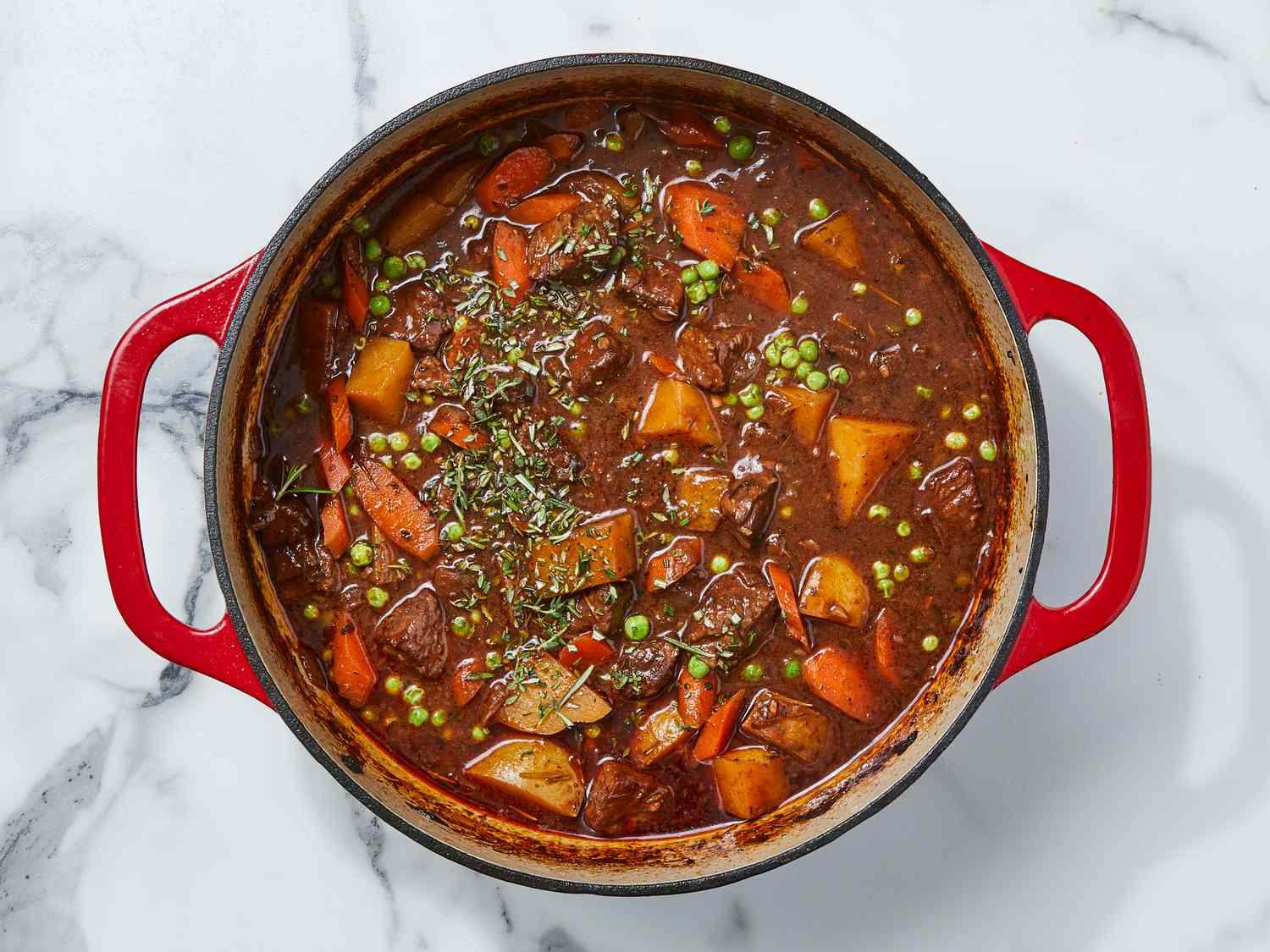
Source: designerandthediyer.com
Slow cooker
Place the browned beef, salt, and liquid in the cooker. Cook on low for about 7 to 9 hours or on high for about 4 to 5 hours, then check tenderness and continue as needed.
Electric pressure cooker
Brown the beef using the sauté setting. Add the required cooking liquid for your appliance, seal the lid, and cook at high pressure for about 35 to 45 minutes, followed by a natural pressure release when practical. Consult the appliance manual for its minimum liquid requirement and safe release instructions.
After cooking
Check that the meat is tender. If it is still firm, cook it longer rather than serving it just because the timer has ended.
Can You Make This Stew Without Browning the Beef?
Yes. Add the raw beef, salt, and liquid directly to the slow cooker if you want fewer dishes and less prep. The meat will cook in the liquid and can still become tender when given enough time. The broth may look lighter and taste less roasted because the browning step creates flavor compounds on the surface of the meat.
For a pressure cooker, browning is also optional unless your recipe or appliance instructions say otherwise. Never fill a pressure cooker beyond its marked limit, and follow the manual for liquid levels and pressure release. Meat and liquid expand or foam differently across appliances, so the manufacturer’s guidance takes priority over a generic cooking time.
Choose no browning
Use this route when convenience matters most or when you want to reduce prep time.
Choose browning
Use this route when you want a deeper roasted flavor and a darker broth.
How to Build Flavor Without Vegetables
Vegetables often add sweetness and aroma to classic beef stew, so leaving them out changes the flavor. You can still make the broth taste full by browning the beef, choosing a flavorful cut, and allowing enough time for the meat to cook. The goal is not to copy a vegetable stew exactly. It is to make a satisfying meat-based dish in its own right.
The cooking liquid matters too. Water keeps the ingredient list simple, while suitable beef broth can add more savory depth. If you use bone broth, check the label because some brands contain plant extracts, sweeteners, or seasonings that may not fit a strict carnivore plan.
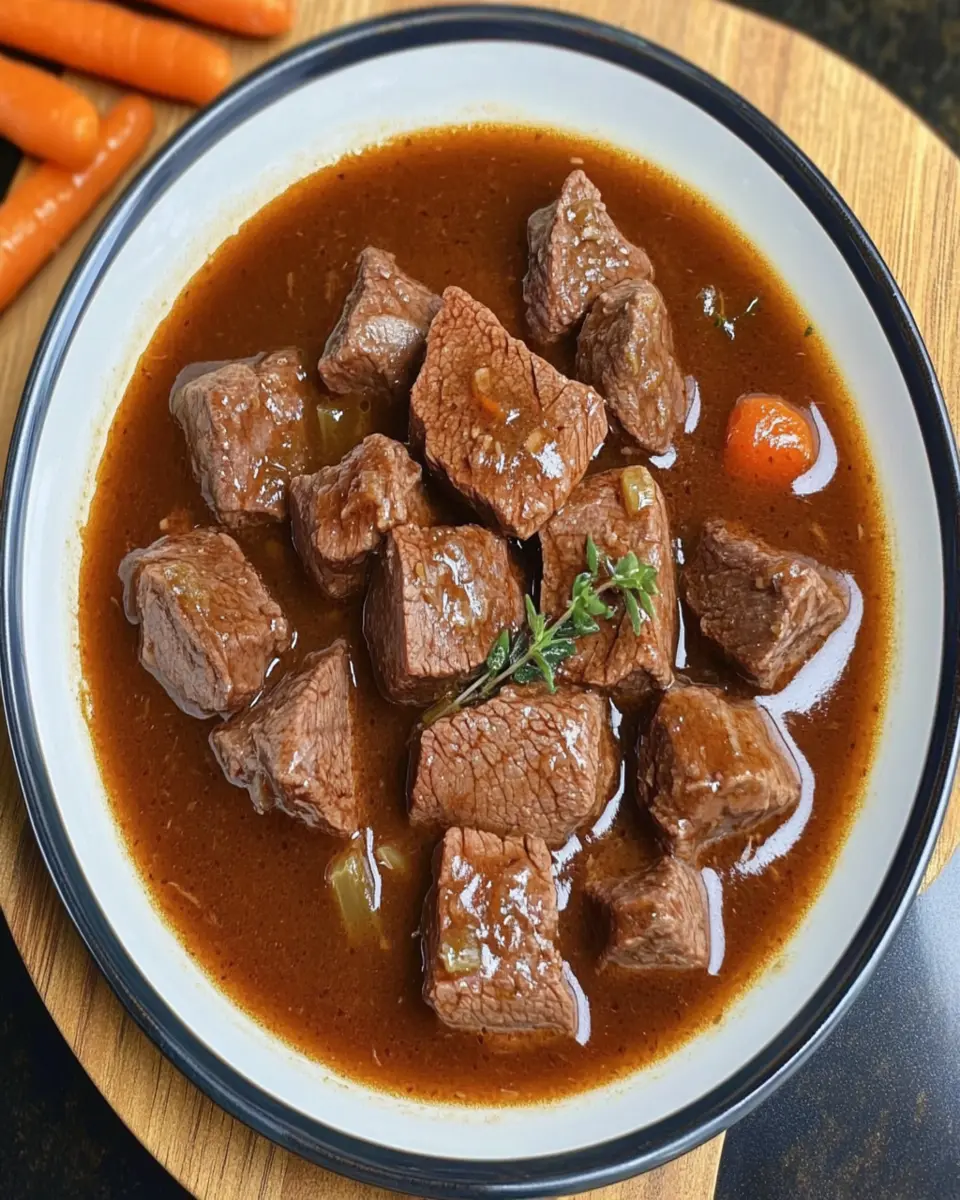
Source: i.pinimg.com
Brown in small batches
Give the beef room in the pot. A browned surface adds flavor that carries into the broth.
Use gelatin-rich cuts
Chuck and shank can add body to the liquid as their connective tissue softens.
Keep the heat gentle
A steady simmer helps the meat soften without excessive evaporation.
Reduce the broth
Remove the lid near the end and let some water evaporate if the liquid tastes thin.
Add animal fat with care
A small amount can enrich the broth, but too much may leave a greasy layer.
How to Make the Broth Thicker Without Flour
A strict carnivore stew does not need flour or starch to thicken it. The simplest method is to simmer the broth uncovered after the beef becomes tender. Water evaporates, so the remaining liquid tastes more concentrated. Watch the pot closely and stop before the broth becomes too salty or the bottom begins to scorch.
Gelatin released from connective tissue can also make the broth feel fuller, especially after it cools. If the stew contains a large amount of free fat, however, the liquid may seem oily rather than thick. Skim off excess fat with a spoon if you prefer a cleaner broth, or stir some back in if that suits your taste and dietary needs.
For a lighter broth
Add a little hot water and stir gently before serving.
For a richer broth
Reduce the liquid for a few minutes while keeping an eye on salt levels.
For more body
Choose a cut with connective tissue rather than relying on added thickeners.
Common Mistakes and Easy Fixes
Most problems with beef stew come from the cut of meat, the heat level, or the amount of liquid. A pot can look done while the beef is still tough, and a broth can taste flat even after a long cook. Small adjustments usually help, so check the meat and liquid before changing the whole recipe.
Avoid adding extra salt too early if you plan to reduce the broth. The flavor becomes more concentrated as water evaporates. Start with a modest amount, then taste near the end and adjust in small steps.
Source: homepressurecooking.com
Tough beef
The meat may need more time. Keep it at a gentle simmer and check again after 20 to 30 minutes.
Dry or stringy beef
The cut may be too lean or the stew may have cooked too hard. Use chuck next time and keep the liquid at a gentle simmer.
Greasy broth
Too much rendered fat may be floating on top. Skim some off, then stir and taste before serving.
Bland flavor
Brown the beef more thoroughly next time, check the salt level, and consider a suitable beef broth.
Watery broth
Simmer uncovered after the meat is tender to reduce the liquid without adding plant-based thickeners.
Overly salty broth
Add a little water or unsalted suitable broth. Do not expect reduction to fix excess salt because it will make the salt more concentrated.
Why Is My Beef Still Tough After Hours of Cooking?
Beef can remain tough when connective tissue has not had enough time to soften. This is common with chuck, shank, and other cuts suited to long cooking. Keep the pot covered and maintain a gentle simmer, then test a piece at regular intervals.
If the beef is already falling apart, additional cooking may cause it to lose its shape. At that point, lower the heat and serve it soon. If you are using a pressure cooker, check the manual and follow the recommended pressure release procedure before opening the lid.
Check the heat
A gentle simmer is usually better than a hard rolling boil for stovetop stew.
Check the cut
Lean steak cuts may not deliver the same soft, gelatin-rich result as chuck.
Serving Ideas for a Meat-Based Meal
Serve the stew hot in a warm bowl, with the beef chunks surrounded by a spoonful of rich broth. A simple serving can be enough for lunch or dinner, especially when the meat portion matches your appetite. If you prepare meals ahead, divide the stew into portions so it is easier to cool, store, and reheat.
People who follow a flexible carnivore approach may serve the stew with eggs, a little butter, or another animal-based food. These additions are optional rather than necessary. If you follow a strict version that excludes dairy and eggs, keep the bowl simple and use only ingredients that meet your rules.
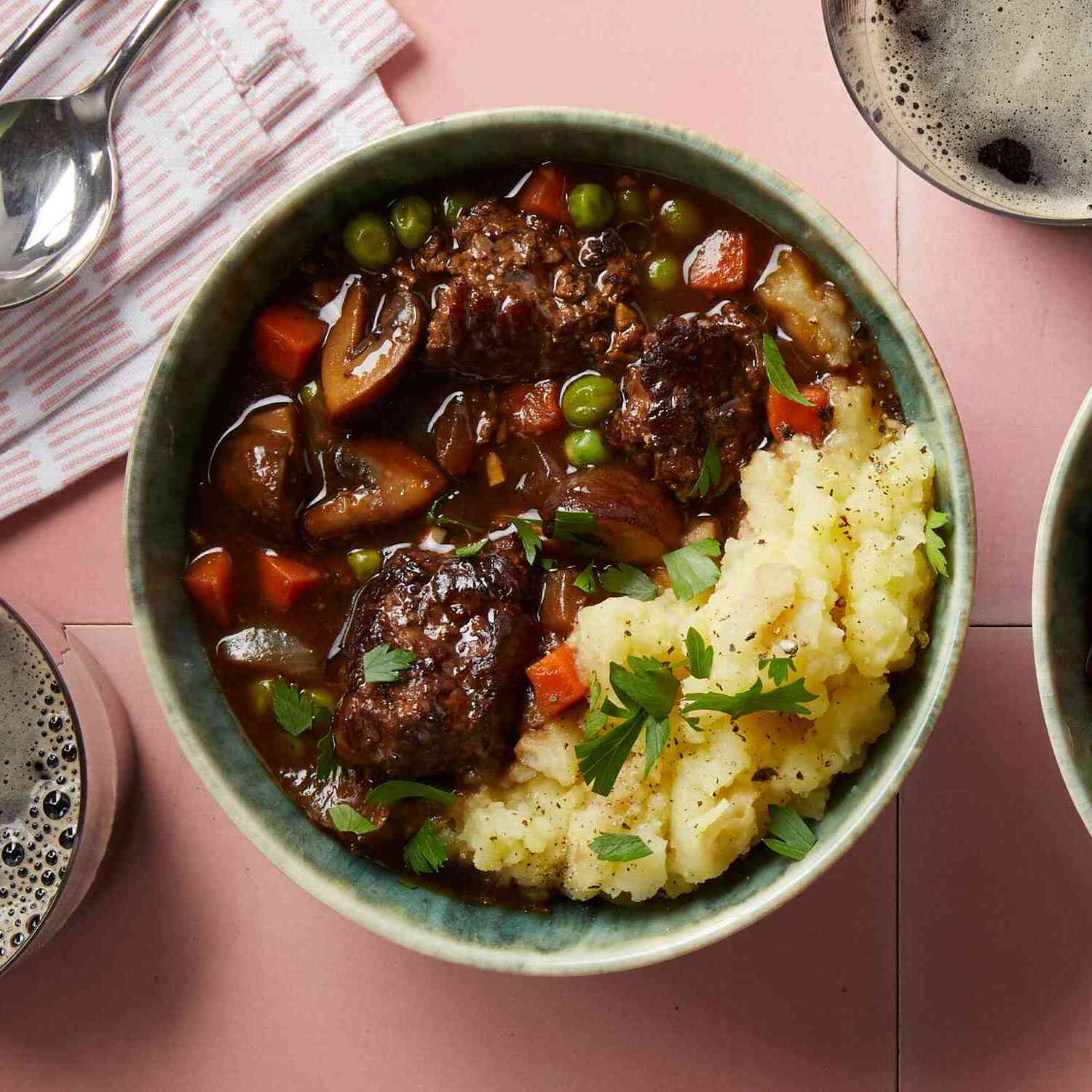
Source: girlcarnivore.com
Simple bowl
Serve the beef with a ladle of broth and adjust the salt just before eating.
Extra-rich serving
Stir in a small amount of beef tallow or marrow if you want more richness and it fits your dietary needs.
Meal prep portion
Divide the stew into single-meal containers after cooking and cool it promptly.
Is This Recipe Suitable for Every Carnivore Diet?
No single ingredient list fits every version of the carnivore diet. Some people include dairy and eggs, while others avoid them. Some accept commercially prepared broth, and others prefer water because packaged broth can contain extra ingredients.
This recipe is designed as a flexible starting point, not a medical diet plan. A meat-heavy diet can be low in fiber and may limit the range of nutrients available from other food groups. People with medical conditions, special nutritional needs, or prescribed diets should speak with a qualified health professional before making major dietary changes.
Strict meat-only plan
Use plain beef, salt, animal fat, and water, subject to your own dietary rules.
Flexible animal-food plan
Consider suitable broth, eggs, or dairy if you include those foods.
Storage, Freezing, and Reheating
Cooked beef stew keeps well when you cool and store it safely. Divide a large batch into shallow containers so it cools faster, rather than leaving the full pot on the counter for hours. Refrigerate the stew within two hours of cooking, or within one hour if the surrounding temperature is above 90°F.
Store the stew in a refrigerator at 40°F or below and use it within three to four days. For longer storage, freeze it in sealed, freezer-safe containers. Leave a little room for expansion and label each container with the date. Frozen stew is best used within a few months for quality, although safe storage time depends on maintaining a steady freezer temperature.
Source: homepressurecooking.com
Refrigerator
Keep cooked stew at 40°F or below and use it within three to four days.
Freezer
Freeze in portion-sized containers, leaving room for expansion and limiting air exposure.
Reheating
Reheat leftovers to 165°F throughout. On the stove, bring the stew to a steady simmer and stir so it heats evenly.
Thawing
Thaw frozen stew in the refrigerator, in cold water in a sealed container, or in the microwave. If using cold water or a microwave, reheat it promptly.
Can You Freeze Carnivore Beef Stew?
Yes. Beef stew generally freezes well, and the broth helps protect the meat from drying out during storage. The texture may change a little after thawing, especially if the beef was already very soft, but gentle reheating usually restores a pleasant texture.
Freeze the stew after it has cooled promptly in shallow containers. Do not put a large, steaming pot straight into the freezer because it can warm nearby food and cool too slowly. For best results, freeze portions that you can finish in one meal and avoid repeated cycles of warming and cooling.
Freeze in small portions
Smaller containers cool and thaw more evenly and reduce waste.
Keep the broth
Store the meat with enough liquid to help maintain moisture during reheating.
Frequently Asked Questions
Q
Can I make carnivore beef stew with only three ingredients?
Yes. Use beef, salt, and water for a very simple version. You can also use beef tallow for browning if you count it as an additional ingredient. The stew will have a plain meat flavor, so browning the beef and choosing a cut with connective tissue can help build depth without adding plant foods.
Q
Can I use ground beef instead of stew meat?
You can, but the result will be closer to a ground beef soup than a traditional chunky stew. Brown the ground beef, add the liquid, and simmer until the flavors blend. Ground beef does not need the same long cooking time as large chuck chunks to become tender, so avoid simmering it for hours unless your chosen recipe requires it.
Q
What can I use instead of beef broth?
Water is the simplest substitute and keeps the ingredient list easy to control. You can also make broth from beef bones or use a suitable packaged broth after checking the label. Some broths contain onion, garlic, vegetable extracts, or sugar, which may not fit a strict carnivore plan.
Q
Does carnivore beef stew need vegetables to taste good?
No. Vegetables add sweetness and aroma to traditional stew, but browning the beef, using a flavorful cut, and reducing the broth can create a savory result without them. The flavor will differ from classic American beef stew, and the texture will be less varied because there are no potatoes or other vegetables.
Q
How long does carnivore beef stew take to cook?
On the stove, plan for about 2 1/2 to 3 1/2 hours for beef chuck, though some cuts need longer. A slow cooker may take around 7 to 9 hours on low, while an electric pressure cooker may take roughly 35 to 45 minutes at high pressure plus time to build and release pressure. These are starting estimates, not guarantees. Check the meat for tenderness and follow your appliance manual.
Q
Is carnivore beef stew healthy?
Its nutritional value depends on the cut of beef, the amount of fat, portion size, and the rest of your diet. Beef provides protein, vitamin B12, iron, and other nutrients, but a meat-only pattern excludes many foods that provide fiber and a wider range of nutrients. Research on strict carnivore diets remains limited, so this stew should not be presented as a cure or a universally suitable diet choice. Ask a qualified health professional for guidance if you plan to follow a restrictive diet long term.
✦ Wrapping Up
Conclusion
A carnivore beef stew recipe can be simple without tasting flat. Beef chuck, salt, animal fat, and water form a useful base, while slow cooking helps turn a tough cut into tender chunks surrounded by savory broth. Browning the meat first adds depth, but you can skip that step when you need a quicker prep routine.
Choose the cooking method that fits your day. Use the stovetop when you want close control, a slow cooker when you prefer a long unattended cook, or a pressure cooker when time is short. Check the ingredients in any packaged broth, follow safe food storage practices, and give the meat enough time to soften.
💡 Key Takeaway
For your first batch, use 2 pounds of beef chuck, 1 to 2 tablespoons of beef tallow, 1 teaspoon of salt, and about 4 cups of water or suitable beef broth. Brown the beef, simmer it gently until fork-tender, then taste and adjust the broth before serving.