An easy gazpacho recipe with V8 combines tomato-based vegetable juice, ripe tomatoes, cucumber, bell pepper, onion, vinegar, and olive oil to make a fresh, chilled soup without cooking. Blend the ingredients to your preferred texture, chill for at least two hours, and serve cold with fresh vegetable toppings.
On a hot summer day in the United States, a cold bowl of soup can be a welcome change from a heavy meal. This easy gazpacho recipe with V8 makes that idea simple. It uses ready-to-drink vegetable juice as a flavorful base, so there is less chopping and blending than in some traditional recipes. Fresh vegetables add crunch, while vinegar and olive oil help bring the flavors together.
Gazpacho is a chilled vegetable soup often linked to southern Spain. Many versions use ripe tomatoes, cucumbers, peppers, garlic, and olive oil. This version takes a shortcut with V8 vegetable juice, which adds tomato flavor and seasoning from the start. The result is a flexible summer dish for lunch, a light dinner, or a starter before a backyard meal. No stove is needed, and the soup can be made ahead to save time.
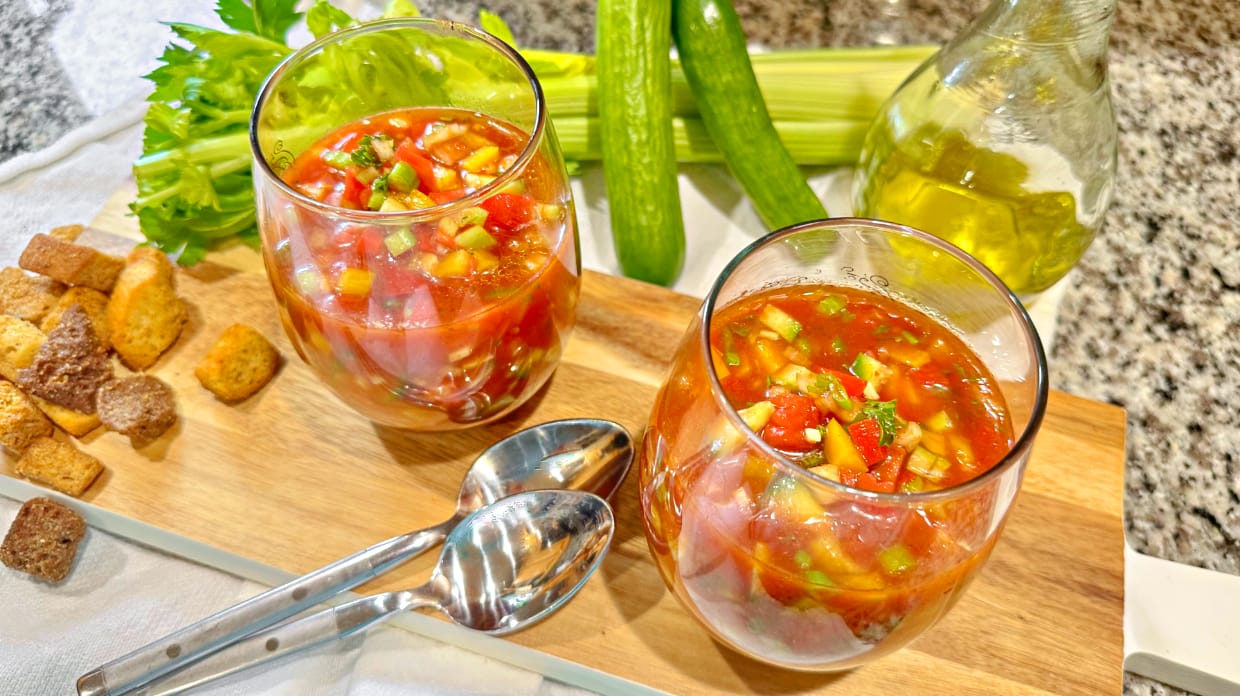
Source: aforkstale.com
What Makes This Easy Gazpacho Recipe With V8 So Simple?
The main shortcut is the vegetable juice. Traditional gazpacho often relies on fresh tomatoes blended with other vegetables and olive oil. V8 supplies a ready-made tomato and vegetable base, which cuts down on prep and gives the soup a steady flavor. You still get the fresh taste of chopped produce without needing a large pile of tomatoes.
This recipe also needs no cooking. Chop the vegetables, mix or blend them with the juice, add the seasonings, and chill. That makes it handy during summer heat when turning on the oven or standing over a hot stove feels like too much work.
The exact taste depends on the juice you choose, the ripeness of the tomatoes, and how much vinegar and salt you add. Start with modest amounts of seasoning, taste the mixture, and adjust it before chilling. Cold foods can taste less intense than warm foods, so a final taste check before serving helps.
Source: RecipeGirl
Less prep
The vegetable juice gives you a ready-made base, so you can spend more time cutting fresh vegetables and less time processing tomatoes.
No cooking
There is no need to heat the soup. A blender or food processor is optional if you prefer a hand-chopped, chunky texture.
Easy to change
You can adjust the spice, acidity, texture, and toppings to suit your meal and taste.
Is V8 a Good Base for Gazpacho?
Yes, V8 can work well as a convenient base for gazpacho. Its tomato and vegetable flavor gives the soup body, while fresh produce adds texture and a brighter taste. Regular V8 is a useful starting point for a mild soup, while a spicy variety can add heat without requiring extra hot sauce.
V8 products can differ in sodium and ingredients, so read the label on the bottle you buy. If the juice tastes salty, leave out added salt until you have mixed and chilled the soup. You can also add a little water if the flavor is too strong, though this will make the soup less rich.
For mild flavor
Choose regular vegetable juice and add black pepper or a small amount of garlic.
For more heat
Choose spicy vegetable juice or add a few drops of hot sauce.
For lower sodium
Compare available labels and avoid adding salt until you taste the finished mixture.
Ingredients for Homemade V8 Gazpacho
This recipe makes about six servings as a starter or four larger servings for a light meal. The quantities are a starting point, not strict rules. If your tomatoes are especially juicy or your vegetable juice is strongly seasoned, you may need less liquid or less salt.
Choose ripe tomatoes that feel firm but yield slightly when pressed. A fresh cucumber and a crisp bell pepper give the soup a clean, fresh taste. Red onion adds a sharper bite, while a small amount of garlic brings depth. Olive oil gives the mixture a fuller feel, and vinegar adds the tang that keeps the tomato flavor from tasting flat.
Source: rezeptesuchen.com
4 cups V8 vegetable juice
Use regular or spicy vegetable juice as the main liquid base. Chill it before mixing if you want the soup to cool faster.
3 medium ripe tomatoes
Core and chop the tomatoes. Remove excess watery seed pulp if you prefer a thicker soup, but keep it if you like a looser texture.
1 medium cucumber
Peel it if the skin is tough or bitter. Leave the peel on for more color and texture when it is tender.
1 green or red bell pepper
Remove the stem, seeds, and inner ribs, then chop the pepper into small pieces.
1/2 small red onion
Use less if you prefer a mild soup. Red onion adds color and a sharp, savory note.
1 small garlic clove
Finely mince the garlic. One small clove is enough to add flavor without overpowering the vegetables.
2 tablespoons extra-virgin olive oil
This adds a smooth mouthfeel and helps round out the sharp tomato and vinegar notes.
2 tablespoons red wine vinegar
Start with this amount, then add more to taste. Sherry vinegar is another option if you have it.
1/4 teaspoon ground black pepper
Add pepper for a mild kick. Adjust after chilling.
Salt to taste
Add salt only after tasting the juice and the mixed soup. Some vegetable juices already contain plenty.
Optional fresh herbs
Chopped parsley, cilantro, or basil can add a fresh note. Use the herb that best suits the flavor you want.
How to Choose the Best Vegetables
Fresh, ripe produce makes the biggest difference in a simple soup. Look for tomatoes with a rich aroma and no soft, damaged spots. Choose a cucumber that feels firm and a bell pepper with smooth, glossy skin.
There is no need to buy costly specialty produce. Standard grocery-store tomatoes and peppers work well. If tomatoes are out of season and taste bland, the V8 base helps maintain tomato flavor, while vinegar and herbs can add brightness.
Tomatoes
Use ripe plum tomatoes for a less watery mix or standard slicing tomatoes for a juicier soup.
Cucumber
English cucumber is convenient because it often has fewer large seeds, but a standard cucumber works too.
Bell pepper
Green pepper gives a sharper flavor. Red pepper tastes sweeter and can make the soup seem milder.
How to Make Easy Gazpacho With V8
The basic method is simple: chop, mix, season, and chill. You can make the soup in a large bowl if you want visible pieces of vegetables. Use a blender or food processor if you prefer a finer texture. Avoid filling a blender past its safe fill line, and work in batches if your machine is small.
Source: RecipeGirl
Step 1: Wash and prep the vegetables
Rinse the tomatoes, cucumber, and bell pepper under clean running water before cutting. Dry them, remove any tough stems or seeds, and chop the vegetables into pieces that suit your chosen texture.
Step 2: Chop the onion and garlic
Finely chop the red onion and mince the garlic. Small pieces spread their flavor through the soup more evenly. If raw onion tastes too strong to you, use less or rinse the chopped onion briefly under cold water and drain it well.
Step 3: Combine the vegetable juice and fresh produce
Pour the V8 into a large mixing bowl. Stir in the tomatoes, cucumber, bell pepper, onion, and garlic. For a chunky soup, stop here and mix well. For a smoother soup, blend some or all of the mixture in batches.
Step 4: Add the oil and vinegar
Stir in the olive oil and red wine vinegar. Add black pepper, then taste the soup. Add salt only if needed. If the tomato flavor feels too strong, add a small splash of cold water; if it tastes dull, add a little more vinegar.
Step 5: Adjust the texture
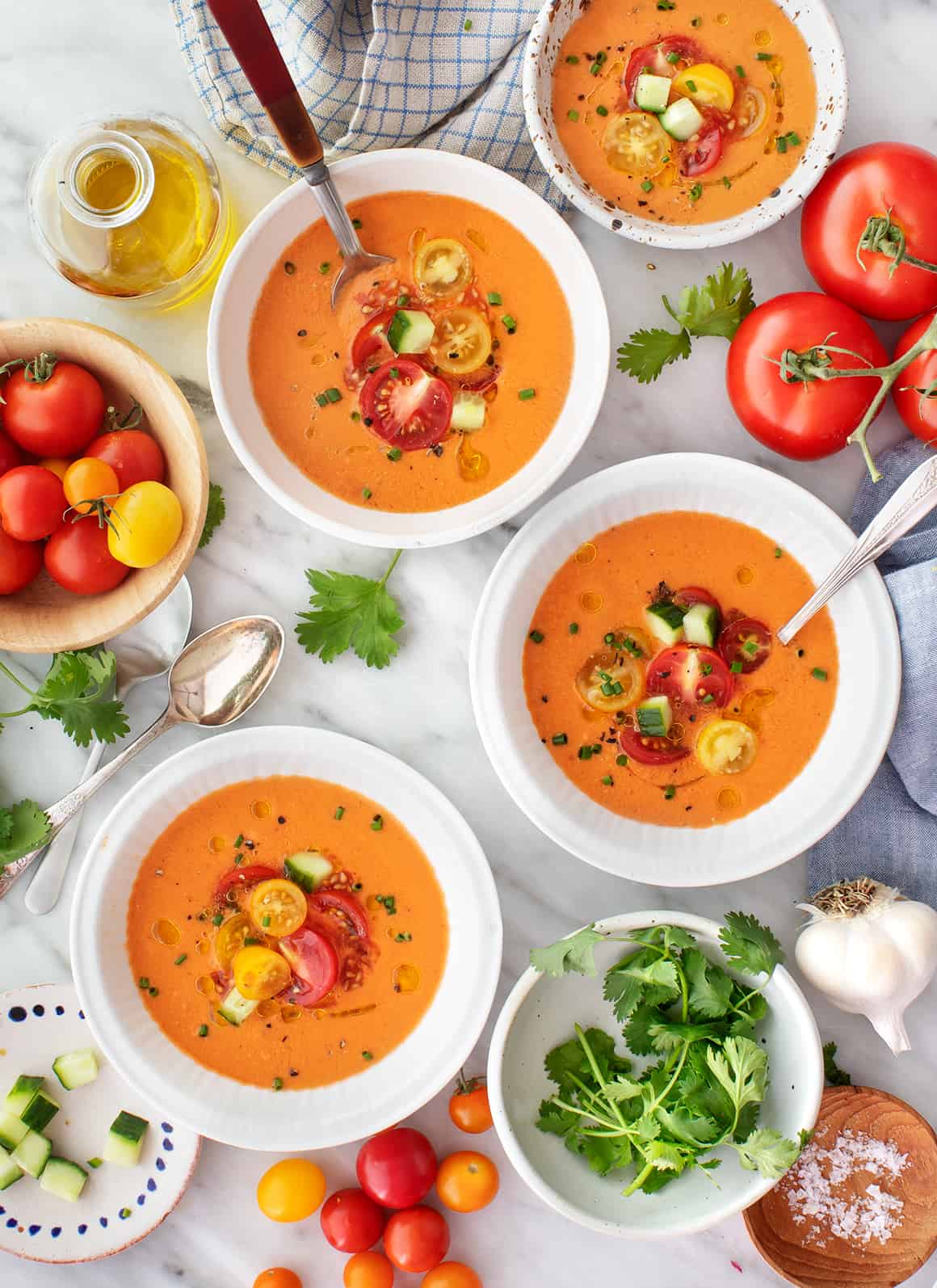
For a rustic texture, leave the chopped vegetables as they are. For a partly smooth texture, blend about half the mixture and stir it back into the bowl. For a smooth soup, blend until the vegetables are finely broken down.
Step 6: Cover and chill
Cover the bowl or transfer the soup to a clean, covered container. Refrigerate for at least two hours. This gives the vegetables time to share their flavor and lets the soup become thoroughly cold.
Step 7: Taste again before serving
Stir the soup and taste it while cold. Add a little more vinegar, pepper, or salt if needed. Serve in chilled bowls with finely chopped vegetables or fresh herbs on top.
How Do You Know When Gazpacho Is Ready?
Good gazpacho should taste fresh, cool, and balanced. The tomato base should stand out, but the vinegar should not make your mouth pucker. Cucumber and pepper should add freshness rather than taste like separate pieces floating in juice.
The soup should be cold throughout, and its texture should match your preference. A chunky version will have visible pieces of vegetables. A blended version should pour easily but still have enough body to feel like soup. If it seems too thick, add a small amount of cold water or vegetable juice.
Too bland
Add a small amount of vinegar or black pepper, stir, and taste again.
Too sharp
Add a little more vegetable juice or finely chopped ripe tomato to soften the vinegar taste.
Too watery
Blend in more tomato or cucumber-free vegetable flesh, or drain excess liquid from the chopped tomatoes before mixing.
Too chunky
Blend a portion of the soup and stir it back in, or process the full batch in safe, manageable amounts.
How Long Should V8 Gazpacho Chill?
Chill gazpacho for at least two hours before serving. This gives the soup time to cool and lets the garlic, onion, vinegar, and fresh vegetables blend into the tomato base. If you have time, making it several hours ahead can be helpful, as long as you keep it covered in the refrigerator.
Start with cold vegetable juice and cold produce if possible. This helps reduce the time the soup needs to cool. Do not leave the finished soup sitting on the counter for hours while waiting for it to chill. Place it in the refrigerator promptly in a clean, covered container.
After chilling, the soup may separate slightly or release some vegetable liquid. That is normal for a fresh mixture. Stir it well before serving. Taste it again because cold temperatures can make some flavors seem less strong.
Source: evelynseats.com
Minimum chill time
Allow at least two hours in the refrigerator for a cold, blended flavor.
Best make-ahead plan
Prepare the soup in the morning for lunch or a few hours before dinner, then keep it covered and cold.
Serving temperature
Serve straight from the refrigerator. If the soup has warmed while serving, return it to the refrigerator promptly.
Can You Make Gazpacho the Night Before?
Yes. Making gazpacho the night before can save time on a busy day. Store it in a clean, covered container in the refrigerator and stir it before serving. The flavors may blend more fully overnight, although the vegetables can soften as they sit in the liquid.
For the freshest crunch, reserve a little chopped cucumber, tomato, and bell pepper for the topping. Add these just before serving instead of mixing all of them into the soup the night before. This gives each bowl a mix of smooth, cold soup and crisp vegetables.
Prepare ahead
Mix the soup up to a day before serving, then check the flavor and texture again.
Keep toppings fresh
Store chopped toppings separately in the refrigerator and add them at the last minute.
Easy Ways to Customize Your Gazpacho
One benefit of V8 gazpacho is how easy it is to adjust. The base already has a strong tomato and vegetable flavor, so small changes can shift the soup toward a milder, spicier, or more herb-rich taste. Make one change at a time and taste before adding more.
Keep the main ingredients in balance. Too much raw onion or garlic can cover the fresh flavor of the tomatoes. Too much vinegar can make the soup harsh, while too much extra liquid can make it thin. Small adjustments are easier to manage than trying to fix a heavily seasoned batch.
Source: foodfitnesslifelove.com
Make it spicy
Use spicy V8, add a few drops of hot sauce, or mix in a small amount of finely chopped jalapeño. Remove the jalapeño seeds and inner ribs for a milder result.
Add more herbs
Try parsley, cilantro, or basil. Chop the herbs finely and start with a small amount so they do not cover the tomato flavor.
Make it smoother
Blend the soup in batches until the pieces are finely broken down. For an especially smooth texture, pass the blended mixture through a fine sieve, though this will remove some pulp.
Keep it chunky
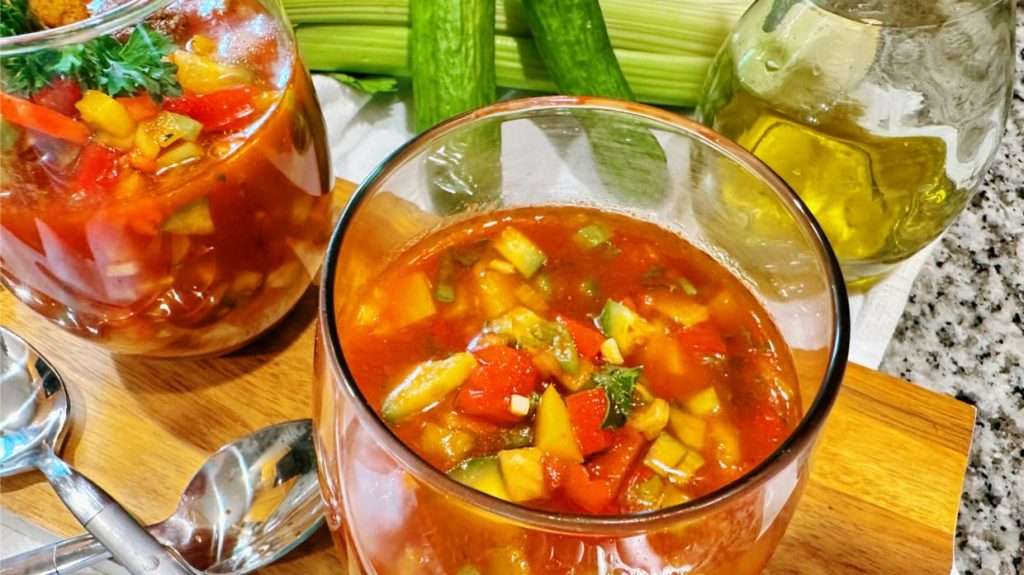
Hand-chop the vegetables into even, small pieces and mix them directly into the V8 base. This style works well when you want each spoonful to have a crisp bite.
Add a fresh citrus note
Use a small squeeze of lemon juice in place of some vinegar. Add it gradually because lemon can change the balance of the soup.
Give it more body
Blend in another ripe tomato or a small portion of chopped cucumber. Avoid adding too much water if you want a thicker soup.
Should You Peel the Tomatoes and Cucumber?
Peeling is optional for this recipe. Tomato skin can leave small bits in a lightly blended soup, but it usually matters less when the mixture is fully blended. If you want a smooth finish, peeling the tomatoes or straining the soup can help.
Cucumber skin adds color and texture. Leave it on if it is tender and tastes fresh. Peel it if the skin is tough or bitter. There is no need to remove every seed unless you prefer a less watery soup.
For a rustic soup
Leave tender skins on and hand-chop the vegetables.
For a smoother soup
Peel tough-skinned produce and blend thoroughly, then strain if desired.
What to Serve With V8 Gazpacho
Gazpacho works as a light lunch, a starter, or a side for a warm-weather meal. Since the soup is cool and fresh, it pairs well with foods that add crunch, protein, or a warm contrast. A small bowl can start a larger meal, while a bigger serving with bread and a protein-rich side can make lunch more filling.
Keep the toppings simple. Fresh chopped vegetables, herbs, and a small drizzle of olive oil bring out the flavors already in the soup. If you serve it at a cookout or picnic, keep it chilled until mealtime and avoid leaving it outdoors in the heat.
Source: aforkstale.com
Crusty bread
Serve toasted sourdough, a baguette, or whole-grain bread for dipping and a more filling meal.
Plain grilled chicken adds protein and pairs well with the bright tomato and cucumber flavors.
Grilled shrimp
Chilled or freshly grilled shrimp can turn the soup into a light summer lunch.
Grilled cheese
A small grilled cheese sandwich provides a warm, crisp contrast to the cold soup.
Simple green salad
Use a light dressing so the salad does not compete with the vinegar in the gazpacho.
Fresh toppings
Offer diced cucumber, tomato, bell pepper, parsley, or croutons in small bowls so everyone can customize a serving.
How to Serve Gazpacho for a Summer Gathering
For a casual summer meal, serve the soup in small bowls or cups as a starter. Set out a few toppings so guests can choose their own. A large chilled serving bowl works for a family lunch, but keep the main container refrigerated between servings when the weather is hot.
If you are transporting the soup to a picnic, use a sealed container in an insulated cooler with enough ice packs to keep it cold. Do not rely on the soup tasting cool as proof that it has stayed at a safe temperature. Return leftovers to refrigeration promptly.
For a starter
Serve small portions with a little chopped cucumber and a drizzle of olive oil.
For lunch
Pair a larger bowl with bread, beans, chicken, or another filling side.
For a party
Serve individual portions and keep extra soup chilled until needed.
Storage, Food Safety, and Freezing
Store homemade gazpacho in a clean, covered container in the refrigerator at 40°F or below. Use it within three to four days for best quality, and discard it sooner if it has been mishandled or shows signs of spoilage. Fresh vegetables release water as they sit, so the soup may become thinner over time.
Food safety matters even though this recipe does not use a stove. Wash fresh produce under running water before cutting, use clean knives and boards, and refrigerate the soup promptly. Perishable food should not sit at room temperature for more than two hours, or more than one hour when the temperature is above 90°F.
Freezing is possible, but the texture may change. Cucumber and tomato contain a lot of water, so they can become soft after thawing. If you plan to freeze a batch, blend it well and expect to stir it thoroughly after thawing in the refrigerator. For the crispest texture, fresh gazpacho is usually better.
Source: foodfitnesslifelove.com
Refrigerator
Keep the soup covered at 40°F or below and use it within three to four days.
Room temperature
Discard soup left out for more than two hours, or more than one hour in temperatures above 90°F.
Freezer
Freeze in airtight containers with room for expansion, thaw in the refrigerator, and stir well before serving.
Signs of spoilage
Discard the soup if you notice mold, an unusual odor, or other clear signs of spoilage. Do not taste food to check whether it is safe.
Can You Freeze Gazpacho With V8?
You can freeze gazpacho with V8, but it may not have the same crisp texture after thawing. The vegetables release moisture as they freeze and thaw, which can make the soup seem watery or soft. Blending the soup before freezing can make the change less noticeable.
Cool storage and safe thawing matter more than preserving the original texture. Freeze the soup in small portions, leave a little space in each container, and thaw it in the refrigerator. Stir well and adjust the seasoning before serving. Add fresh chopped cucumber and tomato after thawing if you want a fresher bite.
Freeze portions
Use sealed, freezer-safe containers and label them with the date.
Thaw safely
Thaw in the refrigerator rather than on the kitchen counter.
Refresh the texture
Stir the thawed soup and add fresh toppings if needed.
Common Gazpacho Problems and How to Fix Them
Most gazpacho problems come from the balance of liquid, fresh vegetables, acid, and salt. Since V8 already contains seasoning, it is best to taste the soup before adding much salt or other strong flavors. Make small changes, stir well, and taste again before adding anything else.
Texture can also change based on the tomatoes you use and how long the soup sits. Ripe tomatoes release juice, while cucumber can add more liquid as the mixture chills. These changes are normal and usually easy to manage.
Source: RecipeGirl
The soup tastes too salty
Add more unsalted chopped tomato or a little water, then taste again. Avoid adding more salt or salty toppings.
The soup tastes too acidic
Stir in more V8 or chopped ripe tomato. Do not add a large amount of oil to try to hide the sharp taste.
The soup tastes flat
Try a small splash of vinegar or a little black pepper. A small amount of fresh herb may also brighten the flavor.
The soup is too thin
Blend in extra tomato or reduce the amount of added water. Drain some excess liquid from very juicy tomatoes before mixing.
The garlic is too strong
Add more vegetable juice and tomato to spread out the flavor. Next time, use half a clove or leave the garlic out.
The onion tastes harsh
Use less onion or rinse the chopped pieces briefly and drain them well before adding them to the soup.
The vegetables seem too soft
Reserve some freshly chopped vegetables for the topping. Add them just before serving rather than leaving all the pieces in the soup overnight.
Can You Make Gazpacho Without a Blender?
Yes. A blender is not required for this recipe. Chop the vegetables into small, even pieces, then stir them into the V8 with the oil, vinegar, and seasonings. The result will be more like a chunky vegetable soup than a smooth purée, but it will still be fresh and flavorful.
A food processor is another option, although it can turn vegetables into a paste quickly. Use short pulses and check the texture often. If you prefer a rustic soup, a knife and cutting board give you the most control.
No special equipment
Use a sharp knife, cutting board, large bowl, and spoon.
For partial blending
Mash some chopped tomatoes with a fork or blend a small portion, then mix it back into the soup.
Frequently Asked Questions
Q
What Is the Best V8 Juice for Gazpacho?
Regular V8 is a good starting point because it provides tomato and vegetable flavor without adding extra heat. Spicy V8 works well if you like a little kick. Check the label for sodium and other ingredients, then adjust the salt and seasonings in your recipe to match.
Q
How Long Does Homemade V8 Gazpacho Last in the Fridge?
Keep homemade gazpacho in a clean, covered container at 40°F or below and use it within three to four days for best quality. Stir before serving because liquid may separate. Discard it if it shows signs of spoilage or has been held at unsafe temperatures.
Q
Can I Make This Gazpacho Without Vinegar?
Yes, but the soup may taste less bright. Try a small amount of lemon juice instead, or leave out the acid if you prefer a milder flavor. Taste the soup after chilling and adjust gradually.
Q
Can I Use Canned Tomatoes Instead of Fresh Tomatoes?
Yes. Use drained canned diced tomatoes if fresh tomatoes are not ripe or available. Choose plain tomatoes rather than heavily seasoned ones so you can control the flavor. Drain them well if you want a thicker soup, and taste before adding salt.
Q
Is Gazpacho Served Hot or Cold?
Gazpacho is served cold. Chill the soup in the refrigerator for at least two hours before serving. Keep it cold until mealtime, especially during summer picnics and outdoor gatherings.
Q
Can I Make V8 Gazpacho Ahead for a Party?
Yes. Prepare it several hours ahead or the night before, then keep it covered in the refrigerator. Reserve some chopped vegetables and herbs for the topping so each bowl has a fresh crunch. Serve small portions and return the main container to the refrigerator between servings.
Q
Is V8 Gazpacho Healthy?
This soup contains vegetables and can be part of a balanced meal. Its nutrition depends on the type of vegetable juice, the amount of olive oil, and the serving size. Check the juice label for sodium and added ingredients, and pair the soup with a protein source or whole-grain bread if you want a more filling meal.
✦ Wrapping Up
Conclusion
An easy gazpacho recipe with V8 is a simple way to serve a cool, fresh meal without turning on the stove. The vegetable juice gives the soup a tomato-rich base, while cucumber, bell pepper, tomatoes, onion, and garlic add fresh flavor and texture. A little olive oil and vinegar help balance the mix, and a few hours in the refrigerator bring the flavors together.
The recipe is flexible enough for a quick lunch, a light summer dinner, or a starter for a backyard gathering. Keep it chunky or blend it smooth, use regular or spicy vegetable juice, and add fresh toppings just before serving. Store leftovers in the refrigerator and enjoy them within three to four days.
💡 Key Takeaway
Chop the vegetables, mix them with four cups of V8, add olive oil and vinegar, season to taste, and refrigerate for at least two hours. Stir well, check the flavor while cold, and serve with fresh chopped vegetables or herbs.