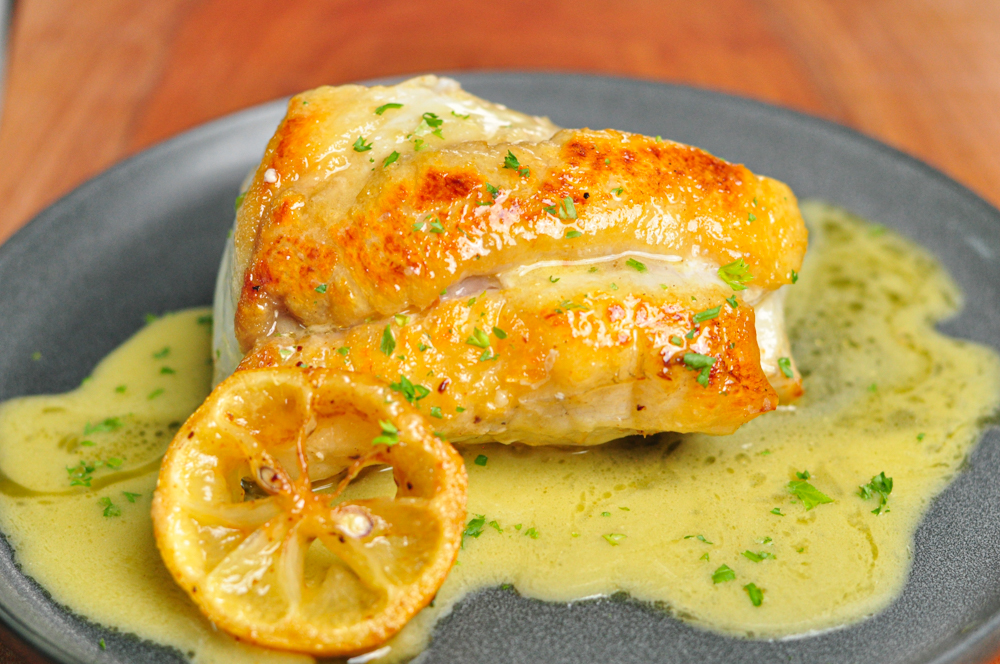
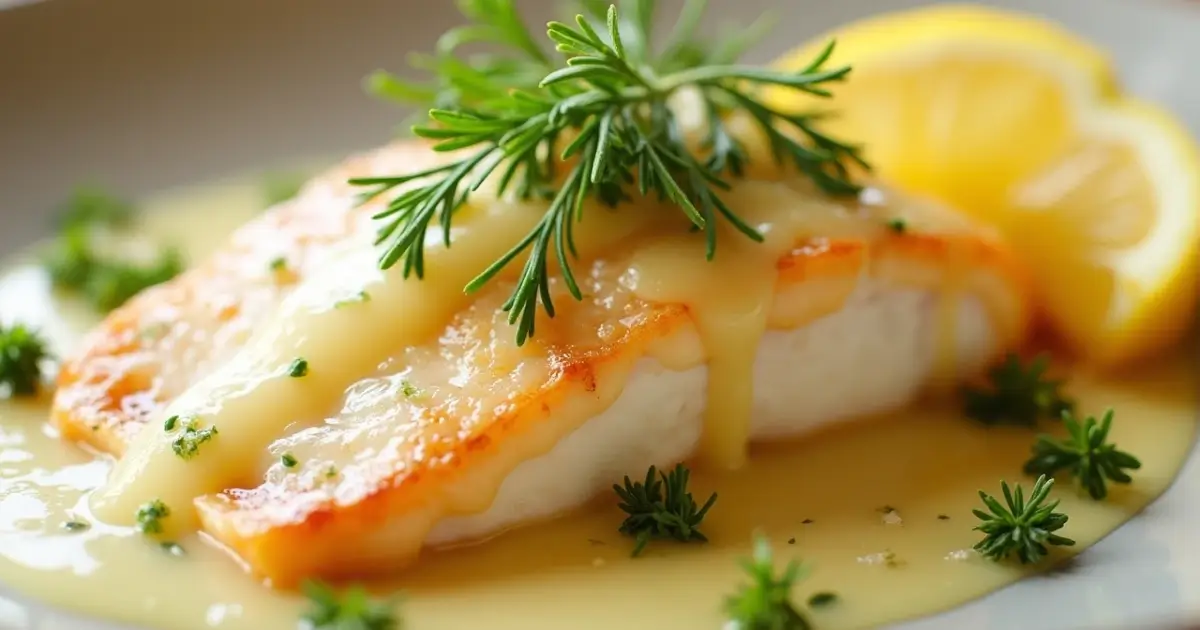
Lemon beurre monte sauce is a warm, smooth butter sauce made by slowly whisking cold butter into a small amount of warm water, then adding fresh lemon juice to taste. The result is rich, silky, and bright, with no need for cream or flour.
In American home kitchens, lemon butter sauce is a handy way to dress up salmon, shrimp, scallops, chicken, and fresh vegetables. It works well for a weeknight dinner or a special meal when plain melted butter feels too heavy. You need only a few basic ingredients and a small pan.
The key to lemon beurre monte sauce is the way you mix the butter and water. Rather than melting all the butter at once, you whisk small pieces of cold butter into warm water over low heat. This helps form an emulsion, which is a blend of ingredients that do not normally stay mixed on their own.
Fresh lemon gives the sauce a clean, tart edge that balances the butter. Keep the heat gentle, add the butter in stages, and avoid boiling the finished sauce. These small steps help you make a smooth sauce that clings to food instead of separating into a pool of fat.
Lemon beurre monte sauce is a warm butter emulsion flavored with lemon juice. The French term beurre monte refers to butter that has been whisked into a small amount of water to create a smooth, unified sauce. It is different from simply melting butter in a pan.
Plain melted butter tends to separate into liquid fat and milk solids as it sits. Beurre monte holds together better because tiny droplets of butterfat are dispersed through the water. Constant whisking and gentle heat help maintain this structure.
The lemon version adds a fresh, sharp note to the rich butter. It can be mild or quite tart, depending on how much juice you use. Unlike some classic French butter sauces, it does not need a cooked wine and shallot reduction.
This sauce is useful when you want the taste of butter to remain the main feature. It has no required cream or flour, so the texture comes from the butter emulsion itself. It is not automatically dairy-free or low in fat, since butter is the main ingredient.
Source: simplyum.com
Texture
Smooth, glossy, and fluid when prepared and held at the right temperature.
Flavor
Rich butter with a fresh lemon tang and an optional hint of salt or herbs.
Best use
A finishing sauce for seafood, vegetables, poultry, and other foods that benefit from a light coating of butter.
Beurre Monte vs. Lemon Beurre Blanc
Beurre monte and beurre blanc both rely on butter, but they begin in different ways. Beurre monte is made by building an emulsion with warm water and cold butter. Beurre blanc usually begins with a reduction of wine and vinegar, often with shallots, before butter is whisked in.
Lemon beurre blanc tends to have a more pronounced acidic base and may carry the flavor of wine, vinegar, and shallots. Lemon beurre monte is simpler and lets the butter and lemon stand out. The names should not be treated as exact synonyms because the methods and flavor profiles differ.
Choose beurre monte
Use it when you want a direct butter flavor and a quick preparation with few ingredients.
Choose beurre blanc
Use it when you want a deeper, tangier sauce built around a wine or vinegar reduction.
Ingredients for Lemon Beurre Monte Sauce
You can make a small batch of lemon beurre monte sauce with just butter, water, and lemon juice. Salt is optional, but a small pinch can bring out the flavor. Use unsalted butter when you want more control over the final taste.
Cold butter is especially useful because it lets you build the emulsion in small stages. Cut it into even cubes so each piece melts at a similar rate. Fresh lemon juice is usually the best choice because it has a bright taste without the muted notes that can occur in some bottled juices.
The water does not need to be a special type. Plain drinking water works well. A small amount creates the base that allows the butter to emulsify, while too much can leave the sauce thinner than you want.
Source: savorousrecipe.com
Unsalted butter
Use 8 tablespoons, or 1 stick, cut into small cubes. Keep it cold until needed.
Water
Start with 1 tablespoon. Add a little more if needed to establish the base.
Fresh lemon juice
Start with 1 to 2 teaspoons, then adjust after tasting.
Fine salt
Add a small pinch if the butter is unsalted and the finished sauce needs more flavor.
Optional flavorings
Try a small amount of lemon zest, finely chopped chives, parsley, or white pepper.
Which Butter Works Best?
Regular unsalted butter is a dependable choice for this sauce. It provides the fat and milk solids that give the sauce its rich taste. Salted butter also works, but taste before adding extra salt because the final seasoning can become too strong.
Cultured butter may add a tangier, more complex flavor. It can be pleasant with fish and vegetables, although the lemon may taste sharper when paired with a more tangy butter. There is no need to buy a specialty brand to make a good sauce.
For a mild flavor
Choose standard unsalted butter and adjust the lemon slowly.
For a stronger butter note
Try cultured butter if its flavor suits the dish you plan to serve.
How to Make Lemon Beurre Monte Sauce
The best way to make lemon beurre monte sauce is to start with a little warm water, whisk in cold butter a few pieces at a time, and keep the heat low. Add lemon near the end so you can control the flavor. The process is simple, but steady heat and constant movement make a real difference.
Use a small saucepan with a heavy base if you have one. A whisk gives you better control than a spoon because it helps distribute the butter as it melts. Have the lemon juice ready before you begin so you do not need to leave the pan unattended.
Source: lazydayrecipes.com
Prep time
About 5 minutes to measure, cube, and juice the ingredients.
Cook time
About 5 to 10 minutes, depending on the heat and the amount of butter.
Yield
A small batch of roughly 4 servings as a finishing sauce, depending on portion size.
Equipment
A small saucepan, a whisk, a knife, and a citrus juicer or fork.
Step 1: Warm the Water
Pour 1 tablespoon of water into the saucepan. Warm it over low heat until it is hot but not boiling. You should see a little steam or gentle movement, not a rolling boil.
If the water boils hard, take the pan off the heat for a moment. Starting with controlled heat gives the butter a better chance to emulsify instead of melting into a separate layer of fat.
Look for
Hot water with no vigorous bubbling.
Step 2: Whisk in the Cold Butter
Add two or three cubes of cold butter to the warm water. Whisk steadily until the pieces begin to melt and blend into the liquid. Add a few more cubes and continue whisking as the mixture thickens.
Keep the pan over low heat, moving it off the burner briefly if the mixture gets too hot. Do not add the full stick at once. The gradual process gives the water and butter time to form a stable emulsion.
Look for
A pale, glossy sauce with no obvious pool of oil on the surface.
Step 3: Adjust the Heat as Needed
The sauce should stay warm enough for the butter to blend, but it should not boil. If the pan begins to bubble strongly, move it away from the heat and keep whisking. Return it to low heat only when the mixture needs more warmth.
A small saucepan can heat quickly, especially on a gas burner or a powerful electric element. Use the lowest practical setting and pay attention to the sauce rather than relying only on the stove dial.
Look for
A smooth texture that coats the whisk lightly and flows back into the pan.
Step 4: Add Lemon Juice and Season
Once all the butter has blended in, remove the pan from direct heat. Whisk in 1 teaspoon of fresh lemon juice, then taste a small amount when it is cool enough to sample safely. Add more lemon in small amounts until the sauce tastes balanced.
Season with a pinch of salt if needed. Add a little finely grated lemon zest for a stronger citrus aroma, but avoid grating deeply into the bitter white pith beneath the yellow skin.
Look for
A rich butter taste followed by a clean lemon note, without harsh sourness.
Step 5: Serve While Warm
Pour the sauce over food or serve it in a warm dish at the table. Use it soon after preparation for the best texture. If you need to hold it for a short time, keep it gently warm without boiling and whisk it from time to time.
Do not leave the pan on a hot burner while you finish the rest of dinner. Residual heat can be enough to make the sauce separate. Prepare the sauce near the end of cooking so it reaches the table in good shape.
Look for
A warm, smooth sauce that stays blended as it is spooned over the meal.
How to Get the Right Sauce Texture
A good lemon beurre monte sauce should look glossy and feel smooth on the tongue. It should flow from a spoon in a steady ribbon, though the exact thickness depends on the amount of butter, water, and lemon juice. It is not meant to be as thick as gravy or a flour-based cream sauce.
The sauce can look pale yellow or ivory, depending on the butter and how much air you whisk into it. Small bubbles from whisking are normal. Large clear pools of oil, greasy streaks, or a watery layer are signs that the emulsion may be breaking.
The goal is not to whip the sauce into foam. Whisk just enough to keep the butter evenly dispersed. Too much heat is a greater risk than a lack of vigorous whisking.
Source: jaylarecipes.com
Smooth and glossy
The butter is dispersed through the water, and the sauce has a uniform appearance.
Too thick
A small amount of warm water may help loosen it while you whisk.
Too thin
Check whether the sauce is fully emulsified before adding more butter. Add a small cube of cold butter while whisking if the mixture is stable but needs more body.
Greasy or separated
Remove the pan from the heat and try whisking in a teaspoon of cool water. If needed, begin with a fresh tablespoon of warm water in another pan and slowly whisk the broken sauce into it.
Why Does Beurre Monte Split?
The sauce may split when it gets too hot, when the butter is added too quickly, or when the mixture loses enough water that the fat can no longer stay dispersed. A hot pan can cause this even after you turn off the burner because the metal still holds heat.
A large amount of lemon juice added at once may also change the texture and flavor. Lemon is best added in small amounts after the butter emulsion has formed. If the sauce breaks, do not keep heating it in the hope that it will come back together.
Prevent overheating
Use low heat and lift the pan from the burner when the sauce becomes very hot.
Add butter in stages
Give each group of cubes time to blend before adding the next group.
Watch the water level
Add a few drops of warm water if the sauce becomes too tight or begins to look oily.
The Best Foods to Serve With Lemon Beurre Monte
Lemon beurre monte sauce works best with foods that benefit from a rich, bright finish. Seafood is a natural match because lemon and butter complement the mild flavor of many fish and shellfish. The sauce also works with plain vegetables, roast chicken, and potatoes.
Use enough sauce to coat the food rather than bury it. A spoonful over a fillet or a light drizzle over vegetables may be all you need. If the main dish already has a rich cream sauce, adding another butter sauce may make the meal feel heavy.
Source: i.pinimg.com
Salmon and white fish
Spoon a little over baked, pan-seared, or grilled fish just before serving. Add chopped chives for a mild onion note.
Shrimp and scallops
Toss cooked seafood lightly with the sauce or drizzle it over the top. Add the sauce at the end so it does not sit over high heat.
Asparagus and green beans
Use a small amount over steamed or roasted vegetables. The lemon helps balance their earthy, green flavor.
Potatoes
Serve over boiled baby potatoes, mashed potatoes, or roasted potato wedges. The sauce adds richness without requiring cream.
Chicken
Use it over simply cooked chicken breast or thighs. Make sure the chicken is fully cooked before adding the sauce.
Pasta
Toss a little sauce with hot pasta and a splash of pasta water if needed. The sauce is rich, so add it in small amounts and serve at once.
Pairing the Sauce With Seafood
For fish, start with a lightly seasoned fillet and let the sauce provide the buttery, citrus flavor. Mild white fish can take a gentle lemon finish, while salmon can stand up to a slightly stronger butter flavor. Shrimp and scallops need only a thin coating to avoid masking their natural taste.
Cook seafood using a suitable method before adding the sauce. The sauce is a finishing element, not a substitute for cooking the main ingredient safely. If you want a crisp crust on fish, spoon the sauce around or over the fillet just before serving instead of simmering the fish in it.
For mild fish
Use less lemon at first and add a little fresh parsley.
For rich fish
Try a touch more lemon juice or zest to balance the butter.
Easy Ways to Change the Flavor
The basic recipe is a useful starting point, but small additions can make it suit different meals. Keep the changes modest so the butter remains the main part of the sauce. Add herbs and seasonings after the emulsion forms, then taste before serving.
Lemon zest gives a stronger citrus smell without adding as much liquid as more juice. Herbs add freshness, while white pepper gives a mild warmth. Garlic can work, but raw garlic may taste sharp, so use a very small amount or cook it gently in the water before adding the butter.
Source: i.pinimg.com
Lemon and chives
Stir in finely chopped chives for fish, shrimp, or steamed vegetables.
Lemon and parsley
Add chopped parsley for a fresh, green finish that suits chicken and white fish.
Lemon and garlic
Warm a little minced garlic in the water before adding butter, taking care not to brown or burn it.
Lemon and white pepper
Add a small pinch for gentle warmth without the dark specks of black pepper.
Lemon and thyme
Use a small amount of fresh thyme with chicken, potatoes, or roasted vegetables.
Can You Use Lemon Zest Instead of Juice?
Yes, lemon zest can add citrus aroma, but it does not provide the same acidity as lemon juice. For a sauce with a bright, tart flavor, use a little juice as well as zest. If you want a softer lemon note, zest alone may be enough.
Grate only the yellow outer layer of the peel. The white pith below it can add bitterness. Add the zest near the end so its fresh aroma remains noticeable.
For more aroma
Use a small pinch of finely grated zest.
For more tartness
Add lemon juice a few drops at a time and taste between additions.
Common Mistakes and How to Fix Them
Most problems with lemon beurre monte sauce come from excess heat, rushed mixing, or poor balance between butter and water. The good news is that a sauce that begins to separate may still be saved if you act quickly. Remove it from the heat before trying to fix the texture.
A few simple checks can help you avoid wasting ingredients. Look at the surface, taste for balance, and make small changes rather than adding more of everything at once. Once the sauce is smooth, stop adjusting it unless there is a clear problem.
Source: kellyscleankitchen.com
The sauce looks oily
Take the pan off the heat. Whisk in a teaspoon of cool water. If the fat remains separate, start a fresh emulsion with a tablespoon of warm water and gradually whisk the broken sauce into it.
The sauce tastes too sour
Whisk in a little more butter if the emulsion is stable, or add a few drops of water and taste again. Avoid adding sugar unless a sweet flavor is part of the dish you want.
The sauce tastes flat
Try a small pinch of salt or a few drops of lemon juice. Add one at a time so the flavor does not swing too far in either direction.
The sauce is too thick
Whisk in a few drops of warm water until it flows more easily. Add liquid slowly to avoid making it watery.
The sauce is too thin
If it is fully emulsified, whisk in a small cube of cold butter. Do not add more butter to a sauce that is already split until you restore the emulsion.
The sauce cools too fast
Serve it in a warm dish and make it near the end of the meal preparation. Avoid placing it over direct heat to warm it again.
Can You Make the Sauce Ahead?
Lemon beurre monte is best made just before serving because its texture depends on a warm emulsion. You can measure the butter, cut it into cubes, and squeeze the lemon ahead of time. Keep the prepared ingredients covered and refrigerated as appropriate until you are ready to cook.
If you make the sauce early, keep it warm only for a short period and avoid boiling. A long hold can lead to separation and a duller lemon flavor. For the most reliable result, prepare a fresh batch when the main dish is nearly ready.
Prep ahead
Measure the water, cube the butter, and juice the lemon before cooking.
Finish near serving time
Build the emulsion shortly before the food reaches the table.
Storage, Reheating, and Food Safety
This sauce is at its best when served fresh. If you have leftovers, transfer them to a clean, covered container and refrigerate them promptly. Since the sauce contains butter and water, chilling will cause the fat to firm up and the texture to change.
For food safety, do not leave the sauce sitting at room temperature for an extended period. Follow standard food safety guidance for perishable foods, and discard leftovers that have been held in unsafe conditions. The presence of lemon juice does not make the sauce shelf-stable.
Reheating can be difficult because high heat may cause the emulsion to split. If you choose to reheat refrigerated sauce, use very low heat and whisk gently. Add a few drops of water if needed, but understand that the sauce may not return to its original texture.
Source: kellyscleankitchen.com
Refrigeration
Store leftovers covered in the refrigerator and use them promptly rather than keeping the sauce for an extended period.
Gentle reheating
Warm slowly in a small pan over low heat while whisking. Do not let it boil.
Avoid repeated warming
Repeated heating and cooling make separation more likely and can affect quality.
Discard when in doubt
Do not taste food to judge whether it is safe if it has been left out too long or stored poorly.
Is Lemon Beurre Monte Suitable for Special Diets?
The classic sauce contains dairy because butter is its main ingredient. It is not suitable for someone who must avoid milk proteins or dairy unless a suitable alternative is used and the recipe is adapted. A plant-based butter substitute may behave differently, so the same method may not produce the same texture.
The sauce can fit some low-carbohydrate meal plans because the base ingredients contain little carbohydrate, but it is rich in fat. Anyone following a prescribed diet should consider the whole meal and their individual needs rather than treating one sauce as suitable for every plan.
Dairy-free needs
Use a suitable dairy-free alternative and test the method, since emulsification may differ from dairy butter.
Lower-fat needs
Use a smaller amount as a finishing drizzle or choose a lighter lemon-based sauce.
Lemon Beurre Monte Sauce Recipe at a Glance
Use this quick guide when you need to make the sauce without reading through every step. The amounts below are a practical starting point for a small batch, not a fixed ratio that every kitchen must follow. Adjust the water and lemon in small steps to suit the butter and the dish.
The most useful sign of success is a smooth, glossy sauce that tastes rich but not greasy. If the flavor feels heavy, a few drops of lemon may help. If it is too sharp, stop adding lemon and adjust the balance gently.
Source: i.pinimg.com
Ingredients
8 tablespoons cold unsalted butter, 1 tablespoon water, 1 to 2 teaspoons fresh lemon juice, and salt to taste.
First step
Warm the water over low heat without bringing it to a rolling boil.
Main step
Whisk in cold butter a few cubes at a time until the sauce becomes smooth.
Final step
Remove from direct heat, add lemon juice gradually, and season to taste.
Serving tip
Spoon over cooked fish, shrimp, chicken, asparagus, or potatoes just before serving.
How Much Sauce Should You Make?
The amount you need depends on the dish and how generously you plan to serve it. A small batch made with one stick of butter can provide a light finishing portion for several plates. For a tasting menu or a dish with many sides, smaller amounts may be enough.
For a larger dinner, it is often better to make a fresh second batch than to keep one large pan warm for too long. Smaller batches are easier to control and less likely to split while waiting.
For two people
Make a half batch if you want only a light drizzle over the main dish.
For four people
A batch made with 8 tablespoons of butter is a reasonable starting point for modest portions.
For a crowd
Work in batches or use a carefully controlled warm holding setup instead of letting a large quantity boil.
Frequently Asked Questions
Q
Is lemon beurre monte the same as lemon butter sauce?
Not always. Lemon butter sauce is a broad name for sauces made with butter and lemon. Lemon beurre monte refers to a more specific method in which cold butter is whisked into warm water to create an emulsion. That method gives the sauce a smooth texture rather than the separated look of plain melted butter.
Q
Can I make lemon beurre monte without water?
Water is the usual starting point for classic beurre monte because it helps create the emulsion. Without it, the butter is more likely to melt into separate fat and milk solids. Some other butter sauces use wine, stock, or a reduction as a base, but those are different preparations.
Q
Can I use bottled lemon juice?
Yes, bottled lemon juice can work if fresh lemons are not available. Its flavor may be less bright or may have a different level of tartness, so begin with a small amount and taste before adding more. Fresh lemon juice and a little zest usually give the sauce a more fragrant citrus note.
Q
Why is my lemon beurre monte sauce greasy?
A greasy surface usually means the emulsion is breaking. Excess heat, adding butter too quickly, or losing too much water can cause the fat to separate. Remove the pan from the heat, whisk in a teaspoon of cool water, and start a fresh emulsion with warm water if the sauce does not come together.
Q
Can I keep lemon beurre monte warm while dinner cooks?
It can be held briefly in a warm spot, but it needs gentle heat and occasional whisking. Do not let it boil or sit over a hot burner while you cook the rest of the meal. The most reliable approach is to prepare the sauce near serving time.
Q
Can I freeze lemon beurre monte sauce?
Freezing is not ideal because thawing can disrupt the emulsion and change the texture. The sauce may separate when reheated, even if it is safe to use after proper storage. For the best result, make a fresh batch when you need it.
Q
What is the difference between beurre monte and clarified butter?
Beurre monte is an emulsion of butter and water that forms a smooth sauce. Clarified butter is butterfat separated from most of the water and milk solids. Clarified butter is useful for cooking at higher heat, while beurre monte is used as a warm sauce or finishing bath.
✦ Wrapping Up
Conclusion
Lemon beurre monte sauce is a simple way to add a rich, bright finish to fish, shrimp, chicken, and vegetables. It uses a short list of ingredients, but the method matters. Warm water, cold butter, steady whisking, and low heat help the sauce stay smooth.
Add the lemon only after the butter has blended, then taste and adjust the seasoning. If the sauce begins to split, take it off the heat and try to bring it back together with a little water. Make it close to serving time for the best texture and flavor.
💡 Key Takeaway
Start with 1 tablespoon of warm water and 8 tablespoons of cold butter. Whisk in the butter a few cubes at a time, keep the heat low, then add fresh lemon juice gradually. Serve the sauce while it is warm and glossy.