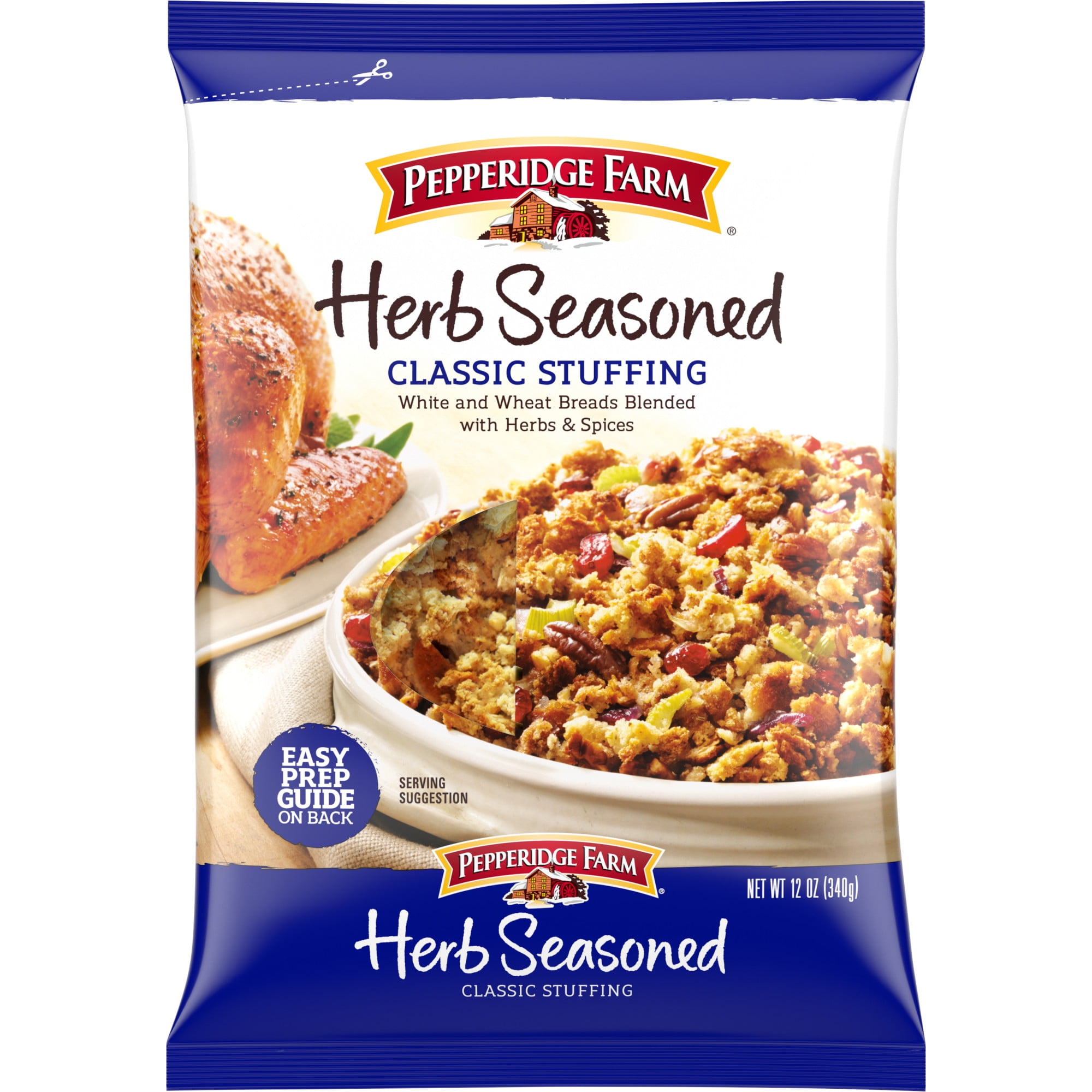
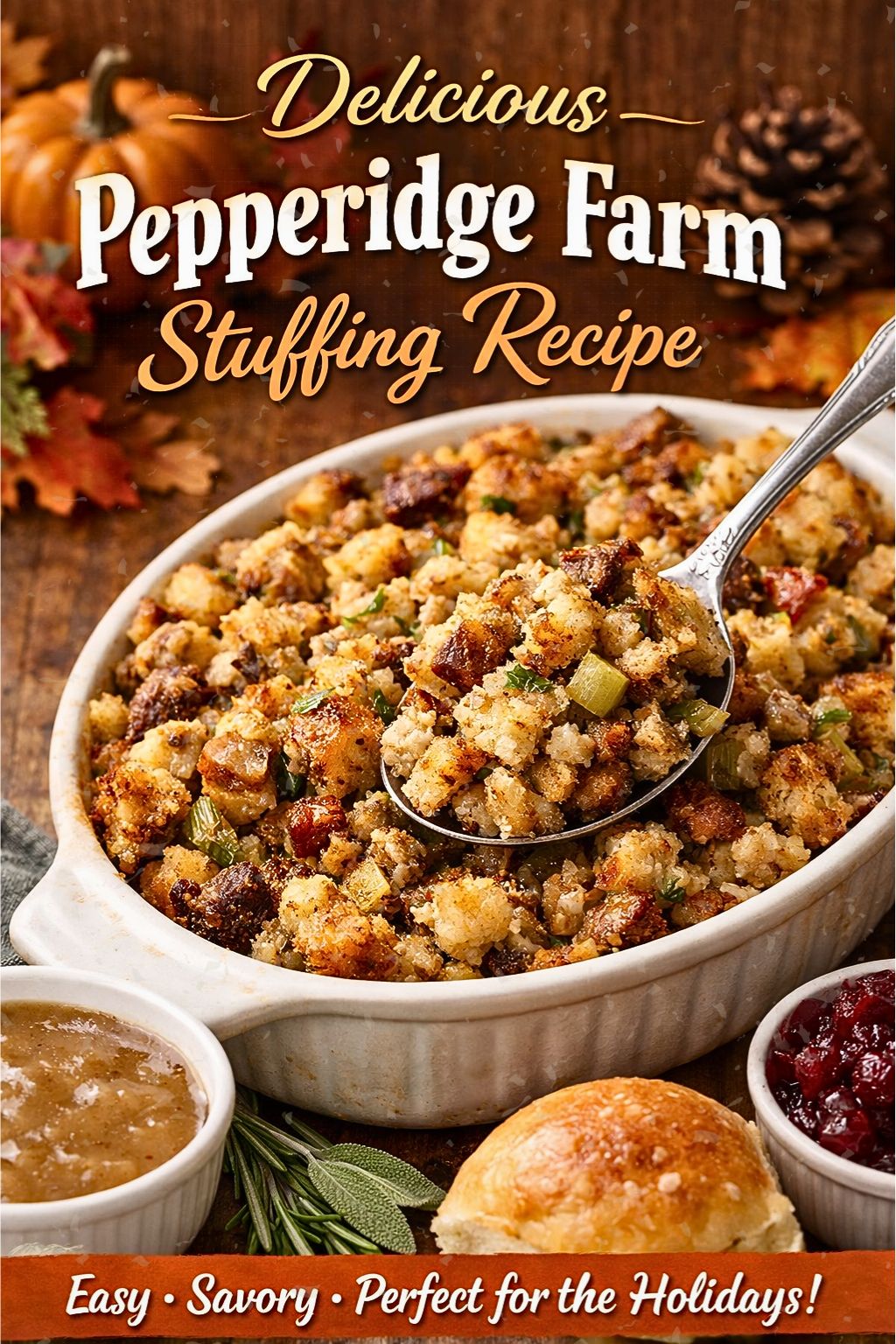
A simple Pepperidge Farm stuffing recipe combines herb-seasoned bread cubes with butter, chopped celery, onion, and broth. Mix the softened vegetables with the bread, add enough broth to moisten it, and bake until hot with a lightly crisp top.
Across the United States, stuffing is a familiar part of Thanksgiving dinner, Christmas meals, and Sunday suppers. It often sits beside roast turkey, baked chicken, mashed potatoes, and gravy. Pepperidge Farm herb-seasoned stuffing makes this classic side easier because the bread cubes already contain seasoning.
This guide explains how to prepare a basic baked stuffing, how to adjust its texture, and how to add ingredients without making it soggy. The recipe is a practical home-cooking adaptation, not a claim to reproduce an exact proprietary recipe from Pepperidge Farm. Package sizes and directions can vary, so check your bag and use its instructions when they differ from this guide.
Source: artofit.org
What Makes This Pepperidge Farm Stuffing Recipe Work?
The main benefit of this recipe is its balance of flavor, moisture, and texture. Seasoned bread cubes bring a savory herb taste, while butter, celery, and onion add richness and a gentle bite. Broth softens the bread and helps the ingredients come together.
The goal is not to turn the bread into a smooth paste. A good baked stuffing should hold together loosely, with tender pieces inside and some browned edges on top. The exact texture depends on the bread, the amount of broth, the baking dish, and the oven.
For a first batch, keep the ingredient list simple. Once you know how your chosen bag absorbs liquid, you can add sausage, mushrooms, apples, or fresh herbs without guessing at every step.
Source: pd.pai-nai.com
Seasoned bread
Use Pepperidge Farm herb-seasoned stuffing cubes as the main ingredient. Their built-in seasoning means you may not need much extra salt or dried herbs.
Cooked vegetables
Butter-softened celery and onion add flavor and moisture. Cooking them first also keeps the finished dish from having a harsh raw-onion taste.
Measured liquid
Broth adds savory flavor and softens the bread. Add it in stages because different bread products absorb liquid at different rates.
Stuffing or Dressing: What Is the Difference?
Many American cooks use the words stuffing and dressing for the same type of seasoned bread dish. Some call it stuffing when it is cooked inside a bird and dressing when it is baked in a separate pan. Regional habits vary, so the name alone does not tell you how the dish was prepared.
This recipe uses a baking dish. That makes it easier to check the center temperature, manage the moisture, and create browned edges without handling a raw turkey cavity.
Ingredients for an Easy Pepperidge Farm Stuffing
This home-style version uses a 12-ounce bag of herb-seasoned stuffing cubes as a starting point. Check the package weight before cooking, since available sizes and varieties may differ. The quantities below are a practical starting point rather than official package instructions.
Use low-sodium broth if you want more control over salt. The seasoned bread may already contain salt, and regular broth can make the dish taste too salty if you add extra seasoning without tasting the mixture first.
Source: yumasy.com
12 ounces seasoned stuffing cubes
Choose the herb-seasoned variety for a classic savory flavor. A different variety may need small adjustments to broth and added seasoning.
4 tablespoons unsalted butter
Butter helps soften the vegetables and adds a rich taste. Salted butter can work, but consider the salt in the bread and broth.
1 cup chopped celery
Cut the celery into small, even pieces so it softens at a similar rate and mixes well with the bread.
1 cup chopped yellow onion
Yellow onion provides a mellow savory base. White onion can also work if that is what you have.
2 to 2 1/2 cups chicken or vegetable broth
Start with 2 cups and add more only as needed. The final amount depends on how dry the bread is and how soft you like your stuffing.
1 tablespoon chopped fresh parsley, optional
Parsley adds a fresh note and a little color. You can leave it out if the seasoned bread already has enough herbal flavor.
Black pepper, to taste
Add a small amount if needed after considering the seasoning in the bread and broth. Extra salt may not be necessary.
What Equipment Do You Need?
Gather a cutting board, a sharp kitchen knife, a skillet, a large mixing bowl, a spoon, and a greased 9-by-13-inch baking dish. A covered oven-safe dish or aluminum foil will help keep the top from browning too quickly.
A larger, shallow dish usually gives you more browned surface area. A deeper dish can keep the middle softer, but it may take longer to heat through. If you change the dish size, check the center rather than relying only on the clock.
How to Make Pepperidge Farm Stuffing Step by Step
Plan on roughly 15 to 20 minutes of preparation, followed by about 30 to 40 minutes of baking. These are estimates, not guaranteed cooking times. Your oven, dish depth, starting temperature, and preferred texture can change how long the stuffing takes.
Source: foodfanatic.com
Step 1: Heat the oven
Preheat the oven to 350°F. Grease a 9-by-13-inch baking dish with a little butter or cooking spray so the stuffing is easier to serve.
Step 2: Chop the vegetables
Cut the celery and onion into small pieces. Keep the cuts fairly even so the vegetables cook at a similar rate.
Step 3: Soften the celery and onion
Melt the butter in a skillet over medium heat. Add the celery and onion and cook for about 8 to 10 minutes, stirring now and then, until they soften. Lower the heat if the onion begins to brown too fast.
Step 4: Warm the broth
Heat the broth until warm, not boiling. Warm liquid helps the bread absorb moisture evenly, though it is not necessary to bring the broth to a rolling boil.
Step 5: Combine the bread and vegetables
Place the stuffing cubes in a large bowl. Add the cooked celery and onion, melted butter from the skillet, and parsley if using. Toss gently to spread the vegetables through the bread.
Step 6: Add broth slowly
Pour in about 2 cups of broth while folding the mixture with a large spoon. Wait briefly for the bread to absorb the liquid, then check the texture. Add a little more broth if many cubes still feel dry.
Step 7: Transfer to the dish
Spoon the mixture into the prepared baking dish. Spread it in an even layer without pressing it into a dense mass. A loose layer allows heat to reach the center and leaves room for the top to brown.
Step 8: Cover and bake
Cover the dish with foil and bake for about 20 minutes. The cover helps keep moisture in while the center heats.
Step 9: Uncover and finish
Remove the foil and bake for another 10 to 20 minutes, checking the center temperature and the top as it cooks. The surface should look lightly golden, and the center should be hot throughout.
Step 10: Rest and serve
Let the dish stand for about 5 minutes before serving. This short rest makes it easier to scoop and gives the moisture time to settle through the bread.
How Can You Tell When the Stuffing Is Ready?
Look for a lightly crisp top, tender bread in the center, and no pool of broth at the bottom. The stuffing should hold together when lifted with a spoon but should not feel like a solid block.
For food safety, use a food thermometer to check the center reaches 165°F. If you have added raw meat or other ingredients that require cooking, make sure those ingredients are handled safely and the finished stuffing reaches the same safe internal temperature.
How Much Broth Should You Add?
The right amount of broth depends on the bread and the texture you want. Begin with the lower end of the suggested range, then add more in small amounts. Once bread cubes become too wet, baking may not restore their original texture.
The ideal mixture feels moist when pressed lightly, but it should not drip when you lift a spoonful. A few firm corners are fine before baking because the bread will keep absorbing liquid as it rests and heats.
Source: recipefairy.com
For firmer stuffing
Use less broth and avoid packing the bread tightly into the dish. This gives the cubes a better chance of keeping their shape.
For soft stuffing
Add broth a little at a time until the bread is evenly moist. Keep the dish covered for most of the baking period to limit moisture loss.
For a crisp top
Leave the dish uncovered for the final part of baking. Watch the surface closely because the edges may brown before the center is ready.
Can You Use Water Instead of Broth?
Water can soften the bread, but it adds little flavor. Chicken broth gives the stuffing a savory taste, while vegetable broth is useful for a meat-free version. Choose a broth that fits the needs of the people at your table.
If you use water, consider relying on the flavor from the butter, cooked vegetables, and the herbs already in the stuffing. Taste the cooked vegetable mixture before combining everything, and avoid adding too much salt to compensate.
Easy Ways to Change the Flavor
The basic recipe is a good starting point for family meals, but you can change it to suit the rest of your menu. Add only a few extras at first so the bread, broth, and vegetables remain the main parts of the dish.
Fresh add-ins can change the amount of moisture in the pan. Cook vegetables before adding them, drain excess liquid, and allow for a little more baking time if the mixture is cold when it goes into the oven.
Source: foodfanatic.com
Sausage stuffing
Brown breakfast sausage or mild Italian sausage in a skillet, breaking it into small pieces. Drain excess fat and make sure the meat is fully cooked before mixing it with the bread.
Mushroom stuffing
Cook sliced mushrooms until their released liquid has mostly evaporated. Adding wet mushrooms straight from the pan can make the stuffing heavy.
Add a small, diced apple for mild sweetness and a tender bite. A firm apple can help it keep its shape during baking.
Fresh herb stuffing
Try chopped parsley, sage, or thyme in small amounts. Seasoned bread already contains herbs, so taste the mixture before adding more.
Cornbread-style stuffing
Use a cornbread stuffing variety if you prefer a corn-based flavor. Cornbread can have a different texture and absorb liquid differently, so adjust the broth gradually.
How to Make a Meat-Free Version
Use vegetable broth and skip sausage or meat drippings. Check the stuffing package and broth labels if the meal must meet a strict vegetarian or vegan requirement, since ingredients and processing details can vary.
For more substance, add cooked mushrooms or a modest amount of chopped nuts if there are no allergy concerns. Keep the additions small enough that the bread still binds the mixture.
Common Stuffing Problems and How to Fix Them
Most stuffing problems come down to moisture, heat, or how tightly the mixture sits in the dish. Check the texture before baking whenever possible. Small adjustments at that stage are easier than trying to fix a pan that is already overcooked.
Source: ristywilson.blogspot.com
The stuffing is too dry
If it has not finished baking, drizzle warm broth over the dry areas and cover the dish again. If it is already cooked, add a little warm broth before reheating, then cover to hold in moisture.
The stuffing is soggy
If the center is fully cooked, uncover the dish and continue baking briefly to let some moisture escape. Check often so the edges do not burn. Next time, start with less broth and cook wet add-ins longer.
The top browns too fast
Cover the dish loosely with foil and continue cooking until the center is hot. Move the dish away from an overly hot upper heating element if your oven setup allows it.
The center stays cold
Spread the mixture in a shallower layer if you have not yet baked it. If it is already in the oven, cover it and continue heating, checking the center with a thermometer.
The flavor seems bland
Taste a cooked spoonful before adding more seasoning. A little black pepper or fresh parsley may help, but also check whether the broth and vegetable mixture were flavorful enough.
The stuffing tastes too salty
Do not add more salt or salty broth. If the mixture has not been baked, mix in some plain, unseasoned bread cubes and enough unsalted liquid to moisten them. The best prevention is to use low-sodium broth.
Why Is My Stuffing Mushy in the Middle?
A mushy center can mean the bread absorbed too much broth, the dish is too deep, or the stuffing was packed too tightly. A large amount of watery vegetables can add to the problem. The center may also need more time if the dish went into the oven cold.
If the stuffing has reached a safe temperature but remains too soft, uncover it and bake briefly to release moisture. If it is still below 165°F, keep heating it safely rather than serving it early just to preserve the crust.
Make-Ahead, Storage, and Reheating Tips
You can prepare parts of the recipe ahead of a holiday meal. Chop the celery and onion in advance, or cook them in butter and refrigerate them in a covered container. Keep the bread cubes separate until you are ready to mix the stuffing so they do not absorb liquid too early.
For best texture, assemble the stuffing close to baking time. If you choose to assemble it ahead, refrigerate it promptly and keep it covered. A cold dish may need extra time in the oven, so check the center temperature instead of assuming the original baking time still applies.
Source: storage.googleapis.com
Refrigerating leftovers
Place leftover stuffing in shallow, covered containers and refrigerate within 2 hours of cooking, or within 1 hour when the surrounding temperature is above 90°F. Use refrigerated leftovers within 3 to 4 days.
Freezing stuffing
For longer storage, freeze the cooled stuffing in airtight, freezer-safe containers. Quality can decline over time, especially if the bread dries out, so label the container with the date and reheat it thoroughly.
Reheating in the oven
Place the stuffing in an oven-safe dish, add a small splash of broth if it seems dry, and cover it while reheating. Remove the cover near the end if you want to restore a crisp top. Heat leftovers to 165°F.
Reheating in the microwave
Place a serving in a microwave-safe dish, cover it loosely, and heat it in short intervals, stirring when possible. Check that the center reaches 165°F before eating.
Can You Assemble Stuffing the Night Before?
Yes, but handle the assembled dish as a perishable food. Keep it refrigerated at 40°F or below, cover it, and do not leave it on the counter overnight. For the most predictable texture, prepare the vegetables ahead and combine them with the bread and broth closer to baking time.
If you assemble the full dish in advance, account for the cold starting temperature and verify that the center reaches 165°F. Do not partially cook the stuffing and leave it to finish later.
Frequently Asked Questions
Q
Do I need to add eggs to Pepperidge Farm stuffing?
No. Eggs are not required for this basic recipe. They can help bind some stuffing variations, but bread, vegetables, butter, and broth are enough for a simple baked version. If you add eggs, mix them into the cooled or lukewarm mixture and bake until the center reaches 165°F.
Q
Can I make Pepperidge Farm stuffing without celery?
Yes. Leave the celery out or replace it with a small amount of cooked mushroom or another vegetable that fits your meal. Since vegetables add moisture, cook watery additions first and adjust the broth slowly.
Q
Should I cover stuffing while it bakes?
Cover it for the first part of baking to help retain moisture. Uncover it near the end to brown the surface. If the top is already golden but the center is not hot enough, cover it again while it finishes cooking.
Q
Can I cook this stuffing inside a turkey?
This guide is written for a separate baking dish. Cooking stuffing inside poultry requires extra care because the center of the stuffing must reach 165°F, and the bird may need additional cooking time to reach safe temperatures as well. For easier temperature control, baking the stuffing separately is the simpler approach.
Q
What should I serve with Pepperidge Farm stuffing?
It pairs well with roast turkey, baked chicken, meatloaf, green beans, roasted carrots, mashed potatoes, and gravy. For a holiday plate, choose a mix of savory dishes and vegetables with different textures. The stuffing is rich enough that a fresh or lightly dressed vegetable can balance the meal.
Q
How do I keep stuffing moist without making it soggy?
Add broth gradually and stop when the bread is evenly moist. Cover the dish for most of the baking time, then uncover it to crisp the top. If the bread still looks dry before baking, add broth a few tablespoons at a time rather than pouring in a large amount at once.
✦ Wrapping Up
Conclusion
A good Pepperidge Farm stuffing recipe does not need a long list of ingredients. Herb-seasoned bread cubes, butter, celery, onion, and broth form a savory side dish that fits a Thanksgiving table or an ordinary family dinner. The main trick is to soften the vegetables first and add enough liquid to moisten the bread without soaking it.
Use the basic method as a starting point, then adjust the broth and baking time to suit your bread and dish. Add sausage, mushrooms, apples, or fresh herbs if you want a different flavor, and check the center temperature before serving. Store leftovers promptly and reheat them thoroughly.
💡 Key Takeaway
Start with 2 cups of broth for a 12-ounce bag of seasoned stuffing cubes, mix gently, and add more only if the bread still feels dry. Bake at 350°F until the top is lightly browned and the center reaches 165°F.