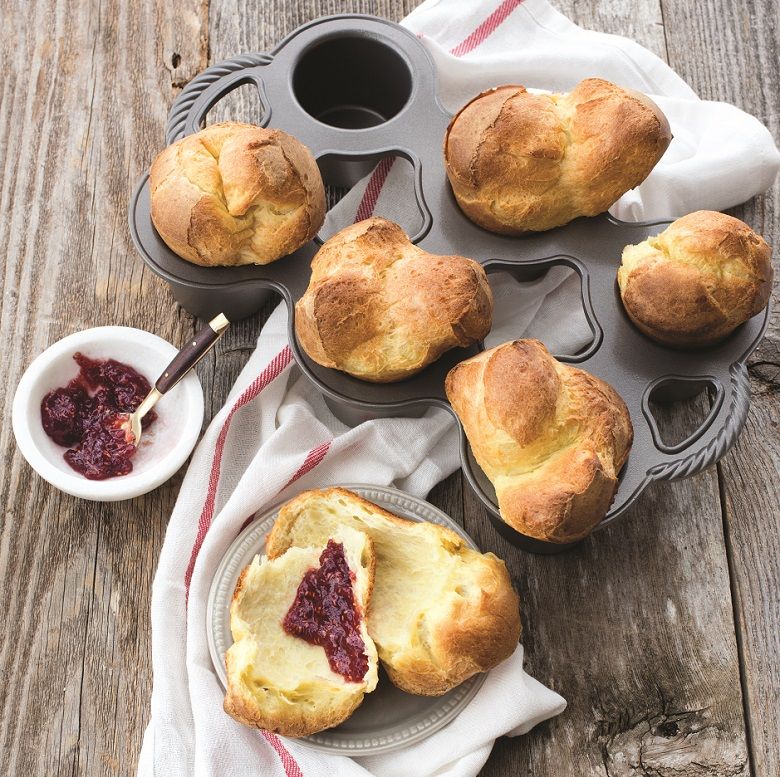
A Nordic Ware popover recipe uses eggs, milk, flour, butter, and salt to make tall, airy rolls with crisp golden shells. For a savory twist, add fresh rosemary and serve the warm popovers with butter, soup, roast meat, or eggs.
In American home kitchens, popovers are a simple way to turn everyday pantry staples into a warm bread for breakfast, brunch, or dinner. They have crisp outer shells and soft, hollow centers. Their dramatic shape comes from steam that expands inside the batter as it bakes. You do not need yeast, a long rise, or a complex dough.
Nordic Ware offers recipes for both full-size and petite popovers. Its rosemary version combines eggs, milk, water, melted butter, flour, rosemary, and salt. The brand lists a baking temperature of 375 degrees F for this version, with a bake time of about 45 to 50 minutes. Its petite popover recipe uses a different formula and a hotter oven, so pan size and recipe choice matter.
This guide brings those ideas together in a practical home recipe. You will find a rosemary popover variation, clear mixing and baking steps, tips for using a Nordic Ware pan, and fixes for common problems. The method is based on published recipe guidance rather than a claim of personal kitchen testing. Follow the directions for your exact pan and avoid opening the oven while the popovers rise.
A popover is a light baked roll made from a thin egg batter. It rises in the oven and forms a crisp shell around a soft, often hollow center. Unlike yeast bread, it does not need time to ferment or proof. The oven supplies the heat that helps the batter expand.
A Nordic Ware popover pan has deep cups designed to give the batter room to rise. The brand sells both grand and petite popover pans, and its recipe collection includes plain and flavored versions. A dedicated pan can help create the familiar tall shape, although a suitable metal muffin tin can also work with a recipe designed for it.
The main thing to remember is that a popover pan and a recipe work as a pair. A recipe written for six large popovers may not fill twelve petite cups in the same way. Smaller portions also tend to need a different baking time. Match the batter amount, oven temperature, and bake time to the recipe you choose.
Source: i.pinimg.com
Light texture
Eggs and steam help the batter expand without yeast or chemical leavening in a basic recipe.
Simple ingredients
Most traditional popovers use flour, eggs, milk, salt, and butter.
Flexible flavor
Fresh herbs can make a savory side, while jam or sweet butter suits breakfast.
Quick preparation
The batter takes only a few minutes to mix, although baking takes longer.
Grand Popovers and Petite Popovers
Grand popovers are larger and make a bold side for a roast dinner or a special brunch. Petite popovers are smaller and easier to serve as bite-size portions. Nordic Ware’s published rosemary recipe yields six grand popovers or twelve petite popovers when prepared according to its stated directions.
Do not assume that every large-batch recipe can be divided between small cups without a change in bake time. Use the recipe that matches your pan when possible. If you are adapting another recipe, watch for a fully browned shell and use the recipe’s recommended baking time as your guide.
Choose grand popovers
Use them when you want larger portions to serve beside soup, meat, or a main meal.
Choose petite popovers
Use them for brunch platters, appetizers, or small servings with jam and butter.
Ingredients for a Nordic Ware Rosemary Popover Recipe
The rosemary version is a useful place to start if you want more flavor than a plain popover offers. Fresh rosemary gives the batter an earthy, fragrant note that pairs well with roast chicken, beef, eggs, or vegetable soup. The flavor stays savory, so the finished popovers can work as bread for a full meal.
The ingredient amounts below follow Nordic Ware’s published rosemary popover recipe. Check the recipe and your pan instructions before baking, since the brand has more than one popover formula. Set out all the ingredients before heating the oven so the pan and batter are ready at the right time.
Source: cdn.nordicbakingpan.com
Softened butter
Use extra butter to grease the popover pan. The published recipe also calls for one tablespoon of melted butter in the batter.
2 large eggs
Eggs give the batter structure and help it rise as moisture turns to steam.
3/4 cup milk
Milk adds moisture and helps form a pourable batter.
1/4 cup water
Water adds liquid to the batter and contributes to steam during baking.
1 tablespoon melted butter
Butter adds flavor and richness to the finished popovers.
1 cup all-purpose flour
Flour provides the structure that holds each popover together.
1 teaspoon minced fresh rosemary
Rosemary gives the popovers a savory herbal taste.
1/2 teaspoon table salt
Salt balances the flavor of the flour, eggs, milk, and herbs.
Can You Use Dried Rosemary?
Yes, dried rosemary can be used when fresh rosemary is not available, but the flavor and texture may differ. Dried herbs are more concentrated by volume than fresh herbs, and small pieces can feel firmer in the finished bread. Start with a smaller amount than the listed fresh rosemary and adjust to your taste.
For the closest match to the published recipe, use fresh rosemary and mince it finely. Large pieces may not spread evenly through the thin batter. Avoid adding a large amount of extra herb, because it can change the flavor balance and make the popovers taste bitter or overly woody.
For a mild herb flavor
Use the listed amount of fresh rosemary.
For a stronger savory flavor
Add a small amount of finely minced herb rather than making a large change to the batter.
How to Make Nordic Ware Popovers Step by Step
Good popovers begin with a well-greased pan, smooth batter, and a fully heated oven. The batter should be thin enough to pour into the cups. Once the popovers go into the oven, steady heat gives the eggs time to set around the expanding steam. Keep the door closed during baking.
This method follows the brand’s rosemary recipe, which calls for a 375-degree-F oven and a longer bake than some petite popover recipes. Use the full directions for that version rather than combining its ingredients with a different recipe’s temperature and timing.
Source: homecookingmemories.com
Step 1: Heat the oven
Place an oven rack in the lower third of the oven. Preheat to 375 degrees F.
Step 2: Grease the pan
Coat the inside of each cup with softened butter. Cover the surfaces that the batter will touch, following the pan’s care instructions.
Step 3: Whisk the liquid ingredients
In a large bowl, whisk the eggs, milk, and water until well combined.
Step 4: Add the melted butter
Pour in one tablespoon of melted butter in a thin stream while whisking. Avoid adding butter that is so hot that it cooks the eggs.
Step 5: Mix in the dry ingredients
Add the flour, minced rosemary, and salt. Whisk until the batter is smooth and no large flour lumps remain.
Step 6: Fill the cups
Divide the batter evenly among the prepared cups. Follow the fill level for your pan and recipe rather than filling each cup to the rim.
Step 7: Bake without opening the door
Bake in the lower third of the oven for about 45 to 50 minutes, as directed by the rosemary recipe. Avoid opening the oven door while the popovers rise.
Step 8: Release the steam
When the popovers are baked and golden, remove the pan carefully. If following the published rosemary recipe, make a small slit in each popover with a paring knife if desired to let steam escape.
Step 9: Serve while warm
Remove the popovers from the pan with care and serve soon after baking. Offer honey butter, plain butter, or jam on the side.
What Should the Batter Look Like?
Popover batter is thinner than bread dough and closer to a pourable pancake batter. It should flow from a measuring cup or ladle without needing to be kneaded or shaped. A few tiny lumps may not be a problem, but large dry pockets of flour should be mixed in before baking.
A blender can help make the batter smooth. If you use one, blend the eggs, milk, water, and melted butter with care, then add the flour, rosemary, and salt. Avoid overfilling the blender, and follow the appliance instructions. Hand whisking also works well for this small batch.
Too thick
Check that you measured the flour correctly and did not pack too much into the measuring cup.
Too many lumps
Whisk again until the larger lumps disappear, or use a blender to mix the batter.
Butter starts to set
Mix the batter soon after adding the melted butter and avoid using butter that has cooled into solid pieces.
The Best Pan, Oven, and Batter Tips
The shape and rise of a popover depend on more than the ingredient list. The pan must be prepared, the oven must reach the stated temperature, and the batter needs enough room to expand. Small changes in pan size or baking method can affect the result.
Nordic Ware’s recipes show why it is best to follow one complete formula. The published rosemary version uses 375 degrees F and a bake time of 45 to 50 minutes. The petite popover recipe uses 400 degrees F and a bake time of about 20 to 23 minutes. Those differences are part of the recipe instructions, not a reason to swap temperatures at random.
Source: cdn.loveandlemons.com
Grease every cup
A thin, even layer of butter helps the popovers release after baking. Do not leave dry spots inside the cups.
Use the right rack
The lower third of the oven is specified for the rosemary recipe. Check your selected recipe before choosing a rack position.
Measure flour with care
Too much flour can make the batter thicker and affect how it rises. Use the listed cup measure and avoid pressing flour into the cup.
Keep the door shut
Opening the oven during the rise lets heat escape and can interrupt expansion before the shell sets.
Use a timer
Set a timer for the stated bake time. Check for the color and firmness described by the recipe when the timer ends.
Should You Preheat the Popover Pan?
Not every popover recipe asks you to preheat the pan. Some recipes instruct the baker to grease a room-temperature pan, while others call for a hot pan. The Nordic Ware rosemary recipe says to grease the cavities before filling them; it does not require preheating the pan as a separate step.
Follow the instructions for the exact recipe you are making. Do not add a hot-pan step simply because another popover recipe uses one. A hot pan also needs careful handling, and pouring thin batter into a very hot metal pan can increase the risk of splashes or burns.
For the rosemary version
Grease the pan as directed and use the published baking temperature.
For another recipe
Use its stated pan preparation and bake time instead of mixing instructions from several sources.
Can You Make Popovers in a Muffin Tin?
A metal muffin tin can work for popovers, but the shape and size may differ from those made in a deep popover pan. King Arthur Baking publishes a popover recipe designed to work in a standard metal muffin tin and explains that a dedicated popover pan can produce a different number of larger or smaller pieces.
If you use a muffin tin, choose a recipe that gives directions for that pan. Do not assume that the Nordic Ware grand popover recipe will yield the same number of pieces or bake in the same time in a shallow muffin cup.
Best for tall shapes
Use a deep popover pan with a recipe written for it.
Best for common kitchen gear
Use a tested muffin-tin popover recipe if you do not own a dedicated pan.
Why Did My Popovers Not Rise?
Popovers that stay flat, turn soggy, or collapse often point to a problem with heat, batter measurements, or bake time. A hollow center is a normal feature, but the shell still needs enough time to set. Start with the easiest checks before changing the ingredient ratios.
The table below matches common symptoms with likely causes and useful next steps. These are troubleshooting possibilities, not a guarantee that one cause explains every failed batch.
Source: webstaurantstore.com
Flat popovers
Check whether the oven reached the recipe’s stated temperature before baking. Also check the flour measure, egg count, and fill level.
Popovers collapse after baking
They may have been removed before the shell was fully set. Follow the full bake time and avoid opening the door during the rise.
Wet or doughy centers
The popovers may need more baking time, or the cups may have been filled too deeply for the selected recipe. Check the stated time and the color of the shell.
Popovers stick to the pan
The pan may not have been greased evenly, or the popovers may have been removed before they had firmed. Grease all contact areas and follow the recipe’s removal instructions.
Dark tops with pale sides
The oven rack may be too high, or the oven may run hotter than the set temperature. Check rack placement and consider verifying the oven temperature with an oven thermometer.
How to Help Popovers Stay Crisp
Serve popovers shortly after they leave the oven. Their crisp shells soften as steam collects inside and moisture moves through the crust. That change is normal, so plan to bake them close to serving time rather than hours ahead.
If the recipe recommends piercing the popovers after baking, use a small slit to let steam escape. Handle the pan with oven mitts, keep your face and hands away from escaping steam, and use a sharp knife with care. Do not cut into a popover while holding it in your palm.
Serve at once
Bring the warm popovers to the table soon after baking for the best texture.
Do not seal them while hot
Trapped steam can soften the crust. Let leftover popovers cool before storing them.
Reheat leftovers
Use a moderate oven until they are warmed through. The outside may crisp again, although the texture will not be exactly the same as fresh popovers.
Easy Ways to Change the Flavor
A plain popover has a mild, egg-rich flavor that works with both sweet and savory toppings. Once you have a recipe that fits your pan, small flavor changes can help you serve it with different meals. Keep additions modest so they do not weigh down the batter or make the centers wet.
The rosemary version is already savory, but the same basic idea can inspire other variations. Nordic Ware also publishes a cheddar and chive petite popover recipe that uses eggs, butter, flour, milk, chives, and grated cheddar. Follow a complete recipe when using cheese or other additions, since their moisture and weight can affect the result.
Source: i.pinimg.com
Cheddar and chives
Use a recipe designed for grated cheddar and chopped chives. Serve the warm popovers with eggs, soup, or a salad.
Garlic and herbs
Add a small amount of finely minced herbs or garlic to a savory batter. Keep the flavor balanced so the herbs do not overpower the egg and butter.
Honey butter
Mix softened butter with a little honey and serve it beside warm popovers. This adds sweetness without changing the batter.
Fruit jam
Blueberry, blackberry, and strawberry jam pair well with plain or lightly herbed popovers.
Coconut variation
For a sweeter option, use a recipe written for coconut popovers rather than adding a large amount of coconut to the rosemary formula.
How to Make a Sweet Popover Variation
The simplest way to serve sweet popovers is to keep the base recipe plain and add a sweet topping after baking. Honey butter, maple butter, or fruit jam can turn a warm popover into a breakfast treat without changing the batter’s balance.
If you want sugar, chocolate, fruit, or coconut inside the batter, choose a recipe that accounts for those ingredients. Extra sugar can affect browning, while wet fruit may add moisture. A savory rosemary recipe is not automatically suited to every sweet addition.
For breakfast
Serve with softened butter, jam, fresh fruit, or scrambled eggs.
For brunch
Arrange the popovers in a basket and offer both sweet and savory spreads.
For dinner
Pair rosemary popovers with roast meat, baked vegetables, or a warm bowl of soup.
What to Serve With Homemade Popovers
Popovers fit a wide range of meals because their flavor is mild and their centers are light. Serve plain popovers with butter and jam for breakfast, or choose rosemary popovers as a bread side for dinner. Their hollow centers also make them easy to split and fill after baking.
For a relaxed American brunch, pair popovers with scrambled eggs, fresh fruit, and coffee. At dinner, place them beside roast chicken, beef, soup, or roasted vegetables. The crisp shell adds a different texture from soft foods such as mashed potatoes or creamy soup.
Source: nordicware.com
Breakfast
Serve with eggs, fruit, butter, and jam for a simple morning meal.
Holiday brunch
Use petite popovers as small portions that guests can pick up and eat with spreads.
Roast dinner
Serve rosemary popovers beside roast meat, gravy, or roasted vegetables.
Soup and salad
Pair warm popovers with tomato soup, vegetable soup, or a crisp green salad.
Afternoon snack
Split a warm popover and add butter, jam, or a little honey.
Can You Fill Popovers After Baking?
Yes. Once the popovers are cool enough to handle, you can split them and add a filling. Their hollow centers make room for soft butter, jam, scrambled eggs, or other fillings that do not make the shell too wet too quickly.
For savory fillings, use cooked ingredients that are ready to eat. For example, scrambled eggs and a little cheese can turn petite popovers into a brunch bite. Add moist fillings just before serving so the shell has less time to soften.
Sweet filling
Try jam, honey butter, or a small spoonful of sweetened cream.
Savory filling
Try scrambled eggs, cooked vegetables, or a small amount of cheese.
Storage, Make-Ahead Tips, and Reheating
Fresh popovers taste best soon after baking, but leftovers can still be useful. Let them cool before storing so trapped heat does not create extra moisture inside the container. Store them in a clean, covered container in the refrigerator if they will not be eaten soon.
For food safety, do not leave egg- and milk-based popovers at room temperature for more than two hours, or more than one hour when the temperature is above 90 degrees F. Refrigerate leftovers promptly and use them within three to four days. Reheat until hot throughout, and discard food that has been left out too long or shows signs of spoilage.
Source: cdn.loveandlemons.com
Cool before storing
Allow excess steam to escape, then place cooled leftovers in a covered container.
Refrigerate promptly
Keep leftovers at 40 degrees F or below and use them within three to four days.
Reheat in the oven
Warm popovers in an oven until heated through. A short oven reheat can help restore some crispness.
Avoid repeated reheating
Warm only the amount you plan to eat and return the rest to the refrigerator promptly.
Can You Make the Batter Ahead?
Some popover recipes allow the batter to rest or be made ahead, but the directions vary. A short rest may help the flour absorb liquid, while cold batter may need more time to bake. The Nordic Ware rosemary instructions do not require an overnight rest, so it is not necessary to add that step.
If you want to prepare ahead, follow a recipe that gives clear storage instructions for uncooked batter. Keep egg-and-milk batter refrigerated, use it within the recipe’s stated window, and check its texture before baking. Do not leave raw batter on the counter for hours.
For same-day baking
Measure the ingredients ahead and mix the batter close to baking time.
For overnight preparation
Use a recipe that explicitly permits refrigerated batter and explains how to bake it from cold.
A Simple Recipe Checklist Before You Bake
A short checklist can prevent the most common mistakes. Popovers use few ingredients, so a missed measurement or a poorly greased cup can make a noticeable difference. Take a minute to check the pan, oven, and recipe before pouring the batter.
The key is to follow one recipe from start to finish. Do not combine the ingredient amounts from Nordic Ware’s rosemary recipe with the hotter oven and shorter bake time of its petite popover recipe. Each formula has its own proportions and method.
Source: cdn.nordicbakingpan.com
Pan ready
Confirm that you have the correct pan and have greased each cup.
Oven ready
Wait until the oven reaches the temperature stated in your chosen recipe.
Ingredients measured
Check the egg count, liquid amounts, flour, butter, salt, and herbs before mixing.
Batter mixed
Whisk until smooth, with no large lumps, and divide it evenly among the cups.
Timer set
Use the stated baking time and keep the oven door closed while the popovers rise.
Serving plan ready
Prepare butter, jam, or dinner sides before the popovers come out of the oven.
The Most Useful Rule for First-Time Bakers
Start with the recipe written for your pan, measure carefully, and resist the urge to open the oven door. Those three steps give you a sound starting point before you make changes to the flavor or method.
If the first batch does not rise as much as you hoped, note the oven temperature, pan size, fill level, and bake time. Change one variable at a time on your next attempt. That makes it easier to see which adjustment helped instead of changing the whole recipe at once.
Keep the recipe consistent
Use the same ingredient amounts and method for the first attempt.
Record what happened
Note the color, height, center texture, and any sticking so you can make a useful adjustment next time.
Frequently Asked Questions
Q
What is the best temperature for a Nordic Ware popover recipe?
Use the temperature listed for the exact recipe you are following. Nordic Ware’s published rosemary popover recipe uses 375 degrees F and calls for about 45 to 50 minutes of baking. Its petite popover recipe uses 400 degrees F and a shorter bake of about 20 to 23 minutes. The formulas and pan sizes differ, so do not treat the temperatures as interchangeable.
Q
Do I need a Nordic Ware popover pan?
No, a dedicated pan is not the only way to make popovers. A metal muffin tin can work when you use a recipe designed for it. However, cup depth and shape affect the final size, so choose a recipe that matches the pan you have.
Q
Why did my popovers collapse?
Popovers may collapse when the shell has not set fully or when heat escapes during baking. Follow the complete bake time, keep the oven door closed while they rise, and look for a well-browned shell. Some settling is normal as the popovers cool, but a very wet center may point to underbaking.
Q
Can I make Nordic Ware popovers without rosemary?
Yes. Leave out the rosemary for a more neutral popover, or use a plain popover recipe that lists the ingredients and method for that version. Plain popovers work well with butter and jam, while rosemary popovers suit savory meals.
Q
Can I use skim milk instead of whole milk?
Milk fat can affect richness, but recipes differ in how they handle milk choices. Whole milk gives a richer flavor, while lower-fat milk may produce a less rich result. For the closest match to a published recipe, use the milk type it specifies and avoid changing several ingredients at once.
Q
How do I stop popovers from sticking to the pan?
Grease each cup well before adding batter, and make sure the coating reaches the areas that the batter touches. Follow the pan maker’s care instructions and avoid using metal tools that could damage a nonstick surface. If sticking continues, check whether the pan needs a different approved grease or whether the popovers were removed too early.
Q
Can I freeze homemade popovers?
Freezing may be possible, although the texture can change after thawing and reheating. Cool the popovers fully, wrap them well, and freeze them in a suitable airtight container. Reheat in the oven until hot throughout, and expect the shells to be less crisp than freshly baked popovers.
✦ Wrapping Up
Conclusion
A Nordic Ware popover recipe is a useful way to make warm, airy bread with basic kitchen ingredients. Eggs, milk, flour, butter, and salt form the base, while rosemary adds a savory note that works well with brunch or dinner. The method is simple, but the pan size, oven temperature, and baking time all matter.
For a first batch, choose the Nordic Ware recipe that matches your grand or petite pan. Measure the ingredients carefully, grease every cup, and keep the oven door closed while the popovers rise. Serve them warm with honey butter, jam, or a savory meal, and make small changes only after you understand how the base recipe behaves.
💡 Key Takeaway
Gather the ingredients, grease your Nordic Ware pan, and follow one complete recipe from start to finish. For rosemary popovers, use the published 375-degree-F method and its full bake time rather than mixing it with a petite-pan recipe.