
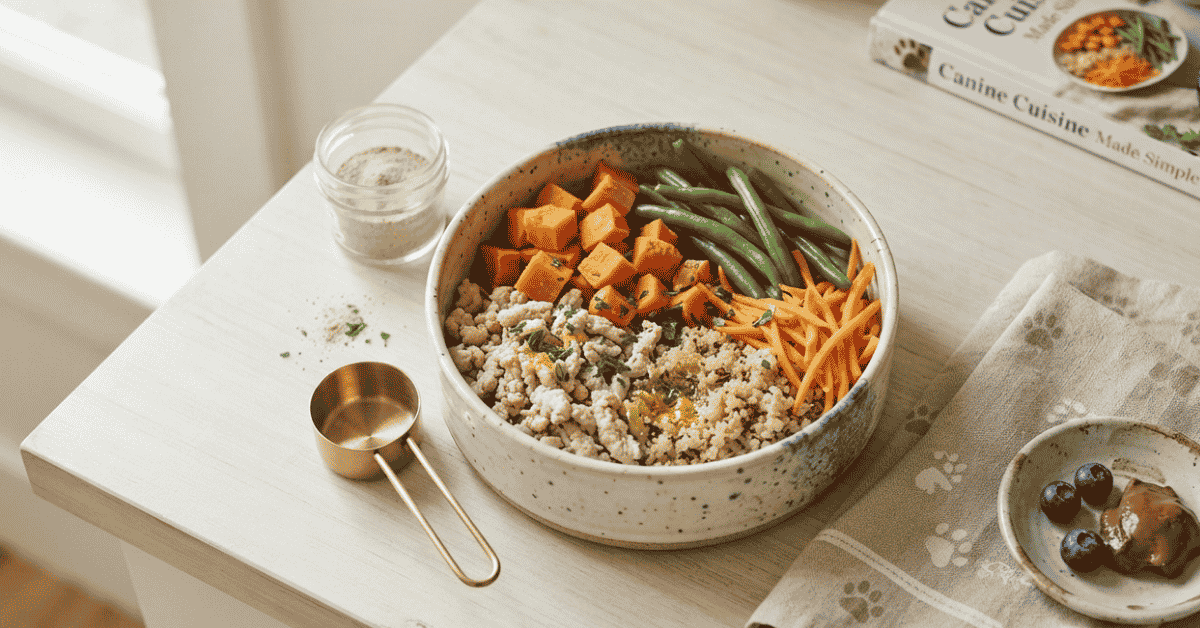
Balance It Dog Food Recipes can make homemade meals safer and simpler. Learn smart prep habits, key nutrition rules, and vet-backed tips.
Balance It Dog Food Recipes first caught my eye online.
I wanted fresh meals without playing guesswork with nutrients.
That mix felt both warm and a little nerve-racking.
I learned fast that homemade food needs tight balance.
Keep reading before you start chopping your dog’s dinner.
Are Balance It Dog Food Recipes Worth the Effort?
I asked myself that after one messy Sunday prep.
My counter held rice, chicken, carrots, and measuring cups.
The room smelled warm, plain, and strangely comforting.
Still, one fear kept tapping at my brain.
A nice bowl does not prove a complete diet.
That part changed my view of homemade dog food.
Balance It uses a recipe builder for custom meals.
The tool can factor life stage and selected ingredients.
Its own site says recipes work best with veterinary judgment.
That gave me a much clearer frame.
The effort makes sense when the recipe stays precise.
Life Before I Found This
My old idea of homemade food was too loose.
I pictured meat, rice, vegetables, then a happy dog.
I remember the soft scrape of a metal spoon.
Steam rose from rice beside a warm chicken pan.
The smell felt safe, simple, and almost nostalgic.
Still, I had no clue about calcium balance.
Trace nutrients barely crossed my mind back then.
That gap made me slow down.
Good intent matters, but exact nutrition matters more.
Why This Matters Right Now
Fresh pet food has become much more common.
Many owners now want more control over ingredients.
Yet homemade meals can miss key nutrients quite easily.
AAFCO notes complete diets must meet many nutrient targets.
Those targets also change across different life stages.
The FDA gives similar guidance for balanced pet food.
A complete diet must supply required nutrients in range.
This matters because dogs eat the same meals often.
Small gaps can add up across weeks and months.
A planned recipe reduces that quiet risk.
The First Big Lesson
My biggest lesson was surprisingly dull: measure everything.
A spoonful here can change more than expected.
Protein alone does not make a diet complete.
Minerals, vitamins, fats, and calories all need care.
Certain nutrients also have safe upper limits.
That changed my whole prep style.
I stopped treating the recipe like casual soup.
I began treating each amount like baking math.
A digital kitchen scale helped me most.
Grams feel less vague than cups and scoops.
The tiny beep became part of my routine.
I also stopped swapping ingredients without checking first.
One food can shift several nutrients at once.
Small Tactics That Actually Work
I print or save the exact recipe first.
That keeps my phone clean during messy food prep.
I weigh each item before mixing the batch.
Cooked food weights can differ from raw weights.
The recipe should guide which form gets measured.
I also prep one ingredient at a time.
That stops missed items during a rushed evening.
Supplements need the same care as food.
I follow the recipe amount rather than guessing.
Some Balance It products also have heat rules.
I label each stored portion with its date.
Freezer bags stack better than bulky food tubs.
A plain marker saves me from mystery meals later.
A Strange Detail I Noticed
The strangest part was not the food itself.
It was the way precision made cooking feel calmer.
I expected measuring to make dinner feel clinical.
Instead, the scale removed a lot of doubt.
Each small number gave me one less choice.
That felt oddly peaceful after a noisy workday.
The dog still heard every tiny bag crinkle.
His nails clicked hard across the kitchen floor.
I guess structure did not kill the warm part.
It simply kept the warm part from becoming guesswork.
Style Comparison & Data
Different homemade meal styles can look equally appealing.
Their nutrition plan can be very different, though.
This quick table shows the main split clearly.
| Meal Style | Planning Level | Main Concern |
|---|---|---|
| Random leftovers | Very low | Nutrient gaps |
| Meat and rice | Low | Missing minerals |
| Internet recipe | Mixed | Unknown balance |
| Vet-made recipe | High | Less flexibility |
| Balance It recipe | High | Exact prep needed |
The polished bowl is not the real test.
The nutrient plan behind it matters far more.
Non-Obvious Gains
I first expected better control over ingredients.
A few other gains showed up later.
-
Exact recipes cut my daily food decision stress.
-
Batch prep makes busy nights much less chaotic.
-
Portion labels help me spot feeding changes faster.
-
Measured meals create a clear record for vet talks.
-
Recipe limits stop random extras from slowly taking over.
-
A set plan makes family feeding more consistent.
I could explain meals without vague kitchen estimates.
Myths vs. My Reality
I used to think fresh food meant balanced food.
But then I learned those ideas are separate.
Fresh ingredients can still leave nutrient gaps.
I used to think more meat meant better meals.
But then mineral balance entered the picture.
A meat-heavy bowl can still need careful support.
I used to think supplements fixed any recipe.
But then I learned formulas need exact pairing.
A powder is not magic without proper amounts.
I used to think cups were accurate enough.
But then my kitchen scale changed that view.
Weight made repeat batches far more consistent.
I used to think vet input meant something was wrong.
But then I saw it as smart review.
Essential Principles for Mastery
My first rule is simple: start with your dog.
Age, size, life stage, and health all matter.
One recipe should not fit every dog.
My second rule is exact recipe use.
Keep ingredient type, amount, and prep method consistent.
Do not make casual swaps just for convenience.
My third rule covers supplements.
Use only the product and amount listed.
Extra nutrients can cause problems, not extra health.
My fourth rule is routine tracking.
Watch body weight, stool, appetite, and energy.
Share meaningful changes with your veterinary team.
My fifth rule is medical caution.
Dogs with health issues may need special recipes.
Balance It itself supports veterinary input for clinical choices.
They turn homemade feeding into a repeatable system.
That is the real goal for me.
FAQs about Balance It Dog Food Recipes
Can I use Balance It recipes every day?
A properly built recipe may be designed for regular feeding, but your dog’s age, health, calories, and exact recipe still matter. I would use the generated plan as written and confirm long-term feeding with your veterinarian.
Can I change ingredients in a Balance It recipe?
I would not swap ingredients by instinct. A simple change can shift calories, minerals, fat, or other nutrients. I prefer rebuilding the recipe inside the tool, then checking the updated amounts before cooking.
Do Balance It recipes need supplements?
Many homemade recipes need added nutrients to become complete. Balance It commonly pairs recipes with its own supplement products. I follow the exact recipe output instead of adding random vitamins or minerals.
Are Balance It recipes safe for dogs with health issues?
Some dogs need diets built around medical needs. The Balance It tool includes options for certain conditions, yet its site still places clinical judgment with veterinarians. I would involve your vet before making those meals.
Can puppies eat Balance It homemade recipes?
The recipe builder includes puppy options, but growth diets need especially careful nutrient control. I would use only a recipe made for puppy growth and review it with a veterinarian before long-term feeding.
My Final Takeaway
Balance It Dog Food Recipes changed my main question.
I stopped asking whether homemade food looked healthy.
I started asking whether the full plan made sense.
That shift felt small, but it changed everything.
The kitchen still smells warm during meal prep.
The dog still waits beside me with bright eyes.
I just feel less tempted to improvise now.
Maybe that is the best part.
Care feels better when it also has a plan.